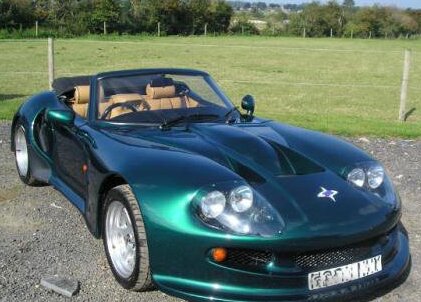
The Marcos LM500 5.0 V8, produced between 1996 and 2000, represents a relatively short-lived but significant chapter in the history of Marcos Engineering. This model, a high-performance, hand-built sports car, was the flagship of the LM series, designed to evoke the spirit of the classic Marcos Mantis and Rover V8-powered models of the past. The LM500 was exclusively offered as a cabriolet, catering to drivers seeking an open-top, exhilarating driving experience. It was positioned as a premium, low-volume sports car, competing with established British manufacturers like TVR and offering a unique blend of performance and exclusivity.
Technical Specifications
| Brand | Marcos |
| Model | LM500 |
| Generation | LM500 |
| Type (Engine) | 5.0 V8 (320 Hp) |
| Start of Production | 1996 |
| End of Production | 2000 |
| Powertrain Architecture | Internal Combustion Engine |
| Body Type | Cabriolet |
| Fuel Type | Petrol (Gasoline) |
| Power | 320 Hp |
| Engine Aspiration | Naturally Aspirated |
Powertrain & Engine Architecture
The heart of the Marcos LM500 is its Rover-sourced 5.0-liter V8 engine. This engine, a descendant of the Buick-designed 215 cubic inch V8 originally introduced in the 1960s, had been extensively developed by Rover over the years. In the LM500, it produced 320 horsepower, providing substantial performance for the lightweight chassis. The engine is naturally aspirated, meaning it relies solely on atmospheric pressure to fill its cylinders, eschewing the complexity and weight of turbocharging or supercharging. Fuel delivery is managed by a multi-point fuel injection system, ensuring efficient combustion and smooth power delivery. The engine features a cast iron block and aluminum cylinder heads, a combination that provides durability and helps to manage weight. The V8’s valvetrain utilizes two valves per cylinder, operated by a single overhead camshaft. The engine is mated to a five-speed manual transmission, providing the driver with full control over the power output. While an automatic transmission was offered in some Marcos models, the LM500 was primarily configured with the manual gearbox to maximize driving engagement.
Driving Characteristics
The Marcos LM500 delivers a raw and engaging driving experience. The combination of a relatively lightweight chassis (around 2,400 lbs) and the 320 hp V8 engine results in brisk acceleration. While official 0-60 mph times varied depending on testing conditions, figures in the low 5-second range were commonly reported. The car’s handling is characterized by its direct steering and responsive chassis. The suspension, consisting of independent double wishbones all around, provides a firm but controlled ride. The five-speed manual transmission offers precise shifts, allowing the driver to exploit the engine’s powerband. The LM500 isn’t a car designed for everyday comfort; it prioritizes performance and driver involvement. The lack of significant electronic driver aids means that the driver must be attentive and skilled to fully exploit the car’s capabilities. Compared to other Marcos models with smaller engines, the LM500 offers a substantial performance upgrade, providing a more visceral and exhilarating driving experience.
Equipment & Trim Levels
The Marcos LM500 was offered with a relatively limited range of options, reflecting its low-volume production and focus on performance. Standard equipment included leather upholstery, power windows, and central locking. The interior was functional and driver-focused, with a minimalist dashboard layout. Options included upgraded audio systems, air conditioning, and various trim materials. The LM500’s interior was not lavishly appointed, but it was well-built and comfortable enough for spirited driving. The exterior featured a fiberglass body, hand-laid to ensure quality and minimize weight. The car was available in a range of colors, and customers could specify custom paint schemes. The convertible top was manually operated, adding to the car’s raw and engaging character.
Chassis & Braking
The Marcos LM500 utilizes a tubular steel space frame chassis, providing a rigid and lightweight platform. This chassis design, a hallmark of Marcos Engineering, contributes significantly to the car’s handling prowess. The suspension consists of independent double wishbones all around, with coil springs and adjustable dampers. This setup provides a good balance between ride comfort and handling performance. Braking is handled by ventilated disc brakes on all four wheels, providing ample stopping power. The braking system is not equipped with ABS, reflecting the car’s focus on driver involvement and its relatively low weight. The steering is unassisted, providing direct and communicative feedback to the driver.
Market Reception & Comparison
The Marcos LM500 received generally positive reviews from automotive journalists. Critics praised its performance, handling, and exclusivity. However, some reviewers noted the car’s lack of refinement and its relatively high price. Compared to other British sports cars of the era, such as the TVR Chimaera and the Lotus Esprit, the LM500 offered a unique blend of performance and character. The TVR Chimaera, with its larger engine, offered more raw power, but the LM500’s lighter weight and more balanced handling made it a more agile and responsive car. The Lotus Esprit, with its more sophisticated chassis and technology, offered a more refined driving experience, but the LM500’s raw and visceral character appealed to a different type of driver. Fuel economy was not a strong point of the LM500, with figures typically in the 15-20 mpg range.
Legacy
The Marcos LM500, despite its limited production run, has become a sought-after collector’s car. The Rover V8 engine, while known for its reliability, requires regular maintenance to ensure optimal performance. Parts availability can be a challenge, as Marcos Engineering ceased production in 2000. However, a dedicated network of specialists and enthusiasts exists to support owners of these cars. The LM500 represents a high point in Marcos Engineering’s history, showcasing the company’s commitment to building high-performance, hand-built sports cars. Today, the LM500 is remembered as a unique and exciting sports car that offered a thrilling driving experience and a distinctive British character. Its relative rarity and increasing collectibility ensure that it will remain a cherished vehicle among enthusiasts for years to come.