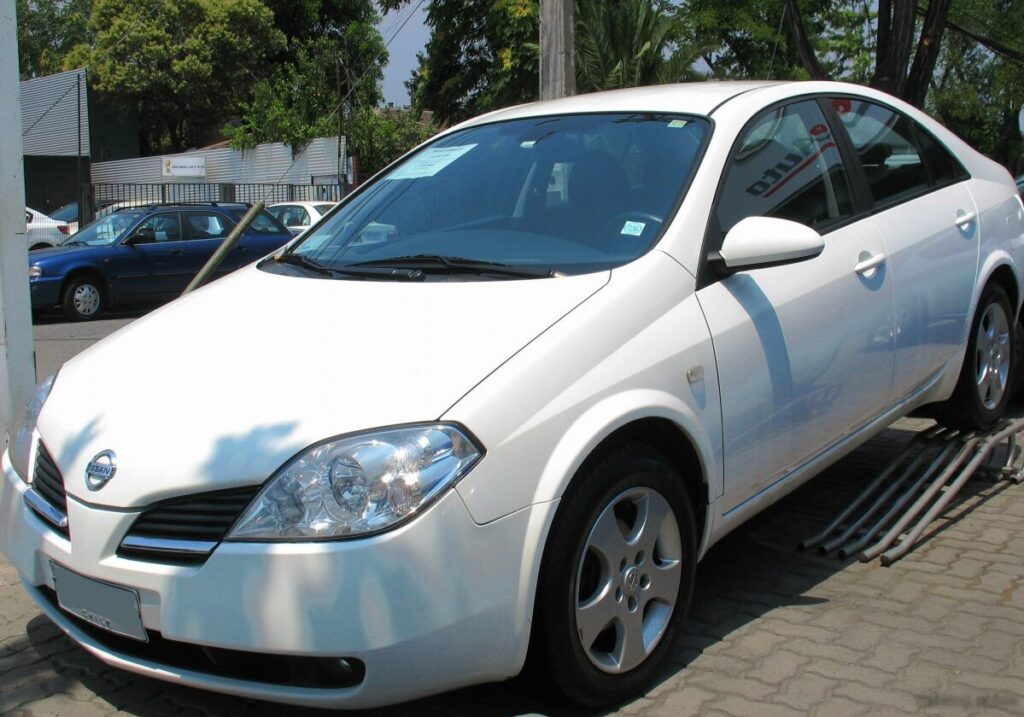
The Nissan Primera (P12) 2.0 i 16V, produced from April 2002 to March 2007, represented a significant evolution in Nissan’s mid-size sedan offerings. Positioned as a more upscale and technologically advanced alternative to the Sentra and Altima in North American markets (though primarily sold in Europe and Asia), the P12 Primera aimed to compete with established rivals like the Ford Mondeo, Vauxhall/Opel Vectra, and Toyota Avensis. This particular 2.0-liter, 140 horsepower variant with a six-speed manual transmission occupied a middle ground in the Primera lineup, offering a balance between performance, fuel efficiency, and affordability. It was designed to appeal to drivers seeking a comfortable and refined driving experience without the higher price tag of the flagship models.
Technical Specifications
| Brand | Nissan |
| Model | Primera |
| Generation | Primera (P12) |
| Type (Engine) | 2.0 i 16V (140 Hp) |
| Start of production | April, 2002 |
| End of production | March, 2007 |
| Powertrain Architecture | Internal Combustion engine |
| Body type | Sedan |
| Seats | 5 |
| Doors | 4 |
| Fuel consumption (urban) | 11.7 l/100 km (20.1 US mpg, 24.1 UK mpg, 8.5 km/l) |
| Fuel consumption (extra urban) | 6.7 l/100 km (35.1 US mpg, 42.2 UK mpg, 14.9 km/l) |
| Fuel consumption (combined) | 8.5 l/100 km (27.7 US mpg, 33.2 UK mpg, 11.8 km/l) |
| Fuel Type | Petrol (Gasoline) |
| Acceleration 0 – 100 km/h | 9.6 sec |
| Acceleration 0 – 62 mph | 9.6 sec |
| Acceleration 0 – 60 mph | 9.1 sec |
| Maximum speed | 204 km/h (126.76 mph) |
| Weight-to-power ratio | 9.6 kg/Hp, 103.7 Hp/tonne |
| Weight-to-torque ratio | 7 kg/Nm, 142.2 Nm/tonne |
| Power | 140 Hp @ 6000 rpm |
| Power per litre | 70.1 Hp/l |
| Torque | 192 Nm @ 4000 rpm (141.61 lb.-ft. @ 4000 rpm) |
| Engine layout | Front, Transverse |
| Engine Model/Code | QR20DE |
| Engine displacement | 1998 cm3 (121.93 cu. in.) |
| Number of cylinders | 4 |
| Engine configuration | Inline |
| Cylinder Bore | 89 mm (3.5 in.) |
| Piston Stroke | 80.3 mm (3.16 in.) |
| Compression ratio | 9.9:1 |
| Number of valves per cylinder | 4 |
| Fuel injection system | Multi-port manifold injection |
| Engine aspiration | Naturally aspirated engine |
| Valvetrain | DOHC |
| Engine oil capacity | 3.9 l (4.12 US qt | 3.43 UK qt) |
| Kerb Weight | 1350 kg (2976.24 lbs.) |
| Max. weight | 1910 kg (4210.83 lbs.) |
| Max load | 560 kg (1234.59 lbs.) |
| Trunk (boot) space – minimum | 450 l (15.89 cu. ft.) |
| Fuel tank capacity | 62 l (16.38 US gal | 13.64 UK gal) |
| Length | 4565 mm (179.72 in.) |
| Width | 1760 mm (69.29 in.) |
| Height | 1480 mm (58.27 in.) |
| Wheelbase | 2680 mm (105.51 in.) |
| Front track | 1530 mm (60.24 in.) |
| Rear (Back) track | 1535 mm (60.43 in.) |
| Drivetrain Architecture | The Internal combustion engine (ICE) drives the front wheels of the vehicle. |
| Drive wheel | Front wheel drive |
| Number of gears and type of gearbox | 6 gears, manual transmission |
| Front suspension | Double wishbone |
| Rear suspension | Coil spring |
| Front brakes | Ventilated discs |
| Rear brakes | Disc |
| Assisting systems | ABS (Anti-lock braking system) |
| Steering type | Steering rack and pinion |
| Power steering | Hydraulic Steering |
| Tires size | 205/60 R16 |
| Wheel rims size | 16 |
Powertrain & Engine Architecture
The heart of the Primera 2.0 i 16V is the QR20DE engine, a 1.998-liter inline-four cylinder powerplant. This engine is a member of Nissan’s QR family, known for its relatively simple design, durability, and good overall performance. The QR20DE utilizes a cast iron block with an aluminum cylinder head, featuring dual overhead camshafts (DOHC) and four valves per cylinder. Fuel delivery is managed by a multi-point fuel injection system, providing precise fuel metering for optimal combustion. The engine’s 140 horsepower output at 6000 rpm and 192 Nm (141.61 lb-ft) of torque at 4000 rpm provided adequate power for everyday driving. The six-speed manual transmission offered precise shifts and contributed to the car’s relatively engaging driving experience. The transmission’s gear ratios were tuned for a balance of acceleration and fuel economy, with a relatively tall sixth gear for highway cruising.
Driving Characteristics
The Primera 2.0 i 16V with the manual transmission offered a reasonably spirited driving experience. While not a sports sedan, the engine provided sufficient power for confident overtaking and merging onto highways. The six-speed gearbox allowed drivers to keep the engine in its optimal power band, maximizing acceleration. Compared to the lower-powered 1.6-liter variants, the 2.0-liter engine offered a noticeable improvement in performance. However, it didn’t possess the outright punch of higher-spec models equipped with larger engines. The suspension, tuned for comfort, provided a smooth ride over most road surfaces, but it wasn’t particularly sporty. Steering was light and precise, making the car easy to maneuver in urban environments.
Equipment & Trim Levels
The 2.0 i 16V trim typically included features such as air conditioning, power windows, power door locks, a CD player, and alloy wheels. Higher trim levels added features like leather upholstery, a sunroof, automatic climate control, and upgraded audio systems. Safety features included ABS brakes, front airbags, and seatbelt pretensioners. The interior design was functional and well-built, with a focus on ergonomics and comfort. The dashboard layout was straightforward and easy to use, with clearly labeled controls.
Chassis & Braking
The Primera P12 utilized a front-engine, front-wheel-drive layout. The front suspension employed a double wishbone design, providing good handling and ride comfort. The rear suspension featured a coil spring setup. Braking duties were handled by ventilated discs at the front and solid discs at the rear, providing adequate stopping power for the vehicle’s weight and performance. The ABS system helped to prevent wheel lockup during hard braking, enhancing safety.
Market Reception & Comparison
The Nissan Primera P12 2.0 i 16V was generally well-received by automotive critics. It was praised for its comfortable ride, spacious interior, and good fuel economy. However, some critics noted that the styling was somewhat conservative and that the driving experience wasn’t as engaging as some of its rivals. Compared to the 1.6-liter Primera, the 2.0-liter model offered a significant performance upgrade, but at a slightly higher price point. The 2.0-liter also offered better fuel economy than the larger engine options. Reliability was generally good, with the QR20DE engine proving to be a durable and dependable unit.
Legacy
The Nissan Primera P12, including the 2.0 i 16V variant, has proven to be a relatively reliable and long-lasting vehicle. On the used car market, these models are often sought after for their affordability, practicality, and dependability. The QR20DE engine is known for its longevity, and with proper maintenance, it can provide many years of trouble-free service. While not a particularly collectible car, the Primera P12 represents a solid and well-engineered mid-size sedan that offered a compelling alternative to its competitors.