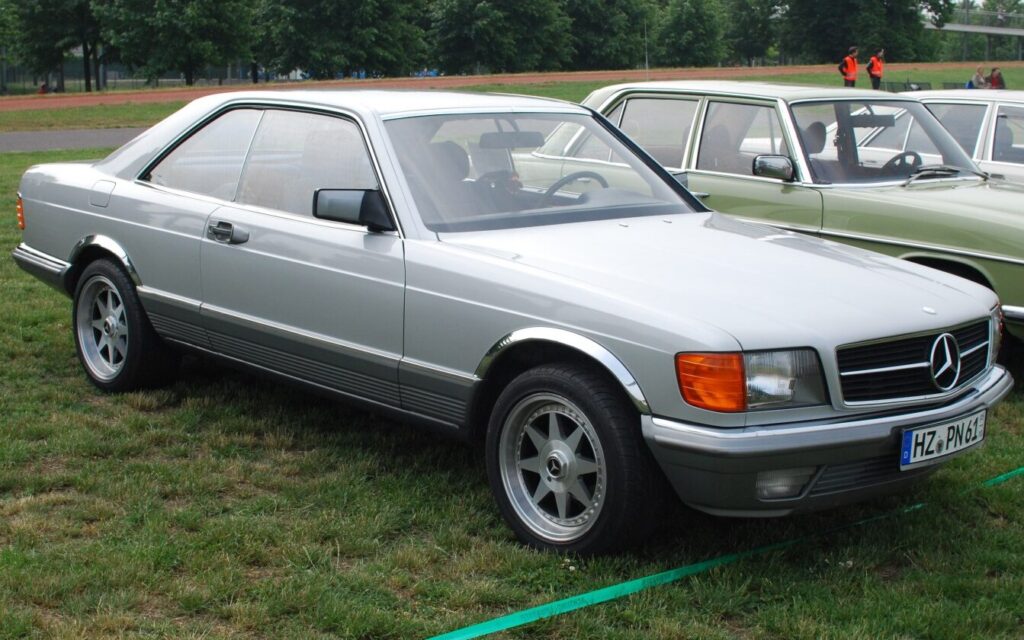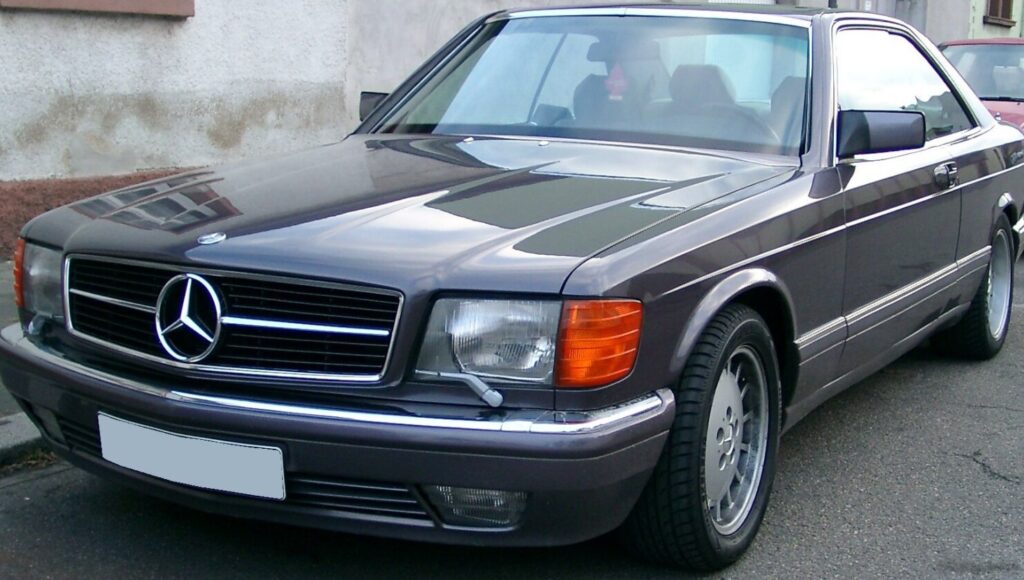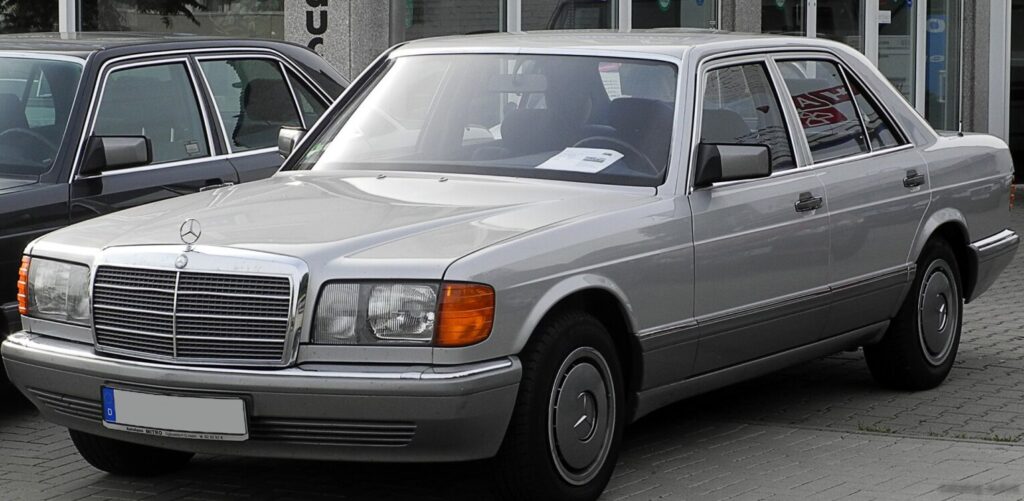
The Mercedes-Benz 300 SE CAT, part of the W126 S-Class range following the 1985 facelift, represented a significant evolution in luxury automotive engineering. Produced from August 1985 to October 1991, this variant occupied a middle ground within the S-Class lineup, offering a balance between performance and refinement. The W126 platform, known for its robust build quality and advanced features for its time, established the S-Class as a benchmark for full-size luxury sedans. The “CAT” designation signified the inclusion of a catalytic converter, reflecting increasing environmental regulations. This model aimed to provide a comfortable and capable experience for discerning buyers, prioritizing smooth operation over outright sporting prowess.
Technical Specifications
| Brand | Mercedes-Benz |
| Model | S-class |
| Generation | S-class SE (W126, facelift 1985) |
| Type (Engine) | 300 SE CAT (179 Hp) |
| Start of production | August, 1985 |
| End of production | October, 1991 |
| Powertrain Architecture | Internal Combustion engine |
| Body type | Sedan |
| Seats | 5 |
| Doors | 4 |
| Fuel consumption (urban) | 14.5 l/100 km (16.2 US mpg, 19.5 UK mpg) |
| Fuel consumption (extra urban) | 8 l/100 km (29.4 US mpg, 35.3 UK mpg) |
| Fuel Type | Petrol (Gasoline) |
| Acceleration 0 – 100 km/h | 9.3 sec |
| Acceleration 0 – 62 mph | 9.3 sec |
| Acceleration 0 – 60 mph | 8.8 sec |
| Maximum speed | 200 km/h (124.27 mph) |
| Weight-to-power ratio | 8.5 kg/Hp, 117.8 Hp/tonne |
| Weight-to-torque ratio | 6 kg/Nm, 167.8 Nm/tonne |
| Power | 179 Hp @ 5700 rpm |
| Power per litre | 60.4 Hp/l |
| Torque | 255 Nm @ 4400 rpm (188.08 lb.-ft. @ 4400 rpm) |
| Engine layout | Front, Longitudinal |
| Engine Model/Code | M 103 E 30 / 103.981 |
| Engine displacement | 2962 cm3 (180.75 cu. in.) |
| Number of cylinders | 6 |
| Engine configuration | Inline |
| Cylinder Bore | 88.5 mm (3.48 in.) |
| Piston Stroke | 80.25 mm (3.16 in.) |
| Compression ratio | 9.2:1 |
| Number of valves per cylinder | 2 |
| Fuel injection system | Multi-port manifold injection |
| Engine aspiration | Naturally aspirated engine |
| Valvetrain | SOHC |
| Engine oil capacity | 6 l (6.34 US qt | 5.28 UK qt) |
| Coolant | 8 l (8.45 US qt | 7.04 UK qt) |
| Kerb Weight | 1520 kg (3351.03 lbs.) |
| Max. weight | 2040 kg (4497.43 lbs.) |
| Max load | 520 kg (1146.4 lbs.) |
| Fuel tank capacity | 90 l (23.78 US gal | 19.8 UK gal) |
| Length | 5020 mm (197.64 in.) |
| Width | 1820 mm (71.65 in.) |
| Height | 1437 mm (56.57 in.) |
| Wheelbase | 2930 mm (115.35 in.) |
| Front track | 1555 mm (61.22 in.) |
| Rear track | 1527 mm (60.12 in.) |
| Drivetrain Architecture | The Internal combustion engine (ICE) drives the rear wheels of the vehicle. |
| Drive wheel | Rear wheel drive |
| Number of gears and type of gearbox | 5 gears, manual transmission |
| Front suspension | Double wishbone |
| Rear suspension | Trailing arm |
| Front brakes | Ventilated discs |
| Rear brakes | Disc |
| Steering type | Cone worm with recirculation balls |
| Power steering | Hydraulic Steering |
| Tires size | Front wheel tires: 205/65 R15Rear wheel tires: 205/65 R15 |
| Wheel rims size | Front wheel rims: 7J x 15Rear wheel rims: 7J x 15 |
Powertrain & Engine Architecture
The 300 SE CAT was powered by the M103 E 30 inline-six engine, a 2.962-liter (180.75 cubic inch) naturally aspirated powerplant. This engine, a hallmark of Mercedes-Benz engineering, featured a single overhead camshaft (SOHC) valvetrain operating two valves per cylinder. Bosch K-Jetronic fuel injection delivered precise fuel metering, contributing to both performance and efficiency. The engine produced 179 horsepower at 5700 rpm and 255 Nm (188 lb-ft) of torque at 4400 rpm. The engine’s robust construction and relatively simple design contributed to its longevity and ease of maintenance. The 300 SE CAT was equipped with a 5-speed manual transmission, providing drivers with direct control over the engine’s power. An optional 4-speed automatic transmission was also available, catering to those prioritizing comfort and convenience.
Driving Characteristics
The 300 SE CAT with the manual transmission offered a reasonably engaging driving experience. While not a sports car, the inline-six provided ample power for comfortable highway cruising and confident overtaking. The 0-60 mph time of around 8.8 seconds was respectable for the era. The automatic transmission, while smooth, did slightly diminish acceleration times and responsiveness. The gear ratios were tuned for relaxed cruising, prioritizing fuel economy and minimizing engine noise. The rear-wheel-drive configuration provided balanced handling, although it lacked the all-weather capability of later all-wheel-drive S-Class models. Compared to the higher-output 300 SEL 6.3, the 300 SE CAT offered a more refined and economical driving experience, sacrificing some outright performance.
Equipment & Trim Levels
The 300 SE CAT came standard with a comprehensive list of features expected of a luxury sedan in the mid-1980s. These included power windows, central locking, air conditioning, and a high-quality sound system. Interior upholstery was typically cloth, with leather options available at extra cost. The dashboard featured wood trim and analog gauges, reflecting the era’s design aesthetic. Optional extras included a sunroof, heated seats, and a more advanced audio system. The level of equipment positioned the 300 SE CAT as a well-appointed, but not overly extravagant, member of the S-Class family.
Chassis & Braking
The W126 S-Class featured a robust chassis with independent suspension at all four wheels. The front suspension utilized a double wishbone design, while the rear employed a trailing arm setup. This configuration provided a comfortable ride and predictable handling. The 300 SE CAT was equipped with ventilated disc brakes at the front and solid disc brakes at the rear, providing adequate stopping power for its weight and performance. Hydraulic power steering made maneuvering easy, particularly at low speeds. The suspension was tuned for comfort, prioritizing a smooth ride over aggressive cornering.
Market Reception & Comparison
The 300 SE CAT was generally well-received by automotive critics. It was praised for its comfortable ride, refined interior, and robust build quality. However, some critics noted that its performance was not as exhilarating as some of its competitors, particularly those from BMW and Jaguar. Fuel economy was considered average for a vehicle of its size and class. Compared to the 300 SDL (diesel) and the more powerful 560 SEC, the 300 SE CAT offered a balance between fuel efficiency, performance, and price. It appealed to buyers who wanted a luxurious and comfortable sedan without the expense of the top-of-the-line models.
Legacy
The M103 engine, found in the 300 SE CAT, is renowned for its durability and reliability. With proper maintenance, these engines can easily exceed 200,000 miles. The W126 S-Class, as a whole, has gained a strong following among classic car enthusiasts. The 300 SE CAT, while not the most sought-after variant, remains a desirable and relatively affordable entry point into the W126 world. Parts availability is generally good, although some specific components may be difficult to find. Today, these cars are appreciated for their timeless design, robust engineering, and comfortable driving experience, representing a high point in Mercedes-Benz’s long history of luxury automobiles.