
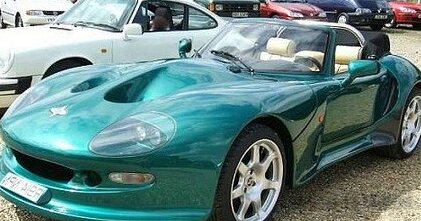
The Marcos Mantis 2.0T, produced between 1998 and 2000, represents a significant iteration of the Mantis model, a British sports car known for its lightweight construction and spirited driving experience. This variant, distinguished by its 200 horsepower turbocharged engine, aimed to deliver enhanced performance while retaining the Mantis’s core characteristics. It occupied a position as the higher-performance option within the Mantis range during its limited production run, appealing to drivers seeking a more engaging and powerful open-top sports car experience. The Mantis itself was a continuation of the Marcos lineage, a brand with a history dating back to the 1960s, known for its hand-built, fiberglass-bodied vehicles.
Technical Specifications
| Brand | Marcos |
| Model | Mantis |
| Generation | Mantis |
| Type (Engine) | 2.0 T (200 Hp) |
| Start of Production | 1998 |
| End of Production | 2000 |
| Powertrain Architecture | Internal Combustion Engine |
| Body Type | Cabriolet |
| Fuel Type | Petrol (Gasoline) |
| Power | 200 Hp |
| Engine Aspiration | Turbocharged |
Powertrain & Engine Architecture
The heart of the Marcos Mantis 2.0T is a 2.0-liter turbocharged four-cylinder engine. While specific engine code details are sometimes debated due to the relatively low production numbers and bespoke nature of Marcos engineering, it’s generally understood to be based on a Ford Zetec unit, heavily modified by Marcos. The addition of a turbocharger significantly boosted power output compared to the naturally aspirated versions of the Mantis. The engine employed a cast iron block and aluminum cylinder head, a common configuration for Ford engines of the era. Fuel delivery was managed by a multi-point fuel injection system, optimized for the increased airflow provided by the turbocharger. The valvetrain featured dual overhead camshafts (DOHC) with four valves per cylinder, contributing to the engine’s responsiveness and high-revving nature. The turbocharger itself was a Garrett unit, selected for its ability to provide a broad powerband. The engine was mated to a five-speed manual transmission, the only transmission option available for this variant. The drivetrain was rear-wheel drive, consistent with the sports car ethos of the Mantis.
Driving Characteristics
The Marcos Mantis 2.0T offered a noticeably more exhilarating driving experience than its lower-powered siblings. The 200 horsepower, coupled with the relatively lightweight chassis (approximately 2,200 lbs), resulted in brisk acceleration. While official 0-60 mph times varied depending on testing conditions, contemporary reviews suggested a figure around 5.5 to 6 seconds. The turbocharger provided a surge of power in the mid-range, making overtaking maneuvers effortless. The five-speed manual transmission offered precise shifts, allowing drivers to fully exploit the engine’s powerband. Handling was sharp and responsive, thanks to the car’s well-balanced chassis and independent suspension. The Mantis 2.0T wasn’t a car designed for outright top speed; rather, it excelled in providing a connected and engaging driving experience on winding roads. Compared to a hypothetical naturally aspirated Mantis, the 2.0T offered significantly more torque, making it feel stronger and more flexible in everyday driving situations. The turbo lag, while present, was manageable and added to the character of the car.
Equipment & Trim Levels
The Marcos Mantis 2.0T was relatively sparsely equipped by modern standards, reflecting its focus on driving purity. Standard features included leather upholstery, a wood-rimmed steering wheel, and a basic instrument cluster. The interior was functional and driver-focused, with minimal distractions. Air conditioning was often an optional extra, as were power windows and central locking. The convertible top was manually operated. Trim levels were limited; the 2.0T represented the highest specification within the Mantis range. Interior color options were typically limited to black or grey leather, with the possibility of bespoke options through Marcos’s custom build program. The dashboard layout was simple and straightforward, prioritizing functionality over aesthetics.
Chassis & Braking
The Marcos Mantis utilized a lightweight, multi-tubular steel space frame chassis, clad in fiberglass body panels. This construction method contributed significantly to the car’s low weight and high torsional rigidity. Suspension was independent all around, with double wishbones at the front and trailing arms at the rear. This setup provided a comfortable ride while maintaining excellent handling characteristics. Braking was handled by ventilated disc brakes on all four wheels, providing ample stopping power. Anti-lock braking (ABS) was not standard equipment, although it may have been available as an option on some models. The steering was unassisted, providing a direct and communicative feel. The car’s relatively low weight helped to minimize the need for overly powerful brakes.
Market Reception & Comparison
The Marcos Mantis 2.0T received generally positive reviews from automotive journalists, who praised its performance, handling, and unique character. However, its limited production numbers and relatively high price (compared to other sports cars of the era) meant that it remained a niche vehicle. Critics noted that the interior was somewhat basic and lacked the refinement of more mainstream sports cars. Compared to other British sports cars of the late 1990s, such as the Lotus Elise, the Mantis offered a different proposition – a more comfortable and usable everyday car, albeit with a slightly less focused driving experience. Fuel economy was reasonable for a performance car of its era, averaging around 22-25 mpg. Reliability was generally good, although the bespoke nature of some components meant that sourcing parts could sometimes be challenging.
Legacy
The Marcos Mantis 2.0T remains a relatively rare and sought-after sports car among enthusiasts. Its combination of lightweight construction, turbocharged power, and open-top thrills makes it a unique and rewarding driving experience. The engine, while based on a Ford unit, benefits from Marcos’s engineering expertise and offers a distinctive character. The car’s long-term reliability is generally good, although regular maintenance is essential, particularly for the turbocharger and fuel injection system. In the used car market, prices for well-maintained examples have been steadily increasing in recent years, reflecting the car’s growing desirability. The Mantis 2.0T represents a high point in Marcos’s history, showcasing the company’s ability to create exciting and engaging sports cars. It stands as a testament to British automotive engineering and a reminder of a time when cars were built with passion and individuality.
