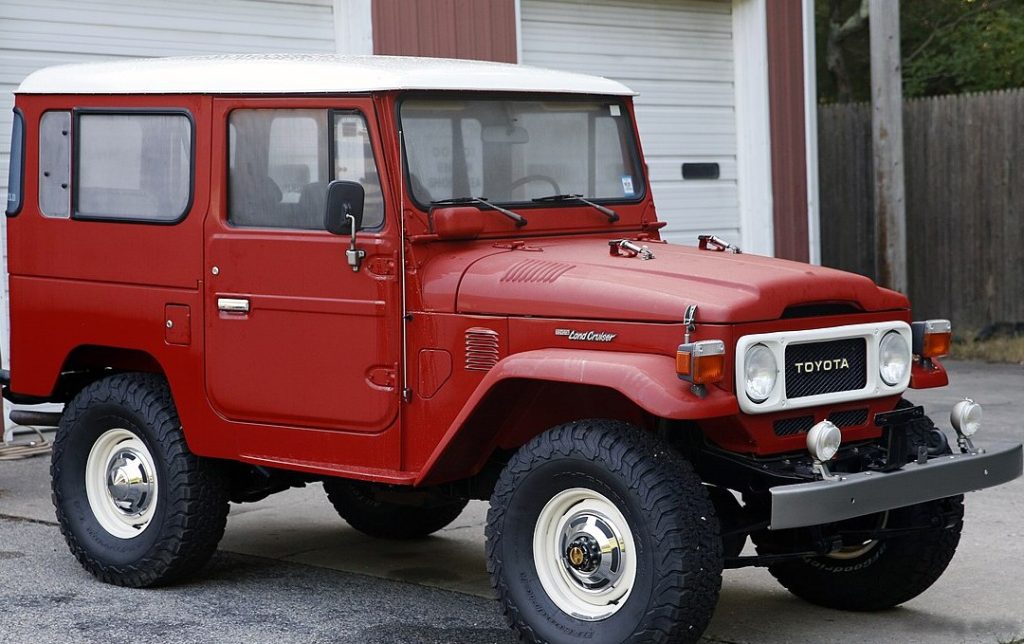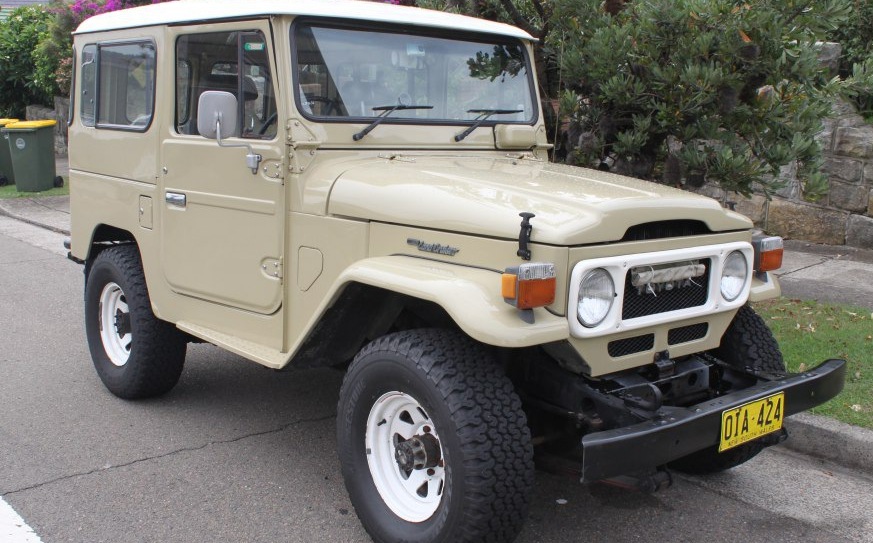
The Toyota Land Cruiser J40 Hard Top 3.0 D, produced between 1974 and 1979, represents a significant iteration of Toyota’s legendary off-road vehicle. This variant, powered by a 3.0-liter diesel engine producing 80 horsepower, was primarily aimed at markets requiring a robust and reliable workhorse, particularly in developing nations and rural areas. It occupied a middle ground within the J40 lineup, offering a balance between affordability and capability compared to gasoline-powered models or later, more luxurious trims. The J40 series, overall, is renowned for its simple construction, durability, and exceptional off-road prowess, establishing the Land Cruiser’s reputation as a virtually indestructible vehicle.
Technical Specifications
| Brand | Toyota |
| Model | Land Cruiser |
| Generation | Land Cruiser (J40) Hard top |
| Type (Engine) | 3.0 D (80 Hp) 4WD |
| Start of production | 1974 |
| End of production | 1979 |
| Powertrain Architecture | Internal Combustion engine |
| Body type | Off-road vehicle |
| Seats | 4 |
| Doors | 2 |
| Fuel Type | Diesel |
| Maximum speed | 115 km/h (71.46 mph) |
| Weight-to-power ratio | 21.9 kg/Hp, 45.6 Hp/tonne |
| Weight-to-torque ratio | 9.2 kg/Nm, 108.8 Nm/tonne |
| Power | 80 Hp @ 3600 rpm |
| Power per litre | 26.9 Hp/l |
| Torque | 191 Nm @ 2200 rpm (140.87 lb.-ft. @ 2200 rpm) |
| Engine layout | Front, Longitudinal |
| Engine Model/Code | B |
| Engine displacement | 2977 cm3 (181.67 cu. in.) |
| Number of cylinders | 4 |
| Engine configuration | Inline |
| Cylinder Bore | 95 mm (3.74 in.) |
| Piston Stroke | 105 mm (4.13 in.) |
| Compression ratio | 21:1 |
| Number of valves per cylinder | 2 |
| Fuel injection system | Precombustion chamber injection |
| Engine aspiration | Naturally aspirated engine |
| Engine oil capacity | 9 l (9.51 US qt | 7.92 UK qt) |
| Coolant capacity | 12.5 l (13.21 US qt | 11 UK qt) |
| Kerb Weight | 1755 kg (3869.11 lbs.) |
| Max. weight | 2300 kg (5070.63 lbs.) |
| Max load | 545 kg (1201.52 lbs.) |
| Fuel tank capacity | 62 l (16.38 US gal | 13.64 UK gal) |
| Length | 3870 mm (152.36 in.) |
| Width | 1665 mm (65.55 in.) |
| Height | 1930 mm (75.98 in.) |
| Wheelbase | 2285 mm (89.96 in.) |
| Front track | 1415 mm (55.71 in.) |
| Rear track | 1400 mm (55.12 in.) |
| Front overhang | 705 mm (27.76 in.) |
| Rear overhang | 880 mm (34.65 in.) |
| Ride height (ground clearance) | 200 mm (7.87 in.) |
| Minimum turning circle | 10.6 m (34.78 ft.) |
| Drive wheel | All wheel drive (4×4) |
| Number of gears | 4 |
| Gearbox type | Manual transmission |
| Front suspension | Rigid axle suspension, Leaf spring |
| Rear suspension | Rigid axle suspension, Leaf spring |
| Front brakes | Drum |
| Rear brakes | Drum |
| Steering type | Cone worm with recirculation balls |
Powertrain & Engine Architecture
The heart of the J40 3.0 D is the ‘B’ engine, a 2.977-liter inline-four diesel. This engine, while relatively simple by modern standards, was designed for durability and low-speed torque. It utilizes a precombustion chamber injection system, a common design for diesel engines of the era, which improves combustion efficiency and reduces engine noise compared to direct injection. The engine’s 21:1 compression ratio contributes to its robust power delivery, although it also necessitates high-quality fuel. The four-speed manual transmission was the standard offering, chosen for its reliability and suitability for off-road conditions. The transmission’s gear ratios were optimized for climbing steep inclines and navigating challenging terrain, prioritizing torque multiplication over outright speed.
Driving Characteristics
The 80-horsepower output and 191 Nm (140.87 lb-ft) of torque delivered by the 3.0 D engine resulted in a driving experience focused on capability rather than acceleration. The Land Cruiser J40 was never intended to be a fast vehicle; its strength lay in its ability to traverse difficult terrain at a steady pace. The manual transmission required deliberate shifting, and the engine’s powerband was relatively narrow. Compared to the gasoline-powered J40s, the diesel offered significantly more low-end torque, making it ideal for towing and hauling heavy loads. However, it lacked the responsiveness and higher top speed of its petrol counterparts. The 4WD system, engaged via a lever, provided excellent traction in off-road situations, and the vehicle’s high ground clearance allowed it to overcome obstacles with ease.
Equipment & Trim Levels
The J40 Hard Top 3.0 D was typically equipped with basic, utilitarian features. Standard equipment included steel wheels, simple cloth or vinyl upholstery, and a basic dashboard with minimal instrumentation. Power steering and air conditioning were generally not available on this trim level, reflecting its focus on affordability and practicality. Optional extras, depending on the market, could include a winch, additional fuel tanks, and upgraded suspension components. The hard top, as the name suggests, provided protection from the elements and offered a more secure cabin compared to the soft-top versions.
Chassis & Braking
The J40’s chassis was a body-on-frame construction, renowned for its strength and durability. Both the front and rear suspension utilized rigid axles and leaf springs, providing a comfortable ride on rough terrain, albeit with some body roll on paved roads. The braking system consisted of drum brakes on all four wheels, which were adequate for the vehicle’s weight and intended use, but lacked the stopping power of more modern disc brake systems. The steering was a recirculating ball type, providing a direct feel but requiring considerable effort, especially at low speeds.
Market Reception & Comparison
The Land Cruiser J40 3.0 D was well-received in markets where reliability and off-road capability were paramount. Critics praised its rugged construction, simple mechanics, and ability to withstand harsh conditions. Compared to the gasoline-powered J40s, the diesel variant offered superior fuel economy and lower running costs, making it a popular choice for commercial applications and rural transportation. However, it was often criticized for its lack of refinement and relatively slow performance. Against competitors like the Land Rover Series II/III and the Jeep CJ series, the J40 offered a compelling combination of durability, simplicity, and off-road prowess.
Legacy
The Toyota Land Cruiser J40 3.0 D has achieved a legendary status among off-road enthusiasts and collectors. Its simple design and robust construction have contributed to its exceptional longevity, with many examples still in use today. The ‘B’ diesel engine, while not particularly powerful, is known for its reliability and relatively easy maintenance. In the used car market, well-maintained J40s command high prices, reflecting their enduring appeal and historical significance. The J40 series, as a whole, cemented the Land Cruiser’s reputation as a truly capable and dependable off-road vehicle, a legacy that continues to this day.