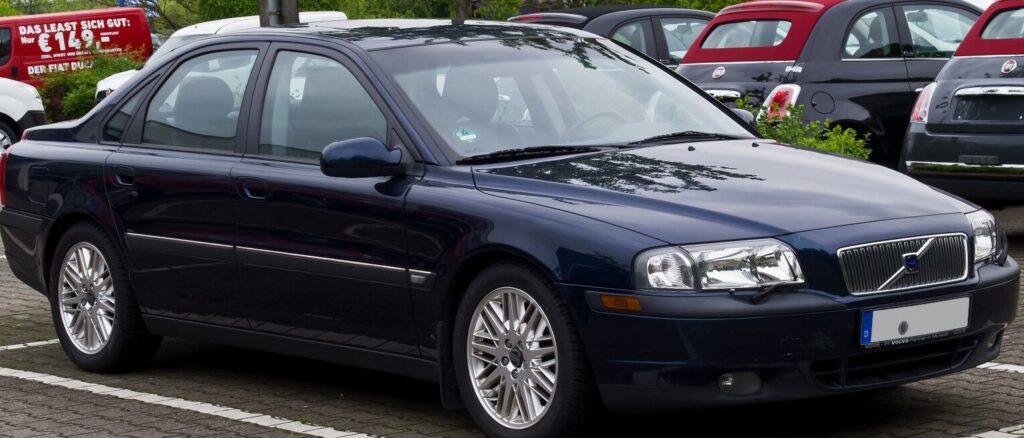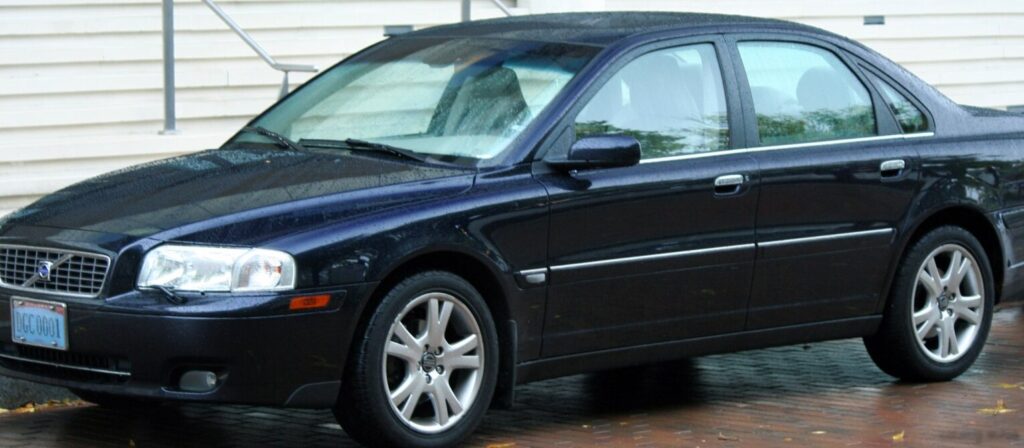
The Volvo S80 2.4 Bi-Fuel, produced from 2003 to 2006, represents a specific iteration of the second-generation S80 (facelifted model, internally designated as the 2003 model year update). This variant combined a 2.4-liter inline-five cylinder engine with the capability to run on both gasoline and Liquefied Petroleum Gas (LPG), offering a unique proposition in the European market where LPG conversions and dedicated bi-fuel vehicles were relatively common. Positioned as a mid-range offering within the S80 lineup, it aimed to provide a balance between performance, fuel economy (particularly when utilizing LPG), and cost of ownership. The S80, as a whole, was Volvo’s flagship sedan, intended to compete with executive cars from German manufacturers like BMW, Mercedes-Benz, and Audi.
Technical Specifications
| Brand | Volvo |
| Model | S80 |
| Generation | S80 (facelift 2003) |
| Type (Engine) | 2.4 (140 Hp) Bi-Fuel LPG |
| Start of production | 2003 |
| End of production | 2006 |
| Powertrain Architecture | Internal Combustion engine |
| Body type | Sedan |
| Seats | 5 |
| Doors | 4 |
| Fuel consumption (economy) – urban | 12.2 l/100 km (19.3 US mpg, 23.2 UK mpg, 8.2 km/l) |
| Fuel consumption (economy) – urban (LPG) | 15.9 l/100 km |
| Fuel consumption (economy) – extra urban | 6.8 l/100 km (34.6 US mpg, 41.5 UK mpg, 14.7 km/l) |
| Fuel consumption (economy) – extra urban (LPG) | 8.8 l/100 km |
| Fuel consumption (economy) – combined | 8.8 l/100 km (26.7 US mpg, 32.1 UK mpg, 11.4 km/l) |
| Fuel consumption (economy) – combined (LPG) | 11.4 l/100 km |
| CO2 emissions | 211 g/km |
| CO2 emissions (LPG) | 184 g/km |
| Fuel Type | Petrol / LPG |
| Acceleration 0 – 100 km/h | 10.5 sec |
| Acceleration 0 – 62 mph | 10.5 sec |
| Acceleration 0 – 100 km/h (LPG) | 10.6 sec |
| Acceleration 0 – 60 mph | 10 sec (Calculated) |
| Maximum speed | 205 km/h (127.38 mph) |
| Emission standard | Euro 4 |
| Weight-to-power ratio | 11.2 kg/Hp, 89.3 Hp/tonne |
| Weight-to-torque ratio | 7.1 kg/Nm, 140.4 Nm/tonne |
| Power | 140 Hp @ 4500 rpm |
| Power per litre | 57.5 Hp/l |
| Power (LPG) | 140 Hp @ 5100 rpm |
| Power per litre (LPG) | 57.5 Hp/l |
| Torque | 220 Nm @ 3300 rpm (162.26 lb.-ft. @ 3300 rpm) |
| Torque (LPG) | 214 Nm @ 4500 rpm |
| Engine layout | Front, Transverse |
| Engine Model/Code | B5244SG2 |
| Engine displacement | 2435 cm3 (148.59 cu. in.) |
| Number of cylinders | 5 |
| Engine configuration | Inline |
| Cylinder Bore | 83 mm (3.27 in.) |
| Piston Stroke | 90 mm (3.54 in.) |
| Compression ratio | 10.3:1 |
| Number of valves per cylinder | 4 |
| Fuel injection system | Multi-port manifold injection |
| Engine aspiration | Naturally aspirated |
| Valvetrain | DOHC |
| Engine oil capacity | 5.8 l (6.13 US qt, 5.1 UK qt) |
| Coolant | 8 l (8.45 US qt, 7.04 UK qt) |
| Kerb Weight | 1567 kg (3454.64 lbs.) |
| Max. weight | 2140 kg (4717.89 lbs.) |
| Max load | 573 kg (1263.25 lbs.) |
| Trunk (boot) space – minimum | 407 l (14.37 cu. ft.) |
| Trunk (boot) space – maximum | 902 l (31.85 cu. ft.) |
| Fuel tank capacity | 29 l (7.66 US gal, 6.38 UK gal) |
| Fuel tank capacity (LPG) | 50 l |
| Max. roof load | 100 kg (220.46 lbs.) |
| Permitted trailer load with brakes (12%) | 1800 kg (3968.32 lbs.) |
| Permitted trailer load without brakes | 750 kg (1653.47 lbs.) |
| Permitted towbar download | 75 kg (165.35 lbs.) |
| Length | 4849 mm (190.91 in.) |
| Width | 1832 mm (72.13 in.) |
| Height | 1452 mm (57.17 in.) |
| Wheelbase | 2791 mm (109.88 in.) |
| Front track | 1570 mm (61.81 in.) |
| Rear track | 1548 mm (60.94 in.) |
| Drag coefficient (Cd) | 0.28 |
| Minimum turning circle | 11.9 m (39.04 ft.) |
| Drivetrain | Front wheel drive |
| Number of gears and type of gearbox | 5 gears, manual transmission |
| Front suspension | Independent type McPherson |
| Rear suspension | Independent multi-link suspension |
| Front brakes | Ventilated discs, 288 mm |
| Rear brakes | Disc, 288 mm |
| Assisting systems | ABS (Anti-lock braking system) |
| Steering type | Steering rack and pinion |
| Power steering | Hydraulic |
| Tires size | 215/55 R16; 225/50 R17 |
| Wheel rims size | 7J x 16; 7J x 17 |
INTRODUCTION
The Volvo S80 2.4 Bi-Fuel, produced between 2003 and 2006, was a variant of the second-generation S80, which debuted in 1998 and received a significant facelift in 2003. This update brought revised styling, improved safety features, and updated engine options. The 2.4 Bi-Fuel model distinguished itself by offering the flexibility of running on either gasoline or LPG, catering to markets where LPG was a popular and cost-effective alternative fuel. It was built on Volvo’s P2 platform, shared with other models like the S60 and V70, and represented Volvo’s commitment to providing a comfortable and safe luxury sedan experience.
Powertrain & Engine Architecture
At the heart of the S80 2.4 Bi-Fuel lies the B5244SG2 engine, a 2.4-liter inline-five cylinder powerplant. This engine is a naturally aspirated unit featuring multi-port fuel injection and a double overhead camshaft (DOHC) valvetrain. The engine’s design prioritized smooth operation and reasonable power output over outright performance. The LPG system was typically a factory-installed conversion, integrating a separate fuel tank (50 liters) and fuel delivery system alongside the standard gasoline system. The engine management system automatically switched between fuels, or allowed the driver to select their preferred fuel source. The LPG system slightly reduced power output (though negligibly in this case) and altered the engine’s characteristics, typically resulting in a smoother, quieter operation. The five-speed manual transmission was standard, providing a relatively conventional driving experience.
Driving Characteristics
The S80 2.4 with the manual transmission offered a comfortable, if not particularly sporty, driving experience. The 140 horsepower and 220 Nm (162 lb-ft) of torque provided adequate acceleration for everyday driving, with a 0-60 mph time of around 10 seconds. The five-speed gearbox was well-matched to the engine’s characteristics, offering reasonable gear spacing. Compared to the higher-output versions of the S80 (like the 2.5T or T6 models), the 2.4 Bi-Fuel felt noticeably less powerful, particularly when accelerating at higher speeds or when carrying a full load. However, the LPG system provided a noticeable cost saving on fuel, making it an attractive option for high-mileage drivers. The suspension, tuned for comfort, absorbed bumps and imperfections in the road well, contributing to a relaxed ride quality.
Equipment & Trim Levels
The S80 2.4 Bi-Fuel typically came with a respectable level of standard equipment, reflecting its position as a mid-range offering. This included features like power windows, power mirrors, central locking, a basic audio system, and climate control. Safety was a key Volvo priority, and the S80 2.4 Bi-Fuel included features like ABS brakes, airbags, and side impact protection. Optional extras included leather upholstery, a sunroof, upgraded audio systems, and parking sensors. Interior trim levels varied, but generally featured comfortable seating and a well-appointed dashboard. The overall interior design emphasized Scandinavian simplicity and functionality.
Chassis & Braking
The S80 2.4 Bi-Fuel utilized a McPherson strut front suspension and a multi-link rear suspension, providing a good balance between ride comfort and handling. The front brakes were ventilated discs, while the rear brakes were solid discs. ABS (Anti-lock Braking System) was standard, enhancing braking performance and stability. The steering was a hydraulic rack and pinion system, offering a reasonably direct and responsive feel. The chassis was designed to provide a stable and predictable driving experience, prioritizing comfort and safety over outright sportiness.
Market Reception & Comparison
The S80 2.4 Bi-Fuel was primarily targeted at markets where LPG was widely available and economically advantageous, such as parts of Europe. Critics generally praised the car’s comfort, safety features, and fuel economy when running on LPG. However, the relatively modest power output and somewhat dated interior design were points of criticism. Compared to the gasoline-only S80 2.4, the Bi-Fuel model offered a lower running cost but a slightly reduced driving range due to the smaller LPG tank. Compared to the more powerful S80 variants, it represented a more affordable entry point into the S80 range, appealing to buyers who prioritized practicality and economy over performance.
Legacy
The Volvo S80 2.4 Bi-Fuel has proven to be a relatively reliable vehicle, with the B5244SG2 engine being known for its durability. The LPG system, when properly maintained, adds little to the overall maintenance burden. Today, these cars can be found on the used car market at relatively affordable prices. While not a particularly sought-after model, the S80 2.4 Bi-Fuel offers a unique combination of comfort, safety, and fuel economy, making it an appealing option for budget-conscious buyers looking for a spacious and reliable sedan. The availability of LPG infrastructure remains a key factor in the desirability of these vehicles.