
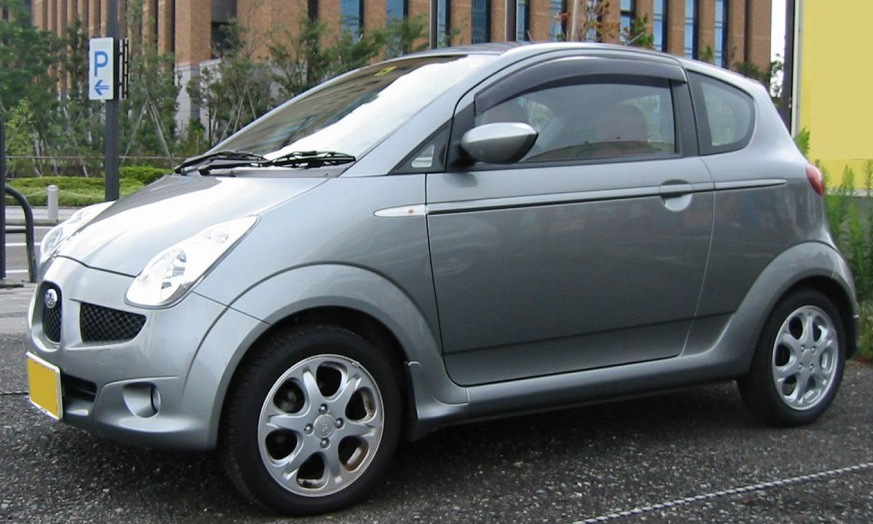
The Subaru R1 is a city car produced by Subaru between 2005 and 2010. Designed as a lightweight and fuel-efficient vehicle for urban environments, the R1 was primarily marketed in Japan, with limited exports to other markets including Europe and Australia. The 0.7-liter (45 hp) 2WD variant represents the base model of the R1 range, offering an affordable and economical entry point into Subaru ownership. It was positioned as a direct competitor to other kei cars and microcars popular in densely populated areas.
Technical Specifications
| Brand | Subaru |
| Model | R1 |
| Generation | R1 |
| Type (Engine) | 0.7 (45 Hp) 2WD |
| Start of production | 2005 |
| End of production | 2010 |
| Powertrain Architecture | Internal Combustion engine |
| Body type | Hatchback |
| Seats | 4 |
| Doors | 3 |
| Fuel Type | Petrol (Gasoline) |
| Power | 45 Hp @ 6400 rpm |
| Power per litre | 68.4 Hp/l |
| Torque | 56 Nm @ 4000 rpm / 41.3 lb.-ft. @ 4000 rpm |
| Engine layout | Front, Transverse |
| Engine Model/Code | EN07 |
| Engine displacement | 658 cm3 / 40.15 cu. in. |
| Number of cylinders | 4 |
| Engine configuration | Inline |
| Cylinder Bore | 56 mm / 2.2 in. |
| Piston Stroke | 66.8 mm / 2.63 in. |
| Compression ratio | 10:1 |
| Number of valves per cylinder | 4 |
| Fuel injection system | Multi-port manifold injection |
| Engine aspiration | Naturally aspirated engine |
| Valvetrain | OHC |
| Engine oil capacity | 2.4 l / 2.54 US qt | 2.11 UK qt |
| Fuel tank capacity | 30 l / 7.93 US gal | 6.6 UK gal |
| Length | 3285 mm / 129.33 in. |
| Width | 1475 mm / 58.07 in. |
| Height | 1510 mm / 59.45 in. |
| Wheelbase | 2195 mm / 86.42 in. |
| Front track | 1295 mm / 50.98 in. |
| Rear (Back) track | 1285 mm / 50.59 in. |
| Drivetrain Architecture | The Internal combustion engine (ICE) drives the front wheels of the vehicle. |
| Drive wheel | Front wheel drive |
| Front brakes | Ventilated discs |
| Rear brakes | Drum |
| Assisting systems | ABS (Anti-lock braking system) |
| Tires size | 155/65 R14 |
Powertrain & Engine Architecture
The Subaru R1 0.7 2WD is powered by the EN07, a 658cc inline-four cylinder engine. This engine utilizes a single overhead camshaft (OHC) valvetrain and multi-point fuel injection. The EN07 engine was designed with a focus on fuel efficiency and low emissions, typical of kei car regulations in Japan. The engine produces 45 horsepower at 6400 rpm and 56 Nm (41.3 lb-ft) of torque at 4000 rpm. The engine’s relatively small displacement and modest output are characteristic of the kei car class, prioritizing economy over outright performance. The engine is transversely mounted at the front of the vehicle. The R1 exclusively offered a 3-speed automatic transmission, designed for smooth and simple operation in city driving conditions. This transmission was chosen to enhance ease of use for the target demographic.
Driving Characteristics
The 0.7-liter R1 with the automatic transmission delivers modest performance. Acceleration is slow, and the vehicle is best suited for urban commutes and short trips. The 3-speed automatic transmission, while providing smooth shifts, lacks the responsiveness of a manual gearbox or a more modern automatic with additional gears. The gear ratios are optimized for fuel economy rather than spirited driving. Compared to potential higher-spec versions (which didn’t exist for the R1), the 0.7L automatic offers a significantly less engaging driving experience. The focus is on ease of use and low running costs, making it ideal for inexperienced drivers or those prioritizing practicality.
Equipment & Trim Levels
The base R1 0.7 2WD trim level was relatively sparsely equipped, reflecting its position as the entry-level model. Standard features typically included air conditioning, power steering, and basic audio system. Interior upholstery was typically cloth, and the dashboard featured a simple, functional design. Optional extras, depending on the market, could include alloy wheels, upgraded audio systems, and color-keyed exterior trim. The interior space, while adequate for its size, is limited, particularly in the rear seats. The R1’s design prioritized maximizing interior space within the constraints of the kei car dimensions.
Chassis & Braking
The Subaru R1 utilizes a front-wheel-drive layout with a MacPherson strut suspension in the front and a torsion beam suspension in the rear. The front brakes are ventilated discs, providing adequate stopping power for the vehicle’s weight and performance. The rear brakes are drums, a cost-saving measure common in this class of vehicle. ABS (Anti-lock Braking System) was standard, enhancing safety. The R1’s suspension is tuned for comfort and ride quality, prioritizing a smooth ride over sporty handling. The relatively narrow tires (155/65 R14) contribute to fuel efficiency and reduced rolling resistance.
Market Reception & Comparison
The Subaru R1 received mixed reviews. Critics praised its fuel efficiency, compact size, and ease of parking, making it well-suited for congested urban environments. However, the limited power and slow acceleration were frequently criticized. Compared to other kei cars available in Japan, the R1 offered a slightly more premium feel and a more refined interior. Its fuel economy was competitive with other vehicles in its class, and its reliability was generally considered good. However, the lack of a manual transmission option and the limited availability outside of Japan hampered its overall sales success.
Legacy
The Subaru R1, while not a commercial blockbuster, represents an interesting experiment in Subaru’s history. It demonstrated the company’s ability to design and build a compact, fuel-efficient city car. The EN07 engine proved to be relatively reliable, and well-maintained examples continue to be seen on the road today. In the used car market, the R1 is often sought after by enthusiasts looking for a unique and affordable vehicle. Its quirky styling and compact dimensions make it a distinctive choice. While not known for high performance or extensive features, the Subaru R1 0.7 2WD remains a testament to Subaru’s engineering ingenuity and its commitment to providing practical transportation solutions.
