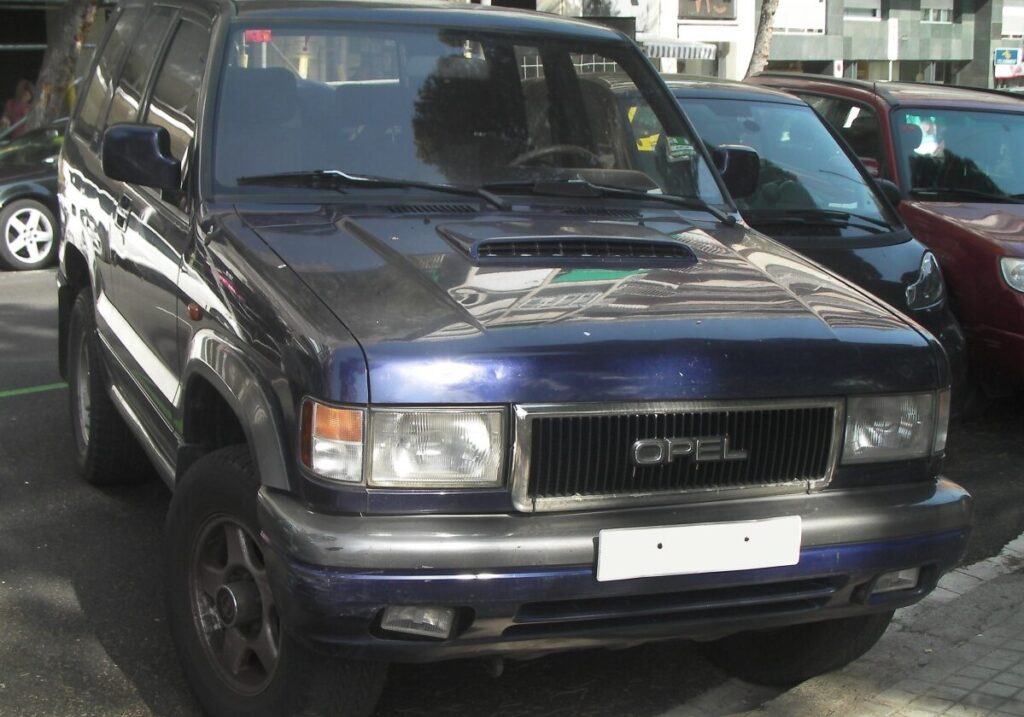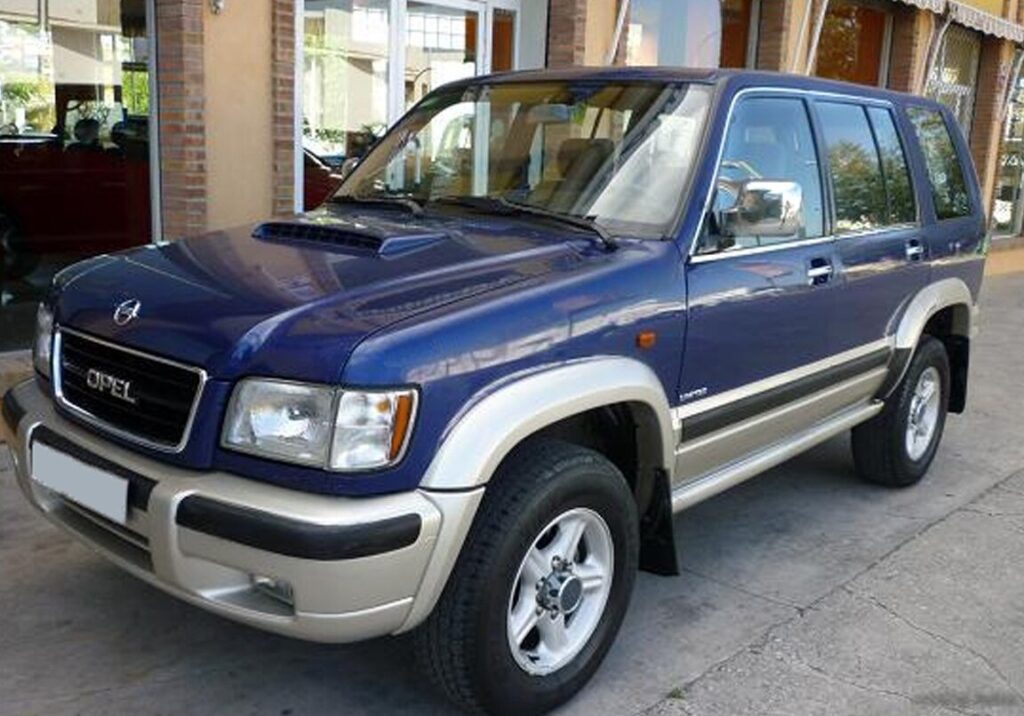
The Opel Monterey, particularly the facelifted version introduced in May 1998, represented Opel’s entry into the mid-size SUV segment. This iteration, running through June 1999, was largely based on the Isuzu Trooper/Bighorn, a result of GM’s partnership with Isuzu. The RS 3.5 V6 24V 4×4 Automatic variant was the top-of-the-line model, offering a blend of performance and capability aimed at buyers seeking a more refined SUV experience. It occupied the premium position within the Monterey lineup, distinguishing itself from the base models with its larger engine and automatic transmission.
Technical Specifications
| Brand | Opel |
| Model | Monterey |
| Generation | Monterey (facelift 1998) |
| Type (Engine) | RS 3.5 V6 24V (215 Hp) 4×4 Automatic |
| Start of production | May, 1998 |
| End of production | June, 1999 |
| Powertrain Architecture | Internal Combustion engine |
| Body type | SUV |
| Seats | 5 |
| Doors | 3 |
| Fuel consumption (urban) | 18.7 l/100 km (12.6 US mpg / 15.1 UK mpg / 5.3 km/l) |
| Fuel consumption (extra urban) | 10.7 l/100 km (22 US mpg / 26.4 UK mpg / 9.3 km/l) |
| Fuel Type | Petrol (Gasoline) |
| Acceleration 0 – 100 km/h | 11.3 sec |
| Acceleration 0 – 62 mph | 11.3 sec |
| Acceleration 0 – 60 mph | 10.7 sec |
| Maximum speed | 180 km/h (111.85 mph) |
| Weight-to-power ratio | 8.7 kg/Hp, 115.3 Hp/tonne |
| Weight-to-torque ratio | 6 kg/Nm, 166.2 Nm/tonne |
| Power | 215 Hp @ 5400 rpm |
| Power per litre | 61.5 Hp/l |
| Torque | 310 Nm @ 3000 rpm (228.64 lb.-ft. @ 3000 rpm) |
| Engine layout | Front, Longitudinal |
| Engine Model/Code | 6VE1 |
| Engine displacement | 3494 cm3 (213.22 cu. in.) |
| Number of cylinders | 6 |
| Engine configuration | V-engine |
| Cylinder Bore | 93.4 mm (3.68 in.) |
| Piston Stroke | 85 mm (3.35 in.) |
| Compression ratio | 9.4:1 |
| Number of valves per cylinder | 4 |
| Fuel injection system | Multi-port manifold injection |
| Engine aspiration | Naturally aspirated engine |
| Valvetrain | OHC |
| Engine oil capacity | 5.3 l (5.6 US qt | 4.66 UK qt) |
| Coolant | 8.5 l (8.98 US qt | 7.48 UK qt) |
| Kerb Weight | 1865 kg (4111.62 lbs.) |
| Max. weight | 2600 kg (5732.02 lbs.) |
| Max load | 735 kg (1620.4 lbs.) |
| Trunk (boot) space – minimum | 769 l (27.16 cu. ft.) |
| Trunk (boot) space – maximum | 2069 l (73.07 cu. ft.) |
| Fuel tank capacity | 85 l (22.45 US gal | 18.7 UK gal) |
| Length | 4365 mm (171.85 in.) |
| Width | 1835 mm (72.24 in.) |
| Height | 1830 mm (72.05 in.) |
| Wheelbase | 2330 mm (91.73 in.) |
| Front track | 1515 mm (59.65 in.) |
| Rear (Back) track | 1520 mm (59.84 in.) |
| Drive wheel | All wheel drive (4×4) |
| Number of gears and type of gearbox | 4 gears, automatic transmission |
| Front suspension | Torsion |
| Rear suspension | Trailing arm |
| Front brakes | Ventilated discs |
| Rear brakes | Ventilated discs |
| Assisting systems | ABS (Anti-lock braking system), Hydraulic Steering |
| Tires size | 215/80 R16 |
| Wheel rims size | 16 |
Powertrain & Engine Architecture
The heart of the Monterey RS was the 6VE1 engine, a 3.5-liter V6 producing 215 horsepower at 5400 rpm and 310 Nm (228.64 lb-ft) of torque at 3000 rpm. This engine, sourced from Isuzu, featured a 9.4:1 compression ratio and a multi-port fuel injection system. The engine utilized an overhead cam (OHC) valvetrain with four valves per cylinder, contributing to its relatively high output for the time. The engine was mounted longitudinally in the chassis. The automatic transmission was a four-speed unit, designed to provide smooth shifts and ease of use, though it wasn’t known for being particularly sporty or fuel-efficient.
Driving Characteristics
The 1865 kg curb weight of the Monterey RS, combined with the four-speed automatic transmission, resulted in a 0-60 mph time of around 10.7 seconds and a top speed of 111.85 mph. While not exceptionally quick, the engine provided adequate power for highway cruising and off-road driving. The automatic transmission prioritized comfort over performance, with relatively conservative gear ratios. Compared to the manual transmission versions of the Monterey, the automatic offered less driver engagement and slightly slower acceleration. The 3.5L V6 offered a more refined driving experience than the smaller engines available in other Monterey trims.
Equipment & Trim Levels
The RS trim level represented the most luxurious offering in the Monterey range. Standard features included air conditioning, power windows and locks, and an upgraded audio system. Interior upholstery typically consisted of cloth or leather, depending on optional packages. The dashboard layout was functional but not particularly modern, reflecting the vehicle’s origins. Optional extras included a sunroof, upgraded sound system, and alloy wheels. The RS trim also featured exterior enhancements such as unique badging and styling cues.
Chassis & Braking
The Monterey utilized a body-on-frame construction, common for SUVs of that era. The front suspension employed a torsion bar setup, while the rear featured a trailing arm design. This suspension configuration provided a reasonable balance between ride comfort and off-road capability. Braking duties were handled by ventilated discs on all four wheels, coupled with an Anti-lock Braking System (ABS) for enhanced safety. Hydraulic power steering was standard, providing relatively light steering effort.
Market Reception & Comparison
The Opel Monterey, and particularly the RS 3.5 V6 Automatic, received mixed reviews. Critics praised its spacious interior and off-road capability, but noted its relatively high fuel consumption (18.7 l/100 km urban, 10.7 l/100 km extra urban) and somewhat dated design. Compared to other SUVs on the market at the time, such as the Ford Explorer or Jeep Grand Cherokee, the Monterey offered a different proposition – a more rugged, less refined experience. The automatic transmission was often criticized for its lack of responsiveness and contribution to lower fuel economy compared to the manual versions.
Legacy
The Opel Monterey, while not a commercial success in the same vein as some of its competitors, remains a notable vehicle in Opel’s history. The 6VE1 engine, while not known for exceptional reliability, proved to be reasonably durable with proper maintenance. Today, the Monterey RS 3.5 V6 Automatic is a relatively rare vehicle, appealing to collectors and enthusiasts seeking a unique and capable SUV. Parts availability can be a challenge, given the vehicle’s age and limited production numbers. However, its robust construction and relatively simple mechanicals make it a potentially rewarding project for those willing to invest the time and effort.