
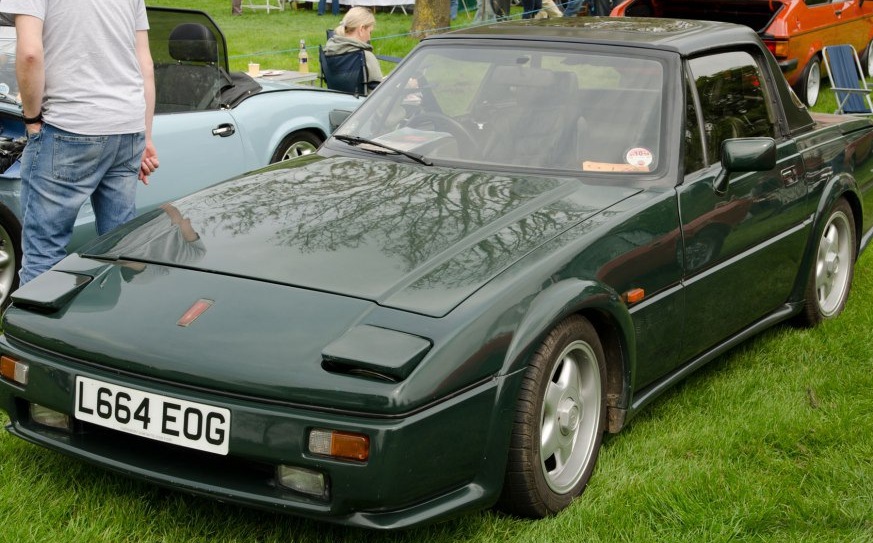
The Reliant Scimitar Sabre 1.4, producing 75 horsepower, was a short-lived but distinctive British sports car produced between 1992 and 1995. Representing a final iteration of the Scimitar line, it aimed to offer an affordable entry point into the Scimitar experience, though it faced challenges in a changing automotive market. The Sabre, built by Reliant Motors, continued the tradition of stylish, fiberglass-bodied cars, but with a more modern, albeit less powerful, engine than its predecessors. It was positioned as a relatively inexpensive, rear-wheel drive roadster, competing with other small sports cars of the era.
Technical Specifications
| Brand | Reliant |
| Model | Scimitar Sabre |
| Generation | Scimitar Sabre |
| Type (Engine) | 1.4 (75 Hp) |
| Start of production | 1992 |
| End of production | 1995 |
| Powertrain Architecture | Internal Combustion engine |
| Body type | Cabriolet |
| Seats | 2 |
| Doors | 2 |
| Fuel consumption (urban) | 10.4 l/100 km (22.6 US mpg, 27.2 UK mpg, 9.6 km/l) |
| Fuel consumption (extra urban) | 7.2 l/100 km (32.7 US mpg, 39.2 UK mpg, 13.9 km/l) |
| Fuel consumption (combined) | 8.9 l/100 km (26.4 US mpg, 31.7 UK mpg, 11.2 km/l) |
| Fuel Type | Petrol (Gasoline) |
| Acceleration 0 – 100 km/h | 13.4 sec |
| Acceleration 0 – 62 mph | 13.4 sec |
| Acceleration 0 – 60 mph | 12.7 sec |
| Maximum speed | 160 km/h (99.42 mph) |
| Weight-to-power ratio | 11.2 kg/Hp, 89.3 Hp/tonne |
| Weight-to-torque ratio | 7.7 kg/Nm, 129.8 Nm/tonne |
| Power | 75 Hp @ 5600 rpm |
| Power per litre | 53.9 Hp/l |
| Torque | 109 Nm @ 4000 rpm (80.39 lb.-ft. @ 4000 rpm) |
| Engine displacement | 1392 cm3 (84.95 cu. in.) |
| Number of cylinders | 4 |
| Engine configuration | Inline |
| Cylinder Bore | 77.24 mm (3.04 in.) |
| Piston Stroke | 74.3 mm (2.93 in.) |
| Compression ratio | 9.5:1 |
| Number of valves per cylinder | 2 |
| Fuel injection system | Carburettor |
| Engine aspiration | Naturally aspirated engine |
| Kerb Weight | 840 kg (1851.88 lbs.) |
| Max. weight | 1120 kg (2469.18 lbs.) |
| Max load | 280 kg (617.29 lbs.) |
| Trunk (boot) space – minimum | 190 l (6.71 cu. ft.) |
| Fuel tank capacity | 45 l (11.89 US gal | 9.9 UK gal) |
| Length | 3890 mm (153.15 in.) |
| Width | 1580 mm (62.2 in.) |
| Height | 1240 mm (48.82 in.) |
| Wheelbase | 2135 mm (84.06 in.) |
| Front track | 1300 mm (51.18 in.) |
| Rear (Back) track | 1320 mm (51.97 in.) |
| Minimum turning circle | 9.1 m (29.86 ft.) |
| Drivetrain Architecture | Rear wheel drive |
| Number of gears and type of gearbox | 5 gears, manual transmission |
| Front suspension | Spring Strut |
| Rear suspension | Spring Strut |
| Front brakes | Disc |
| Rear brakes | Drum |
| Assisting systems | ABS (Anti-lock braking system) |
| Tires size | 185/60 R14 |
| Wheel rims size | 14 |
Powertrain & Engine Architecture
The Scimitar Sabre 1.4 was powered by a 1392cc inline-four cylinder engine, producing 75 horsepower at 5600 rpm and 109 Nm (80.39 lb-ft) of torque at 4000 rpm. This engine, while a significant departure from the larger, more powerful V6 engines previously offered in the Scimitar, was chosen to lower the car’s price point and appeal to a broader market. The engine utilized a carburettor fuel injection system, a relatively outdated technology at the time, which contributed to its lower output and less refined performance compared to contemporary fuel-injected engines. The engine featured a 9.5:1 compression ratio and two valves per cylinder. The Sabre was exclusively offered with a five-speed manual transmission, driving the rear wheels. This rear-wheel drive configuration was a hallmark of the Scimitar line, providing a more engaging driving experience than front-wheel drive alternatives.
Driving Characteristics
The 1.4-liter engine in the Scimitar Sabre provided adequate, but not exhilarating, performance. Acceleration from 0-60 mph took around 12.7 seconds, and the top speed was approximately 99.42 mph. Compared to earlier Scimitar models with larger engines, the 1.4 felt noticeably slower, particularly during overtaking maneuvers. The five-speed manual transmission helped to keep the engine in its optimal power band, but the lack of torque meant frequent gear changes were necessary. The rear-wheel drive layout offered a balanced handling characteristic, but the relatively soft suspension and modest tires limited cornering grip. The Sabre was more suited to relaxed cruising than spirited driving.
Equipment & Trim Levels
The Scimitar Sabre 1.4 was offered with a relatively basic level of equipment, reflecting its position as the entry-level model. Standard features included cloth upholstery, a basic stereo system, and power steering. Optional extras included leather upholstery, alloy wheels, and a sunroof. The interior design was functional but lacked the refinement of more expensive sports cars. The dashboard layout was straightforward, with clearly marked gauges and easy-to-use controls. The Sabre’s cabin was relatively spacious for a two-seater roadster, offering comfortable seating for two adults.
Chassis & Braking
The Scimitar Sabre utilized a body-on-frame construction, with a steel chassis and a fiberglass body. The suspension consisted of independent spring struts at the front and a live axle with spring struts at the rear. The braking system featured disc brakes at the front and drum brakes at the rear. Anti-lock braking system (ABS) was included as standard equipment. The suspension was tuned for comfort rather than outright handling performance, providing a relatively smooth ride over uneven surfaces. The drum brakes at the rear were a cost-saving measure, and their performance was less effective than disc brakes, particularly under heavy braking.
Market Reception & Comparison
The Reliant Scimitar Sabre 1.4 received mixed reviews from automotive critics. While the car’s styling and rear-wheel drive layout were praised, the engine’s lack of power and the use of a carburettor were criticized. Compared to other small sports cars of the era, such as the Mazda MX-5 (Miata), the Sabre offered a more distinctive design but lacked the refinement and performance of its Japanese rival. Fuel economy was reasonable, averaging around 26.4 US mpg in combined driving. Reliability was generally good, but the carburettor required regular maintenance. The Sabre’s relatively low price made it an attractive option for budget-conscious buyers, but its limited performance and basic equipment level limited its appeal.
Legacy
The Reliant Scimitar Sabre 1.4 represents the final chapter in the Scimitar story. Production ended in 1995, and Reliant Motors subsequently ceased operations. Today, the Sabre is a relatively rare and collectible car, particularly in good condition. The 1.4-liter engine is generally considered reliable, but parts availability can be a challenge. The Sabre’s unique styling and rear-wheel drive layout continue to appeal to enthusiasts, and it remains a distinctive example of British sports car design. While not a performance icon, the Scimitar Sabre 1.4 offers a unique and affordable entry point into the world of classic British motoring.
