
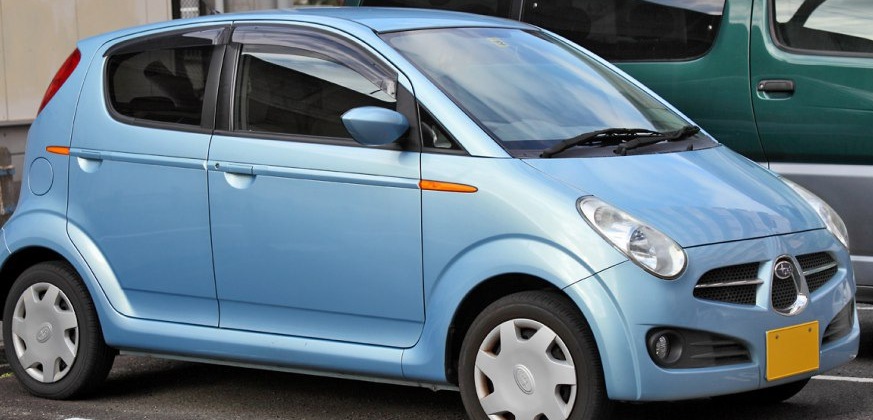
The Subaru R2 is a kei car that was produced by Subaru between December 2003 and March 2010. Positioned as an entry-level vehicle, the R2 aimed to provide affordable and practical transportation within the unique regulations governing Japan’s kei car class. The 0.7i 45 hp 2WD variant represents the base model of the R2 lineup, offering a no-frills, economical option for urban commuters. It was a direct competitor to other kei cars like the Daihatsu Mira and Suzuki Alto, focusing on fuel efficiency and ease of parking in crowded Japanese cities. While not officially sold in the United States, the R2 exemplifies the innovative engineering and compact design principles prevalent in the Japanese automotive industry.
Technical Specifications
| Brand | Subaru |
| Model | R2 |
| Generation | R2 |
| Type (Engine) | 0.7i (45 Hp) 2WD |
| Start of production | December, 2003 |
| End of production | March, 2010 |
| Powertrain Architecture | Internal Combustion engine |
| Body type | Hatchback |
| Seats | 5 |
| Doors | 5 |
| Fuel Type | Petrol (Gasoline) |
| Weight-to-power ratio | 17.1 kg/Hp, 58.4 Hp/tonne |
| Weight-to-torque ratio | 13.8 kg/Nm, 72.7 Nm/tonne |
| Power | 45 Hp @ 6400 rpm |
| Power per litre | 68.4 Hp/l |
| Torque | 56 Nm @ 4000 rpm, 41.3 lb.-ft. @ 4000 rpm |
| Engine layout | Front, Transverse |
| Engine Model/Code | EN07 |
| Engine displacement | 658 cm3, 40.15 cu. in. |
| Number of cylinders | 4 |
| Engine configuration | Inline |
| Cylinder Bore | 56 mm, 2.2 in. |
| Piston Stroke | 66.8 mm, 2.63 in. |
| Compression ratio | 10:1 |
| Number of valves per cylinder | 4 |
| Fuel injection system | Multi-port manifold injection |
| Engine aspiration | Naturally aspirated engine |
| Valvetrain | OHC |
| Engine oil capacity | 2.4 l, 2.54 US qt | 2.11 UK qt |
| Kerb Weight | 770 kg, 1697.56 lbs |
| Fuel tank capacity | 30 l, 7.93 US gal | 6.6 UK gal |
| Length | 3395 mm, 133.66 in. |
| Width | 1475 mm, 58.07 in. |
| Height | 1520 mm, 59.84 in. |
| Wheelbase | 2360 mm, 92.91 in. |
| Front track | 1295 mm, 50.98 in. |
| Rear (Back) track | 1285 mm, 50.59 in. |
| Drivetrain Architecture | The Internal combustion engine (ICE) drives the front wheels of the vehicle. |
| Drive wheel | Front wheel drive |
| Number of gears and type of gearbox | 5 gears, manual transmission |
| Front brakes | Ventilated discs |
| Rear brakes | Drum |
| Tires size | 155/65 R14 |
Powertrain & Engine Architecture
The Subaru R2 0.7i is powered by the EN07, a 658cc inline-four cylinder engine. This engine is a naturally aspirated unit, utilizing a multi-port fuel injection system to deliver fuel to the cylinders. The engine features an overhead camshaft (OHC) valvetrain, operating with four valves per cylinder. This configuration, while simple, was designed for reliability and fuel efficiency rather than outright performance. The engine produces 45 horsepower at 6400 rpm and 56 Nm (41.3 lb-ft) of torque at 4000 rpm. The engine’s small displacement and relatively low output are characteristic of kei cars, which are subject to strict limitations on engine size and power. The R2 0.7i was exclusively offered with a five-speed manual transmission in its base configuration, contributing to its affordability and driver engagement. The transmission is front-wheel drive, typical for kei cars, maximizing interior space and simplifying the drivetrain.
Driving Characteristics
The Subaru R2 0.7i 2WD, with its 45 horsepower, offers modest performance. Acceleration is slow, particularly when fully loaded, and it’s best suited for city driving. The five-speed manual transmission allows drivers to keep the engine in its optimal power band, but it still requires frequent shifting. Compared to potential higher-spec R2 variants (which were not widely available), the 0.7i lacks the punch needed for highway merging or overtaking. The gear ratios are tuned for economy, prioritizing fuel efficiency over rapid acceleration. Handling is adequate for its intended purpose, with light steering and a relatively soft suspension setup. The small size and tight turning radius make it exceptionally easy to maneuver in congested urban environments.
Equipment & Trim Levels
The base-level Subaru R2 0.7i was intentionally spartan in its equipment list to keep the price point low. Standard features typically included basic cloth upholstery, manual windows and door locks, and a simple instrument cluster. Air conditioning was often an optional extra. The interior design prioritized functionality over luxury, with durable plastics and a minimalist layout. Safety features were also basic, typically including dual airbags and seatbelts. The R2 0.7i served as the entry point to the R2 range, with higher trim levels offering features like power windows, central locking, and upgraded audio systems. However, the 0.7i’s appeal lay in its affordability and practicality.
Chassis & Braking
The Subaru R2 0.7i utilizes a relatively simple chassis design. The front suspension consists of MacPherson struts, while the rear suspension employs a torsion beam setup. This configuration is common in kei cars, balancing cost-effectiveness with acceptable ride quality. The braking system features ventilated discs on the front wheels and drum brakes on the rear. This combination was sufficient for the R2’s weight and performance capabilities. The relatively light curb weight of 770 kg (1697.56 lbs) contributes to its manageable handling characteristics. Stabilizer bars were not typically included on the base 0.7i model, further emphasizing its focus on affordability.
Market Reception & Comparison
The Subaru R2 0.7i was generally well-received in the Japanese market as a practical and economical kei car. Critics praised its fuel efficiency and ease of driving in urban environments. However, its limited power and basic equipment levels were also noted. Compared to other kei cars like the Daihatsu Mira and Suzuki Alto, the R2 offered a slightly more refined driving experience, thanks to Subaru’s engineering expertise. Fuel economy was competitive, typically achieving around 5.0-5.5 liters per 100 kilometers (47-51 mpg) in real-world driving conditions. Reliability was generally good, although the small engine could be prone to wear and tear if not properly maintained.
Legacy
The Subaru R2, while not a mainstream success outside of Japan, represents an important chapter in Subaru’s history. It demonstrated the company’s ability to design and manufacture a competitive kei car, catering to the specific needs of the Japanese market. The 0.7i variant, as the entry-level model, provided affordable transportation for a wide range of customers. In the used car market today, the R2 0.7i is relatively affordable and can be a good option for those seeking a unique and economical city car. However, potential buyers should be aware of the engine’s small displacement and the potential for age-related maintenance issues. The EN07 engine, while generally reliable, may require more frequent servicing as it ages. Overall, the Subaru R2 0.7i remains a testament to the ingenuity and practicality of Japanese automotive engineering.
