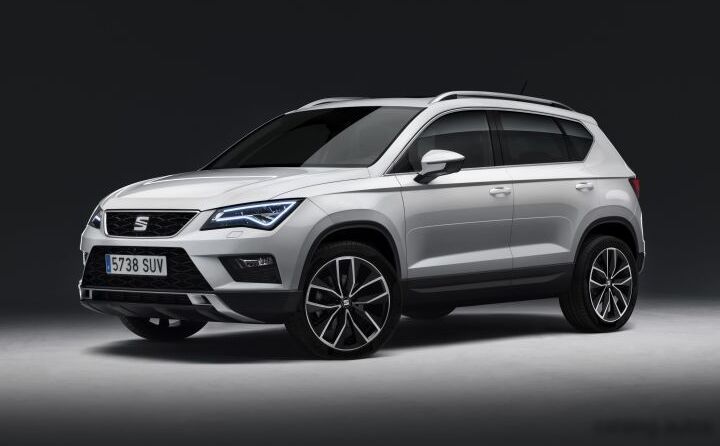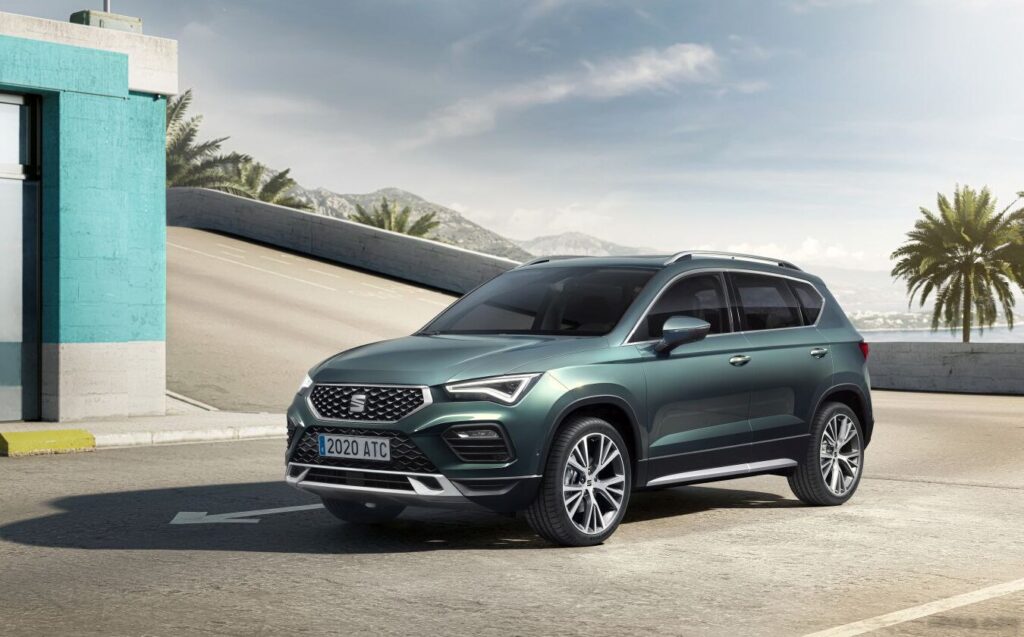
The Seat Ateca I (facelift, introduced in November 2020) 2.0 TDI 115 horsepower variant represents a key offering within the Ateca compact SUV range. Positioned as a fuel-efficient and practical option, this model aimed to provide a balance between affordability and capability for European buyers. Production continued through May 2023. The facelift brought styling updates and revised technology, building upon the success of the original Ateca, which was the first SUV from the Spanish brand. This particular engine and transmission combination served as a core trim level, appealing to customers prioritizing economy and everyday usability over outright performance.
Technical Specifications
| Brand | Seat |
| Model | Ateca |
| Generation | Ateca I (facelift 2020) |
| Type (Engine) | 2.0 TDI (115 Hp) |
| Start of production | November, 2020 |
| End of production | May, 2023 |
| Powertrain Architecture | Internal Combustion engine |
| Body type | SUV |
| Seats | 5 |
| Doors | 5 |
| Combined fuel consumption (WLTP) | 4.9-5.4 l/100 km (48 – 43.6 US mpg, 57.6 – 52.3 UK mpg, 20.4 – 18.5 km/l) |
| CO2 emissions (WLTP) | 127-142 g/km |
| Fuel consumption (urban) | 5.8 l/100 km (40.6 US mpg, 48.7 UK mpg, 17.2 km/l) |
| Fuel consumption (extra urban) | 3.8 l/100 km (61.9 US mpg, 74.3 UK mpg, 26.3 km/l) |
| Fuel consumption (combined) | 4.6 l/100 km (51.1 US mpg, 61.4 UK mpg, 21.7 km/l) |
| CO2 emissions (NEDC) | 120 g/km |
| Fuel Type | Diesel |
| Acceleration 0 – 100 km/h | 10.9 sec |
| Acceleration 0 – 62 mph | 10.9 sec |
| Acceleration 0 – 60 mph | 10.4 sec |
| Maximum speed | 185 km/h (114.95 mph) |
| Emission standard | Euro 6 AP |
| Weight-to-power ratio | 12.1 kg/Hp, 82.6 Hp/tonne |
| Weight-to-torque ratio | 4.6 kg/Nm, 215.4 Nm/tonne |
| Power | 115 Hp @ 2750-4250 rpm |
| Power per litre | 58.4 Hp/l |
| Torque | 300 Nm @ 1600-2500 rpm (221.27 lb.-ft. @ 1600-2500 rpm) |
| Engine layout | Front, Transverse |
| Engine Model/Code | DTR |
| Engine displacement | 1968 cm3 (120.09 cu. in.) |
| Number of cylinders | 4 |
| Engine configuration | Inline |
| Cylinder Bore | 81 mm (3.19 in.) |
| Piston Stroke | 95.5 mm (3.76 in.) |
| Compression ratio | 16:1 |
| Number of valves per cylinder | 4 |
| Fuel injection system | Diesel Commonrail |
| Engine aspiration | Turbocharger, Intercooler |
| Kerb Weight | 1393 kg (3071.04 lbs.) |
| Max. weight | 2000 kg (4409.25 lbs.) |
| Max load | 607 kg (1338.21 lbs.) |
| Trunk (boot) space – minimum | 510 l (18.01 cu. ft.) |
| Trunk (boot) space – maximum | 1604 l (56.64 cu. ft.) |
| Fuel tank capacity | 50 l (13.21 US gal | 11 UK gal) |
| Max. roof load | 75 kg (165.35 lbs.) |
| Permitted trailer load with brakes (12%) | 1500 kg (3306.93 lbs.) |
| Permitted trailer load without brakes | 730 kg (1609.37 lbs.) |
| Permitted towbar download | 88 kg (194.01 lbs.) |
| Length | 4381 mm (172.48 in.) |
| Width | 1841 mm (72.48 in.) |
| Width including mirrors | 2078 mm (81.81 in.) |
| Height | 1615 mm (63.58 in.) |
| Wheelbase | 2638 mm (103.86 in.) |
| Front track | 1576 mm (62.05 in.) |
| Rear track | 1541 mm (60.67 in.) |
| Front overhang | 871 mm (34.29 in.) |
| Rear overhang | 872 mm (34.33 in.) |
| Drivetrain Architecture | Front wheel drive |
| Number of gears | 6 |
| Gearbox type | Manual transmission |
| Front suspension | Independent type McPherson |
| Rear suspension | Semi-independent, coil spring |
| Front brakes | Ventilated discs |
| Rear brakes | Disc |
| Tires size | 215/55 R17; 215/50 R18; 235/40 R19 |
| Wheel rims size | 7J x 17; 7J x 18; 8J x 19 |
INTRODUCTION
The Seat Ateca 2.0 TDI 115 hp, introduced with the 2020 facelift, is a five-door compact SUV designed for the European market. Built on the Volkswagen Group’s MQB platform (specifically the A3 iteration, also known as 1HX0), the Ateca was Seat’s first foray into the popular SUV segment. The facelift brought updated styling, improved technology, and refinements to the engine lineup. This 115 hp diesel variant was positioned as an entry-level to mid-range option, offering a compelling blend of fuel efficiency, practicality, and value. It aimed to attract buyers seeking a versatile vehicle for daily commuting and family use.
Powertrain & Engine Architecture
At the heart of the Ateca 2.0 TDI 115 is the Volkswagen Group’s DTR engine. This is a 1968cc, four-cylinder diesel engine utilizing common rail direct injection and a turbocharger with intercooling. The engine produces 115 horsepower at 2750-4250 rpm and 300 Nm (221 lb-ft) of torque between 1600-2500 rpm. The engine features a 16:1 compression ratio and four valves per cylinder. The fuel injection system is a modern common rail system, allowing for precise fuel delivery and optimized combustion. This particular variant was exclusively offered with a six-speed manual transmission, sending power to the front wheels. The engine is transversely mounted, contributing to efficient packaging within the Ateca’s front-wheel-drive layout.
Driving Characteristics
The 115 hp 2.0 TDI with the six-speed manual transmission delivers adequate, though not exhilarating, performance. Acceleration from 0-100 km/h (0-62 mph) takes approximately 10.9 seconds. The engine’s strength lies in its mid-range torque, making it well-suited for everyday driving and overtaking maneuvers. The manual gearbox provides a direct connection to the engine, allowing drivers to make the most of the available power. Compared to higher-output TDI variants (like the 150 hp or 190 hp versions), this model feels less responsive, particularly at higher speeds. However, the trade-off is significantly improved fuel economy. The gear ratios are tuned for efficiency, prioritizing fuel savings over outright acceleration. The clutch feel is generally light, making it easy to operate in urban traffic.
Equipment & Trim Levels
The Ateca 2.0 TDI 115 typically came equipped with a respectable level of standard features. These included air conditioning, a touchscreen infotainment system with smartphone integration (Apple CarPlay and Android Auto), Bluetooth connectivity, and a suite of safety features such as ABS, ESC (Electronic Stability Control), and multiple airbags. Higher trim levels offered upgrades like automatic climate control, a larger touchscreen display, navigation system, parking sensors, and a rear-view camera. Interior upholstery was typically cloth, with options for leather or Alcantara available on higher trims. Exterior features included alloy wheels (size varying by trim), body-colored bumpers and door mirrors, and halogen headlights (LED headlights were available as an option).
Chassis & Braking
The Ateca utilizes a McPherson strut front suspension and a semi-independent torsion beam rear suspension. This setup provides a good balance between ride comfort and handling. The front brakes are ventilated discs, while the rear brakes are solid discs. ABS (Anti-lock Braking System) and ESC (Electronic Stability Control) are standard features, enhancing safety and stability. The steering is electric power-assisted, providing a light and responsive feel. Stabilizer bars are fitted to both the front and rear axles to reduce body roll during cornering. The suspension tuning is geared towards comfort, absorbing bumps and imperfections in the road surface effectively.
Market Reception & Comparison
The Seat Ateca 2.0 TDI 115 was generally well-received by automotive critics as a practical and economical SUV. It was praised for its fuel efficiency, comfortable ride, and spacious interior. However, some reviewers noted that the engine could feel underpowered, particularly when fully loaded or driving on steep inclines. Compared to the more powerful TDI variants, this model offered a lower price point, making it an attractive option for budget-conscious buyers. Its fuel economy figures (4.9-5.4 l/100 km) were competitive within its segment, making it a strong contender against rivals like the Nissan Qashqai and Kia Sportage. Reliability reports suggest that the 2.0 TDI engine is generally robust, although regular maintenance is crucial.
Legacy
The Seat Ateca 2.0 TDI 115 has established itself as a reliable and affordable used car option. The 2.0 TDI engine, while not the most powerful, is known for its durability and fuel efficiency. The manual transmission is also generally considered to be robust. As with any diesel vehicle, it’s important to ensure that the diesel particulate filter (DPF) has been properly maintained. Today, these models represent good value for money, offering a practical and economical SUV experience. The Ateca, in general, helped establish Seat as a serious player in the competitive SUV market, and this 115 hp diesel variant played a significant role in attracting a wider range of customers to the brand.