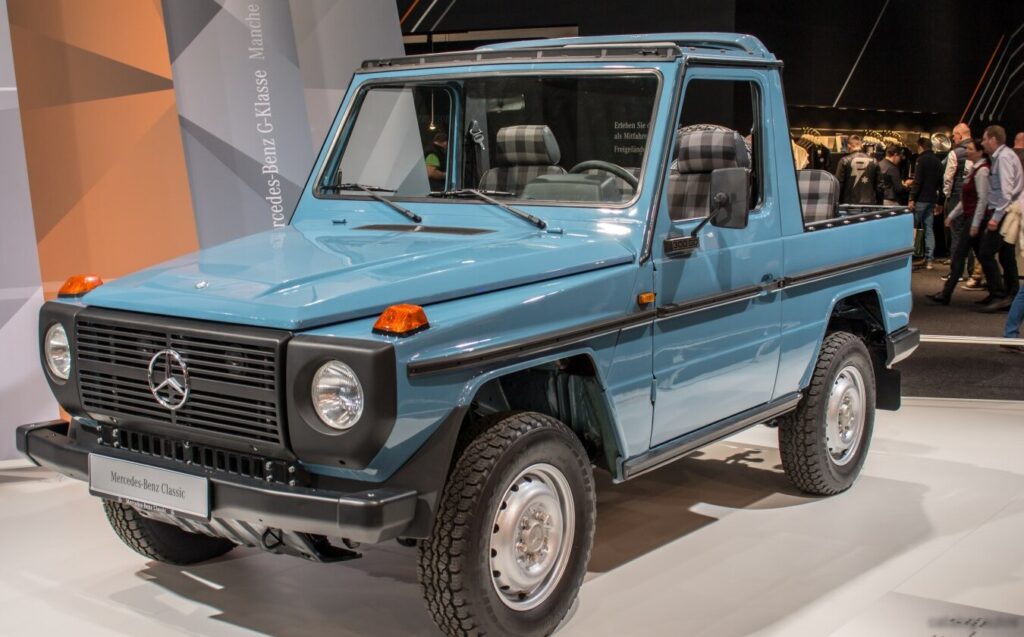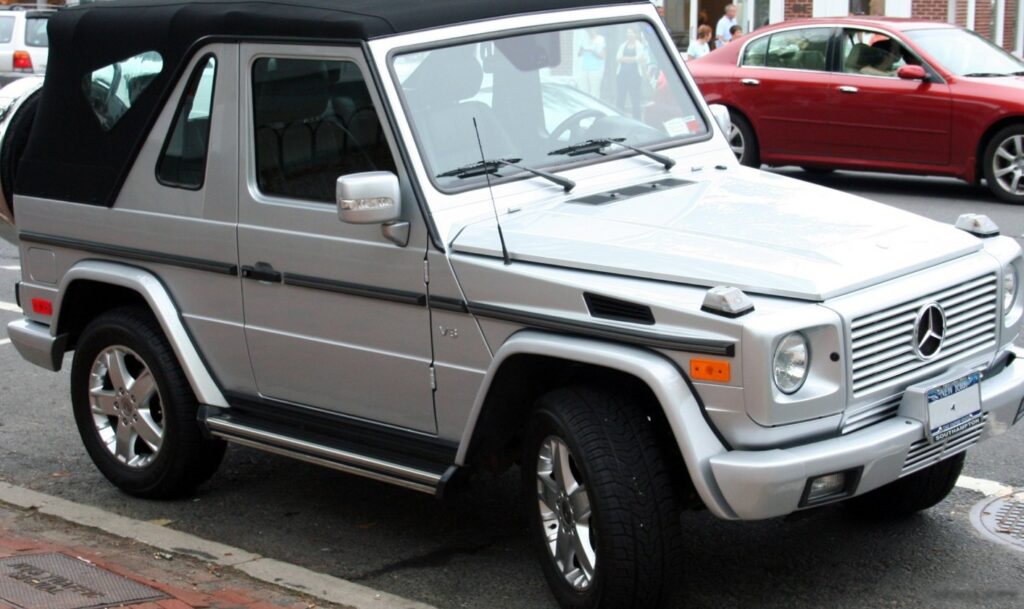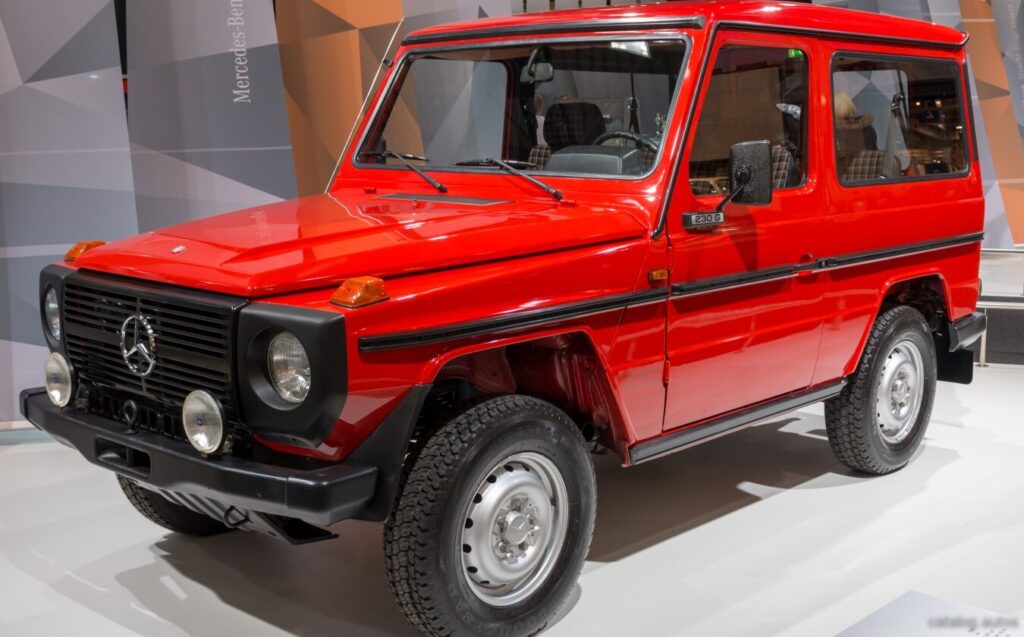
The Mercedes-Benz G-Class W460 230 G, produced from 1979 to 1982, represents the initial iteration of what would become an iconic off-road vehicle. Positioned as the entry-level model in the W460 series, the 230 G offered a more accessible price point compared to the larger-engined variants, while still retaining the G-Class’s legendary four-wheel-drive capability. It was originally conceived as a military vehicle, and the civilian version aimed to provide robust, utilitarian transport, particularly appealing to those needing a durable vehicle for rural or challenging terrains. The W460 platform, representing the first generation of the G-Wagen, laid the foundation for the vehicle’s enduring reputation for toughness and off-road prowess.
Technical Specifications
| Brand | Mercedes-Benz |
| Model | G-class |
| Generation | G-class (W460) |
| Type (Engine) | 230 G (90 Hp) 4WD |
| Start of production | 1979 |
| End of production | 1982 |
| Powertrain Architecture | Internal Combustion engine |
| Body type | Off-road vehicle |
| Seats | 5 |
| Doors | 3 |
| Fuel consumption (urban) | 19.2 l/100 km (12.3 US mpg, 14.7 UK mpg, 5.2 km/l) |
| Fuel consumption (extra urban) | 12.5 l/100 km (18.8 US mpg, 22.6 UK mpg, 8 km/l) |
| Fuel Type | Petrol (Gasoline) |
| Maximum speed | 128 km/h (79.54 mph) |
| Weight-to-power ratio | 19.7 kg/Hp, 50.7 Hp/tonne |
| Weight-to-torque ratio | 10.6 kg/Nm, 94.1 Nm/tonne |
| Power | 90 Hp @ 5000 rpm |
| Power per litre | 39 Hp/l |
| Torque | 167 Nm @ 2500 rpm (123.17 lb.-ft. @ 2500 rpm) |
| Engine layout | Front, Longitudinal |
| Engine Model/Code | M 115.973 |
| Engine displacement | 2307 cm3 (140.78 cu. in.) |
| Number of cylinders | 4 |
| Engine configuration | Inline |
| Cylinder Bore | 93.7 mm (3.69 in.) |
| Piston Stroke | 83.6 mm (3.29 in.) |
| Compression ratio | 8:1 |
| Number of valves per cylinder | 2 |
| Fuel injection system | Carburettor |
| Engine aspiration | Naturally aspirated engine |
| Valvetrain | SOHC |
| Engine oil capacity | 5.5 l (5.81 US qt, 4.84 UK qt) |
| Coolant capacity | 10.7 l (11.31 US qt, 9.41 UK qt) |
| Kerb Weight | 1775 kg (3913.21 lbs.) |
| Max. weight | 2500 kg (5511.56 lbs.) |
| Max load | 725 kg (1598.35 lbs.) |
| Trunk (boot) space – minimum | 743 l (26.24 cu. ft.) |
| Trunk (boot) space – maximum | 1730 l (61.09 cu. ft.) |
| Fuel tank capacity | 75 l (19.81 US gal, 16.5 UK gal) |
| Permitted trailer load with brakes (12%) | 2500 kg (5511.56 lbs.) |
| Permitted trailer load without brakes | 750 kg (1653.47 lbs.) |
| Length | 4145 mm (163.19 in.) |
| Width | 1700 mm (66.93 in.) |
| Height | 1985 mm (78.15 in.) |
| Wheelbase | 2400 mm (94.49 in.) |
| Front track | 1425 mm (56.1 in.) |
| Rear track | 1425 mm (56.1 in.) |
| Front overhang | 745 mm (29.33 in.) |
| Rear overhang | 800 mm (31.5 in.) |
| Ride height (ground clearance) | 215 mm (8.46 in.) |
| Minimum turning circle | 11.4 m (37.4 ft.) |
| Approach angle | 45° |
| Departure angle | 40° |
| Ramp-over angle | 31° |
| Climb angle | 38.7° |
| Wading depth | 600 mm (23.62 in.) |
| Drivetrain Architecture | The Internal combustion engine (ICE) drives the rear wheels permanently, and the front wheels are driven through an electrically or mechanically operated clutch if necessary. |
| Drive wheel | All wheel drive (4×4) |
| Number of gears and type of gearbox | 4 gears, manual transmission |
| Front suspension | Coil spring, Rigid axle suspension, Transverse stabilizer, Trailing arm |
| Rear suspension | Rigid axle suspension, Trailing arm, Coil spring |
| Front brakes | Disc, 303 mm |
| Rear brakes | Drum, 260 mm |
| Steering type | Cone worm with recirculation balls |
| Tires size | 205/80 R16 |
| Wheel rims size | 5.5J x 16 |
Powertrain & Engine Architecture
The 230 G was powered by the Mercedes-Benz M 115.973 engine, a 2.3-liter inline-four cylinder gasoline engine. This engine, while relatively modest in output by modern standards, was known for its durability and torque characteristics. It featured a single overhead camshaft (SOHC) valvetrain and a compression ratio of 8:1. Fuel delivery was handled by a carburetor, a common feature for the time, rather than fuel injection. The engine produced 90 horsepower at 5000 rpm and 167 Nm (123.17 lb-ft) of torque at 2500 rpm. The engine was mounted longitudinally in the front of the vehicle. The standard transmission was a four-speed manual gearbox, designed to provide a balance of usability and robustness for off-road conditions. The drivetrain employed a permanent rear-wheel-drive system with a selectable four-wheel-drive mode, engaged via an electrically or mechanically operated clutch.
Driving Characteristics
The 230 G, with its 90 horsepower and manual transmission, offered a driving experience focused on capability rather than outright speed. Acceleration was modest, and the vehicle felt most comfortable at steady cruising speeds. The four-speed gearbox, while durable, had relatively wide gear ratios, meaning the engine often operated at higher revs during highway driving. The 4WD system, when engaged, provided excellent traction in challenging terrain, making the 230 G a capable off-road performer. Compared to later, more powerful G-Class models (like those with the inline-six engines), the 230 G felt underpowered, particularly when fully loaded or tackling steep inclines. However, its lower weight and simpler mechanicals contributed to its reliability and ease of maintenance.
Equipment & Trim Levels
The 230 G was typically equipped with basic, utilitarian features reflecting its intended purpose. Standard equipment included steel wheels, vinyl upholstery, and a simple dashboard layout. Options were limited but could include features like upgraded seating materials, a sunroof, and auxiliary lighting. The interior was functional and durable, prioritizing practicality over luxury. The 230 G represented the base trim level, with higher-spec models offering more refined interiors and additional features.
Chassis & Braking
The W460 G-Class featured a robust ladder-frame chassis, providing exceptional strength and rigidity. Suspension consisted of coil springs and rigid axles front and rear, with trailing arms and a transverse stabilizer bar at the front. This setup provided good articulation for off-road driving, but the ride quality on paved roads was firm. Braking was accomplished via disc brakes at the front and drum brakes at the rear. The braking system, while adequate for the vehicle’s weight and performance, lacked the sophistication of more modern systems.
Market Reception & Comparison
The 230 G was generally well-received as a capable and durable off-road vehicle. Critics praised its robust construction and four-wheel-drive system, but noted its relatively low power output and basic interior. Compared to the more expensive G-Class variants, the 230 G offered a more affordable entry point into the G-Wagen world. Fuel economy, while not a primary concern for G-Class buyers, was relatively poor, reflecting the engine’s carbureted fuel delivery system and the vehicle’s weight. Reliability was generally good, although maintenance could be demanding due to the vehicle’s age and mechanical complexity.
Legacy
The 230 G, while the least powerful and least luxurious of the initial W460 G-Class models, played a crucial role in establishing the G-Wagen’s reputation for toughness and off-road capability. Today, these early G-Class models are sought after by collectors and enthusiasts, particularly those who appreciate their simplicity and rugged charm. The M 115 engine, while not known for its high performance, is considered relatively reliable when properly maintained. Finding well-preserved examples can be challenging, as many were used extensively in demanding conditions. The 230 G represents a significant piece of automotive history, embodying the original spirit of the G-Class as a no-nonsense, go-anywhere vehicle.