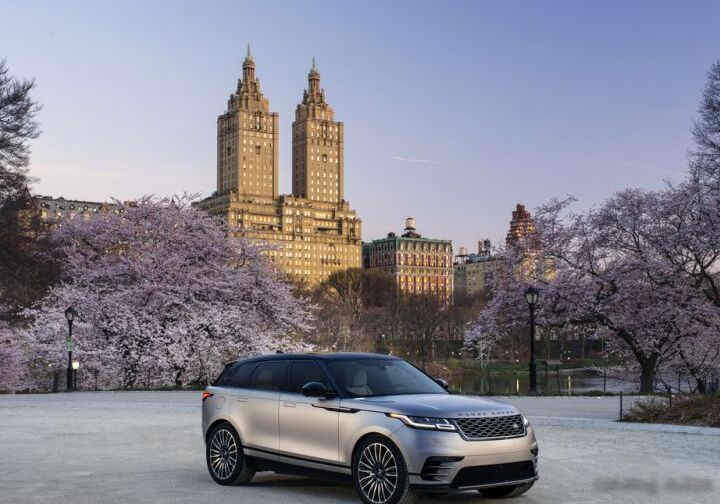
The Land Rover Range Rover Velar D 180 2.0, produced from 2017 to 2020, represents an entry point into the Velar lineup, offering a blend of luxury, capability, and relatively efficient diesel power. Positioned below the higher-output diesel and petrol variants, the D 180 was aimed at buyers prioritizing fuel economy and a comfortable driving experience over outright performance. It slots into the first generation of the Velar (L561), which debuted as a crucial model bridging the gap between the Evoque and the full-size Range Rover, utilizing the Premium Lightweight Architecture (PLA) platform also found in the Jaguar F-Pace. This variant was primarily sold in European and international markets, with limited availability in the United States due to tightening diesel regulations.
Technical Specifications
| Brand | Land Rover |
| Model | Range Rover Velar |
| Type (Engine) | D 180 2.0 (180 Hp) AWD Automatic |
| Start of production | 2017 |
| End of production | 2020 |
| Powertrain Architecture | Internal Combustion engine |
| Body type | SUV |
| Seats | 5 |
| Doors | 5 |
| Fuel consumption (urban) | 6.2 l/100 km (37.9 US mpg, 45.6 UK mpg, 16.1 km/l) |
| Fuel consumption (extra urban) | 4.9 l/100 km (48 US mpg, 57.6 UK mpg, 20.4 km/l) |
| Fuel consumption (combined) | 5.4 l/100 km (43.6 US mpg, 52.3 UK mpg, 18.5 km/l) |
| CO2 emissions | 142 g/km |
| Fuel Type | Diesel |
| Acceleration 0 – 100 km/h | 8.9 sec |
| Acceleration 0 – 62 mph | 8.9 sec |
| Acceleration 0 – 60 mph | 8.5 sec |
| Maximum speed | 209 km/h (129.87 mph) |
| Emission standard | Euro 6 |
| Weight-to-power ratio | 10.2 kg/Hp, 98.4 Hp/tonne |
| Weight-to-torque ratio | 4.3 kg/Nm, 235.1 Nm/tonne |
| Power | 180 Hp @ 4000 rpm |
| Power per litre | 90 Hp/l |
| Torque | 430 Nm @ 1500 rpm (317.15 lb.-ft. @ 1500 rpm) |
| Engine layout | Front, Longitudinal |
| Engine Model/Code | Ingenium / AJ20D4 |
| Engine displacement | 1999 cm3 (121.99 cu. in.) |
| Number of cylinders | 4 |
| Engine configuration | Inline |
| Cylinder Bore | 83 mm (3.27 in.) |
| Piston Stroke | 92.4 mm (3.64 in.) |
| Compression ratio | 15.5:1 |
| Number of valves per cylinder | 4 |
| Fuel injection system | Diesel Commonrail |
| Engine aspiration | Turbocharger, Intercooler |
| Valvetrain | DOHC |
| Engine oil capacity | 6.5 l (6.87 US qt | 5.72 UK qt) |
| Coolant | 11 l (11.62 US qt | 9.68 UK qt) |
| Kerb Weight | 1829 kg (4032.25 lbs.) |
| Trunk (boot) space – minimum | 673 l (23.77 cu. ft.) |
| Trunk (boot) space – maximum | 1731 l (61.13 cu. ft.) |
| Fuel tank capacity | 60 l (15.85 US gal | 13.2 UK gal) |
| AdBlue tank | 17 l (4.49 US gal | 3.74 UK gal) |
| Permitted trailer load with brakes (8%) | 2400 kg (5291.09 lbs.) |
| Permitted trailer load without brakes | 750 kg (1653.47 lbs.) |
| Length | 4803 mm (189.09 in.) |
| Width with mirrors folded | 2032 mm (80 in.) |
| Width including mirrors | 2145 mm (84.45 in.) |
| Height | 1665 mm (65.55 in.) |
| Wheelbase | 2874 mm (113.15 in.) |
| Front track | 1640-1644 mm (64.57 – 64.72 in.) |
| Rear (Back) track | 1657-1663 mm (65.24 – 65.47 in.) |
| Ride height (ground clearance) | 213-251 mm (8.39 – 9.88 in.) |
| Drag coefficient (Cd) | 0.32 |
| Minimum turning circle (turning diameter) | 11.6 m (38.06 ft.) |
| Approach angle | 25.93- 28.89° |
| Departure angle | 27.3-29.5° |
| Ramp-over (brakeover) angle | 21-23.5° |
| Wading depth | 600-650 mm (23.62 – 25.59 in.) |
| Drive wheel | All wheel drive (4×4) |
| Number of gears and type of gearbox | 8 gears, automatic transmission |
| Front suspension | Double wishbone |
| Rear suspension | Independent multi-link suspension |
| Front brakes | Ventilated discs |
| Rear brakes | Ventilated discs |
| Assisting systems | ABS (Anti-lock braking system) |
| Steering type | Steering rack and pinion |
| Power steering | Electric Steering |
Powertrain & Engine Architecture
The D 180 variant utilizes Land Rover’s Ingenium engine family, specifically the AJ20D4 2.0-liter four-cylinder diesel. This engine is characterized by its all-aluminum construction, intended to reduce weight and improve efficiency. It employs a turbocharger with variable geometry, along with direct injection and a high compression ratio of 15.5:1. The fuel injection system is a common rail diesel injection (CRDI) system, delivering precise fuel metering for optimized combustion. The engine produces 180 horsepower at 4000 rpm and 430 Nm (317 lb-ft) of torque from as low as 1500 rpm. The engine is longitudinally mounted, driving all four wheels through an eight-speed automatic transmission developed by ZF. This transmission is known for its smooth shifts and wide gear ratio spread, contributing to both fuel efficiency and acceptable acceleration.
Driving Characteristics
The Velar D 180 offers a comfortable and refined driving experience, prioritizing smoothness over outright speed. The 8-speed automatic transmission is well-matched to the engine’s torque curve, providing adequate acceleration for everyday driving. While 0-60 mph takes around 8.5 seconds, the engine feels more responsive in the mid-range, making overtaking maneuvers manageable. Compared to the more powerful D200 or petrol variants, the D 180 feels noticeably less urgent. The automatic transmission, while smooth, can sometimes hesitate during quick downshifts. The all-wheel-drive system provides good traction in various conditions, enhancing stability and confidence. The gear ratios are tuned for efficiency, resulting in relatively low engine speeds at highway cruising speeds.
Equipment & Trim Levels
The D 180 typically came standard with features such as leather upholstery, dual-zone climate control, an 8-inch touchscreen infotainment system with navigation, and a suite of safety features including autonomous emergency braking and lane departure warning. Optional extras included a panoramic sunroof, upgraded sound systems (Meridian), adaptive cruise control, and various interior trim upgrades. The trim levels varied by market, but generally included a base model and higher-spec ‘S’ and ‘SE’ trims, with the latter adding more luxurious appointments and technology features. Exterior styling remained consistent across trims, with the D 180 sharing the Velar’s sleek and modern design language.
Chassis & Braking
The Velar’s chassis features a double-wishbone front suspension and an independent multi-link rear suspension, providing a comfortable ride and good handling characteristics. The D 180 variant typically used ventilated disc brakes on all four wheels, offering adequate stopping power for its weight class. ABS (Anti-lock Braking System) is standard. The suspension tuning is geared towards comfort, with a focus on absorbing bumps and providing a stable ride. Stabilizer bars are fitted front and rear to reduce body roll during cornering. The steering is electrically assisted, providing a light and precise feel.
Market Reception & Comparison
The Range Rover Velar D 180 was generally well-received by critics for its stylish design, comfortable interior, and fuel efficiency. However, some reviewers noted that the engine felt underpowered compared to the higher-output variants. Compared to the D200, the D 180 offered a more affordable entry point into the Velar range, but at the expense of performance. Fuel economy was a strong point, with combined figures around 43.6 US mpg, making it a competitive option in its class. Reliability reports have been generally positive, although some owners have reported minor issues with the infotainment system.
Legacy
The Velar D 180, while not the most powerful variant, remains a popular choice in the used car market due to its attractive styling, comfortable ride, and relatively low running costs. The Ingenium engine has proven to be generally reliable, although regular maintenance is crucial. As diesel vehicle values have fluctuated in recent years, the D 180 represents a relatively affordable way to experience Range Rover luxury and capability. Its blend of efficiency and refinement continues to appeal to buyers seeking a practical and stylish SUV.