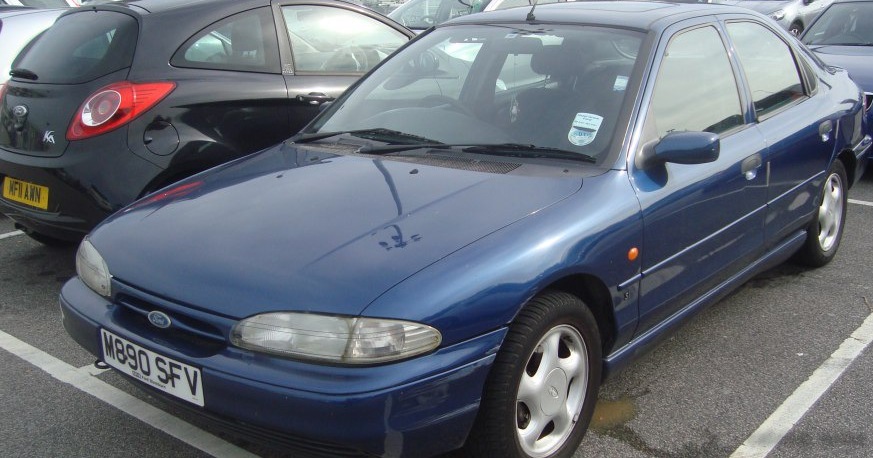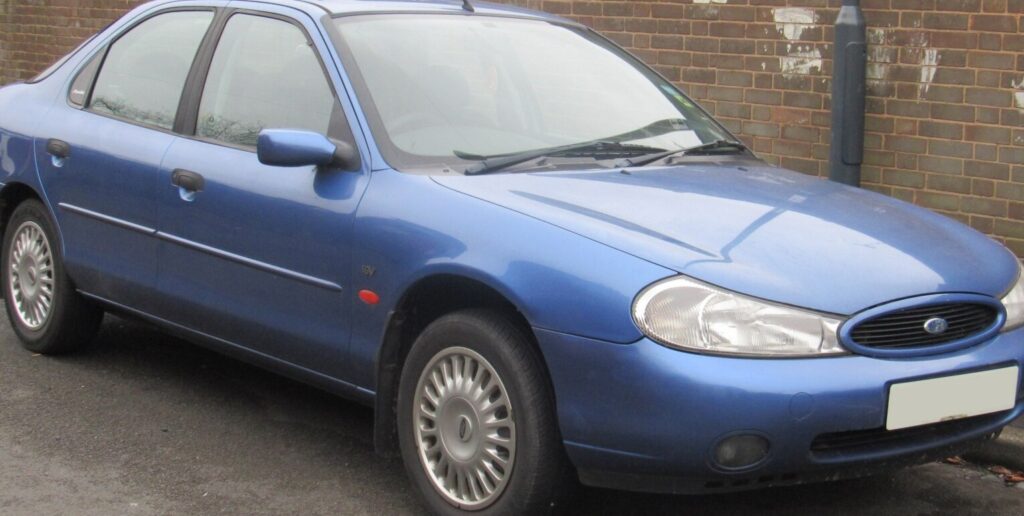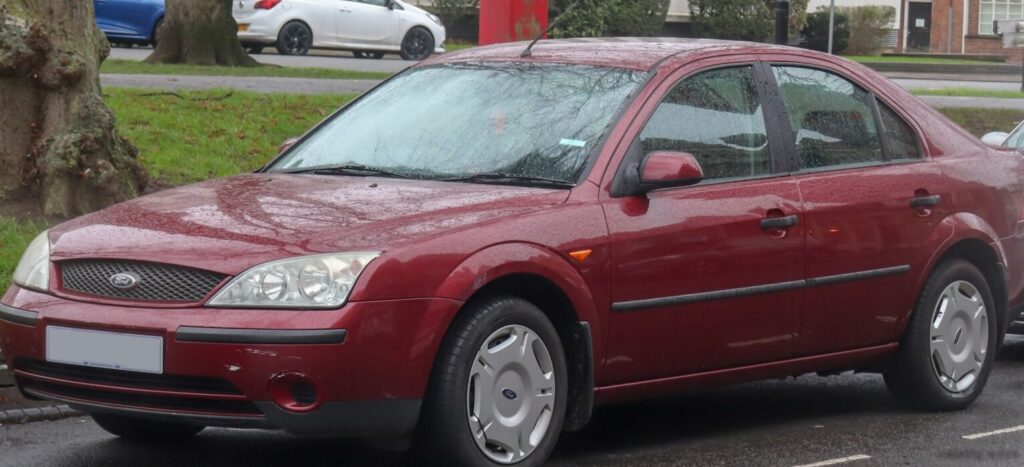
The Ford Mondeo II Hatchback 2.2 TDCi, produced between 2003 and 2007, represented a significant step forward for Ford’s mid-size offering in the European market. Positioned as a more premium and technologically advanced alternative to rivals like the Vauxhall/Opel Vectra and Volkswagen Passat, the Mondeo II aimed to deliver a blend of comfort, practicality, and driving enjoyment. The 2.2 TDCi variant, boasting 155 horsepower, was a popular choice, offering a balance between fuel efficiency and performance. It sat towards the upper end of the Mondeo II range, appealing to drivers needing more power than the base petrol engines but not necessarily desiring the flagship performance of potential future variants.
Technical Specifications
| Brand | Ford |
| Model | Mondeo |
| Generation | Mondeo II Hatchback |
| Type (Engine) | 2.2 TDCi (155 Hp) |
| Start of production | 2003 |
| End of production | 2007 |
| Powertrain Architecture | Internal Combustion engine |
| Body type | Hatchback |
| Seats | 5 |
| Doors | 5 |
| Fuel consumption (urban) | 8.2 l/100 km (28.7 US mpg) |
| Fuel consumption (extra urban) | 4.9 l/100 km (48 US mpg) |
| Fuel Type | Diesel |
| Acceleration 0 – 100 km/h | 8.7 sec |
| Acceleration 0 – 62 mph | 8.7 sec |
| Acceleration 0 – 60 mph | 8.3 sec |
| Maximum speed | 223 km/h (138.57 mph) |
| Weight-to-power ratio | 9.1 kg/Hp |
| Weight-to-torque ratio | 3.9 kg/Nm |
| Power | 155 Hp @ 3500 rpm |
| Torque | 360 Nm @ 1800 rpm (265.52 lb.-ft. @ 1800 rpm) |
| Engine layout | Front, Transverse |
| Engine Model/Code | QJBA, QJBB |
| Engine displacement | 2198 cm3 (134.13 cu. in.) |
| Number of cylinders | 4 |
| Engine configuration | Inline |
| Cylinder Bore | 86 mm (3.39 in.) |
| Piston Stroke | 94.6 mm (3.72 in.) |
| Compression ratio | 17.5:1 |
| Number of valves per cylinder | 4 |
| Fuel injection system | Diesel Commonrail |
| Engine aspiration | Turbocharger, Intercooler |
| Engine oil capacity | 6.7 l (7.08 US qt | 5.9 UK qt) |
| Coolant capacity | 10.4 l (10.99 US qt | 9.15 UK qt) |
| Kerb Weight | 1410 kg (3108.52 lbs.) |
| Max. weight | 2015 kg (4442.31 lbs.) |
| Max load | 605 kg (1333.8 lbs.) |
| Trunk (boot) space – minimum | 500 l (17.66 cu. ft.) |
| Trunk (boot) space – maximum | 1370 l (48.38 cu. ft.) |
| Fuel tank capacity | 56 l (14.79 US gal | 12.32 UK gal) |
| Length | 4731 mm (186.26 in.) |
| Width | 1812 mm (71.34 in.) |
| Height | 1429 mm (56.26 in.) |
| Wheelbase | 2754 mm (108.43 in.) |
| Front track | 1522 mm (59.92 in.) |
| Rear track | 1537 mm (60.51 in.) |
| Drivetrain Architecture | Front wheel drive |
| Number of gears | 6 |
| Gearbox type | Manual transmission |
| Front suspension | Wishbone |
| Rear suspension | Several levers and rods |
| Front brakes | Ventilated discs |
| Rear brakes | Disc |
| Assisting systems | ABS (Anti-lock braking system) |
| Steering type | Steering rack and pinion |
| Power steering | Hydraulic |
| Tires size | 205/55 R16 |
Powertrain & Engine Architecture
The heart of the Mondeo II 2.2 TDCi was the QJBA or QJBB engine, a four-cylinder diesel utilizing common rail direct injection. This engine was part of Ford’s Duratorq family, known for its robust construction and relatively refined operation for a diesel of its era. The 2.2-liter displacement provided a good balance between power and fuel economy. The common rail system, supplied by Bosch, allowed for precise control of fuel delivery, contributing to improved combustion efficiency and reduced emissions. A turbocharger with an intercooler further enhanced performance, boosting power output to 155 hp and delivering a substantial 360 Nm (265 lb-ft) of torque. The engine featured a four-valve-per-cylinder configuration and a compression ratio of 17.5:1. The six-speed manual transmission was the standard offering, providing well-spaced gear ratios to maximize the engine’s torque curve and deliver responsive acceleration.
Driving Characteristics
The 2.2 TDCi Mondeo offered a noticeably more spirited driving experience than the lower-powered petrol variants. The abundant torque, available from as low as 1800 rpm, made it particularly well-suited for everyday driving and overtaking maneuvers. While not a sports car, the Mondeo II 2.2 TDCi felt composed and stable at highway speeds. The six-speed gearbox allowed drivers to keep the engine in its optimal power band, resulting in brisk acceleration. Compared to the later 2.0-liter TDCi engines, the 2.2 offered a more relaxed feel at cruising speeds, with less need for frequent gear changes. The manual transmission, while precise, wasn’t particularly sporty in its feel, prioritizing smooth operation over outright engagement.
Equipment & Trim Levels
The 2.2 TDCi trim typically included features such as air conditioning, power windows, power mirrors, and a basic audio system. Higher trim levels, such as Ghia, added luxuries like leather upholstery, alloy wheels, automatic climate control, and upgraded audio systems. Optional extras included a sunroof, parking sensors, and a navigation system. Interior materials were generally of good quality for the price point, although the dashboard design was somewhat conservative. The Mondeo II offered a spacious cabin with ample room for passengers and luggage, making it a practical choice for families.
Chassis & Braking
The Mondeo II utilized an independent front suspension with MacPherson struts and a multi-link rear suspension. This setup provided a comfortable ride quality while maintaining good handling characteristics. The 2.2 TDCi models typically featured ventilated front disc brakes and solid rear disc brakes. Anti-lock Braking System (ABS) was standard, enhancing safety. Steering was via a hydraulic power steering system, offering a good balance between assistance and feel. The suspension was tuned to prioritize comfort, but the Mondeo II still offered a reasonably engaging driving experience, particularly on winding roads.
Market Reception & Comparison
The Mondeo II 2.2 TDCi was generally well-received by automotive critics. It was praised for its comfortable ride, spacious interior, and strong engine performance. Fuel economy was also a strong point, making it an attractive option for drivers covering long distances. Compared to the petrol variants, the 2.2 TDCi offered significantly better fuel efficiency and a more relaxed driving experience. However, some critics noted that the diesel engine was slightly noisier than the petrol engines. Reliability was generally good, although some owners reported issues with the fuel injection system and turbocharger over the long term.
Legacy
The Ford Mondeo II 2.2 TDCi remains a popular choice in the used car market, particularly for those seeking a practical and reliable family car. The Duratorq engine, while not without its potential issues, is generally considered to be durable and capable of high mileage with proper maintenance. Parts availability is good, and repair costs are relatively reasonable. The Mondeo II 2.2 TDCi represents a significant milestone in Ford’s history, demonstrating the company’s commitment to producing well-engineered and competitively priced vehicles. It laid the foundation for the continued success of the Mondeo model line.