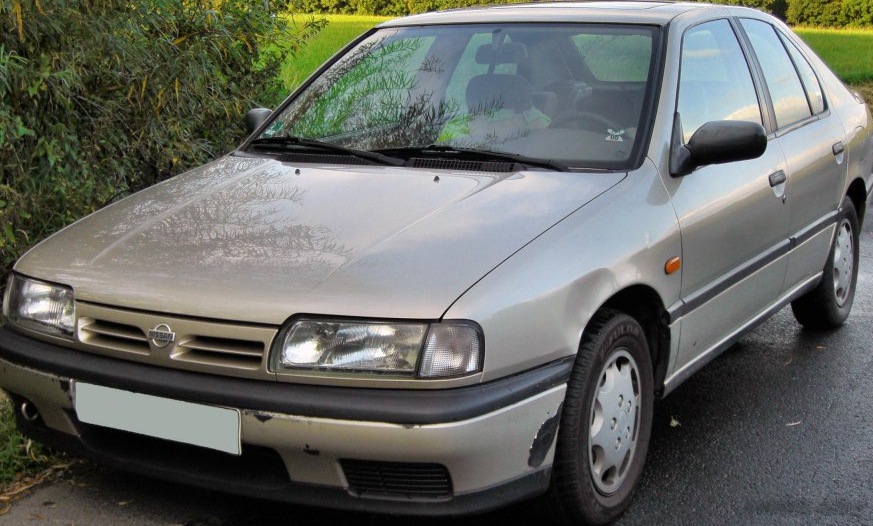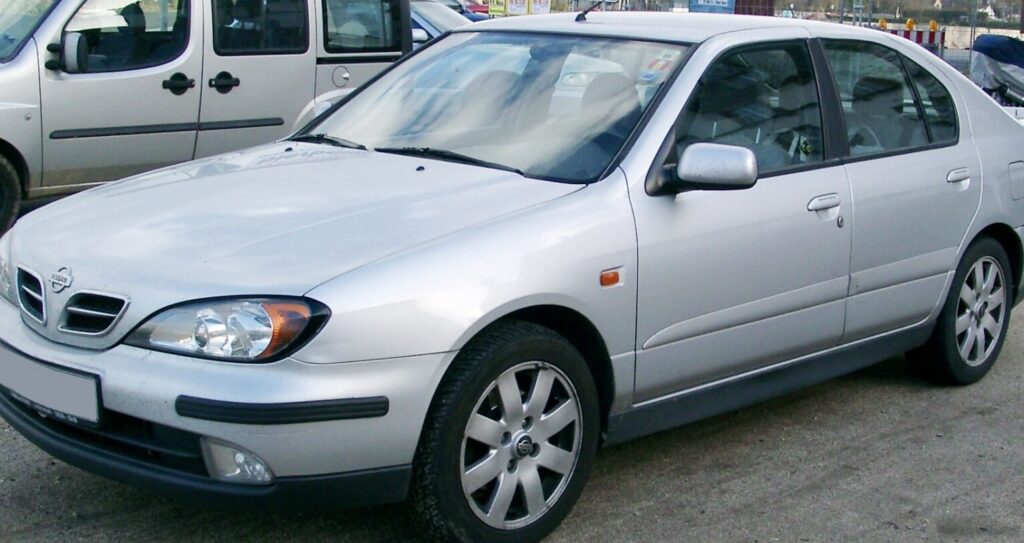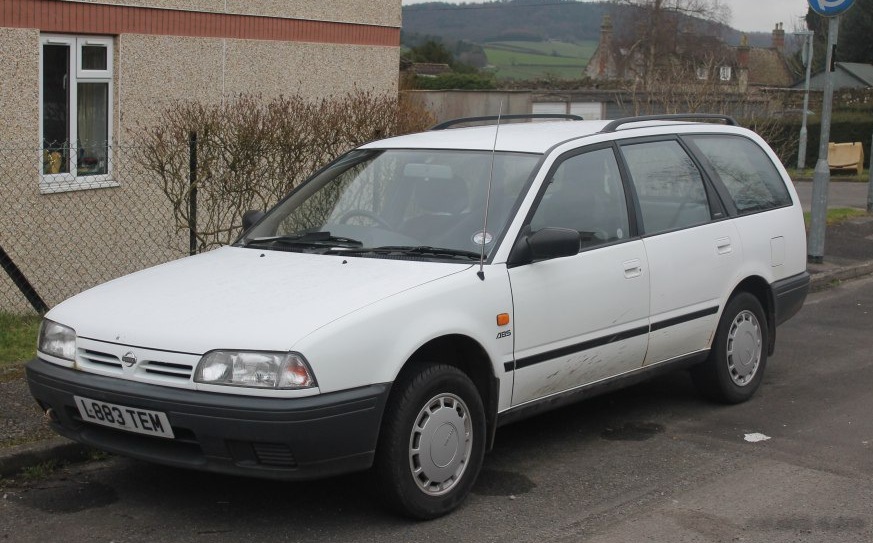
The Nissan Primera Wagon (P10) 2.0i, produced between 1990 and 1995, represented Nissan’s entry into the European and Japanese market for a practical, family-oriented station wagon. Positioned as a mid-range offering within the P10 Primera lineup, the 2.0i variant aimed to balance performance with reasonable fuel economy and a comfortable driving experience. It was a key model in Nissan’s strategy to establish a stronger presence in the competitive mid-size segment, offering a compelling alternative to established European and domestic rivals. The P10 series, built on Nissan’s ‘H’ platform, was notable for its relatively spacious interior and focus on everyday usability.
Technical Specifications
| Brand | Nissan |
| Model | Primera |
| Generation | Primera Wagon (P10) |
| Type (Engine) | 2.0 i (115 Hp) |
| Start of production | 1990 |
| End of production | 1995 |
| Powertrain Architecture | Internal Combustion engine |
| Body type | Station wagon (estate) |
| Seats | 5 |
| Doors | 5 |
| Fuel consumption (combined) | 9.1 l/100 km |
| Fuel consumption (US mpg) | 25.8 US mpg |
| Fuel consumption (UK mpg) | 31 UK mpg |
| Fuel consumption (km/l) | 11 km/l |
| Fuel Type | Petrol (Gasoline) |
| Acceleration 0 – 100 km/h | 9.9 sec |
| Acceleration 0 – 62 mph | 9.9 sec |
| Acceleration 0 – 60 mph | 9.4 sec |
| Maximum speed | 190 km/h (118.06 mph) |
| Weight-to-power ratio | 10.7 kg/Hp |
| Weight-to-torque ratio | 7.4 kg/Nm |
| Power | 115 Hp @ 6000 rpm |
| Power per litre | 57.6 Hp/l |
| Torque | 166 Nm @ 4800 rpm (122.44 lb.-ft. @ 4800 rpm) |
| Engine layout | Front, Transverse |
| Engine displacement | 1998 cm3 (121.93 cu. in.) |
| Number of cylinders | 4 |
| Engine configuration | Inline |
| Cylinder Bore | 86 mm (3.39 in.) |
| Piston Stroke | 86 mm (3.39 in.) |
| Compression ratio | 9.5:1 |
| Number of valves per cylinder | 4 |
| Fuel injection system | Multi-port manifold injection |
| Engine aspiration | Naturally aspirated engine |
| Valvetrain | DOHC |
| Engine oil capacity | 3.4 l (3.59 US qt | 2.99 UK qt) |
| Coolant capacity | 6.4 l (6.76 US qt | 5.63 UK qt) |
| Kerb Weight | 1229 kg (2709.48 lbs.) |
| Max. weight | 1810 kg (3990.37 lbs.) |
| Max load | 581 kg (1280.89 lbs.) |
| Trunk (boot) space – minimum | 460 l (16.24 cu. ft.) |
| Trunk (boot) space – maximum | 1700 l (60.03 cu. ft.) |
| Fuel tank capacity | 60 l (15.85 US gal | 13.2 UK gal) |
| Length | 4460 mm (175.59 in.) |
| Width | 1695 mm (66.73 in.) |
| Height | 1500 mm (59.06 in.) |
| Wheelbase | 2550 mm (100.39 in.) |
| Front track | 1460 mm (57.48 in.) |
| Rear track | 1460 mm (57.48 in.) |
| Drivetrain Architecture | Front wheel drive |
| Number of gears | 5 |
| Gearbox type | Manual transmission |
| Front suspension | Coil spring |
| Rear suspension | Coil spring |
| Front brakes | Ventilated discs |
| Rear brakes | Disc |
| Assisting systems | ABS (Anti-lock braking system) |
| Steering type | Steering rack and pinion |
| Power steering | Hydraulic Steering |
| Tires size | 195/65 R14 |
Powertrain & Engine Architecture
The heart of the Primera Wagon 2.0i was Nissan’s GA20DE engine, a 1998cc inline-four cylinder powerplant. This engine utilized a multi-port fuel injection system and a double overhead camshaft (DOHC) valvetrain, contributing to its relatively smooth power delivery. The GA20DE was known for its durability and relatively simple design, making it easier to maintain compared to some of its more complex competitors. The 5-speed manual transmission was the standard offering, providing drivers with a direct connection to the engine’s power. The engine’s 9.5:1 compression ratio was a typical value for the time, balancing performance and fuel efficiency. The GA20DE was a common engine in various Nissan models of the era, benefitting from economies of scale in production and parts availability.
Driving Characteristics
The 2.0i Primera Wagon offered a respectable, if not exhilarating, driving experience. With 115 horsepower and 122 lb-ft of torque, acceleration from 0-60 mph took around 9.4 seconds, placing it in the middle of the pack for its class. The manual transmission allowed for good control over the engine’s power, and the gear ratios were well-suited for both city driving and highway cruising. Compared to the base 1.6L models, the 2.0i provided noticeably more punch, especially when fully loaded with passengers and cargo. While not as sporty as some rivals, the Primera Wagon prioritized comfort and practicality, offering a smooth ride and predictable handling. The front-wheel-drive configuration provided adequate grip in most conditions, and the ABS brakes offered a reassuring level of stopping power.
Equipment & Trim Levels
The 2.0i trim level typically included features such as power steering, central locking, electric windows, and an AM/FM radio. Higher-spec versions could be equipped with optional extras like air conditioning, alloy wheels, and a sunroof. Interior upholstery was generally cloth, with a functional and durable design. The dashboard layout was straightforward and easy to use, with clearly labeled controls. Nissan offered various option packages that allowed buyers to customize their Primera Wagon to their specific needs and preferences. The overall interior ambiance was focused on practicality and comfort rather than luxury.
Chassis & Braking
The Primera Wagon’s chassis featured a coil spring suspension system at both the front and rear, providing a comfortable ride quality. The front suspension utilized MacPherson struts, while the rear employed a multi-link setup. Braking duties were handled by ventilated discs at the front and solid discs at the rear. The inclusion of ABS (Anti-lock Braking System) was a significant safety feature for the time, helping to prevent wheel lockup during hard braking. The chassis was designed to provide a good balance between handling and ride comfort, making it suitable for both everyday commuting and longer journeys.
Market Reception & Comparison
The Nissan Primera Wagon 2.0i was generally well-received by automotive critics, who praised its spacious interior, comfortable ride, and reasonable fuel economy. However, some reviewers noted that its styling was somewhat conservative compared to some of its more flamboyant rivals. Compared to other 2.0L station wagons of the era, the Primera offered a competitive level of performance and features at a reasonable price point. Its fuel economy of around 25.8 US mpg was respectable for its class, and its reliability was generally considered to be good. The 2.0i variant offered a compelling alternative to popular European models like the Ford Mondeo and the Vauxhall/Opel Vectra.
Legacy
The Nissan Primera Wagon (P10) 2.0i has proven to be a relatively durable and reliable vehicle, with many examples still on the road today. The GA20DE engine is known for its longevity, and parts availability remains reasonably good. While not a particularly sought-after classic, the P10 Primera Wagon is appreciated by enthusiasts for its practicality, comfort, and understated styling. In the used car market, these wagons represent a relatively affordable and dependable option for those seeking a spacious and versatile family vehicle. The P10 series helped establish Nissan as a credible player in the European and Japanese mid-size market, paving the way for future models like the Almera and the Qashqai.