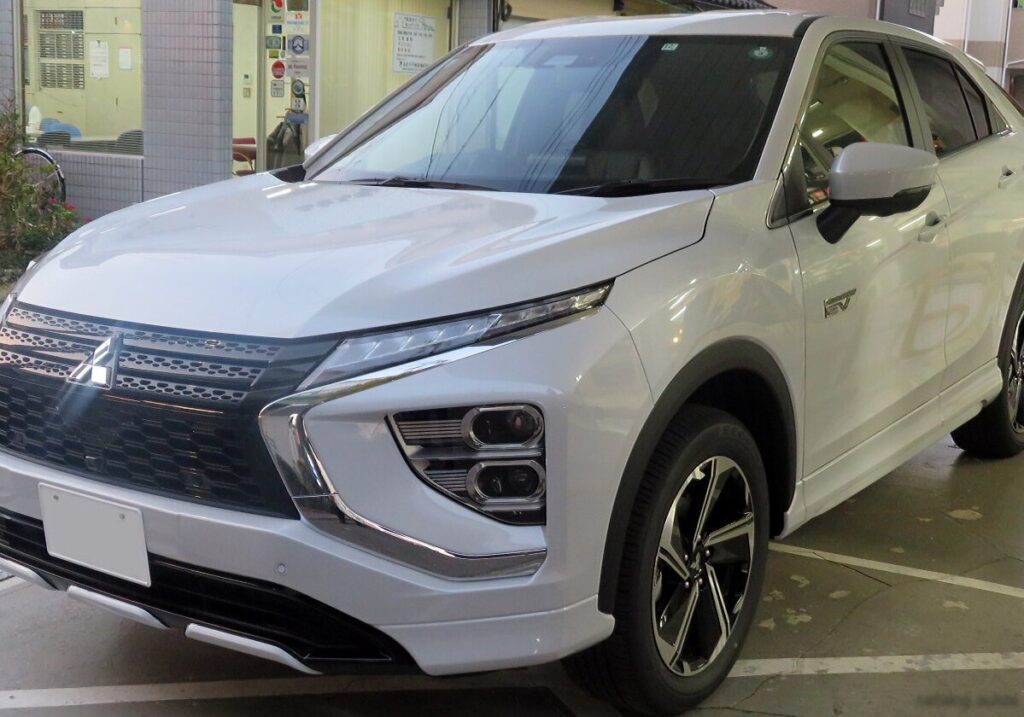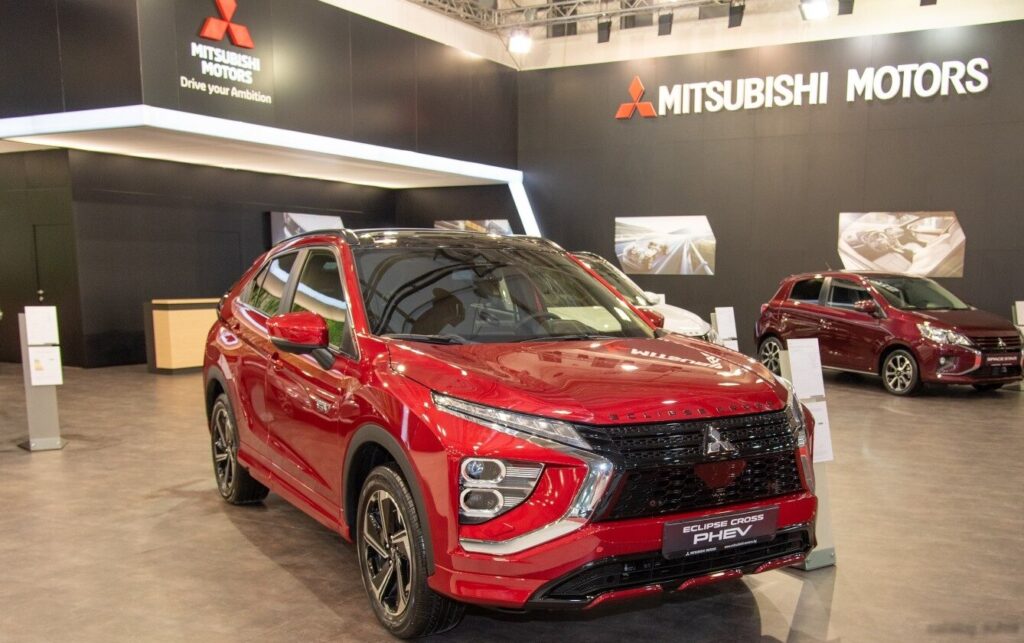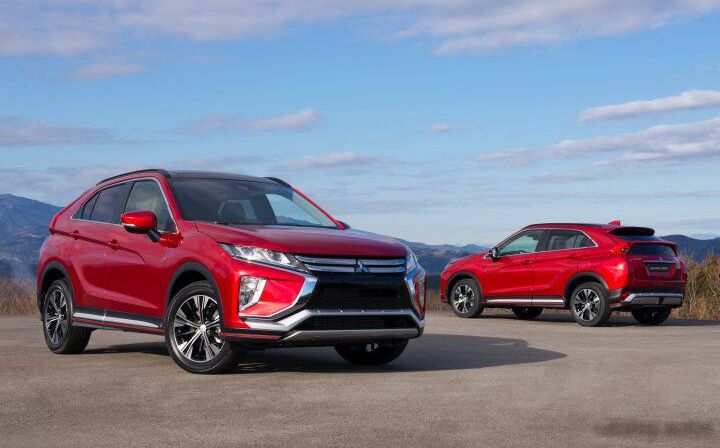
The Mitsubishi Eclipse Cross 2.2 DiD 4WD Automatic, produced between 2018 and 2021, represented a significant entry for Mitsubishi into the increasingly competitive compact SUV segment. Part of the first generation Eclipse Cross (XC I) series, this variant aimed to offer a blend of fuel efficiency, practicality, and all-weather capability through its diesel powertrain and four-wheel-drive system. Positioned as a mid-range offering within the Eclipse Cross lineup, it sat above the base gasoline models but below the higher-specification trims. The Eclipse Cross was designed to appeal to buyers seeking a stylish and versatile vehicle for both urban commuting and occasional off-road adventures, primarily targeting the European and Asian markets, though limited numbers were available in other regions.
Technical Specifications
| Brand | Mitsubishi |
| Model | Eclipse Cross |
| Generation | Eclipse Cross I |
| Type | 2.2 DiD (150 Hp) 4WD Automatic |
| Start of production | 2018 |
| End of production | 2021 |
| Powertrain Architecture | Internal Combustion engine |
| Body type | SUV |
| Seats | 5 |
| Doors | 5 |
| Fuel Type | Diesel |
| Emission standard | Euro 6 |
| Weight-to-power ratio | 11.1 kg/Hp, 90.4 Hp/tonne |
| Weight-to-torque ratio | 4.2 kg/Nm, 241 Nm/tonne |
| Power | 150 Hp @ 3750 rpm |
| Power per litre | 66.1 Hp/l |
| Torque | 400 Nm @ 2000-2250 rpm (295.02 lb.-ft. @ 2000-2250 rpm) |
| Engine layout | Front, Transverse |
| Engine Model/Code | 4N14 |
| Engine displacement | 2268 cm3 (138.4 cu. in.) |
| Number of cylinders | 4 |
| Engine configuration | Inline |
| Cylinder Bore | 86 mm (3.39 in.) |
| Piston Stroke | 97.6 mm (3.84 in.) |
| Compression ratio | 14.9:1 |
| Number of valves per cylinder | 4 |
| Fuel injection system | Diesel Commonrail |
| Engine aspiration | Turbocharger, Intercooler |
| Engine oil capacity | 5.9 l (6.23 US qt | 5.19 UK qt) |
| Coolant | 8 l (8.45 US qt | 7.04 UK qt) |
| Kerb Weight | 1660-1690 kg (3659.67 – 3725.81 lbs.) |
| Trunk (boot) space – minimum | 341 l (12.04 cu. ft.) |
| Trunk (boot) space – maximum | 448 l (15.82 cu. ft.) |
| Permitted trailer load with brakes (12%) | 2000 kg (4409.25 lbs.) |
| Length | 4405 mm (173.43 in.) |
| Width | 1805 mm (71.06 in.) |
| Height | 1685 mm (66.34 in.) |
| Wheelbase | 2670 mm (105.12 in.) |
| Front track | 1545 mm (60.83 in.) |
| Rear (Back) track | 1545 mm (60.83 in.) |
| Ride height (ground clearance) | 183 mm (7.2 in.) |
| Minimum turning circle (turning diameter) | 10.6 m (34.78 ft.) |
| Approach angle | 18.8° |
| Departure angle | 29.6° |
| Ramp-over (brakeover) angle | 18.0° |
| Drive wheel | All wheel drive (4×4) |
| Number of gears and type of gearbox | 8 gears, automatic transmission |
| Front suspension | Independent type McPherson |
| Rear suspension | Independent multi-link suspension |
| Front brakes | Ventilated discs |
| Rear brakes | Disc |
| Assisting systems | ABS (Anti-lock braking system) |
| Steering type | Steering rack and pinion |
| Power steering | Electric Steering |
| Tires size | 215/70 R16; 225/55 R18 |
| Wheel rims size | 16; 18 |
Powertrain & Engine Architecture
The heart of the Eclipse Cross 2.2 DiD is Mitsubishi’s 4N14 2.2-liter inline-four diesel engine. This engine is a turbocharged and intercooled common-rail direct injection (CRDI) unit, designed for a balance of power and fuel economy. The 4N14 engine features a cast iron block and aluminum cylinder head, contributing to its durability. The common-rail system, supplied by Bosch, delivers fuel at extremely high pressure, optimizing combustion efficiency and reducing emissions. The turbocharger, coupled with an intercooler, enhances power output by forcing more air into the cylinders. The engine produces 150 horsepower at 3750 rpm and a substantial 400 Nm (295 lb-ft) of torque between 2000 and 2250 rpm. This torque output is a key characteristic of diesel engines, providing strong low-end pulling power. The engine is paired with a smooth-shifting 8-speed automatic transmission, which is designed to maximize fuel efficiency and provide comfortable gear changes. This transmission sends power to all four wheels via Mitsubishi’s Super All-Wheel Control (S-AWC) system.
Driving Characteristics
The 2.2 DiD Automatic powertrain delivers a composed and capable driving experience. The abundant low-end torque makes the Eclipse Cross feel responsive in everyday driving situations, providing effortless acceleration for merging onto highways or overtaking slower vehicles. While not a particularly sporty vehicle, the 8-speed automatic transmission is well-tuned, offering smooth and timely gear changes. Compared to the gasoline-powered Eclipse Cross variants, the diesel model offers significantly better fuel economy, making it an attractive option for drivers who cover long distances. However, the diesel engine is noticeably louder and less refined than the gasoline engines, particularly during cold starts. The S-AWC system provides enhanced traction and stability, especially on slippery surfaces, making the Eclipse Cross a confident performer in inclement weather. The automatic transmission, while convenient, doesn’t offer the same level of driver engagement as a manual gearbox.
Equipment & Trim Levels
The 2.2 DiD Automatic trim typically included a generous array of standard features. These commonly included automatic climate control, a touchscreen infotainment system with Apple CarPlay and Android Auto compatibility, Bluetooth connectivity, and a rearview camera. Safety features such as ABS, electronic stability control, and multiple airbags were also standard. Higher trim levels offered additional features such as leather upholstery, heated front seats, a panoramic sunroof, and advanced driver-assistance systems like adaptive cruise control and lane departure warning. Interior upholstery was typically a combination of cloth and synthetic leather, with a focus on durability and practicality. The dashboard layout was modern and functional, with a clear and easy-to-read instrument cluster.
Chassis & Braking
The Eclipse Cross utilizes a front independent McPherson strut suspension and a rear independent multi-link suspension. This setup provides a good balance of ride comfort and handling. The suspension is tuned to prioritize comfort over outright sportiness, resulting in a smooth and controlled ride. The braking system consists of ventilated discs on the front wheels and solid discs on the rear. ABS (Anti-lock Braking System) is standard, providing enhanced braking performance and stability. The steering is electrically assisted, offering light and precise steering feel. The vehicle’s weight, ranging from 1660 to 1690 kg, is relatively moderate for its class, contributing to its manageable handling characteristics.
Market Reception & Comparison
The Mitsubishi Eclipse Cross 2.2 DiD 4WD Automatic received generally positive reviews from automotive critics. It was praised for its fuel efficiency, spacious interior, and capable all-wheel-drive system. However, some critics noted the engine’s noise and lack of refinement compared to competitors. Compared to other diesel-powered SUVs in its class, such as the Nissan Qashqai dCi and the Peugeot 3008 BlueHDi, the Eclipse Cross offered a competitive level of performance and equipment. Its fuel economy was generally comparable to its rivals, but its interior design and overall refinement were sometimes considered less appealing. Reliability reports suggest that the 4N14 diesel engine is generally durable, but regular maintenance is essential to prevent issues with the diesel particulate filter (DPF).
Legacy
The Mitsubishi Eclipse Cross 2.2 DiD 4WD Automatic has established itself as a reliable and practical used car option. The 4N14 diesel engine, when properly maintained, is known for its longevity. However, potential buyers should be aware of the potential for DPF issues, particularly if the vehicle has been primarily used for short trips. The Eclipse Cross’s all-wheel-drive system remains a valuable asset for drivers in regions with harsh weather conditions. As a compact SUV, it continues to offer a compelling combination of fuel efficiency, practicality, and all-weather capability, making it a popular choice in the used car market.