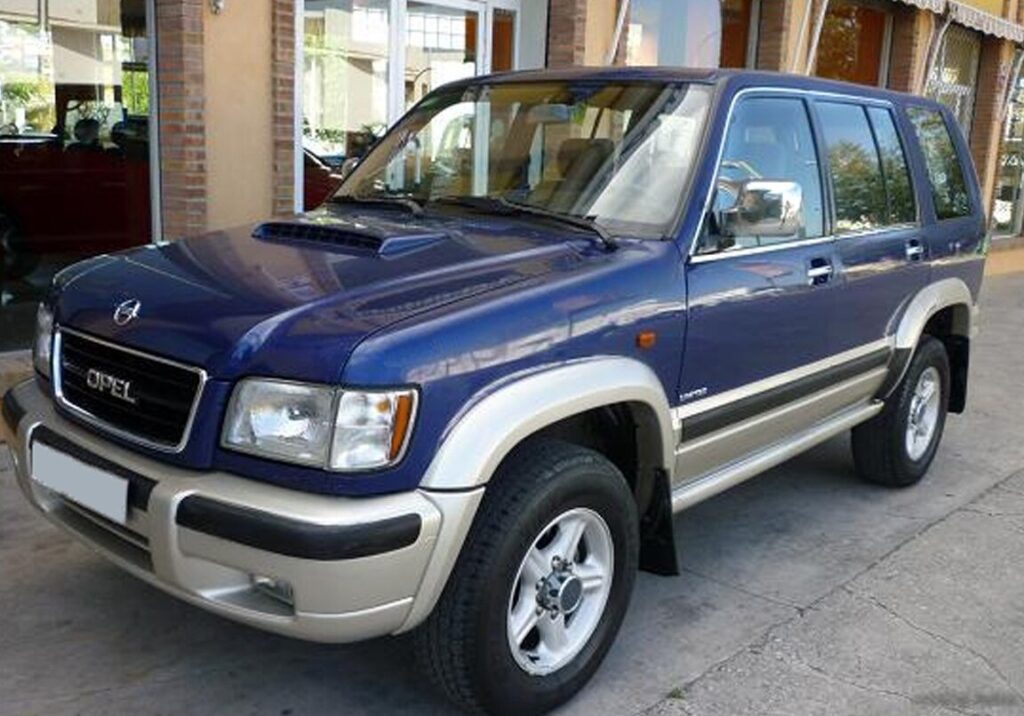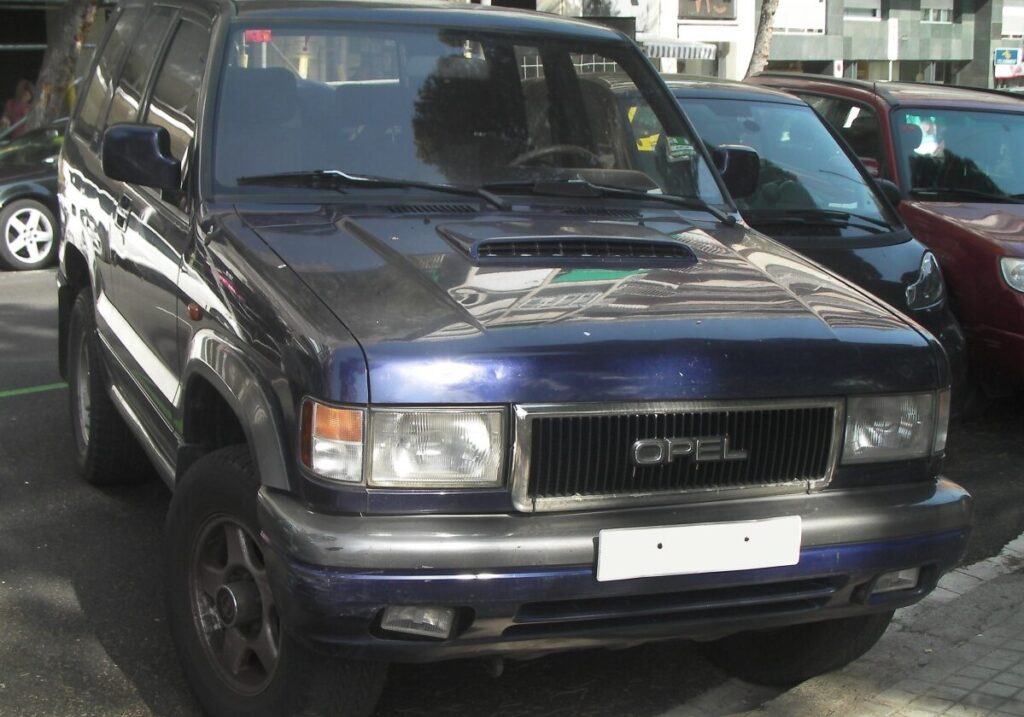
The Opel Monterey RS 3.2i V6 24V 4×4 Automatic, produced from May 1992 to April 1998, represented Opel’s entry into the burgeoning mid-size SUV market. Positioned as a more premium offering within the Monterey range, the RS variant aimed to provide a blend of off-road capability, respectable on-road performance, and a degree of luxury. It was built upon the robust foundations of the Isuzu Trooper, a result of Opel’s collaboration with its Japanese partner. The Monterey, and specifically the RS 3.2i, was primarily marketed in Europe, offering an alternative to established SUVs like the Jeep Cherokee and Toyota Land Cruiser, though with a distinctly European flavor. This model occupied the top tier of the Monterey lineup, offering the most powerful engine and a more comprehensive equipment list.
Technical Specifications
| Brand | Opel |
| Model | Monterey |
| Generation | Monterey |
| Type (Engine) | RS 3.2i V6 24V (177 Hp) 4×4 Automatic |
| Start of production | May, 1992 |
| End of production | April, 1998 |
| Powertrain Architecture | Internal Combustion engine |
| Body type | SUV |
| Seats | 5 |
| Doors | 3 |
| Fuel consumption (combined) | 14.4 l/100 km (16.3 US mpg, 19.6 UK mpg, 6.9 km/l) |
| Fuel Type | Petrol (Gasoline) |
| Acceleration 0 – 100 km/h | 11.5 sec |
| Acceleration 0 – 62 mph | 11.5 sec |
| Acceleration 0 – 60 mph | 10.9 sec |
| Maximum speed | 170 km/h (105.63 mph) |
| Weight-to-power ratio | 10.1 kg/Hp, 98.6 Hp/tonne |
| Weight-to-torque ratio | 6.9 kg/Nm, 144.8 Nm/tonne |
| Power | 177 Hp @ 5200 rpm |
| Power per litre | 55.9 Hp/l |
| Torque | 260 Nm @ 3750 rpm (191.77 lb.-ft. @ 3750 rpm) |
| Engine layout | Front, Longitudinal |
| Engine Model/Code | 6VD1 |
| Engine displacement | 3165 cm3 (193.14 cu. in.) |
| Number of cylinders | 6 |
| Engine configuration | V-engine |
| Cylinder Bore | 93.4 mm (3.68 in.) |
| Piston Stroke | 77 mm (3.03 in.) |
| Compression ratio | 9.3:1 |
| Number of valves per cylinder | 4 |
| Fuel injection system | Multi-port manifold injection |
| Engine aspiration | Naturally aspirated engine |
| Valvetrain | OHC |
| Engine oil capacity | 5.3 l (5.6 US qt | 4.66 UK qt) |
| Coolant | 8.8 l (9.3 US qt | 7.74 UK qt) |
| Kerb Weight | 1795 kg (3957.3 lbs.) |
| Max. weight | 2600 kg (5732.02 lbs.) |
| Max load | 805 kg (1774.72 lbs.) |
| Trunk (boot) space – minimum | 1339 l (47.29 cu. ft.) |
| Trunk (boot) space – maximum | 1934 l (68.3 cu. ft.) |
| Fuel tank capacity | 85 l (22.45 US gal | 18.7 UK gal) |
| Length | 4270 mm (168.11 in.) |
| Width | 1745 mm (68.7 in.) |
| Height | 1835 mm (72.24 in.) |
| Wheelbase | 2330 mm (91.73 in.) |
| Front track | 1455 mm (57.28 in.) |
| Rear (Back) track | 1460 mm (57.48 in.) |
| Drive wheel | All wheel drive (4×4) |
| Number of gears and type of gearbox | 4 gears, automatic transmission |
| Front suspension | Double wishbone |
| Rear suspension | Coil spring |
| Front brakes | Ventilated discs |
| Rear brakes | Ventilated discs |
| Assisting systems | ABS (Anti-lock braking system), Hydraulic Steering |
| Tires size | 245/70 R16 |
| Wheel rims size | 16 |
Powertrain & Engine Architecture
The heart of the Monterey RS 3.2i was the 6VD1 engine, a 3.2-liter, naturally aspirated V6. This engine, derived from Isuzu’s designs, featured a 90-degree V-angle and a single overhead camshaft (OHC) per cylinder bank operating four valves per cylinder. The engine utilized multi-port fuel injection, delivering fuel directly into the intake ports for improved combustion efficiency. The 6VD1 produced 177 horsepower at 5200 rpm and 260 Nm (191.77 lb-ft) of torque at 3750 rpm. Paired with this engine was a four-speed automatic transmission, providing relatively smooth shifts but lacking the responsiveness of a manual gearbox. The transmission was designed to handle the engine’s torque output and provide adequate gearing for both on-road cruising and moderate off-road conditions.
Driving Characteristics
The Monterey RS 3.2i Automatic offered a comfortable, if not particularly sporty, driving experience. The automatic transmission, while convenient, did detract from the engine’s potential. Acceleration to 60 mph took around 10.9 seconds, and the top speed was limited to 105.63 mph. The automatic transmission’s gear ratios were geared more towards fuel economy and relaxed cruising than outright performance. Compared to a manual transmission equipped Monterey, the automatic version felt noticeably slower and less engaging. The 4×4 system provided enhanced traction in slippery conditions, but the Monterey wasn’t designed for serious off-roading; it was more suited to gravel roads and mild trails. The relatively high curb weight of 1795 kg contributed to a somewhat ponderous feel, especially during cornering.
Equipment & Trim Levels
The RS trim level represented the highest specification available for the Monterey. Standard features included air conditioning, power windows and locks, central locking, and an upgraded audio system. Interior upholstery typically consisted of cloth or a combination of cloth and vinyl. Optional extras included a sunroof, leather upholstery, and upgraded sound systems. The dashboard layout was functional and straightforward, with clearly labeled controls. The RS trim also featured exterior enhancements such as alloy wheels and body-colored bumpers.
Chassis & Braking
The Monterey utilized a body-on-frame construction, providing a robust and durable chassis. Front suspension consisted of a double wishbone setup, while the rear employed a coil spring arrangement. Braking duties were handled by ventilated discs on all four wheels, providing adequate stopping power for the vehicle’s weight. An Anti-lock Braking System (ABS) was standard on the RS model, enhancing safety during emergency braking situations. Hydraulic power steering was also standard, making maneuvering the relatively large SUV easier.
Market Reception & Comparison
The Opel Monterey RS 3.2i Automatic received mixed reviews from automotive critics. While praised for its spacious interior, comfortable ride, and capable 4×4 system, it was often criticized for its lackluster performance and relatively high fuel consumption (14.4 l/100 km). Compared to the base Monterey models with smaller engines, the RS offered a significant performance upgrade, but it came at a higher price. The 1.8L and 2.0L versions were more fuel-efficient and affordable, appealing to buyers prioritizing economy over power. The RS was positioned as a competitor to other mid-size SUVs, but it often fell short in terms of refinement and driving dynamics.
Legacy
The Opel Monterey, while not a runaway success, established Opel as a player in the SUV market. The 3.2i V6 engine, while not known for exceptional reliability, proved to be reasonably durable with proper maintenance. Today, the Monterey RS 3.2i is a relatively rare vehicle, appealing to collectors and enthusiasts seeking a unique and capable classic SUV. Parts availability can be challenging, as many components are specific to the Monterey and its Isuzu counterparts. Well-maintained examples command a modest premium in the used car market, representing a piece of Opel’s early foray into the SUV segment.