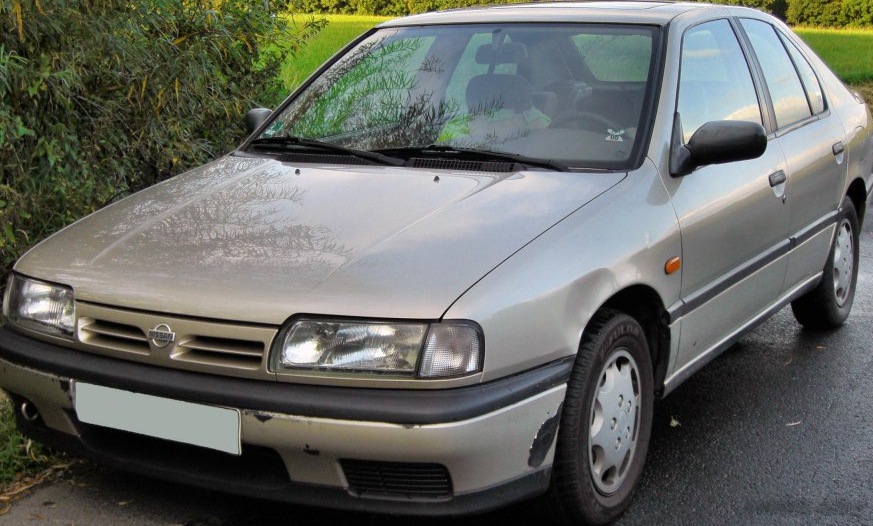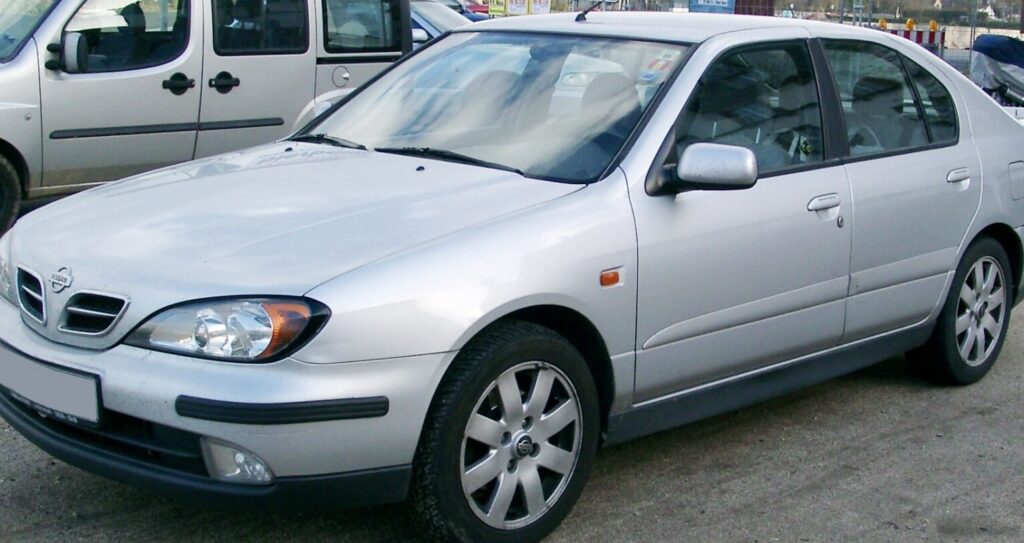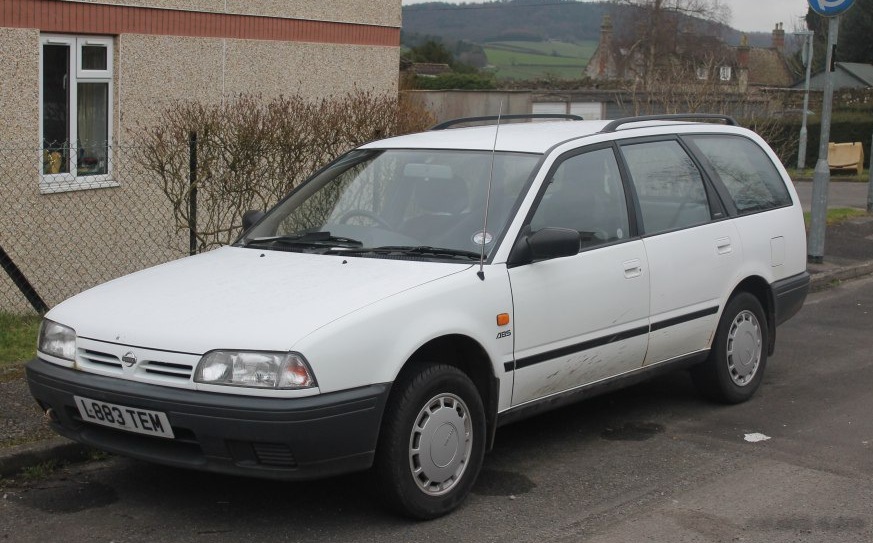
The Nissan Primera Wagon (P10) 2.0i Automatic, produced between 1990 and 1995, represented a practical and relatively upscale offering in the European and Japanese station wagon market. Positioned as a mid-range trim within the P10 Primera Wagon lineup, it catered to buyers seeking a comfortable, spacious family vehicle with the convenience of an automatic transmission. The P10 series, built on Nissan’s ‘H’ platform, aimed to provide a more refined experience than its predecessors, competing with established European rivals like the Ford Mondeo and Vauxhall/Opel Vectra Estate. This particular variant, with its 2.0-liter engine and four-speed automatic, offered a balance between performance and fuel economy, though it wasn’t the sportiest option available.
Technical Specifications
| Brand | Nissan |
| Model | Primera |
| Generation | Primera Wagon (P10) |
| Type (Engine) | 2.0 i (115 Hp) Automatic |
| Start of production | 1990 |
| End of production | 1995 |
| Powertrain Architecture | Internal Combustion engine |
| Body type | Station wagon (estate) |
| Seats | 5 |
| Doors | 5 |
| Fuel consumption (combined) | 9.1 l/100 km |
| Fuel consumption (US mpg) | 25.8 US mpg |
| Fuel consumption (UK mpg) | 31 UK mpg |
| Fuel consumption (km/l) | 11 km/l |
| Fuel Type | Petrol (Gasoline) |
| Acceleration 0 – 100 km/h | 9.9 sec |
| Acceleration 0 – 62 mph | 9.9 sec |
| Acceleration 0 – 60 mph | 9.4 sec |
| Maximum speed | 190 km/h (118.06 mph) |
| Weight-to-power ratio | 10.7 kg/Hp |
| Weight-to-torque ratio | 7.4 kg/Nm |
| Power | 115 Hp @ 6000 rpm |
| Power per litre | 57.6 Hp/l |
| Torque | 166 Nm @ 4800 rpm (122.44 lb.-ft. @ 4800 rpm) |
| Engine layout | Front, Transverse |
| Engine displacement | 1998 cm3 (121.93 cu. in.) |
| Number of cylinders | 4 |
| Engine configuration | Inline |
| Cylinder Bore | 86 mm (3.39 in.) |
| Piston Stroke | 86 mm (3.39 in.) |
| Compression ratio | 9.5:1 |
| Number of valves per cylinder | 4 |
| Fuel injection system | Multi-port manifold injection |
| Engine aspiration | Naturally aspirated engine |
| Valvetrain | DOHC |
| Engine oil capacity | 3.4 l (3.59 US qt | 2.99 UK qt) |
| Coolant capacity | 6.4 l (6.76 US qt | 5.63 UK qt) |
| Kerb Weight | 1229 kg (2709.48 lbs.) |
| Max. weight | 1810 kg (3990.37 lbs.) |
| Max load | 581 kg (1280.89 lbs.) |
| Trunk (boot) space – minimum | 460 l (16.24 cu. ft.) |
| Trunk (boot) space – maximum | 1700 l (60.03 cu. ft.) |
| Fuel tank capacity | 60 l (15.85 US gal | 13.2 UK gal) |
| Length | 4460 mm (175.59 in.) |
| Width | 1695 mm (66.73 in.) |
| Height | 1500 mm (59.06 in.) |
| Wheelbase | 2550 mm (100.39 in.) |
| Front track | 1460 mm (57.48 in.) |
| Rear track | 1460 mm (57.48 in.) |
| Drivetrain Architecture | Front wheel drive |
| Number of gears | 4 |
| Gearbox type | Automatic transmission |
| Front suspension | Coil spring |
| Rear suspension | Coil spring |
| Front brakes | Ventilated discs |
| Rear brakes | Disc |
| Assisting systems | ABS (Anti-lock braking system) |
| Steering type | Steering rack and pinion |
| Power steering | Hydraulic Steering |
| Tires size | 195/65 R14 |
| Wheel rims size | 14 |
Powertrain & Engine Architecture
The heart of the Primera Wagon 2.0i Automatic was Nissan’s GA20DE engine, a 1998cc inline-four cylinder powerplant. This engine utilized a multi-port fuel injection system and a double overhead camshaft (DOHC) valvetrain, contributing to its relatively smooth operation and decent power output for its time. The GA20DE was known for its durability and relative simplicity, making it a reasonably reliable unit. The four-speed automatic transmission, while providing convenience, wasn’t particularly advanced. It featured traditional hydraulic control and offered smooth, if not particularly quick, shifts. The transmission’s gear ratios were tuned for comfortable cruising rather than spirited acceleration. Compared to the 1.6-liter variants, the 2.0i offered a noticeable increase in torque, making it more capable of handling a fully loaded vehicle or navigating hilly terrain.
Driving Characteristics
The 2.0i Automatic Primera Wagon delivered a comfortable and predictable driving experience. Acceleration from 0-60 mph took around 9.4 seconds, which was adequate for the era but not particularly brisk. The automatic transmission, while convenient, did sap some of the engine’s power, resulting in a slightly less responsive feel compared to the five-speed manual version. The gear ratios were spaced to prioritize fuel efficiency and smooth cruising, meaning the engine often felt strained during hard acceleration. Handling was generally safe and predictable, with the coil spring suspension providing a reasonably comfortable ride. However, it wasn’t a particularly sporty vehicle, and body roll was noticeable in corners.
Equipment & Trim Levels
The 2.0i Automatic trim typically included features such as power steering, central locking, electric windows, and an AM/FM radio. Higher-spec versions could be equipped with options like air conditioning, alloy wheels, and a sunroof. Interior upholstery was typically cloth, with a relatively simple and functional dashboard layout. The wagon body style offered a generous amount of cargo space, making it a practical choice for families. The rear seats could be folded down to further increase cargo capacity. Compared to the base models, the 2.0i Automatic offered a more refined interior and a more powerful engine, justifying its higher price point.
Chassis & Braking
The Primera Wagon featured a front-wheel-drive layout with coil spring suspension at all four corners. The front suspension utilized MacPherson struts, while the rear employed a multi-link setup. Braking duties were handled by ventilated discs at the front and solid discs at the rear. An Anti-lock Braking System (ABS) was standard equipment, enhancing safety. The chassis was designed to provide a balance between comfort and handling, prioritizing ride quality over sporty dynamics. The weight distribution was reasonably well-balanced, contributing to predictable handling characteristics.
Market Reception & Comparison
The Nissan Primera Wagon 2.0i Automatic was generally well-received by critics as a practical and comfortable family vehicle. However, some reviewers noted that the automatic transmission dulled the engine’s performance and that the handling wasn’t as sharp as some of its European rivals. Fuel economy was considered reasonable for its class, averaging around 25.8 US mpg. Compared to the 1.6-liter Primera Wagon, the 2.0i offered a noticeable improvement in performance, but at a higher price. The 2.0i also offered a more refined driving experience than the diesel variants, which were often noisier and less powerful.
Legacy
The Nissan Primera Wagon (P10) 2.0i Automatic has proven to be a relatively reliable vehicle, with many examples still on the road today. The GA20DE engine is known for its durability, and the automatic transmission, while not particularly sophisticated, is generally robust. However, like any older vehicle, it’s susceptible to age-related issues such as rust and wear and tear on suspension components. In the used car market, these Primera Wagons are often sought after by enthusiasts looking for a practical and affordable classic. They represent a solid and dependable choice for those seeking a spacious and comfortable estate car from the early 1990s.