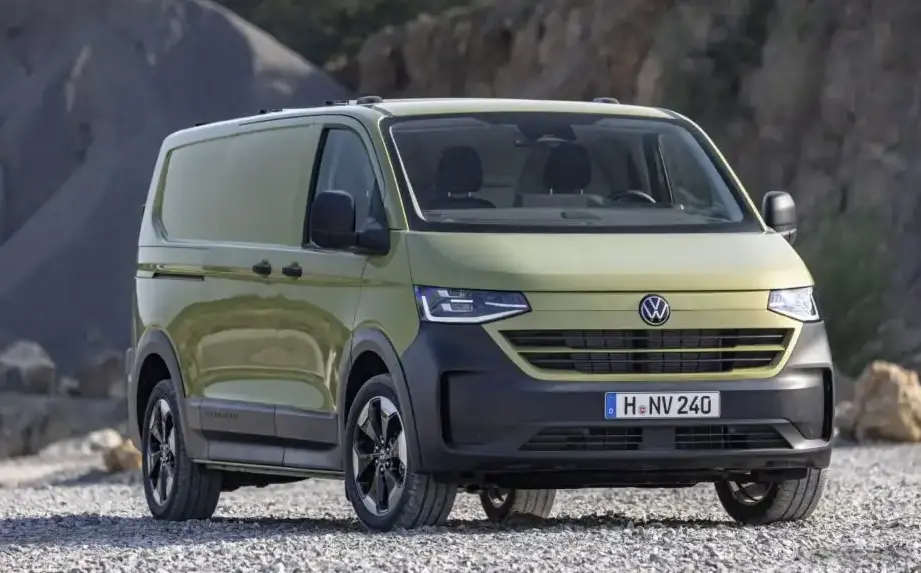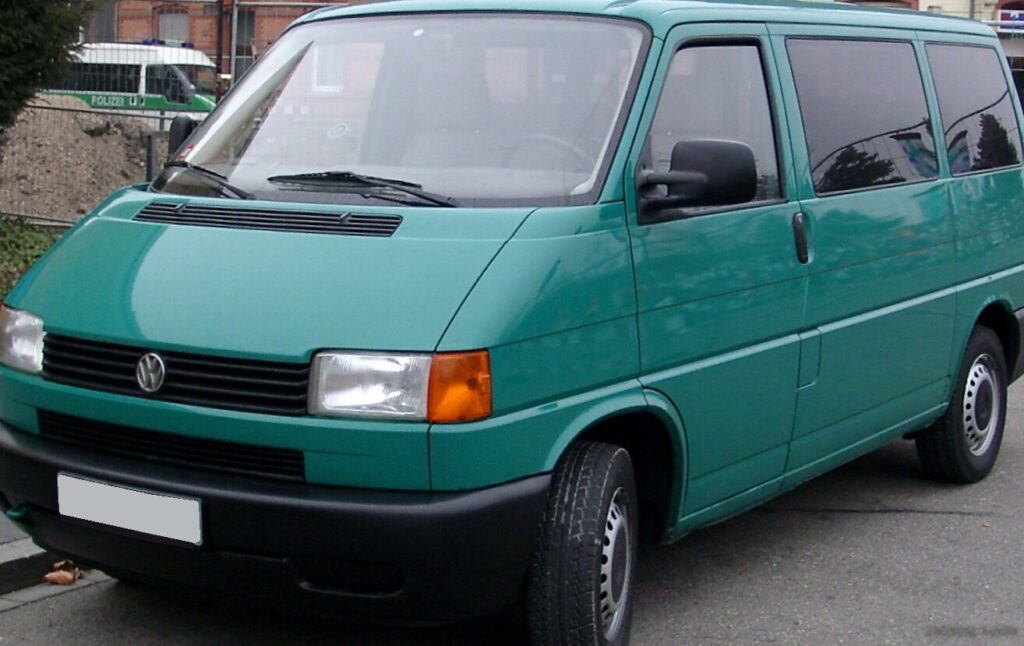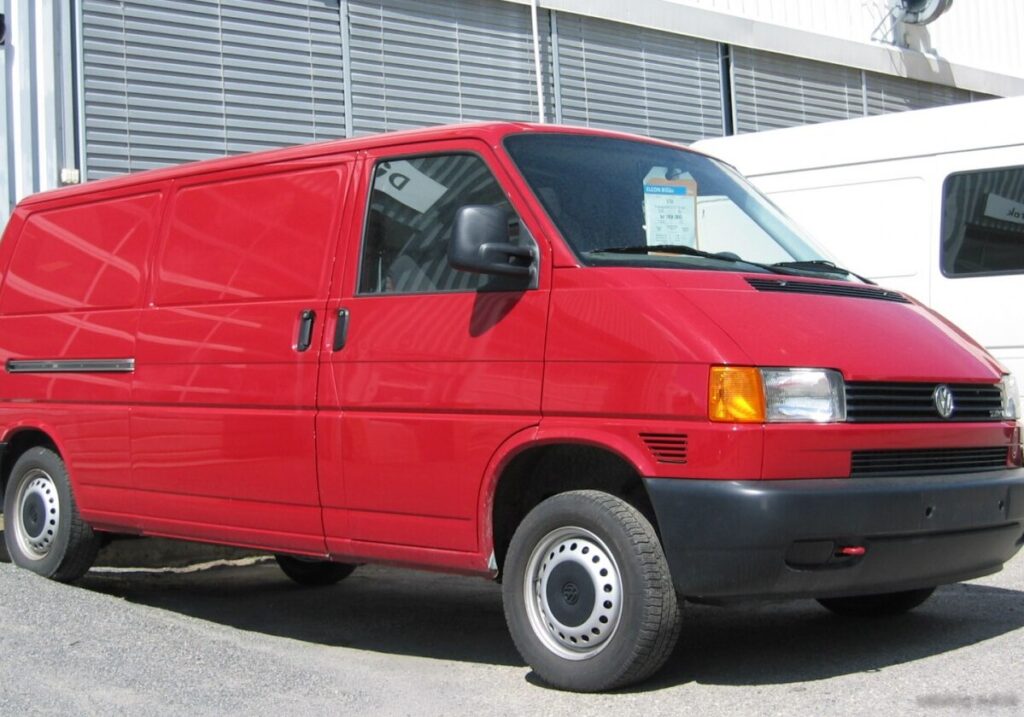
The Volkswagen Transporter (T4), particularly the facelifted version introduced in 1996, represented a significant evolution in the popular van lineage. Produced from 1996 through 2003, the T4 aimed to blend practicality with improved comfort and safety. Within the T4 range, the 2.5-liter (110 horsepower) Panel Van in the L2H2 configuration occupied a middle ground, offering a balance between affordability, capability, and fuel efficiency for commercial and personal use. The L2H2 designation refers to the vehicle’s length and roof height – a long wheelbase and high roof, maximizing cargo space. This variant was a common sight across Europe, serving as a workhorse for businesses and a base for camper conversions.
Technical Specifications
| Brand | Volkswagen |
| Model | Transporter |
| Generation | Transporter (T4, facelift 1996) Panel Van |
| Type (Engine) | 2.5 (110 Hp) L2H2 |
| Start of production | 1996 |
| End of production | 2003 |
| Powertrain Architecture | Internal Combustion engine |
| Body type | Van |
| Seats | 2 |
| Doors | 4-5 |
| Fuel consumption (combined) | 13.3 l/100 km (17.7 US mpg, 21.2 UK mpg, 7.5 km/l) |
| Fuel Type | Petrol (Gasoline) |
| Maximum speed | 154 km/h (95.69 mph) |
| Weight-to-power ratio | 16 kg/Hp, 62.7 Hp/tonne |
| Weight-to-torque ratio | 9 kg/Nm, 111.1 Nm/tonne |
| Power | 110 Hp @ 4500 rpm |
| Power per litre | 44.7 Hp/l |
| Torque | 195 Nm @ 2200 rpm (143.82 lb.-ft. @ 2200 rpm) |
| Engine layout | Front, Transverse |
| Engine Model/Code | ACU, AEN, AEU |
| Engine displacement | 2461 cm3 (150.18 cu. in.) |
| Number of cylinders | 5 |
| Engine configuration | Inline |
| Cylinder Bore | 81 mm (3.19 in.) |
| Piston Stroke | 95.5 mm (3.76 in.) |
| Compression ratio | 10:1 |
| Number of valves per cylinder | 2 |
| Fuel injection system | Multi-port manifold injection |
| Engine aspiration | Naturally aspirated engine |
| Valvetrain | SOHC |
| Engine oil capacity | 5.5 l (5.81 US qt | 4.84 UK qt) |
| Coolant | 11.5 l (12.15 US qt | 10.12 UK qt) |
| Kerb Weight | 1755 kg (3869.11 lbs.) |
| Max. weight | 2700-2800 kg (5952.48 – 6172.94 lbs.) |
| Max load | 945-1045 kg (2083.37 – 2303.83 lbs.) |
| Trunk (boot) space – maximum | 7800 l (275.45 cu. ft.) |
| Fuel tank capacity | 80 l (21.13 US gal | 17.6 UK gal) |
| Max. roof load | 100 kg (220.46 lbs.) |
| Permitted trailer load with brakes (12%) | 2000 kg (4409.25 lbs.) |
| Permitted trailer load without brakes | 700 kg (1543.24 lbs.) |
| Permitted towbar download | 100 kg (220.46 lbs.) |
| Length | 5107 mm (201.06 in.) |
| Width | 1840 mm (72.44 in.) |
| Width including mirrors | 2175 mm (85.63 in.) |
| Height | 2430 mm (95.67 in.) |
| Wheelbase | 3320 mm (130.71 in.) |
| Front track | 1589 mm (62.56 in.) |
| Rear (Back) track | 1554 mm (61.18 in.) |
| Front overhang | 886 mm (34.88 in.) |
| Rear overhang | 901 mm (35.47 in.) |
| Ride height (ground clearance) | 180 mm (7.09 in.) |
| Minimum turning circle (turning diameter) | 12.9 m (42.32 ft.) |
| Wading depth | 350 mm (13.78 in.) |
| Drivetrain Architecture | The Internal combustion engine (ICE) drives the front wheels of the vehicle. |
| Drive wheel | Front wheel drive |
| Number of gears and type of gearbox | 5 gears, manual transmission |
| Front suspension | Independent torsion bar, double wishbone, Transverse stabilizer |
| Rear suspension | Independent coil spring, Trailing arm |
| Front brakes | Disc |
| Rear brakes | Disc |
| Assisting systems | ABS (Anti-lock braking system) |
| Steering type | Steering rack and pinion |
| Power steering | Hydraulic Steering |
| Tires size | 195/70 R15; 205/65 R15 |
| Wheel rims size | 6J x 15 |
INTRODUCTION
The 2.5-liter, 110 horsepower Volkswagen Transporter T4 (facelift) Panel Van L2H2, produced between 1996 and 2003, was a mainstay of the European commercial vehicle market. Positioned as a practical and relatively affordable option, it catered to businesses needing a reliable van for deliveries, tradespeople requiring a mobile workshop, and individuals seeking a spacious vehicle for leisure activities. The “L2H2” designation signifies a long wheelbase and high roof, providing a substantial cargo volume of 7800 liters. This variant typically featured a basic, functional interior focused on durability and ease of use, making it a popular choice for fleet operators. The engine codes associated with this configuration are ACU, AEN, and AEU, indicating slight variations in calibration and emissions control.
Powertrain & Engine Architecture
The heart of this Transporter variant is the 2.5-liter, naturally aspirated inline five-cylinder engine. This engine, part of Volkswagen’s ‘NG’ series, utilizes a single overhead camshaft (SOHC) valvetrain operating two valves per cylinder. The engine codes (ACU, AEN, AEU) denote minor differences, primarily relating to emissions standards and fuel injection calibration. Fuel delivery is managed by a multi-port manifold injection system, providing a balance between efficiency and performance. The engine’s 10:1 compression ratio contributes to its respectable power output of 110 horsepower at 4500 rpm and 195 Nm (143.82 lb-ft) of torque at 2200 rpm. The engine is transversely mounted at the front of the vehicle, driving the front wheels. The standard transmission for this model was a five-speed manual gearbox, although an optional four-speed automatic transmission was available, albeit less common. The automatic transmission, while offering convenience, typically resulted in slightly reduced fuel economy and performance.
Driving Characteristics
The 110 hp 2.5-liter engine, coupled with the standard five-speed manual transmission, provided adequate, though not exhilarating, performance. Acceleration was modest, with a 0-60 mph time estimated around 14-16 seconds. The engine’s torque peak at 2200 rpm meant that it felt reasonably responsive in everyday driving situations, particularly when lightly loaded. The automatic transmission, while smoothing out gear changes, noticeably dulled acceleration and increased fuel consumption. The gear ratios were geared towards maximizing fuel efficiency and providing sufficient pulling power for carrying loads. Handling was typical of a van – somewhat ponderous compared to a car, but predictable and stable. The front-wheel-drive configuration offered decent grip in most conditions, but traction could be limited when fully loaded on slippery surfaces.
Equipment & Trim Levels
The T4 Panel Van L2H2 2.5 was generally offered with a fairly basic level of equipment, reflecting its commercial focus. Standard features typically included power steering, central locking, and an adjustable steering column. The interior was functional and durable, with hard-wearing plastic trim and cloth upholstery. Air conditioning and power windows were often optional extras. The dashboard layout was straightforward, prioritizing practicality over aesthetics. Optional extras included upgraded audio systems, additional storage compartments, and various security features. The L2H2 configuration itself was a key feature, providing a generous cargo space that could be further enhanced with shelving or other load securing systems.
Chassis & Braking
The T4 utilized an independent suspension setup on both the front and rear axles. The front suspension employed a torsion bar and double wishbone configuration, while the rear featured independent coil springs and trailing arms. This setup provided a reasonable balance between ride comfort and load-carrying capacity. A transverse stabilizer bar was fitted to both axles to reduce body roll during cornering. The braking system consisted of disc brakes on all four wheels, providing adequate stopping power for the vehicle’s weight. An Anti-lock Braking System (ABS) was standard, enhancing safety by preventing wheel lockup during emergency braking. The steering was rack and pinion, providing precise and responsive control.
Market Reception & Comparison
The T4 2.5-liter 110 hp Panel Van L2H2 was generally well-received in the market as a reliable and practical workhorse. Critics praised its spacious interior, robust build quality, and relatively low running costs. However, the engine was sometimes criticized for being somewhat underpowered, particularly when carrying heavy loads or traveling uphill. Compared to the more powerful 1.9 TDI diesel variants, the 2.5-liter petrol engine offered less torque and higher fuel consumption. The 1.9 TDI was favored by those prioritizing fuel economy and pulling power, while the 2.5-liter appealed to those who preferred the smoother, quieter operation of a petrol engine. The automatic transmission option was often viewed as a compromise, sacrificing performance for convenience.
Legacy
The Volkswagen Transporter T4, including the 2.5-liter 110 hp L2H2 variant, has proven to be a durable and long-lasting vehicle. Many examples are still in use today, testament to their robust construction and relatively simple mechanical design. The 2.5-liter engine, while not known for being particularly high-tech, is generally considered reliable if properly maintained. Common issues include oil leaks and occasional problems with the fuel injection system. On the used car market, these vans are often sought after for their practicality and affordability, particularly by small businesses and tradespeople. The T4’s enduring popularity has cemented its status as a classic commercial vehicle, and well-maintained examples continue to command reasonable prices.