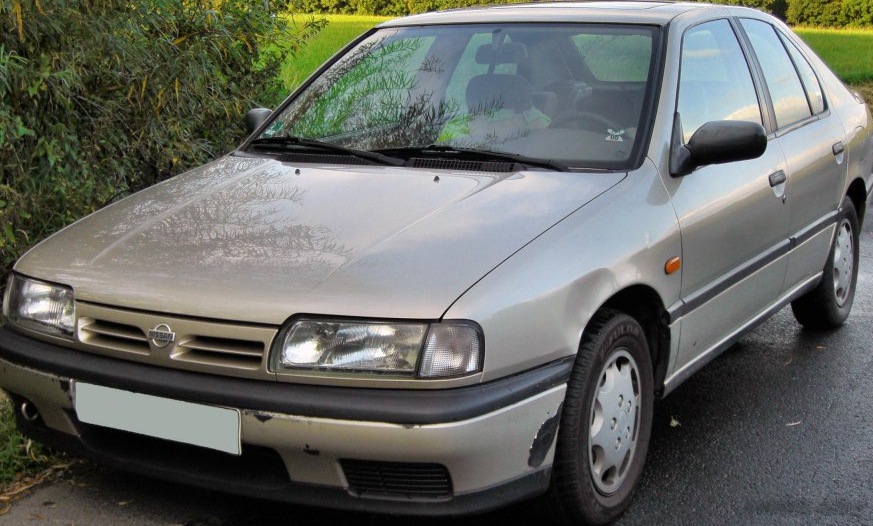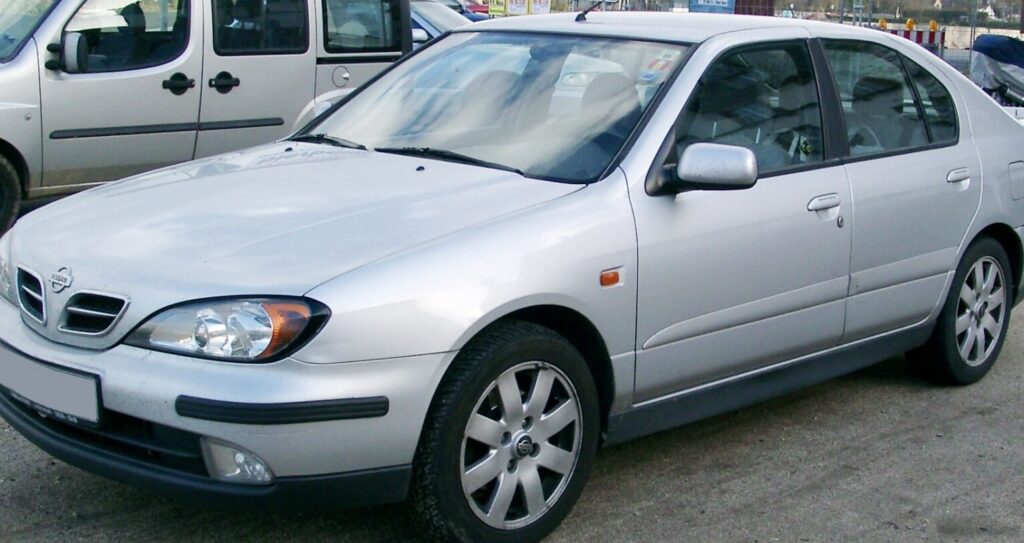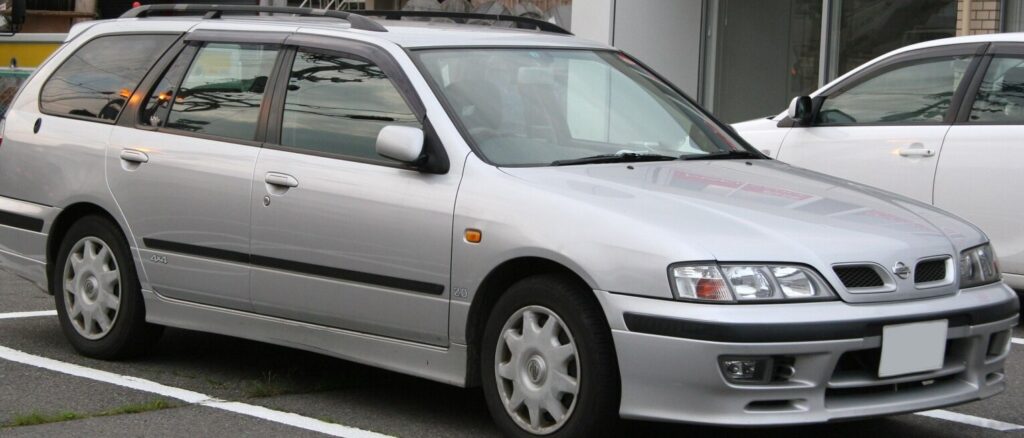
The Nissan Primera Wagon (P11) 1.6 16V, producing 99 horsepower, was a mainstay of the Primera range in Europe and other international markets from 1998 to 2002. Representing an entry-level option within the P11 wagon lineup, it offered practical family transport with reasonable fuel economy. The P11 generation Primera, launched in 1997, was a significant step forward for Nissan in the mid-size segment, aiming to compete with established rivals like the Ford Mondeo and Volkswagen Passat. The wagon body style, introduced shortly after the sedan, catered to buyers needing increased cargo capacity without sacrificing the Primera’s comfortable ride and relatively refined interior.
Technical Specifications
| Brand | Nissan |
| Model | Primera |
| Generation | Primera Wagon (P11) |
| Type (Engine) | 1.6 16V (99 Hp) |
| Start of production | 1998 |
| End of production | 2002 |
| Powertrain Architecture | Internal Combustion engine |
| Body type | Station wagon (estate) |
| Seats | 5 |
| Doors | 5 |
| Fuel consumption (urban) | 9.9 l/100 km (23.8 US mpg) |
| Fuel consumption (extra urban) | 6.2 l/100 km (37.9 US mpg) |
| Fuel Type | Petrol (Gasoline) |
| Acceleration 0 – 100 km/h | 12.8 sec |
| Acceleration 0 – 62 mph | 12.8 sec |
| Acceleration 0 – 60 mph | 12.2 sec |
| Maximum speed | 176 km/h (109.36 mph) |
| Weight-to-power ratio | 12.8 kg/Hp |
| Weight-to-torque ratio | 9.3 kg/Nm |
| Power | 99 Hp @ 6000 rpm |
| Power per litre | 62 Hp/l |
| Torque | 136 Nm @ 4000 rpm (100.31 lb.-ft. @ 4000 rpm) |
| Engine layout | Front, Transverse |
| Engine Model/Code | GA16DE |
| Engine displacement | 1597 cm3 (97.45 cu. in.) |
| Number of cylinders | 4 |
| Engine configuration | Inline |
| Cylinder Bore | 76 mm (2.99 in.) |
| Piston Stroke | 88 mm (3.46 in.) |
| Compression ratio | 9.8:1 |
| Number of valves per cylinder | 4 |
| Fuel injection system | Multi-port manifold injection |
| Engine aspiration | Naturally aspirated engine |
| Valvetrain | DOHC |
| Engine oil capacity | 3.3 l (3.49 US qt | 2.9 UK qt) |
| Coolant capacity | 5.5 l (5.81 US qt | 4.84 UK qt) |
| Kerb Weight | 1270 kg (2799.87 lbs.) |
| Max. weight | 1750 kg (3858.09 lbs.) |
| Max load | 480 kg (1058.22 lbs.) |
| Trunk (boot) space – minimum | 430 l (15.19 cu. ft.) |
| Trunk (boot) space – maximum | 1650 l (58.27 cu. ft.) |
| Fuel tank capacity | 60 l (15.85 US gal | 13.2 UK gal) |
| Length | 4516 mm (177.8 in.) |
| Width | 1715 mm (67.52 in.) |
| Height | 1450 mm (57.09 in.) |
| Wheelbase | 2600 mm (102.36 in.) |
| Front track | 1471 mm (57.91 in.) |
| Rear track | 1460 mm (57.48 in.) |
| Drivetrain Architecture | Front wheel drive |
| Number of gears | 5 |
| Gearbox type | Manual transmission |
| Front suspension | Spring-loaded rack |
| Rear suspension | Spring-loaded rack |
| Front brakes | Ventilated discs |
| Rear brakes | Disc |
| Assisting systems | ABS (Anti-lock braking system) |
| Steering type | Steering rack and pinion |
| Power steering | Hydraulic |
| Tires size | 185/65R15 |
Powertrain & Engine Architecture
The heart of the Primera Wagon 1.6 16V was the GA16DE engine, a 1.6-liter inline-four cylinder powerplant. This engine, part of Nissan’s GA series, featured a cast iron block and an aluminum cylinder head with dual overhead camshafts (DOHC) and four valves per cylinder. The GA16DE utilized multi-point fuel injection, delivering fuel directly to each intake port for improved combustion efficiency. The 99 horsepower output was achieved at 6000 rpm, with peak torque of 136 Nm (100.31 lb-ft) arriving at 4000 rpm. The engine’s design prioritized reliability and fuel economy over outright performance. The standard transmission was a five-speed manual, although a four-speed automatic transmission was also available, albeit impacting acceleration and fuel consumption. The automatic transmission was a conventional hydraulic unit, offering smooth but not particularly sporty shifts.
Driving Characteristics
The 1.6-liter engine, paired with the wagon’s weight of approximately 1270 kg (2799.87 lbs), resulted in a 0-60 mph time of around 12.2 seconds. While not a particularly quick car, the Primera Wagon 1.6 16V provided adequate performance for everyday driving. The engine felt relatively responsive at lower speeds, making it suitable for urban commutes. However, overtaking maneuvers required careful planning, and the engine could feel strained when fully loaded or climbing hills. The five-speed manual transmission allowed drivers to keep the engine in its optimal power band, while the automatic version prioritized convenience over driver engagement. The suspension, tuned for comfort, provided a smooth ride, absorbing bumps and imperfections in the road surface effectively. Steering was light and precise, making the car easy to maneuver.
Equipment & Trim Levels
The Primera Wagon 1.6 16V typically came equipped with a reasonable level of standard features. These included power steering, central locking, electric front windows, and an AM/FM radio. Higher trim levels, such as the SE or LX, added features like alloy wheels, air conditioning, a CD player, and upgraded interior trim. Interior upholstery was typically cloth, with a dark color scheme. Optional extras included a sunroof, rear parking sensors, and upgraded audio systems. The dashboard layout was functional and straightforward, with clearly labeled controls. Safety features included ABS anti-lock brakes, which were standard across the range.
Chassis & Braking
The Primera Wagon utilized a MacPherson strut front suspension and a spring-loaded rack rear suspension. This setup provided a good balance between ride comfort and handling. The front brakes were ventilated discs, offering good stopping power, while the rear brakes were solid discs. The ABS system helped to prevent wheel lockup during hard braking, enhancing safety. The steering was a rack and pinion system with hydraulic power assistance, providing light and precise steering feel. Tire size was typically 185/65R15, offering a good compromise between comfort and grip.
Market Reception & Comparison
The Primera Wagon 1.6 16V was generally well-received by critics as a practical and affordable family car. It was praised for its comfortable ride, spacious interior, and reasonable fuel economy. However, it was often criticized for its lack of outright performance compared to some of its rivals. Compared to the higher-powered Primera variants, such as the 2.0-liter models, the 1.6-liter engine felt underpowered. The 1.9 TDI diesel version offered significantly better fuel economy but lacked the refinement of the petrol engine. In terms of reliability, the GA16DE engine proved to be generally robust, although regular maintenance was essential.
Legacy
The Nissan Primera Wagon 1.6 16V remains a relatively common sight on used car markets today. Its reputation for reliability and affordability has made it a popular choice for budget-conscious buyers. While not a particularly exciting car to drive, it offers a practical and comfortable solution for family transport. The GA16DE engine is known for its durability, and with proper maintenance, it can provide many years of reliable service. However, potential buyers should be aware of potential issues such as oil leaks and corrosion, particularly on older examples. The P11 Primera, in general, is remembered as a solid and dependable mid-size family car that offered good value for money.