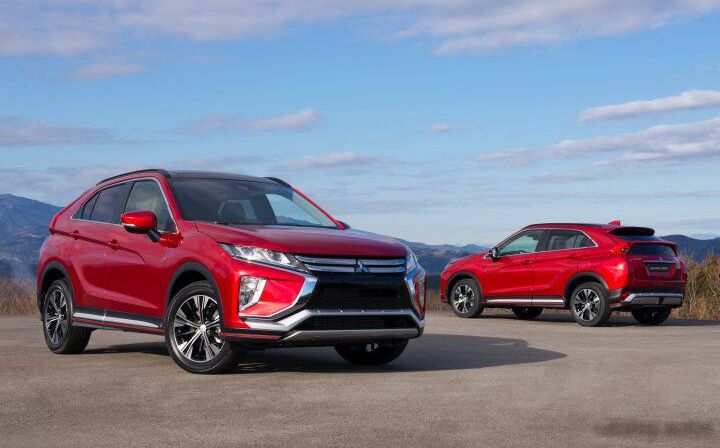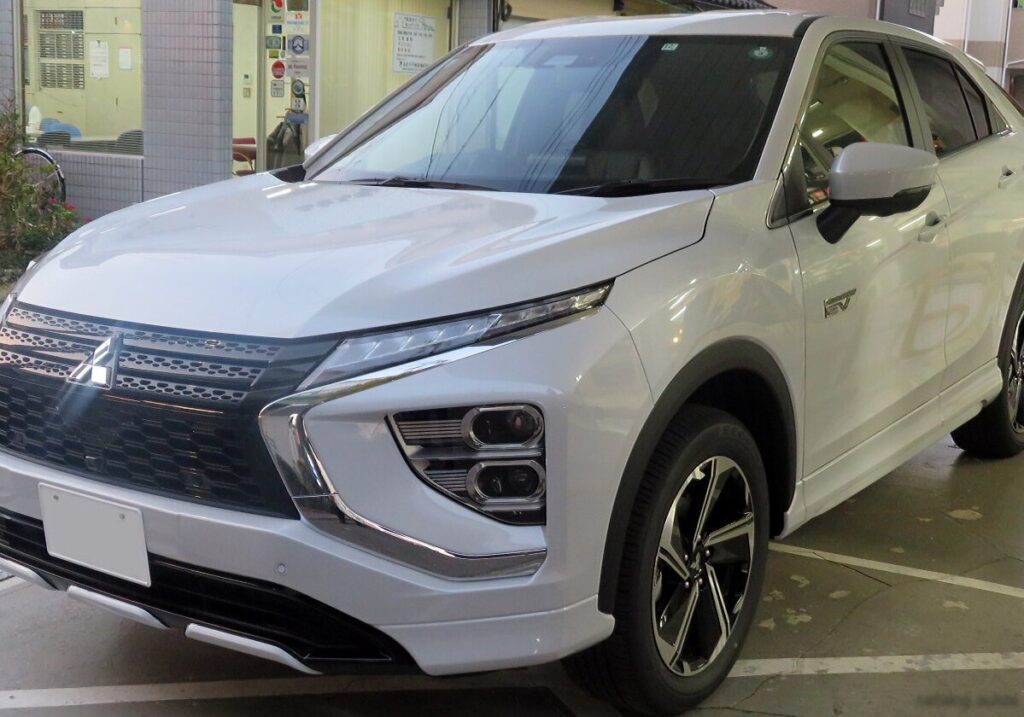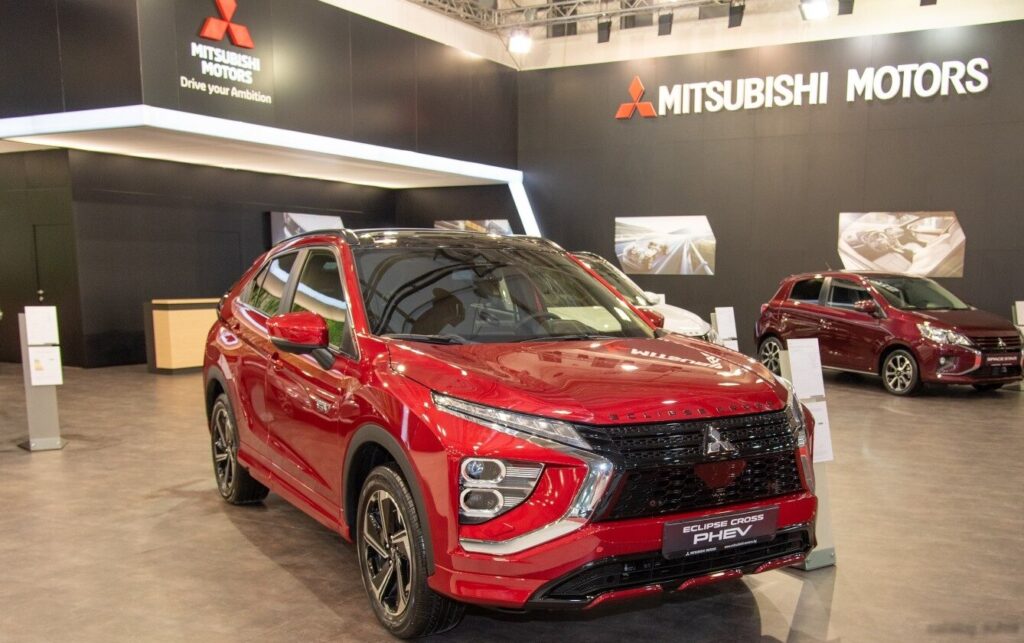
The Mitsubishi Eclipse Cross, launched in 2017, represented Mitsubishi’s entry into the highly competitive compact SUV segment. The first generation, known internally as GK7W, underwent a significant facelift in 2021, introducing updated styling, improved technology, and a new plug-in hybrid powertrain option. This article focuses specifically on the 2021 facelifted Mitsubishi Eclipse Cross equipped with the 2.4 MIVEC Plug-in Hybrid S-AWC (Super All-Wheel Control) system, producing a combined system output of 188 horsepower. Production of this variant began in 2021, primarily targeting markets in Europe, Australia, and New Zealand, where demand for fuel-efficient and environmentally conscious vehicles was growing. The Eclipse Cross aimed to offer a blend of practicality, technology, and Mitsubishi’s renowned all-wheel-drive capability.
Technical Specifications
| Brand | Mitsubishi |
| Model | Eclipse Cross |
| Generation | Eclipse Cross I (facelift 2021) |
| Type (Engine) | 2.4 MIVEC (188 Hp) Plug-in Hybrid S-AWC |
| Start of production | 2021 |
| Powertrain Architecture | PHEV (Plug-in Hybrid Electric Vehicle) |
| Body type | SUV |
| Seats | 5 |
| Doors | 5 |
| Fuel consumption (combined) | 1.8 l/100 km (130.7 US mpg, 156.9 UK mpg, 55.6 km/l) |
| CO2 emissions | 41 g/km |
| Fuel Type | Petrol / electricity |
| Acceleration 0 – 100 km/h | 10.9 sec |
| Acceleration 0 – 62 mph | 10.9 sec |
| Acceleration 0 – 60 mph | 10.4 sec |
| Maximum speed | 162 km/h (100.66 mph) |
| Emission standard | Euro 6d |
| Weight-to-power ratio | 10.2 kg/Hp, 98.4 Hp/tonne |
| Weight-to-torque ratio | 9.9 kg/Nm, 101 Nm/tonne |
| Gross battery capacity | 13.8 kWh |
| Battery voltage | 300 V |
| Battery technology | Lithium-ion (Li-Ion) |
| Battery location | Below the floor |
| All-electric range (WLTP) | 45 km (27.96 mi) |
| All-electric range | 61 km (37.9 mi) |
| Average Energy consumption | 19.3 kWh/100 km (31.06 kWh/100 mi, 108 MPGe, 5.2 km/kWh, 3.2 mi/kWh) |
| Max speed (electric) | 135 km/h (83.89 mph) |
| Electric motor power (1) | 82 Hp |
| Electric motor Torque (1) | 137 Nm (101.05 lb.-ft.) |
| Electric motor model/code (1) | S61 |
| Electric motor location (1) | Integrated into the transmission |
| Electric motor power (2) | 95 Hp |
| Electric motor Torque (2) | 195 Nm (143.82 lb.-ft.) |
| Electric motor model/code (2) | Y61 |
| Electric motor location (2) | Rear axle, Transverse |
| System power | 188 Hp |
| Power | 98 Hp @ 4000 rpm |
| Torque | 193 Nm @ 2500 rpm (142.35 lb.-ft. @ 2500 rpm) |
| Engine layout | Front, Transverse |
| Engine Model/Code | 4B12 |
| Engine displacement | 2360 cm3 (144.02 cu. in.) |
| Number of cylinders | 4 |
| Engine configuration | Inline |
| Cylinder Bore | 88 mm (3.46 in.) |
| Piston Stroke | 97 mm (3.82 in.) |
| Compression ratio | 12:1 |
| Number of valves per cylinder | 4 |
| Fuel injection system | Multi-port manifold injection |
| Engine aspiration | Naturally aspirated engine |
| Valvetrain | DOHC |
| Engine oil capacity | 4.6 l (4.86 US qt | 4.05 UK qt) |
| Coolant | 6.5 l (6.87 US qt | 5.72 UK qt) |
| Kerb Weight | 1910 kg (4210.83 lbs.) |
| Max. weight | 2425 kg (5346.21 lbs.) |
| Max load | 515 kg (1135.38 lbs.) |
| Trunk (boot) space – minimum | 359 l (12.68 cu. ft.) |
| Trunk (boot) space – maximum | 1108 l (39.13 cu. ft.) |
| Fuel tank capacity | 43 l (11.36 US gal | 9.46 UK gal) |
| Max. roof load | 50 kg (110.23 lbs.) |
| Permitted trailer load with brakes (12%) | 1500 kg (3306.93 lbs.) |
| Permitted trailer load without brakes | 750 kg (1653.47 lbs.) |
| Permitted towbar download | 75 kg (165.35 lbs.) |
| Length | 4545 mm (178.94 in.) |
| Width | 1805 mm (71.06 in.) |
| Width including mirrors | 2166 mm (85.28 in.) |
| Height | 1685 mm (66.34 in.) |
| Wheelbase | 2670 mm (105.12 in.) |
| Front track | 1540 mm (60.63 in.) |
| Rear (Back) track | 1540 mm (60.63 in.) |
| Front overhang | 990 mm (38.98 in.) |
| Rear overhang | 885 mm (34.84 in.) |
| Ride height (ground clearance) | 191 mm (7.52 in.) |
| Minimum turning circle (turning diameter) | 10.6 m (34.78 ft.) |
| Approach angle | 20.4° |
| Departure angle | 29.6° |
| Ramp-over (brakeover) angle | 18.5° |
| Drivetrain Architecture | An Internal combustion engine (ICE) drives the front wheels, one electric motor drives the front wheels, one electric motor drives the rear wheels. There is an ability for running in full electric or mixed mode. |
| Drive wheel | All wheel drive (4×4) |
| Front suspension | Independent, type McPherson with coil spring and anti-roll bar |
| Rear suspension | Independent multi-link spring suspension with stabilizer |
| Front brakes | Ventilated discs |
| Rear brakes | Disc |
| Assisting systems | ABS (Anti-lock braking system) |
| Steering type | Steering rack and pinion |
| Power steering | Electric Steering |
| Tires size | 225/55 R18 |
| Wheel rims size | 7J x 18 |
INTRODUCTION
The 2021 facelift of the Mitsubishi Eclipse Cross marked a significant step forward for the model, particularly with the introduction of the plug-in hybrid variant. Built on the GK7W platform, this version combined a 2.4-liter MIVEC four-cylinder gasoline engine with two electric motors – one powering the front wheels and another driving the rear axle – creating a sophisticated all-wheel-drive system known as S-AWC. This configuration allowed for both fully electric driving for shorter distances and a hybrid mode for longer journeys, appealing to environmentally conscious buyers. Positioned as a mid-range offering within the Eclipse Cross lineup, the PHEV variant offered a compelling blend of fuel efficiency, all-weather capability, and modern technology.
Powertrain & Engine Architecture
The heart of the 2021 Eclipse Cross PHEV is the 4B12 2.4-liter MIVEC (Mitsubishi Innovative Valve timing and lift Electronic Control) inline-four cylinder engine. This naturally aspirated engine produces 98 horsepower at 4000 rpm and 193 Nm (142.35 lb-ft) of torque at 2500 rpm. The MIVEC system optimizes valve timing for improved efficiency and power delivery. The engine utilizes multi-port fuel injection. Complementing the engine are two electric motors. The front motor (S61 code) delivers 82 hp and 137 Nm (101.05 lb-ft) of torque, while the rear motor (Y61 code) provides 95 hp and 195 Nm (143.82 lb-ft). The combined system output is 188 hp. The powertrain utilizes a single-speed reduction gear for each electric motor. The 13.8 kWh lithium-ion battery pack is located under the floor, contributing to a lower center of gravity and improved handling. The transmission is effectively a sophisticated power-split system managed by the vehicle’s control unit, seamlessly blending power from the engine and electric motors.
Driving Characteristics
The 2.4 MIVEC Plug-in Hybrid S-AWC Eclipse Cross offers a distinct driving experience compared to its gasoline-only counterparts. In full electric mode, the vehicle provides smooth, quiet acceleration, suitable for urban commuting. The all-electric range of up to 45 km (27.96 miles) allows for zero-emission driving on shorter trips. When the battery is depleted or requires assistance, the gasoline engine seamlessly kicks in, providing a combined output that delivers adequate, though not particularly sporty, performance. Acceleration from 0-60 mph takes around 10.4 seconds. The S-AWC system provides excellent traction and stability, particularly in adverse weather conditions. The gear ratios are optimized for efficiency rather than outright performance, resulting in a more relaxed and refined driving experience. Compared to the 1.5-liter turbocharged gasoline engine offered in other Eclipse Cross trims, the PHEV prioritizes fuel economy and low-speed torque over outright horsepower.
Equipment & Trim Levels
The 2021 Eclipse Cross PHEV typically came well-equipped, reflecting its position as a mid-range offering. Standard features generally included automatic climate control, a touchscreen infotainment system with Apple CarPlay and Android Auto compatibility, a rearview camera, and a suite of advanced driver-assistance systems (ADAS) such as automatic emergency braking and lane departure warning. Interior upholstery was typically cloth or a combination of cloth and synthetic leather. Optional extras often included a panoramic sunroof, heated front seats, a premium audio system, and upgraded alloy wheels. The dashboard layout was updated with the facelift, featuring a more modern and streamlined design.
Chassis & Braking
The Eclipse Cross PHEV utilizes an independent McPherson strut suspension at the front and an independent multi-link suspension at the rear, providing a comfortable and controlled ride. Stabilizer bars are fitted to both axles to reduce body roll during cornering. The added weight of the battery pack and electric motors necessitated a slightly stiffer suspension setup compared to the standard gasoline models. Braking duties are handled by ventilated discs at the front and solid discs at the rear, equipped with ABS (Anti-lock Braking System) and electronic brake-force distribution. The regenerative braking system helps to recapture energy during deceleration, further enhancing fuel efficiency.
Market Reception & Comparison
The 2021 Mitsubishi Eclipse Cross PHEV was generally well-received by critics, who praised its fuel efficiency, all-wheel-drive capability, and comfortable ride. However, some reviewers noted that the combined system output of 188 hp felt somewhat underpowered for a vehicle of its size and weight. Compared to other plug-in hybrid SUVs in the same segment, such as the Toyota RAV4 Prime, the Eclipse Cross offered a more affordable price point but lacked the same level of performance. Fuel economy was a strong point, with combined figures of 1.8 l/100 km (130.7 US mpg) making it one of the most efficient SUVs in its class. Reliability reports have been generally positive, with the powertrain proving to be relatively robust.
Legacy
The Mitsubishi Eclipse Cross PHEV represents a significant step in Mitsubishi’s commitment to electrification. While not a sales leader in its segment, it established the brand as a player in the growing plug-in hybrid market. The powertrain, while not without its critics regarding performance, has proven to be reasonably reliable in real-world use. On the used car market, the 2021 Eclipse Cross PHEV remains a viable option for buyers seeking a fuel-efficient and capable compact SUV with all-wheel drive. Its long-term value will likely depend on battery health and maintenance records, but it continues to offer a compelling package for those prioritizing environmental responsibility and practicality.