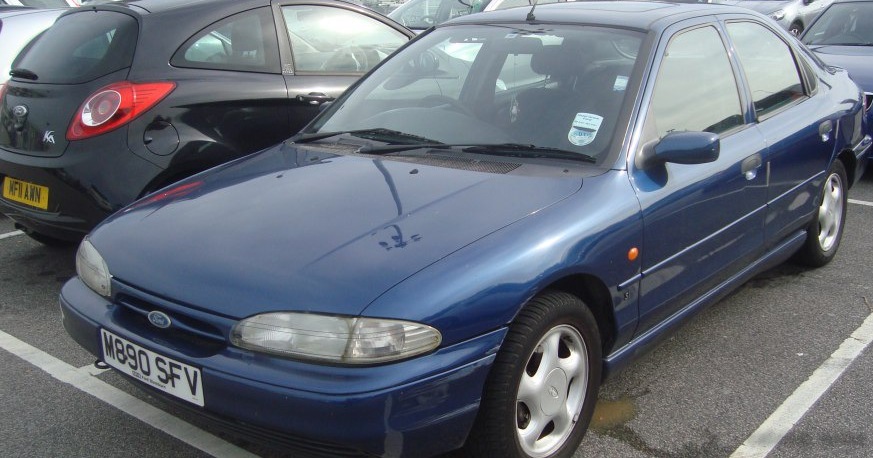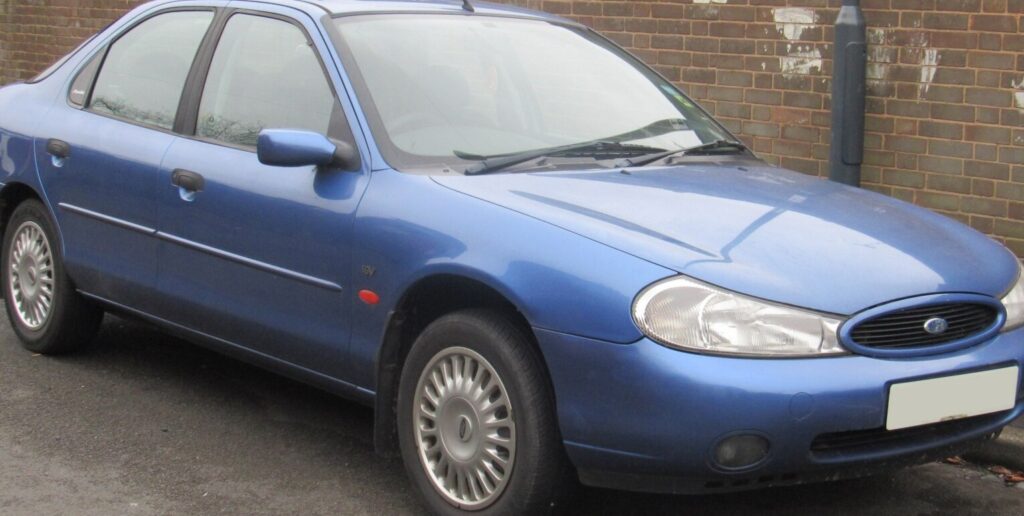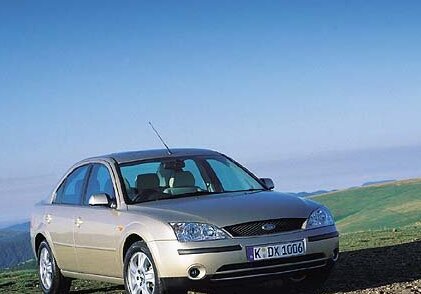
The Ford Mondeo II Sedan 1.8, produced between 2001 and 2006, represented a key offering in Ford’s mid-size family car lineup. Positioned as an accessible entry point to the second-generation Mondeo (internally designated as the B500 series), this variant aimed to balance affordability with the Mondeo’s established reputation for spaciousness and comfortable driving dynamics. It served as a popular choice in European markets, where the Mondeo competed directly with vehicles like the Volkswagen Passat, Opel Vectra, and Peugeot 406. The 1.8L engine, coupled with a five-speed manual transmission, provided a practical and economical option for buyers prioritizing fuel efficiency and everyday usability over outright performance.
Technical Specifications
| Brand | Ford |
| Model | Mondeo |
| Generation | Mondeo II Sedan |
| Type (Engine) | 1.8 (125 Hp) |
| Start of production | 2001 |
| End of production | 2006 |
| Powertrain Architecture | Internal Combustion engine |
| Body type | Sedan |
| Seats | 5 |
| Doors | 4 |
| Fuel consumption (urban) | 11.2 l/100 km (21 US mpg) |
| Fuel consumption (extra urban) | 5.8 l/100 km (40.6 US mpg) |
| Fuel consumption (combined) | 7.8 l/100 km (30.2 US mpg) |
| Fuel Type | Petrol (Gasoline) |
| Acceleration 0 – 100 km/h | 10.8 sec |
| Acceleration 0 – 62 mph | 10.8 sec |
| Acceleration 0 – 60 mph | 10.3 sec |
| Maximum speed | 205 km/h (127.38 mph) |
| Weight-to-power ratio | 11 kg/Hp |
| Weight-to-torque ratio | 8.1 kg/Nm |
| Power | 125 Hp @ 6000 rpm |
| Torque | 170 Nm @ 4500 rpm (125.39 lb.-ft. @ 4500 rpm) |
| Engine layout | Front, Transverse |
| Engine Model/Code | CHBA |
| Engine displacement | 1798 cm3 (109.72 cu. in.) |
| Number of cylinders | 4 |
| Engine configuration | Inline |
| Cylinder Bore | 83 mm (3.27 in.) |
| Piston Stroke | 83.1 mm (3.27 in.) |
| Compression ratio | 10.8:1 |
| Number of valves per cylinder | 4 |
| Fuel injection system | Multi-port manifold injection |
| Engine aspiration | Naturally aspirated engine |
| Valvetrain | DOHC |
| Engine oil capacity | 4.3 l (4.54 US qt | 3.78 UK qt) |
| Coolant capacity | 8.1 l (8.56 US qt | 7.13 UK qt) |
| Kerb Weight | 1373 kg (3026.95 lbs.) |
| Max. weight | 1865 kg (4111.62 lbs.) |
| Max load | 492 kg (1084.67 lbs.) |
| Trunk (boot) space – minimum | 500 l (17.66 cu. ft.) |
| Fuel tank capacity | 58 l (15.32 US gal | 12.76 UK gal) |
| Length | 4731 mm (186.26 in.) |
| Width | 1812 mm (71.34 in.) |
| Height | 1429 mm (56.26 in.) |
| Wheelbase | 2754 mm (108.43 in.) |
| Front track | 1522 mm (59.92 in.) |
| Rear track | 1537 mm (60.51 in.) |
| Drivetrain Architecture | Front wheel drive |
| Number of gears | 5 |
| Gearbox type | Manual transmission |
| Front suspension | Wishbone |
| Rear suspension | Coil spring |
| Front brakes | Ventilated discs |
| Rear brakes | Disc |
| Assisting systems | ABS (Anti-lock braking system) |
| Steering type | Steering rack and pinion |
| Power steering | Hydraulic Steering |
| Tires size | 205/55 R16 |
Powertrain & Engine Architecture
The heart of this Mondeo variant was the Ford CHBA engine, a 1.8-liter inline-four cylinder gasoline engine. This engine belonged to the Ford Zetec-E family, known for its relatively simple design and durability. The CHBA featured a multi-port fuel injection system, delivering fuel directly into the intake ports, and a double overhead camshaft (DOHC) valvetrain, optimizing airflow for improved performance. The engine produced 125 horsepower at 6000 rpm and 170 Nm (125 lb-ft) of torque at 4500 rpm. The five-speed manual transmission was a standard offering, providing a balance between fuel economy and driver control. The transmission’s gear ratios were tuned for everyday driving, prioritizing smooth shifts and reasonable acceleration rather than sporty performance.
Driving Characteristics
The 1.8L Mondeo Sedan offered a comfortable and predictable driving experience. Acceleration from 0-60 mph took around 10.3 seconds, which was adequate for most daily driving situations but noticeably slower than the higher-powered 2.0L or V6 versions. The engine felt responsive enough in normal driving conditions, but required downshifting for quicker overtaking maneuvers. The five-speed manual transmission allowed drivers to maintain optimal engine speed for varying road conditions. Compared to the automatic transmission option available on other Mondeo trims, the manual provided a more engaging driving experience and slightly better fuel economy. The suspension, tuned for comfort, absorbed bumps and imperfections in the road well, contributing to a smooth ride.
Equipment & Trim Levels
The 1.8L Mondeo typically came equipped with a reasonable level of standard features. These generally included power steering, central locking, electric front windows, and an AM/FM radio. Higher trim levels, such as the Ghia, offered additional features like alloy wheels, air conditioning, upgraded upholstery, and a more comprehensive audio system. Optional extras available for the 1.8L model included a sunroof, rear parking sensors, and upgraded interior trim materials. The interior generally featured durable cloth upholstery and a functional, if somewhat understated, dashboard design.
Chassis & Braking
The Mondeo II Sedan utilized a front-wheel-drive layout with independent wishbone suspension at the front and a coil spring rear suspension. This setup provided a good balance between ride comfort and handling. The braking system consisted of ventilated discs at the front and solid discs at the rear, providing adequate stopping power for the vehicle’s weight and performance. Anti-lock Braking System (ABS) was standard, enhancing safety by preventing wheel lockup during hard braking. The steering was rack and pinion, offering precise and responsive control.
Market Reception & Comparison
The 1.8L Mondeo Sedan was generally well-received by automotive critics as a practical and affordable family car. It was praised for its spacious interior, comfortable ride, and good fuel economy. However, some reviewers noted that the engine lacked the punch of the higher-powered options. Compared to the 2.0L Mondeo, the 1.8L offered lower running costs but sacrificed performance. The V6 models provided significantly more power but came with a higher price tag and increased fuel consumption. In terms of reliability, the CHBA engine proved to be generally dependable, although regular maintenance was essential to prevent issues such as oil leaks and timing belt failure.
Legacy
The Ford Mondeo II Sedan 1.8 remains a relatively common sight on used car markets today. Its reputation for reliability and affordability has made it a popular choice for budget-conscious buyers. While not a performance icon, the 1.8L engine has proven to be durable and relatively easy to maintain. Parts availability is generally good, and the Mondeo’s simple mechanical design makes it accessible to amateur mechanics. However, potential buyers should be aware of the importance of regular timing belt replacement, as failure can result in significant engine damage. Overall, the 1.8L Mondeo Sedan represents a solid and dependable family car that continues to offer good value for money.