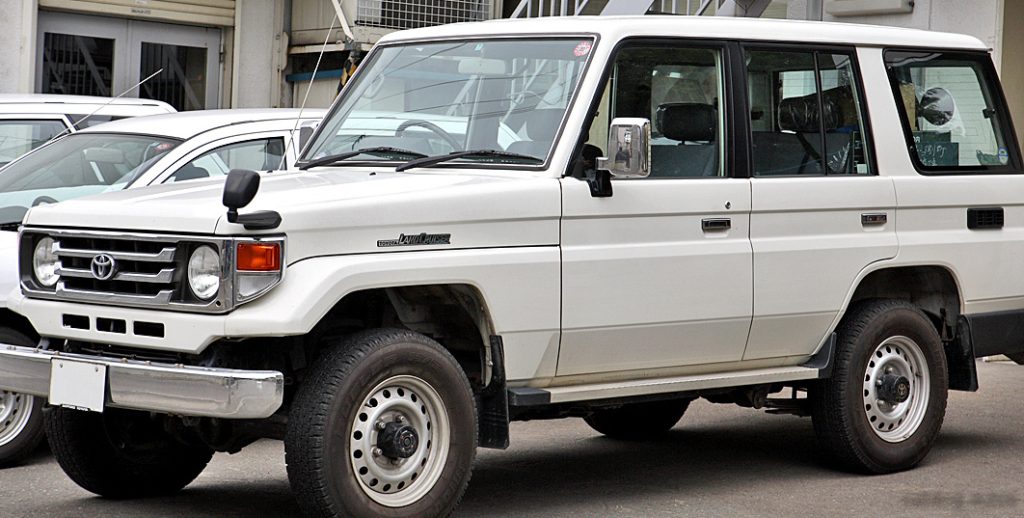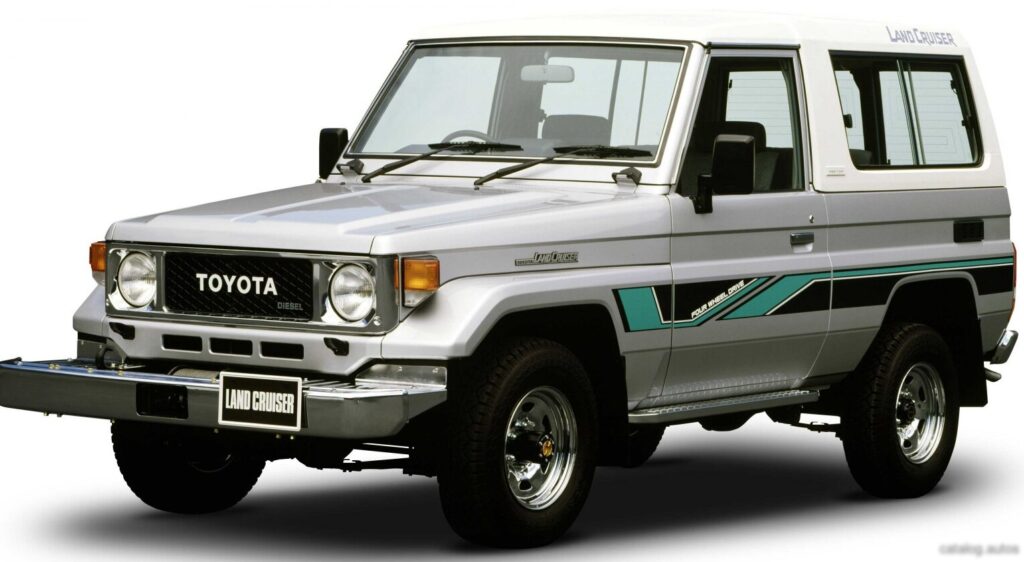
The Toyota Land Cruiser J70 series, produced from 1984 to 1998, represents a pivotal generation for the iconic off-road vehicle. Within this series, the J73 variant, specifically equipped with the 2.4-liter (RJ73) engine producing 110 horsepower, occupied a unique position. This model, manufactured between 1984 and 1989, was primarily aimed at markets outside of North America, where a more utilitarian and rugged Land Cruiser was favored. The J73, characterized by its short wheelbase and three-door configuration, was designed for practicality and maneuverability in challenging terrains. It served as a workhorse vehicle, popular with agricultural users, forestry services, and those requiring a robust 4×4 for remote areas.
Technical Specifications
| Brand | Toyota |
| Model | Land Cruiser |
| Generation | Land Cruiser (J70, J73) |
| Type | 2.4 (RJ73) (110 Hp) 4WD |
| Start of production | 1984 |
| End of production | 1989 |
| Powertrain Architecture | Internal Combustion engine |
| Body type | Off-road vehicle |
| Seats | 8 |
| Doors | 3 |
| Fuel Type | Petrol (Gasoline) |
| Power | 110 Hp @ 5000 rpm |
| Power per litre | 46.5 Hp/l |
| Torque | 187 Nm @ 3400 rpm / 137.92 lb.-ft. @ 3400 rpm |
| Engine layout | Front, Longitudinal |
| Engine Model/Code | 22R |
| Engine displacement | 2366 cm3 / 144.38 cu. in. |
| Number of cylinders | 4 |
| Engine configuration | Inline |
| Cylinder Bore | 92 mm / 3.62 in. |
| Piston Stroke | 89 mm / 3.5 in. |
| Compression ratio | 9:1 |
| Fuel injection system | Carburettor |
| Engine aspiration | Naturally aspirated engine |
| Engine oil capacity | 4.2 l / 4.44 US qt | 3.7 UK qt |
| Fuel tank capacity | 90 l / 23.78 US gal | 19.8 UK gal |
| Length | 4405 mm / 173.43 in. |
| Width | 1790 mm / 70.47 in. |
| Height | 1950 mm / 76.77 in. |
| Wheelbase | 2600 mm / 102.36 in. |
| Front track | 1455 mm / 57.28 in. |
| Rear track | 1440 mm / 56.69 in. |
| Drivetrain Architecture | The Internal combustion engine (ICE) drives the rear wheels permanently, and the front wheels are driven through an electrically or mechanically operated clutch if necessary. |
| Drive wheel | All wheel drive (4×4) |
| Number of gears | 5 gears, manual transmission |
| Front suspension | Leaf spring |
| Rear suspension | Leaf spring |
| Front brakes | Ventilated discs |
| Rear brakes | Drum |
| Steering type | Cone worm with recirculation balls |
| Tires size | 265/75 R15 |
Powertrain & Engine Architecture
The heart of the J73 RJ73 is the Toyota 22R engine, a 2.4-liter inline-four cylinder gasoline engine. This engine, a staple of Toyota’s lineup during the 1980s, is known for its durability and relative simplicity. The 22R utilizes a single overhead camshaft (SOHC) valvetrain and a two-barrel carburetor for fuel delivery. While not a high-performance engine, the 22R provides adequate torque for off-road applications and a reasonable level of reliability. The 110 horsepower output is achieved at 5000 rpm, while peak torque of 187 Nm (137.92 lb-ft) arrives at 3400 rpm. The engine is longitudinally mounted in the engine bay, driving power to all four wheels through a robust, part-time four-wheel-drive system. The standard transmission for this variant was a five-speed manual gearbox, chosen for its durability and suitability for off-road driving.
Driving Characteristics
The J73 2.4’s driving experience is defined by its ruggedness rather than speed. The 110 hp engine, coupled with the relatively heavy vehicle weight, results in modest acceleration. The five-speed manual transmission allows the driver to keep the engine in its optimal power band, but it requires frequent shifting, especially when ascending hills or navigating challenging terrain. The part-time 4WD system, engaged via a lever inside the cabin, provides excellent traction in low-grip conditions. The leaf spring suspension, while providing a comfortable ride on smoother surfaces, can feel stiff and bouncy on rough terrain. Steering is accomplished through a recirculating ball system, which provides a direct feel but requires more effort than modern rack-and-pinion setups. Compared to later Land Cruiser variants with larger engines or automatic transmissions, the J73 2.4 offers a more engaging and driver-focused experience, albeit at the expense of outright performance.
Equipment & Trim Levels
The J73 RJ73 was typically equipped with a fairly basic level of trim, reflecting its utilitarian purpose. Standard features generally included steel wheels, vinyl or cloth upholstery, a simple dashboard layout, and basic instrumentation. Power steering and air conditioning were often optional extras, depending on the market. The interior was designed for practicality and ease of cleaning, with durable materials used throughout. The J73’s three-door configuration meant limited rear passenger space, but the vehicle could accommodate up to eight occupants with the use of fold-down rear seats. Optional extras could include a winch, roof rack, and upgraded suspension components for more serious off-road use.
Chassis & Braking
The J73’s chassis is a body-on-frame construction, providing exceptional strength and durability. The front suspension utilizes leaf springs, while the rear suspension also employs a leaf spring setup. This configuration is well-suited for carrying heavy loads and traversing rough terrain. Braking duties are handled by ventilated discs at the front and drum brakes at the rear. While adequate for the vehicle’s weight and intended use, the braking system lacks the sophistication of more modern setups. The steering system utilizes a cone worm and recirculating ball mechanism, providing a direct feel but requiring more physical effort from the driver. The J73’s tires are typically 265/75 R15, chosen for their off-road capability and durability.
Market Reception & Comparison
The J73 2.4 was well-received in markets where a rugged, reliable, and affordable 4×4 was in demand. Critics praised its durability, off-road capability, and simple mechanical design. However, the engine’s modest power output and the basic level of trim were often noted. Compared to other Land Cruiser variants, such as those equipped with larger engines or automatic transmissions, the J73 2.4 offered a more affordable entry point into the Land Cruiser family. It was often favored by those who prioritized functionality and reliability over luxury and performance. Fuel economy, while not exceptional, was reasonable for a vehicle of its size and capability.
Legacy
The Toyota Land Cruiser J70 series, and the J73 2.4 variant in particular, has earned a reputation for exceptional longevity and reliability. Many examples are still in use today, often having accumulated hundreds of thousands of miles. The 22R engine is known for its ability to withstand abuse and its relatively simple maintenance requirements. In the used car market, the J73 2.4 remains a popular choice for those seeking a rugged and dependable off-road vehicle. Its simplicity and durability make it a relatively easy vehicle to maintain and repair, even in remote locations. The J73 represents a classic era of Land Cruiser design, embodying the brand’s commitment to building vehicles that can withstand the harshest conditions.