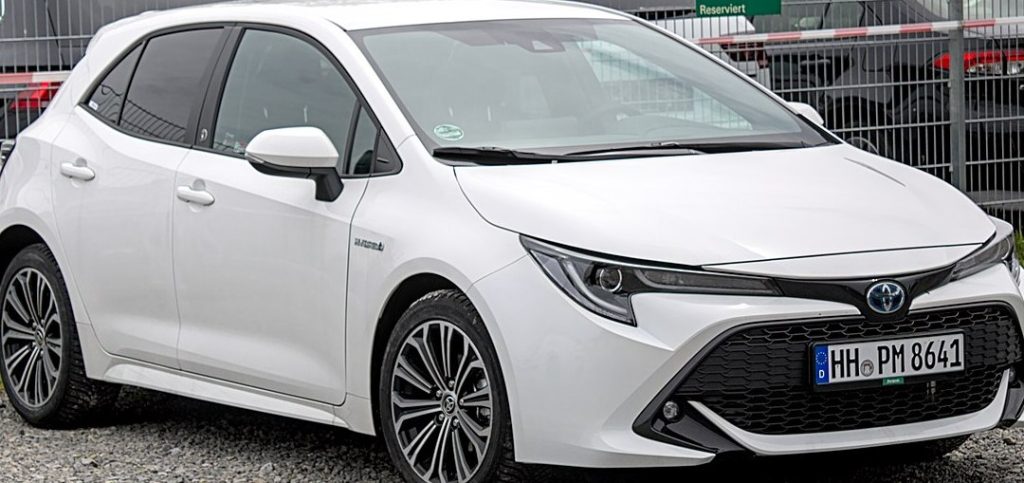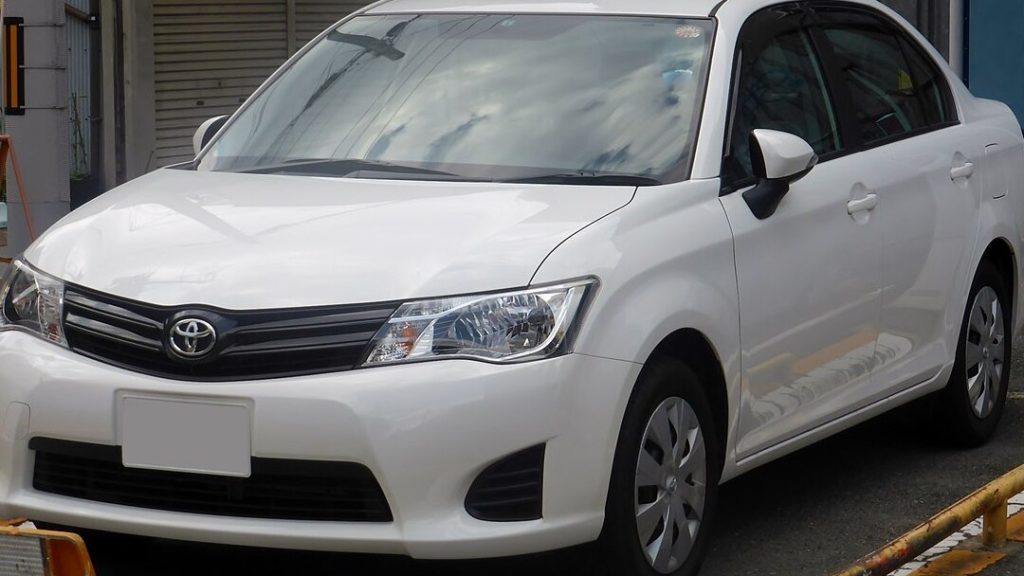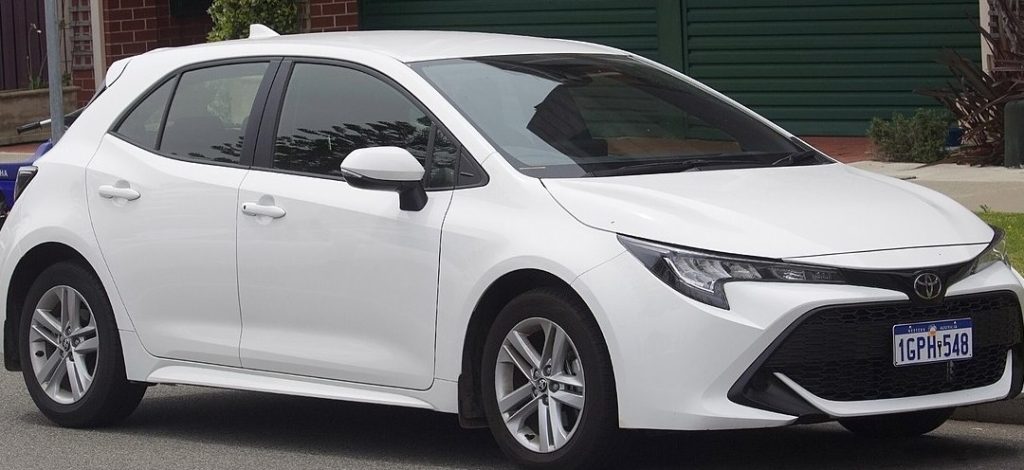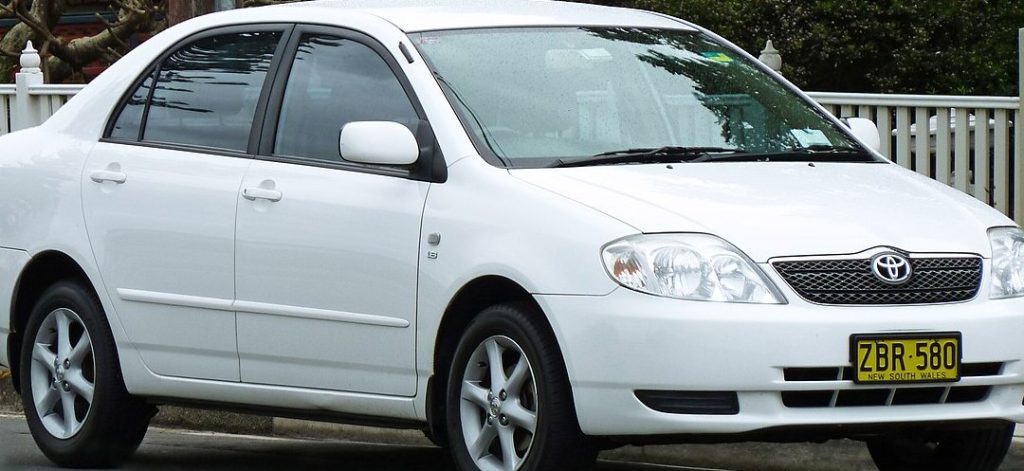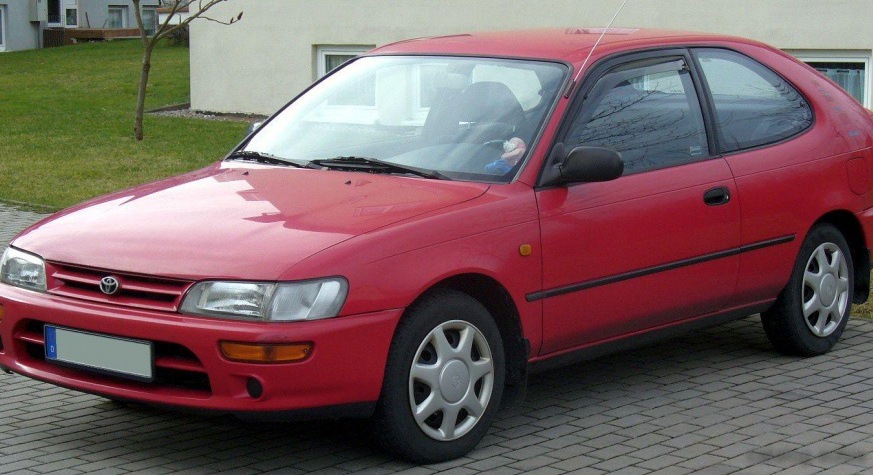
The Toyota Corolla E100, produced between 1995 and 1997, represented the seventh generation of Toyota’s globally successful Corolla line. Available in both 3-door and 5-door hatchback configurations, as well as a sedan, the E100 was a crucial model for Toyota, particularly in Europe and Asia, where compact hatchbacks were immensely popular. The 1.3 i 16V XLi variant, equipped with a 75 horsepower engine and a five-speed manual transmission, served as an entry-level offering, prioritizing fuel efficiency and affordability within the E100 range. It aimed to provide reliable transportation for budget-conscious buyers, and was positioned below the more powerful 1.6L and 1.8L models.
Technical Specifications
| Brand | Toyota |
| Model | Corolla |
| Generation | Corolla Compact VII (E100) |
| Type (Engine) | 1.3 i 16V XLi (75 Hp) |
| Start of production | 1995 |
| End of production | 1997 |
| Powertrain Architecture | Internal Combustion engine |
| Body type | Hatchback |
| Seats | 5 |
| Doors | 3-5 |
| Fuel consumption (combined) | 6.7 l/100 km (35.1 US mpg, 42.2 UK mpg, 14.9 km/l) |
| Fuel Type | Petrol (Gasoline) |
| Acceleration 0 – 100 km/h | 12.8 sec |
| Acceleration 0 – 62 mph | 12.8 sec |
| Acceleration 0 – 60 mph | 12.2 sec |
| Maximum speed | 170 km/h (105.63 mph) |
| Weight-to-power ratio | 20.8 kg/Hp, 48.1 Hp/tonne |
| Weight-to-torque ratio | 13.6 kg/Nm, 73.7 Nm/tonne |
| Power | 75 Hp @ 5400 rpm |
| Power per litre | 56.3 Hp/l |
| Torque | 115 Nm @ 4300 rpm (84.82 lb.-ft. @ 4300 rpm) |
| Engine layout | Front, Transverse |
| Engine Model/Code | 4E-FE |
| Engine displacement | 1332 cm3 (81.28 cu. in.) |
| Number of cylinders | 4 |
| Engine configuration | Inline |
| Cylinder Bore | 74 mm (2.91 in.) |
| Piston Stroke | 77.4 mm (3.05 in.) |
| Compression ratio | 9.6:1 |
| Number of valves per cylinder | 4 |
| Fuel injection system | Multi-port manifold injection |
| Engine aspiration | Naturally aspirated engine |
| Valvetrain | DOHC |
| Engine oil capacity | 3.2 l (3.38 US qt | 2.82 UK qt) |
| Coolant capacity | 4 l (4.23 US qt | 3.52 UK qt) |
| Kerb Weight | 1560 kg (3439.21 lbs.) |
| Max. weight | 1975 kg (4354.13 lbs.) |
| Max load | 415 kg (914.92 lbs.) |
| Trunk (boot) space – minimum | 309 l (10.91 cu. ft.) |
| Trunk (boot) space – maximum | 748 l (26.42 cu. ft.) |
| Fuel tank capacity | 50 l (13.21 US gal | 11 UK gal) |
| Length | 4059 mm (159.8 in.) |
| Width | 1685 mm (66.34 in.) |
| Height | 1380 mm (54.33 in.) |
| Wheelbase | 2465 mm (97.05 in.) |
| Front track | 1460 mm (57.48 in.) |
| Rear track | 1450 mm (57.09 in.) |
| Drivetrain Architecture | Front wheel drive |
| Number of gears | 5 |
| Gearbox type | Manual transmission |
| Front suspension | Spring Strut |
| Rear suspension | Spring Strut |
| Front brakes | Ventilated discs |
| Rear brakes | Drum |
| Assisting systems | ABS (Anti-lock braking system) |
| Steering type | Steering rack and pinion |
| Power steering | Hydraulic Steering |
| Tires size | 165/70 R14 |
INTRODUCTION
The Toyota Corolla E100 1.3 i 16V XLi was a key component of Toyota’s strategy to offer a versatile and affordable compact car. Introduced in 1995 and continuing through 1997, this variant occupied the entry-level position within the E100 lineup. It was designed to appeal to first-time car buyers, those seeking economical transportation, and individuals who prioritized practicality over outright performance. The E100 platform itself represented a significant step forward for the Corolla, offering improved styling, increased interior space, and enhanced safety features compared to its predecessor. The XLi trim level, even in its base 1.3L form, provided a reasonable level of equipment and comfort for the price point.
Powertrain & Engine Architecture
The heart of the 1.3 i 16V XLi is the 4E-FE engine, a 1.3-liter (1332cc) inline-four cylinder gasoline engine. This engine utilizes a single overhead camshaft (SOHC) design, although it features 16 valves (four per cylinder) for improved breathing. The 4E-FE is known for its reliability and fuel efficiency, rather than its power output. Fuel delivery is managed by a multi-port fuel injection system, which precisely meters fuel into each cylinder for optimal combustion. The engine produces 75 horsepower at 5400 rpm and 115 Nm (84.82 lb-ft) of torque at 4300 rpm. The five-speed manual transmission was the standard offering for this variant, providing a balance between fuel economy and driver control. The transmission’s gear ratios were tuned for everyday driving, prioritizing acceleration in the lower gears and comfortable cruising at highway speeds.
Driving Characteristics
The 1.3L engine, paired with the five-speed manual, delivered adequate, but not exhilarating, performance. Acceleration from 0-60 mph took approximately 12.2 seconds, and the top speed was around 105.63 mph. The car felt most comfortable in city driving and on winding roads, where the engine’s torque was sufficient for passing maneuvers. Compared to the 1.6L and 1.8L versions of the E100, the 1.3L felt noticeably slower, particularly when fully loaded with passengers and cargo. However, the lighter engine weight contributed to nimble handling and a more responsive steering feel. The five-speed manual transmission allowed drivers to keep the engine in its optimal power band, maximizing efficiency and performance.
Equipment & Trim Levels
The XLi trim level, even in its base 1.3L configuration, offered a respectable level of standard equipment. Features typically included power steering, central locking, electric windows, and a basic audio system. Interior upholstery was typically cloth, with a simple and functional dashboard layout. Optional extras available for the XLi included air conditioning, alloy wheels, and upgraded audio systems. The interior space was well-utilized, providing comfortable seating for five passengers. The hatchback body style offered excellent versatility, with the rear seats folding down to create a larger cargo area.
Chassis & Braking
The E100 Corolla utilized a relatively simple suspension setup, consisting of MacPherson strut front suspension and a torsion beam rear suspension. This configuration provided a comfortable ride quality, although it wasn’t particularly sporty. The front brakes were ventilated discs, offering good stopping power, while the rear brakes were drums, which were adequate for the car’s weight and performance. Anti-lock braking system (ABS) was available as an option, enhancing safety in emergency braking situations. The steering was rack and pinion, providing precise and responsive handling.
Market Reception & Comparison
The Corolla E100 1.3 i 16V XLi was generally well-received by critics as a practical and reliable compact car. It was praised for its fuel efficiency, affordability, and ease of driving. However, some reviewers noted that the 1.3L engine lacked power, particularly when compared to the larger-displacement engines available in the E100 range. Compared to competitors like the Volkswagen Golf and Ford Escort, the Corolla offered a reputation for exceptional reliability and low running costs. The 1.6L and 1.8L Corolla models offered more performance, but at a higher price point. The 1.3L XLi appealed to buyers who prioritized economy and practicality over outright speed.
Legacy
The Toyota Corolla E100 1.3 i 16V XLi has proven to be a remarkably durable and reliable vehicle. Many examples are still on the road today, testament to Toyota’s engineering quality. The 4E-FE engine is known for its longevity and relatively low maintenance costs. In the used car market, these Corollas are often sought after by buyers looking for an affordable and dependable vehicle. While not a performance icon, the E100 1.3L XLi holds a significant place in automotive history as a symbol of Toyota’s commitment to building reliable and accessible transportation for the masses.