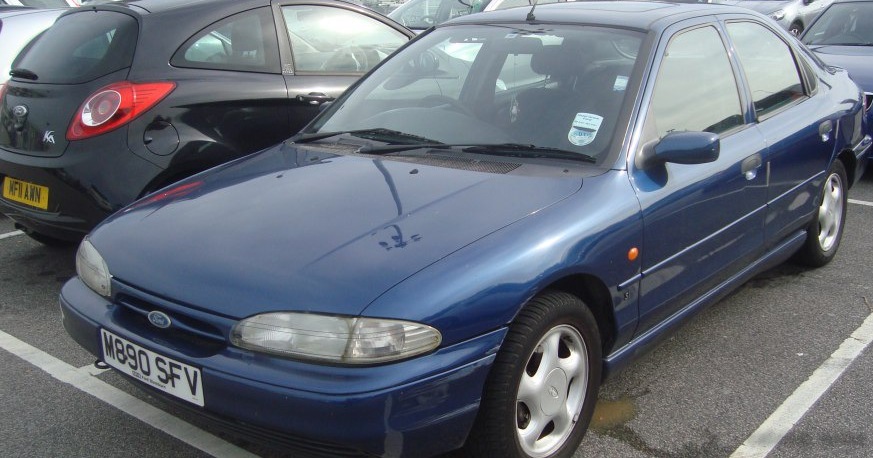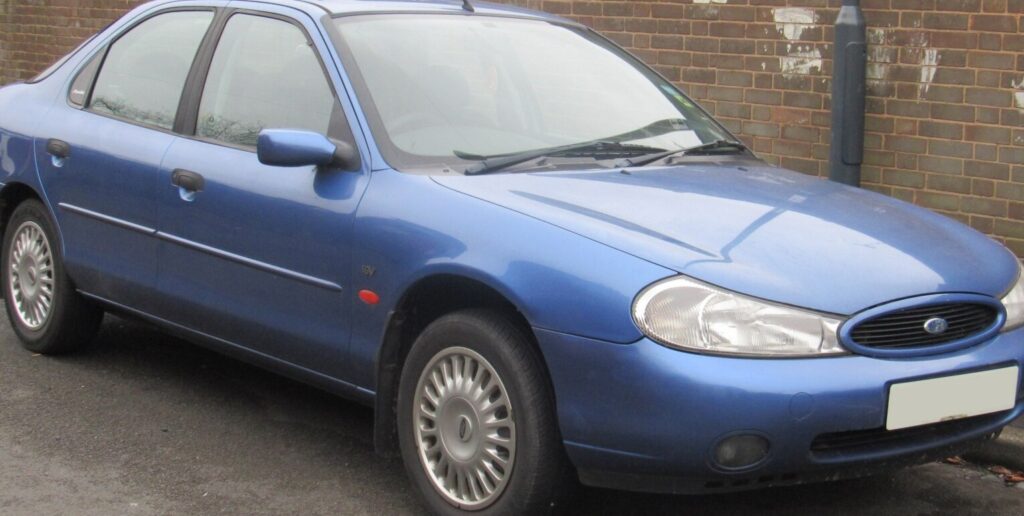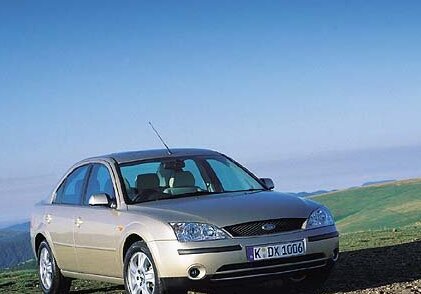
The Ford Mondeo II Sedan 2.0, producing 145 horsepower, was a significant model within the broader Mondeo II generation, manufactured between 2001 and 2006. Positioned as a mid-range offering, it aimed to balance performance and fuel efficiency for the family sedan market, primarily in Europe. This variant represented a step up from the base 1.6L engine, offering more power and torque for improved driving dynamics, while remaining more accessible than the flagship 2.2L or performance-oriented ST models. The Mondeo II itself was a crucial vehicle for Ford, building upon the success of the original Mondeo and solidifying its position as a strong competitor in the D-segment.
Technical Specifications
| Brand | Ford |
| Model | Mondeo |
| Generation | Mondeo II Sedan |
| Type (Engine) | 2.0 (145 Hp) |
| Start of production | 2001 |
| End of production | 2006 |
| Powertrain Architecture | Internal Combustion engine |
| Body type | Sedan |
| Seats | 5 |
| Doors | 4 |
| Fuel consumption (urban) | 11.5 l/100 km (20.5 US mpg) |
| Fuel consumption (extra urban) | 6 l/100 km (39.2 US mpg) |
| Fuel consumption (combined) | 8 l/100 km (29.4 US mpg) |
| Fuel Type | Petrol (Gasoline) |
| Acceleration 0 – 100 km/h | 9.8 sec |
| Acceleration 0 – 62 mph | 9.8 sec |
| Acceleration 0 – 60 mph | 9.3 sec |
| Maximum speed | 215 km/h (133.59 mph) |
| Weight-to-power ratio | 9.5 kg/Hp |
| Weight-to-torque ratio | 7.2 kg/Nm |
| Power | 145 Hp @ 6000 rpm |
| Power per litre | 72.5 Hp/l |
| Torque | 190 Nm @ 4500 rpm (140.14 lb.-ft. @ 4500 rpm) |
| Engine layout | Front, Transverse |
| Engine Model/Code | CJBA |
| Engine displacement | 1999 cm3 (121.99 cu. in.) |
| Number of cylinders | 4 |
| Engine configuration | Inline |
| Cylinder Bore | 87.5 mm (3.44 in.) |
| Piston Stroke | 83.1 mm (3.27 in.) |
| Compression ratio | 10.8:1 |
| Number of valves per cylinder | 4 |
| Fuel injection system | Multi-port manifold injection |
| Engine aspiration | Naturally aspirated engine |
| Valvetrain | DOHC |
| Engine oil capacity | 4.3 l (4.54 US qt | 3.78 UK qt) |
| Coolant | 8.3 l (8.77 US qt | 7.3 UK qt) |
| Kerb Weight | 1376 kg (3033.56 lbs.) |
| Max. weight | 1865 kg (4111.62 lbs.) |
| Max load | 489 kg (1078.06 lbs.) |
| Trunk (boot) space – minimum | 500 l (17.66 cu. ft.) |
| Fuel tank capacity | 58 l (15.32 US gal | 12.76 UK gal) |
| Length | 4731 mm (186.26 in.) |
| Width | 1812 mm (71.34 in.) |
| Height | 1429 mm (56.26 in.) |
| Wheelbase | 2754 mm (108.43 in.) |
| Front track | 1522 mm (59.92 in.) |
| Rear (Back) track | 1537 mm (60.51 in.) |
| Drivetrain Architecture | The Internal combustion engine (ICE) drives the front wheels of the vehicle. |
| Drive wheel | Front wheel drive |
| Number of gears and type of gearbox | 5 gears, manual transmission |
| Front suspension | Wishbone |
| Rear suspension | Coil spring |
| Front brakes | Ventilated discs |
| Rear brakes | Disc |
| Assisting systems | ABS (Anti-lock braking system) |
| Steering type | Steering rack and pinion |
| Power steering | Hydraulic Steering |
| Tires size | 205/55 R16 |
Powertrain & Engine Architecture
The heart of the Mondeo II 2.0 was the CJBA engine, a 1.999-liter inline-four cylinder gasoline engine. This engine belonged to Ford’s Zetec family, known for its relatively simple yet robust design. The CJBA featured a multi-port fuel injection system, delivering fuel directly into the intake ports, and a double overhead camshaft (DOHC) valvetrain, optimizing airflow for improved performance. The engine’s 10.8:1 compression ratio contributed to its efficiency and power output. The 145 hp peak power was achieved at 6000 rpm, while the 190 Nm (140 lb-ft) of torque was available at 4500 rpm. The engine was transversely mounted in the front of the vehicle, driving the front wheels. The five-speed manual transmission was the standard offering, providing a balance between fuel economy and responsiveness.
Driving Characteristics
The 2.0-liter Mondeo II offered a noticeable improvement in performance over the base 1.6L models. While not a sports sedan, the 145 hp engine provided adequate power for everyday driving and overtaking maneuvers. The five-speed manual transmission allowed drivers to keep the engine in its optimal power band. Acceleration from 0 to 60 mph took approximately 9.3 seconds, and the car could reach a top speed of 133.59 mph. Compared to the higher-output 2.2L versions, the 2.0L felt less eager to rev, but offered a more relaxed and fuel-efficient driving experience. The gear ratios were tuned for a balance of acceleration and cruising comfort. The handling was typical of front-wheel-drive sedans of the era – safe and predictable, but not particularly sporty.
Equipment & Trim Levels
The 2.0-liter Mondeo II typically came equipped with features considered standard for a mid-range family sedan. This included power windows, central locking, power steering, and an ABS anti-lock braking system. Interior upholstery was generally cloth, with options for upgraded materials available. Dashboard configuration was functional and straightforward, prioritizing usability over aesthetics. Optional extras included air conditioning, alloy wheels, a CD player, and upgraded sound systems. Higher trim levels, such as the Ghia, added features like leather upholstery, wood trim, and automatic climate control.
Chassis & Braking
The Mondeo II utilized a front-wheel-drive chassis with independent wishbone suspension at the front and a coil spring rear suspension. This setup provided a comfortable ride and decent handling characteristics. The front brakes were ventilated discs, offering good stopping power, while the rear brakes were solid discs. The ABS system helped to maintain steering control during emergency braking situations. Stabilizer bars were fitted to both the front and rear axles to reduce body roll during cornering. The suspension was tuned for a balance between comfort and handling, making it suitable for both city driving and longer journeys.
Market Reception & Comparison
The Ford Mondeo II 2.0 was generally well-received by automotive critics. It was praised for its spacious interior, comfortable ride, and good value for money. The 2.0-liter engine was considered a good compromise between performance and fuel economy. Compared to the base 1.6L model, the 2.0L offered a significant improvement in performance, making it a more appealing option for drivers who frequently traveled on highways or carried passengers. However, it wasn’t as refined or powerful as the more expensive 2.2L models. Fuel economy was respectable for its class, averaging around 29.4 US mpg in combined driving conditions. Reliability was generally good, although some owners reported minor issues with the electrical system.
Legacy
The Ford Mondeo II 2.0 remains a relatively common sight on used car markets today. The CJBA engine is known for its durability and relatively low maintenance costs. While not a particularly exciting car, it represents a solid and dependable family sedan. Parts availability is generally good, and repair costs are reasonable. The Mondeo II helped to establish Ford as a major player in the European D-segment, and its legacy continues with subsequent generations of the Mondeo. The 2.0L variant, in particular, offered a practical and affordable option for buyers seeking a comfortable and reliable vehicle.