Technical Specifications
| Brand | Toyota |
| Model | Land Cruiser |
| Generation | Land Cruiser (J70, J73) |
| Type (Engine) | 2.4 TD (LJ73) (86 Hp) 4WD |
| Start of production | 1988 |
| End of production | 1990 |
| Powertrain Architecture | Internal Combustion engine |
| Body type | Off-road vehicle |
| Seats | 8 |
| Doors | 3 |
| Fuel consumption (urban) | 12-13 l/100 km (19.6 – 18.1 US mpg, 23.5 – 21.7 UK mpg, 8.3 – 7.7 km/l) |
| Fuel consumption (combined) | 10 l/100 km (23.5 US mpg, 28.2 UK mpg, 10 km/l) |
| Fuel Type | Diesel |
| Maximum speed | 145 km/h (90.1 mph) |
| Power | 86 Hp @ 4000 rpm |
| Power per litre | 35.2 Hp/l |
| Torque | 188 Nm @ 2200 rpm (138.66 lb.-ft. @ 2200 rpm) |
| Engine layout | Front, Longitudinal |
| Engine Model/Code | 2L-T |
| Engine displacement | 2446 cm3 (149.26 cu. in.) |
| Number of cylinders | 4 |
| Engine configuration | Inline |
| Cylinder Bore | 92 mm (3.62 in.) |
| Piston Stroke | 92 mm (3.62 in.) |
| Compression ratio | 20:1 |
| Number of valves per cylinder | 2 |
| Fuel injection system | Precombustion chamber injection |
| Engine aspiration | Turbocharger |
| Valvetrain | SOHC |
| Engine oil capacity | 6 l (6.34 US qt | 5.28 UK qt) |
| Fuel tank capacity | 90 l (23.78 US gal | 19.8 UK gal) |
| Length | 4405 mm (173.43 in.) |
| Width | 1790 mm (70.47 in.) |
| Height | 1950 mm (76.77 in.) |
| Wheelbase | 2600 mm (102.36 in.) |
| Front track | 1455 mm (57.28 in.) |
| Rear track | 1440 mm (56.69 in.) |
| Drivetrain Architecture | The Internal combustion engine (ICE) drives the rear wheels permanently, and the front wheels are driven through an electrically or mechanically operated clutch if necessary. |
| Drive wheel | All wheel drive (4×4) |
| Number of gears and type of gearbox | 5 gears, manual transmission |
| Front suspension | Leaf spring |
| Rear suspension | Leaf spring |
| Front brakes | Disc |
| Rear brakes | Drum |
| Steering type | Cone worm with recirculation balls |
| Power steering | Hydraulic Steering |
| Tires size | 265/75 R15 |
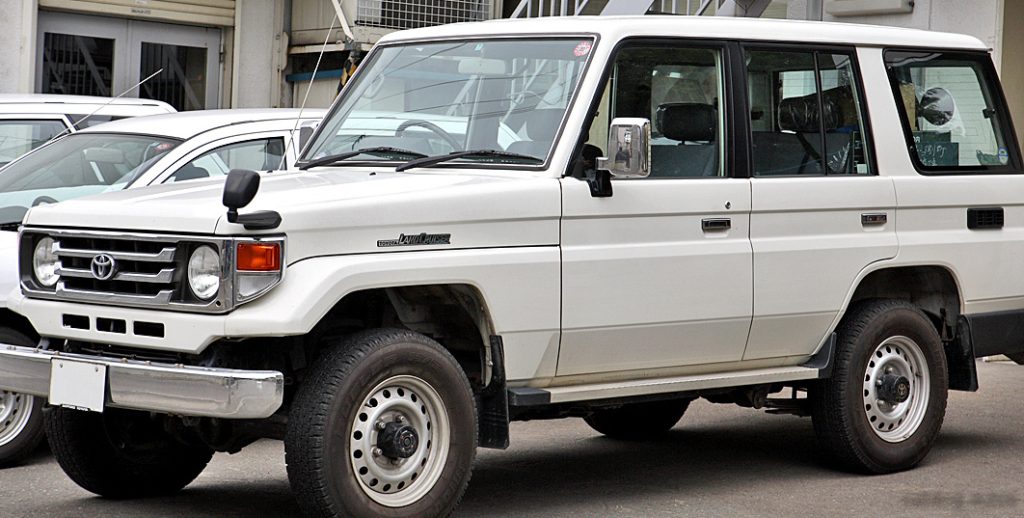
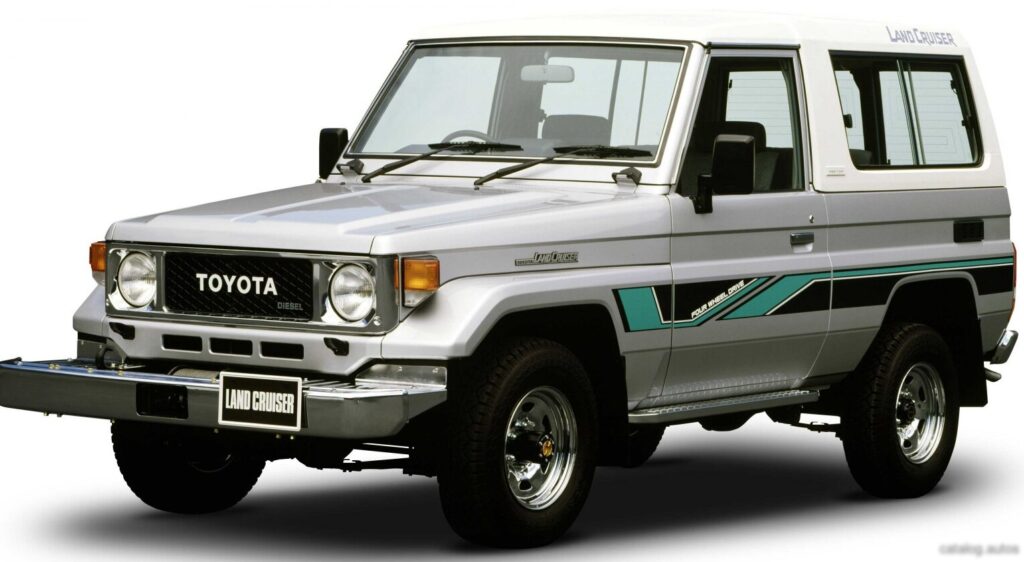
The Toyota Land Cruiser J70 series, produced from 1989 to 1998 (with some variations continuing later in certain markets), marked a significant departure in Toyota’s renowned off-road vehicle lineage. The LJ73 variant, specifically equipped with the 2.4-liter 2L-T turbocharged diesel engine producing 86 horsepower, was a crucial model within the J70 range, particularly in regions outside of North America. Production of this specific configuration spanned from 1988 to 1990. This model was engineered to deliver a balance of durability, capability, and relative affordability, making it a popular choice for commercial operations, agricultural applications, and adventurous individuals in areas like Australia, Africa, and parts of Asia. The J70 series, unlike its predecessors, embraced a more utilitarian design, prioritizing functionality over luxury, and solidifying its reputation as a truly rugged and dependable 4×4.
Powertrain & Engine Architecture
The LJ73’s core was the 2L-T engine, a 2.4-liter inline-four diesel. This engine employed a precombustion chamber injection system, a common design for diesel engines of the time, which enhanced combustion efficiency and reduced engine noise compared to direct injection systems. The addition of a turbocharger substantially increased power output for its displacement, achieving 86 horsepower. The 2L-T featured a single overhead camshaft (SOHC) valvetrain, operating two valves per cylinder. The engine was mounted longitudinally in the engine bay, contributing to a balanced weight distribution. A five-speed manual transmission was standard for this variant, offering a good compromise between fuel economy and usability. The transmission was selected for its robustness and ability to manage the torque characteristics of the diesel engine.
Driving Characteristics
The LJ73 2.4 TD, with its 86 horsepower and 188 Nm (138.66 lb-ft) of torque, provided a distinct driving experience compared to more powerful Land Cruisers or those with gasoline engines. Acceleration was moderate, but the engine’s torque delivery offered ample low-end power, making it well-suited for navigating challenging off-road terrain. The manual transmission allowed for precise control, particularly when maneuvering difficult obstacles. While not a fast vehicle, the LJ73 was incredibly capable in slow-speed, technical off-roading scenarios. Compared to the later 3.0-liter diesel versions, the 2.4 TD felt less strained when fully loaded, and its smaller displacement contributed to slightly improved fuel economy.
Equipment & Trim Levels
The LJ73 2.4 TD was generally positioned as a workhorse model within the J70 lineup. Consequently, it typically featured a relatively basic level of equipment. Standard features included simple steel wheels, vinyl or cloth upholstery, a straightforward dashboard layout, and minimal comfort features. Power steering was often included, but air conditioning and power windows were usually optional extras. The interior was designed for durability and ease of cleaning, reflecting the vehicle’s intended purpose. Trim levels varied by market, but generally focused on adding features like upgraded upholstery, additional sound insulation, or a more comprehensive instrument cluster.
Chassis & Braking
The J70 Land Cruiser utilized a robust body-on-frame construction, providing exceptional durability and off-road capability. The LJ73 variant featured a leaf spring suspension system at both the front and rear, designed to absorb impacts and provide a comfortable ride even on rough terrain. Front brakes were discs, offering better stopping power than the drum brakes on the rear axle. The steering system employed a cone worm and recirculation ball mechanism, providing a direct and responsive feel. The LJ73’s relatively light weight, compared to some of the larger J70 variants, contributed to its nimble handling and reduced stress on the suspension components.
Market Reception & Comparison
The LJ73 2.4 TD was well-received in markets where fuel efficiency and reliability were highly valued. Critics praised its ruggedness, off-road capability, and relatively low operating costs. However, its modest power output and lack of refinement were often noted. Compared to gasoline-powered Land Cruisers, the 2.4 TD offered significantly better fuel economy, making it a more practical choice for long-distance travel or commercial applications. Against other diesel-powered 4x4s of the era, the LJ73 stood out due to Toyota’s reputation for reliability and its comprehensive 4×4 system.
Legacy
The Toyota Land Cruiser J70 series, and the LJ73 2.4 TD variant in particular, has achieved legendary status among off-road enthusiasts. These vehicles are known for their exceptional durability and ability to withstand years of demanding use. Today, well-maintained LJ73s are highly sought after by collectors and adventurers alike. The 2L-T engine, while not exceptionally powerful, is renowned for its longevity and relatively simple maintenance requirements. Parts availability remains reasonably good, ensuring that these vehicles can be kept operational for many years to come. The LJ73 represents a golden age of rugged, dependable 4×4 design, and its legacy continues to endure.