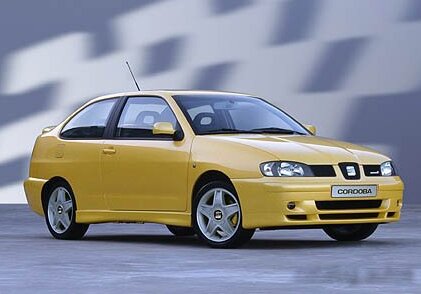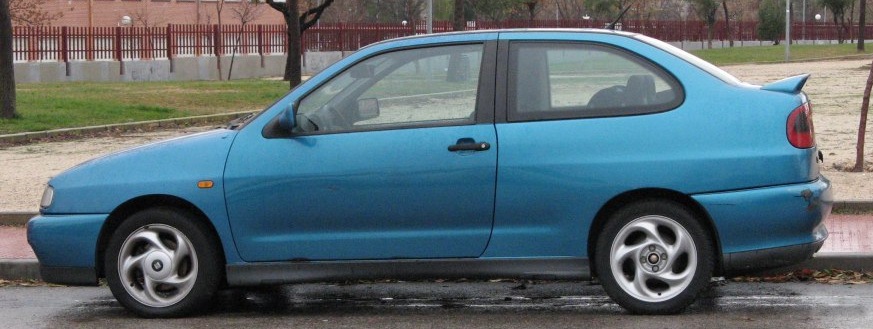
The SEAT Córdoba Coupe I 2.0 i (115 hp) was a sporty coupe produced between 1993 and 1999, representing SEAT’s foray into the compact coupe market. Based on the SEAT Ibiza Mk2 platform (1HX0/A3), the Córdoba Coupe aimed to offer a more stylish and performance-oriented alternative to the hatchback. This particular 2.0-liter variant occupied a mid-range position within the Córdoba Coupe lineup, offering a balance between performance and affordability, slotting above the smaller displacement engines and below potential future performance models. It was primarily marketed in Europe, where SEAT was establishing itself as a brand offering value and a sporty driving experience.
Technical Specifications
| Brand | Seat |
| Model | Cordoba |
| Generation | Cordoba Coupe I |
| Type (Engine) | 2.0 i (115 Hp) |
| Start of production | 1993 |
| End of production | 1999 |
| Powertrain Architecture | Internal Combustion engine |
| Body type | Coupe |
| Seats | 5 |
| Doors | 3 |
| Fuel consumption (urban) | 9.9 l/100 km (23.8 US mpg) |
| Fuel consumption (extra urban) | 5.7 l/100 km (41.3 US mpg) |
| Fuel Type | Petrol (Gasoline) |
| Acceleration 0 – 100 km/h | 10.1 sec |
| Acceleration 0 – 62 mph | 10.1 sec |
| Acceleration 0 – 60 mph | 9.6 sec |
| Maximum speed | 198 km/h (123.03 mph) |
| Power | 115 Hp @ 5400 rpm |
| Power per litre | 58 Hp/l |
| Torque | 166 Nm @ 3200 rpm (122.44 lb.-ft. @ 3200 rpm) |
| Engine layout | Front, Transverse |
| Engine Model/Code | 2E/AGG |
| Engine displacement | 1984 cm3 (121.07 cu. in.) |
| Number of cylinders | 4 |
| Engine configuration | Inline |
| Cylinder Bore | 82.5 mm (3.25 in.) |
| Piston Stroke | 92.8 mm (3.65 in.) |
| Compression ratio | 10:1 |
| Number of valves per cylinder | 2 |
| Fuel injection system | Multi-port manifold injection |
| Engine aspiration | Naturally aspirated engine |
| Valvetrain | SOHC |
| Engine oil capacity | 4 l (4.23 US qt | 3.52 UK qt) |
| Coolant capacity | 6.6 l (6.97 US qt | 5.81 UK qt) |
| Trunk (boot) space – minimum | 455 l (16.07 cu. ft.) |
| Trunk (boot) space – maximum | 762 l (26.91 cu. ft.) |
| Fuel tank capacity | 45 l (11.89 US gal | 9.9 UK gal) |
| Length | 4142 mm (163.07 in.) |
| Width | 1640 mm (64.57 in.) |
| Height | 1409 mm (55.47 in.) |
| Wheelbase | 2440 mm (96.06 in.) |
| Front track | 1430 mm (56.3 in.) |
| Rear track | 1394 mm (54.88 in.) |
| Drivetrain Architecture | Front wheel drive |
| Number of gears | 5 |
| Gearbox type | Manual transmission |
| Front suspension | Independent, McPherson with coil spring and anti-roll bar |
| Rear suspension | Torsion |
| Front brakes | Ventilated discs |
| Rear brakes | Disc |
| Assisting systems | ABS (Anti-lock braking system) |
| Steering type | Steering rack and pinion |
| Power steering | Hydraulic |
| Tires size | 185/55 R15 |
| Wheel rims size | 6J x 15 |
Powertrain & Engine Architecture
The Córdoba Coupe I 2.0 i was powered by the SEAT 2E/AGG engine, a 1.984-liter inline-four cylinder gasoline engine. This engine was part of the Volkswagen Group’s EA827 family, known for its relative simplicity and durability. The 2E/AGG featured a single overhead camshaft (SOHC) valvetrain operating two valves per cylinder. Fuel delivery was managed by a multi-port fuel injection system, providing a balance between efficiency and performance. The engine produced 115 horsepower at 5400 rpm and 166 Nm (122.44 lb-ft) of torque at 3200 rpm. The engine’s transverse mounting and front-wheel-drive configuration were typical for European compact cars of the era. The 5-speed manual transmission was the standard offering, providing drivers with direct control over the engine’s power.
Driving Characteristics
The 2.0-liter engine provided a noticeable step up in performance compared to the smaller 1.4 and 1.6-liter engines available in the Córdoba Coupe range. While not a high-performance machine, the 115 hp engine offered adequate acceleration for everyday driving and comfortable cruising on highways. The 0-60 mph time of around 9.6 seconds and a top speed of 123 mph were respectable for its class. The manual transmission allowed for engaging driving experience, although the gear ratios were tuned more for fuel efficiency than outright acceleration. Compared to a potential VR6 version (which was never officially offered in the Córdoba Coupe), the 2.0-liter engine lacked the smooth power delivery and overall performance of the larger six-cylinder unit. However, it offered better fuel economy and lower maintenance costs.
Equipment & Trim Levels
The Córdoba Coupe I 2.0 i typically came equipped with features considered standard for a mid-range coupe in the 1990s. This included power steering, central locking, electric front windows, and an adjustable steering column. Interior upholstery was typically cloth, with options for upgraded materials available. Dashboard design was functional and straightforward, reflecting the car’s focus on value. Optional extras included air conditioning, a sunroof, and upgraded audio systems. The trim level often dictated the availability of these options, with higher trims offering more standard features.
Chassis & Braking
The Córdoba Coupe I utilized a McPherson strut front suspension with coil springs and an anti-roll bar, providing a comfortable ride and decent handling. The rear suspension employed a torsion beam setup, which was a cost-effective solution for compact cars. Braking duties were handled by ventilated discs at the front and solid discs at the rear. An Anti-lock Braking System (ABS) was standard, enhancing safety by preventing wheel lockup during hard braking. The steering was rack and pinion, providing precise and responsive steering feel.
Market Reception & Comparison
The SEAT Córdoba Coupe I 2.0 i was generally well-received by automotive critics as a stylish and affordable coupe. It was praised for its handling, comfortable ride, and relatively spacious interior for a coupe. However, some critics noted that the interior materials were somewhat basic and that the engine, while adequate, lacked the refinement of some competitors. Compared to other coupes in its class, such as the Peugeot 306 Coupe or the Renault Mégane Coupe, the Córdoba offered a good balance of price, performance, and practicality. Fuel economy was competitive, and reliability was generally considered good, although maintenance costs could be higher than some Japanese competitors.
Legacy
The SEAT Córdoba Coupe I, particularly the 2.0 i variant, has become a popular choice among classic car enthusiasts. The 2E/AGG engine is known for its durability and relative ease of maintenance, making it a reliable powertrain for everyday use. Parts availability is generally good, thanks to the engine’s widespread use in other Volkswagen Group vehicles. Today, well-maintained examples of the Córdoba Coupe I 2.0 i are sought after by collectors and enthusiasts who appreciate its classic styling and engaging driving experience. While not a particularly rare car, its condition and originality significantly impact its value in the used car market.