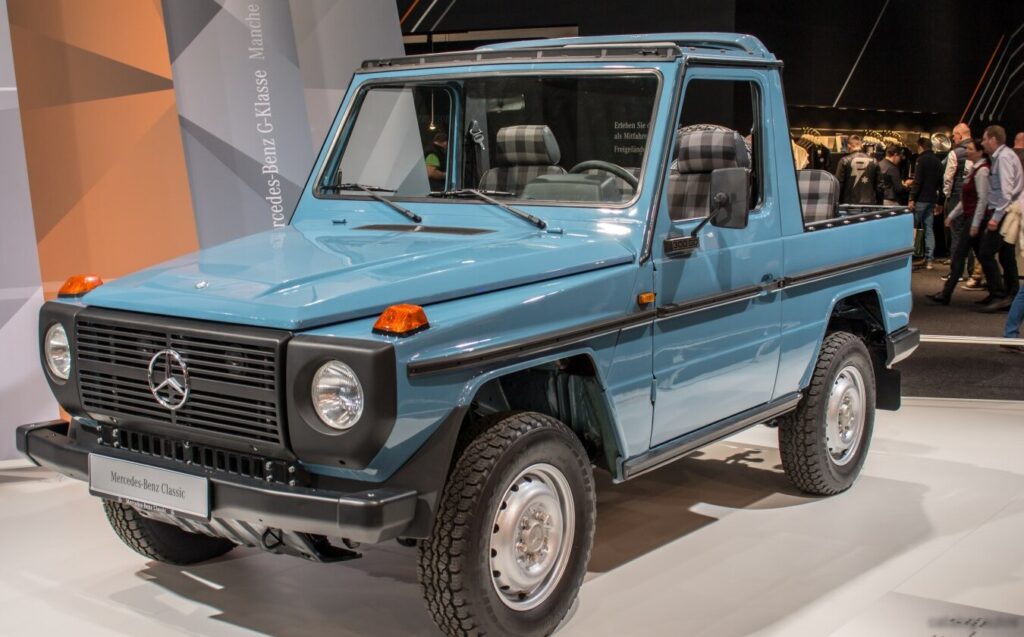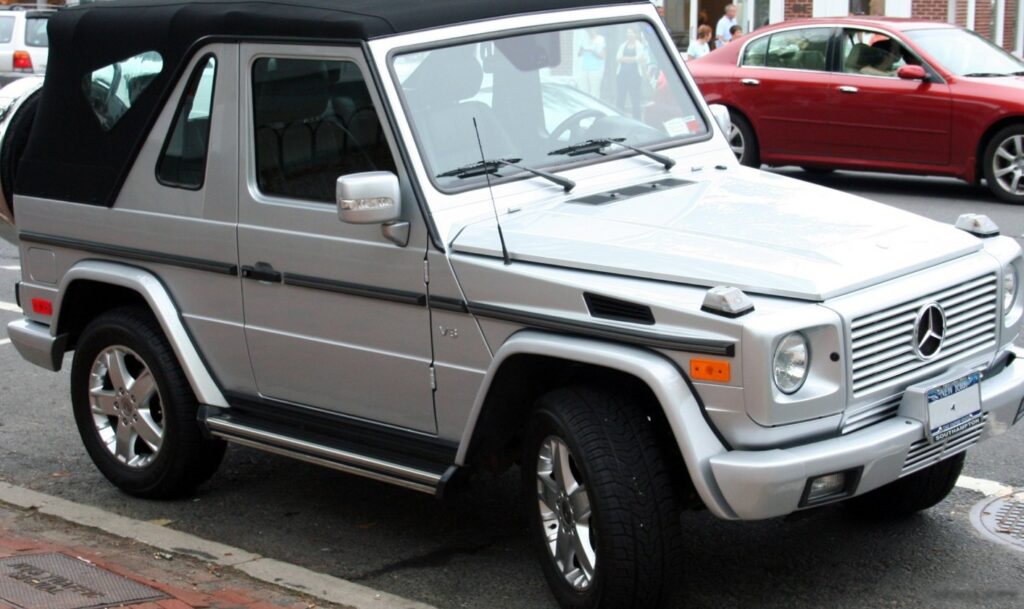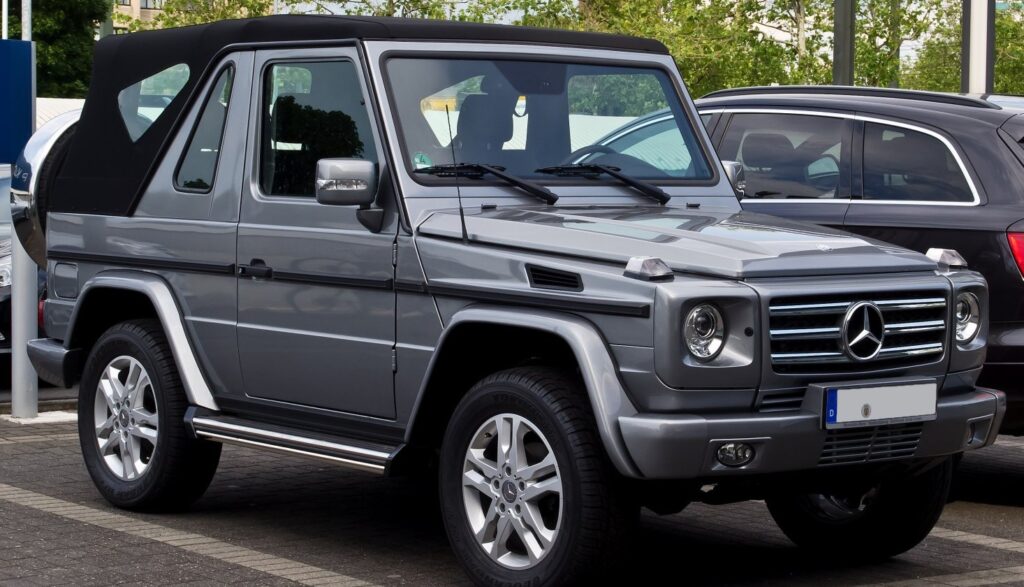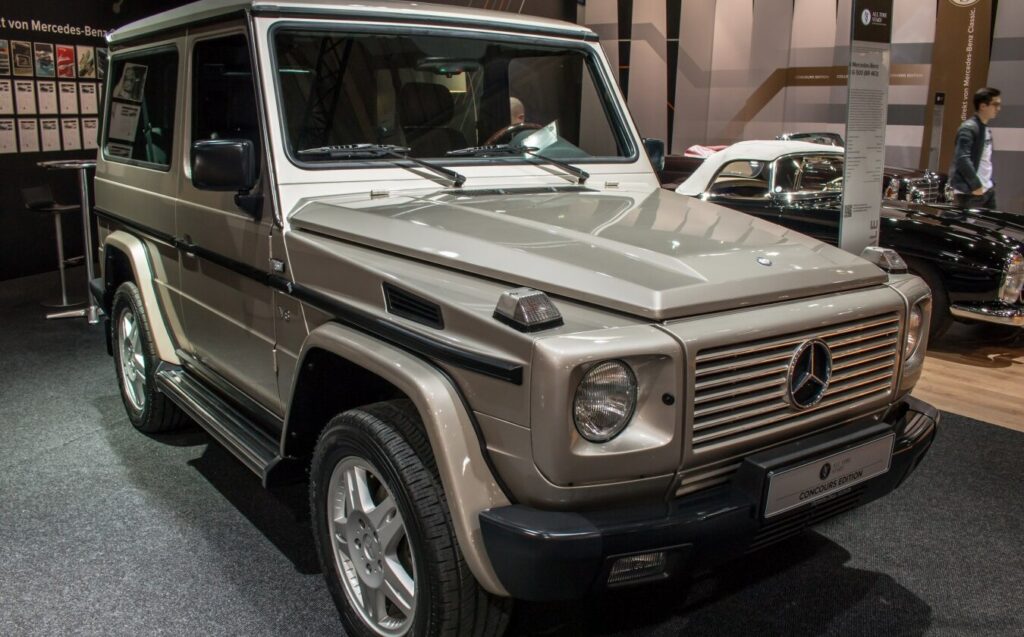
The Mercedes-Benz G-class (W463) 300 GE 4MATIC, produced from April 1990 to September 1993, represents a pivotal point in the evolution of the iconic “Gelandewagen.” Positioned as a mid-range offering within the W463 series, it bridged the gap between the entry-level 230 GE and the more powerful 360 GE. This variant aimed to provide a balance of capability, durability, and relative affordability for those seeking the G-class’s legendary off-road prowess. The 300 GE was a key model for expanding the G-class’s appeal beyond purely utilitarian applications, attracting a wider customer base interested in a robust and capable vehicle with a degree of refinement.
Technical Specifications
| Brand | Mercedes-Benz |
| Model | G-class |
| Generation | G-class (W463) |
| Type | 300 GE (170 Hp) 4MATIC |
| Start of production | April, 1990 |
| End of production | September, 1993 |
| Powertrain Architecture | Internal Combustion engine |
| Body type | Off-road vehicle |
| Seats | 5 |
| Doors | 3 |
| Fuel consumption (urban) | 18.7 l/100 km (12.6 US mpg) |
| Fuel consumption (extra urban) | 13.4 l/100 km (17.6 US mpg) |
| Fuel Type | Petrol (Gasoline) |
| Acceleration 0 – 100 km/h | 13.5 sec |
| Acceleration 0 – 62 mph | 13.5 sec |
| Acceleration 0 – 60 mph | 12.8 sec |
| Maximum speed | 165 km/h (102.53 mph) |
| Weight-to-power ratio | 12.3 kg/Hp |
| Weight-to-torque ratio | 8.9 kg/Nm |
| Power | 170 Hp @ 5500 rpm |
| Torque | 235 Nm @ 4500 rpm (173.33 lb.-ft. @ 4500 rpm) |
| Engine layout | Front, Longitudinal |
| Engine Model/Code | M 103.987 |
| Engine displacement | 2960 cm3 (180.63 cu. in.) |
| Number of cylinders | 6 |
| Engine configuration | Inline |
| Cylinder Bore | 88.5 mm (3.48 in.) |
| Piston Stroke | 80.2 mm (3.16 in.) |
| Compression ratio | 9.2:1 |
| Number of valves per cylinder | 2 |
| Fuel injection system | Multi-port manifold injection |
| Engine aspiration | Naturally aspirated engine |
| Valvetrain | SOHC |
| Engine oil capacity | 6.5 l (6.87 US qt | 5.72 UK qt) |
| Coolant capacity | 7.8 l (8.24 US qt | 6.86 UK qt) |
| Kerb Weight | 2085 kg (4596.64 lbs.) |
| Max. weight | 2620 kg (5776.11 lbs.) |
| Max load | 535 kg (1179.47 lbs.) |
| Fuel tank capacity | 96 l (25.36 US gal | 21.12 UK gal) |
| Length | 4185 mm (164.76 in.) |
| Width | 1690 mm (66.54 in.) |
| Height | 1908 mm (75.12 in.) |
| Wheelbase | 2400 mm (94.49 in.) |
| Front track | 1425 mm (56.1 in.) |
| Rear track | 1425 mm (56.1 in.) |
| Drivetrain Architecture | All wheel drive (4×4) |
| Number of gears | 5 |
| Gearbox type | Manual transmission |
| Front suspension | Coil spring, Rigid axle suspension, Trailing arm |
| Rear suspension | Rigid axle suspension, Trailing arm, Coil spring |
| Front brakes | Disc |
| Rear brakes | Drum |
| Steering type | Cone worm with recirculation balls |
| Power steering | Hydraulic Steering |
| Tires size | 205/80 R 16 |
| Wheel rims size | 6 J x 16 |
Powertrain & Engine Architecture
The 300 GE was powered by the M103.987, a 3.0-liter inline-six cylinder gasoline engine. This engine, a mainstay of Mercedes-Benz’s mid-size and larger vehicles throughout the 1980s and early 1990s, was known for its durability and smooth operation. It featured a single overhead camshaft (SOHC) valvetrain and Bosch multi-port fuel injection. The engine produced 170 horsepower at 5500 rpm and 235 Nm (173 lb-ft) of torque at 4500 rpm. The engine’s longitudinal mounting and the robust four-wheel-drive system contributed to the G-class’s exceptional off-road capability. The 300 GE utilized a five-speed manual transmission as standard, providing a direct connection to the engine’s power. While an automatic transmission was available as an option, the manual was favored by many enthusiasts for its greater control in challenging terrain.
Driving Characteristics
The 300 GE, with its 170 hp and manual transmission, offered a respectable, though not blistering, performance profile. Acceleration from 0 to 60 mph took around 12.8 seconds, and it had a top speed of approximately 102.5 mph. Compared to the 230 GE, the 300 GE provided noticeably more power and torque, making it more comfortable for highway driving and towing. However, it lacked the outright performance of the 360 GE. The manual transmission’s gear ratios were well-suited to both on-road and off-road driving, providing sufficient torque for navigating difficult terrain while still allowing for comfortable cruising speeds. The G-class’s high center of gravity and relatively soft suspension meant that cornering was not its strong suit, but its robust construction and four-wheel-drive system made it virtually unstoppable off the pavement.
Equipment & Trim Levels
The 300 GE 4MATIC typically came with a relatively basic level of equipment, reflecting its utilitarian origins. Standard features included cloth upholstery, manual windows and door locks, and a simple dashboard layout. However, buyers could opt for a range of optional extras, including leather upholstery, air conditioning, a sunroof, and upgraded audio systems. The interior was functional and durable, designed to withstand the rigors of off-road use. The exterior styling was largely consistent across the W463 range, with the 300 GE distinguished by its badging and, occasionally, by optional accessories such as roof racks and auxiliary lights.
Chassis & Braking
The W463 G-class featured a robust ladder-frame chassis, providing exceptional strength and durability. The suspension consisted of coil springs and rigid axles front and rear, offering a comfortable ride and excellent articulation for off-road driving. Front brakes were discs, while rear brakes were drums – a cost-saving measure common for the time. The steering was a recirculating ball system, providing a direct feel but requiring considerable effort at low speeds. The 300 GE’s relatively high weight (approximately 4597 lbs) necessitated a robust braking system, but stopping distances were not particularly short by modern standards.
Market Reception & Comparison
The 300 GE was generally well-received by automotive critics as a capable and durable off-road vehicle. It was praised for its robust construction, powerful engine, and legendary four-wheel-drive system. However, it was also criticized for its relatively high price, basic interior, and somewhat crude driving characteristics. Compared to the 230 GE, the 300 GE offered a significant performance upgrade, making it a more appealing option for those who frequently drove on the highway or needed to tow. Compared to the 360 GE, the 300 GE was more fuel-efficient and less expensive, making it a more practical choice for everyday use. Fuel economy was, unsurprisingly, poor, averaging around 12.6 mpg in the city and 17.6 mpg on the highway.
Legacy
The Mercedes-Benz G-class (W463) 300 GE 4MATIC has become a sought-after classic among enthusiasts. Its robust construction and relatively simple mechanicals make it a reliable and relatively easy-to-maintain vehicle. The M103 engine is known for its longevity, and parts availability is generally good. Today, well-maintained examples of the 300 GE command a premium price in the used car market, reflecting its iconic status and enduring appeal. It represents a sweet spot in the G-class lineage, offering a blend of capability, durability, and relative affordability that is increasingly rare in modern vehicles. The 300 GE solidified the G-class’s reputation as a truly exceptional off-road vehicle and laid the foundation for its continued success in the luxury SUV segment.