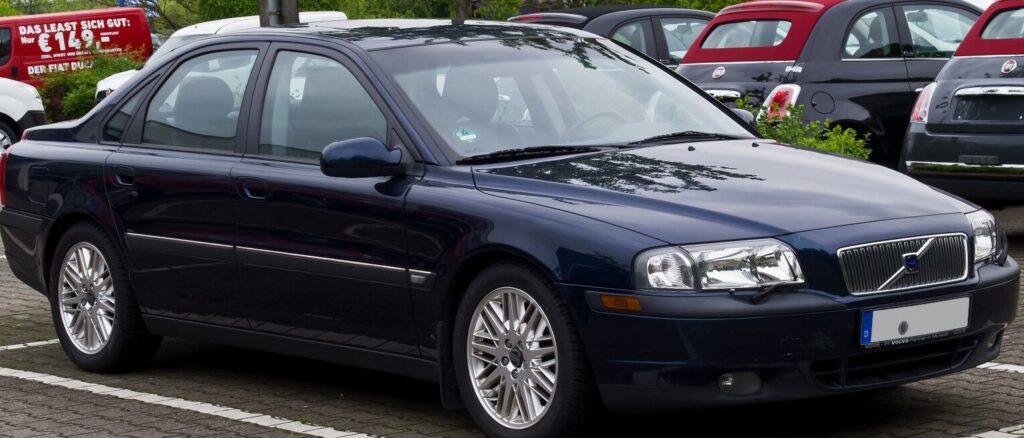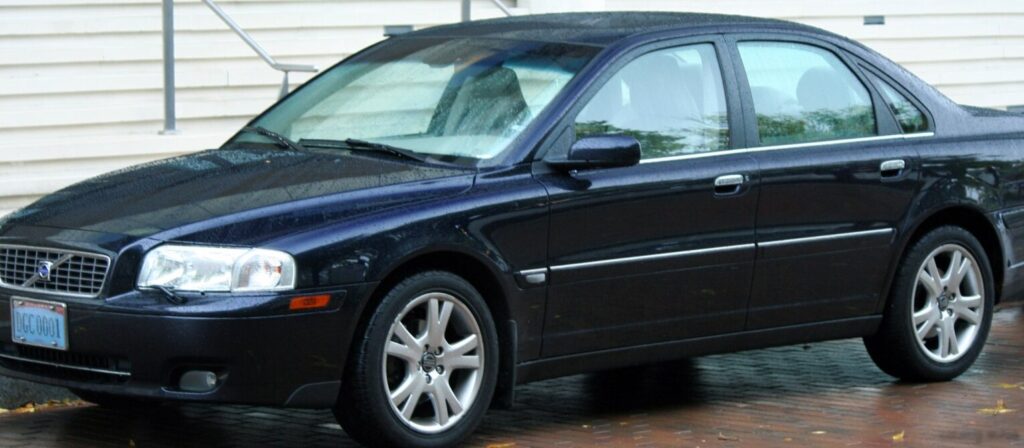
The Volvo S80 2.9 T6 24V Automatic, produced from 2003 to 2006, represents a high-performance variant within the second-generation (1998-2006) S80 lineup. This facelifted model, building upon the initial S80 launch, aimed to solidify Volvo’s position in the premium executive sedan segment. The 2.9 T6 was positioned as the flagship engine option, offering a significant power upgrade over the more common 2.4-liter engines. It catered to buyers seeking a blend of luxury, performance, and Scandinavian safety features. This particular configuration – the 2.9-liter turbocharged inline-six paired with a four-speed automatic transmission – was a key offering in North American and European markets.
Technical Specifications
| Brand | Volvo |
| Model | S80 |
| Generation | S80 (facelift 2003) |
| Type (Engine) | 2.9 T6 24V (272 Hp) Automatic |
| Start of production | 2003 |
| End of production | 2006 |
| Powertrain Architecture | Internal Combustion engine |
| Body type | Sedan |
| Seats | 5 |
| Doors | 4 |
| Fuel consumption (urban) | 16.2 l/100 km (14.5 US mpg, 17.4 UK mpg, 6.2 km/l) |
| Fuel consumption (extra urban) | 8.4 l/100 km (28 US mpg, 33.6 UK mpg, 11.9 km/l) |
| Fuel consumption (combined) | 11.3 l/100 km (20.8 US mpg, 25 UK mpg, 8.8 km/l) |
| CO2 emissions | 272 g/km |
| Fuel Type | Petrol (Gasoline) |
| Acceleration 0 – 100 km/h | 7.2 sec |
| Acceleration 0 – 62 mph | 7.2 sec |
| Acceleration 0 – 60 mph | 6.8 sec |
| Maximum speed | 250 km/h (155.34 mph) |
| Emission standard | Euro 4 |
| Weight-to-power ratio | 5.9 kg/Hp, 168.4 Hp/tonne |
| Weight-to-torque ratio | 4.3 kg/Nm, 235.3 Nm/tonne |
| Power | 272 Hp @ 5200 rpm |
| Torque | 380 Nm @ 1800-5000 rpm (280.27 lb.-ft. @ 1800-5000 rpm) |
| Engine layout | Front, Transverse |
| Engine Model/Code | B6294T |
| Engine displacement | 2922 cm3 (178.31 cu. in.) |
| Number of cylinders | 6 |
| Engine configuration | Inline |
| Cylinder Bore | 83 mm (3.27 in.) |
| Piston Stroke | 90 mm (3.54 in.) |
| Compression ratio | 8.5:1 |
| Number of valves per cylinder | 4 |
| Fuel injection system | Multi-port manifold injection |
| Engine aspiration | Turbocharger, Intercooler |
| Valvetrain | DOHC |
| Engine oil capacity | 6.5 l (6.87 US qt | 5.72 UK qt) |
| Coolant | 9.5 l (10.04 US qt | 8.36 UK qt) |
| Kerb Weight | 1615 kg (3560.47 lbs.) |
| Max. weight | 2120 kg (4673.8 lbs.) |
| Max load | 505 kg (1113.33 lbs.) |
| Trunk (boot) space – minimum | 460 l (16.24 cu. ft.) |
| Trunk (boot) space – maximum | 1126 l (39.76 cu. ft.) |
| Fuel tank capacity | 80 l (21.13 US gal | 17.6 UK gal) |
| Max. roof load | 100 kg (220.46 lbs.) |
| Permitted trailer load with brakes (12%) | 1800 kg (3968.32 lbs.) |
| Permitted trailer load without brakes | 750 kg (1653.47 lbs.) |
| Permitted towbar download | 75 kg (165.35 lbs.) |
| Length | 4822 mm (189.84 in.) |
| Width | 1832 mm (72.13 in.) |
| Height | 1452 mm (57.17 in.) |
| Wheelbase | 2791 mm (109.88 in.) |
| Front track | 1570 mm (61.81 in.) |
| Rear (Back) track | 1548 mm (60.94 in.) |
| Front overhang | 964 mm (37.95 in.) |
| Rear overhang | 1067 mm (42.01 in.) |
| Drag coefficient (Cd) | 0.28 |
| Minimum turning circle (turning diameter) | 11.6 m (38.06 ft.) |
| Drivetrain Architecture | The Internal combustion engine (ICE) drives the front wheels of the vehicle. |
| Drive wheel | Front wheel drive |
| Number of gears and type of gearbox | 4 gears, automatic transmission |
| Front suspension | Independent type McPherson |
| Rear suspension | Independent multi-link suspension |
| Front brakes | Ventilated discs, 305 mm |
| Rear brakes | Disc, 288 mm |
| Assisting systems | ABS (Anti-lock braking system) |
| Steering type | Steering rack and pinion |
| Power steering | Hydraulic Steering |
| Tires size | 225/55 R16; 225/50 R17 |
| Wheel rims size | 7J x 16; 7J x 17 |
Powertrain & Engine Architecture
The heart of the S80 2.9 T6 is the B6294T engine, a 2.9-liter (2922 cc) inline-six cylinder powerplant. This engine utilizes a light-pressure turbocharger with an intercooler to boost power output to 272 horsepower at 5200 rpm and 380 Nm (280 lb-ft) of torque available from 1800 to 5000 rpm. The engine features multi-port fuel injection and a double overhead camshaft (DOHC) valvetrain with four valves per cylinder. The compression ratio is set at 8.5:1. The four-speed automatic transmission, while providing smooth shifts, is a point of criticism in retrospect, as newer transmissions offer more gears for improved fuel efficiency and performance.
Driving Characteristics
The 2.9 T6 Automatic offered a noticeably quicker driving experience compared to the base S80 models. Acceleration from 0 to 60 mph was achieved in around 6.8 seconds, and the car had a governed top speed of 155 mph. The automatic transmission, while convenient, did result in some power loss compared to the available manual transmission. Gear ratios were tuned for a balance between acceleration and cruising comfort. The turbocharger provided a noticeable surge of power, but turbo lag was present, particularly at lower engine speeds. The front-wheel-drive configuration, while typical for the class, didn’t offer the same level of handling precision as rear-wheel-drive competitors.
Equipment & Trim Levels
The 2.9 T6 typically came well-equipped, reflecting its position as the range-topping model. Standard features included leather upholstery, power-adjustable front seats with memory function, a premium audio system, automatic climate control, and rain-sensing wipers. Optional extras included a navigation system, sunroof, and upgraded wheels. The interior design emphasized Scandinavian minimalism, with clean lines and high-quality materials. Safety features were a Volvo hallmark, and the S80 2.9 T6 included standard ABS brakes, side airbags, and curtain airbags.
Chassis & Braking
The S80 2.9 T6 utilized an independent McPherson strut suspension at the front and an independent multi-link suspension at the rear. This setup provided a comfortable ride quality, although it wasn’t particularly sporty. The car featured ventilated disc brakes at the front and solid disc brakes at the rear. ABS (Anti-lock Braking System) was standard. The steering was a hydraulic rack-and-pinion system, offering reasonable precision but lacking the feel of more modern electric power steering systems.
Market Reception & Comparison
The S80 2.9 T6 was generally well-received by automotive critics, who praised its powerful engine, comfortable ride, and luxurious interior. However, the four-speed automatic transmission was often criticized for being outdated. Compared to its rivals, such as the BMW 5 Series and Mercedes-Benz E-Class, the S80 offered a different character – prioritizing comfort and safety over outright sportiness. Fuel economy was also a concern, with combined fuel consumption averaging around 20.8 US mpg. The 2.4L non-turbo models offered significantly better fuel economy, while the T6 provided a substantial performance advantage.
Legacy
The Volvo S80 2.9 T6, while not a sales leader in its segment, remains a desirable used car for enthusiasts seeking a comfortable and powerful executive sedan. The B6294T engine is generally considered reliable, although regular maintenance is crucial. Common issues include turbocharger wear and potential oil leaks. The four-speed automatic transmission can be prone to wear and tear, and finding replacement parts can sometimes be challenging. Today, these cars represent a unique blend of Scandinavian design, turbocharged performance, and Volvo’s renowned safety features, making them a compelling option for collectors and drivers alike.