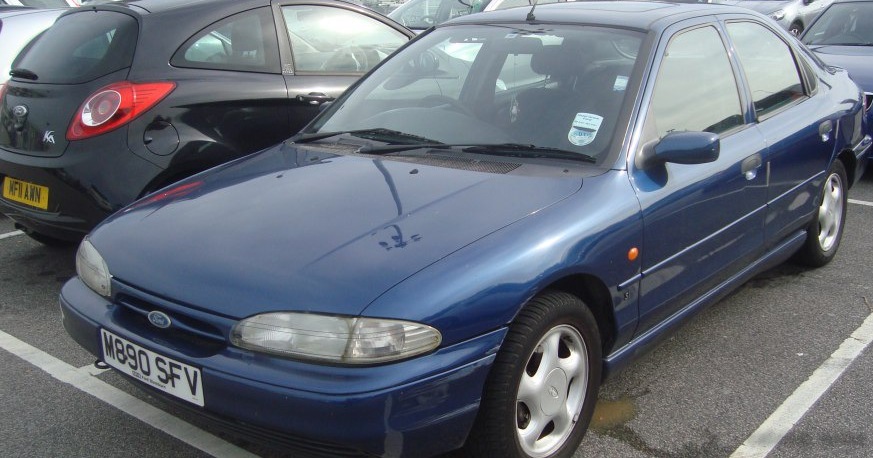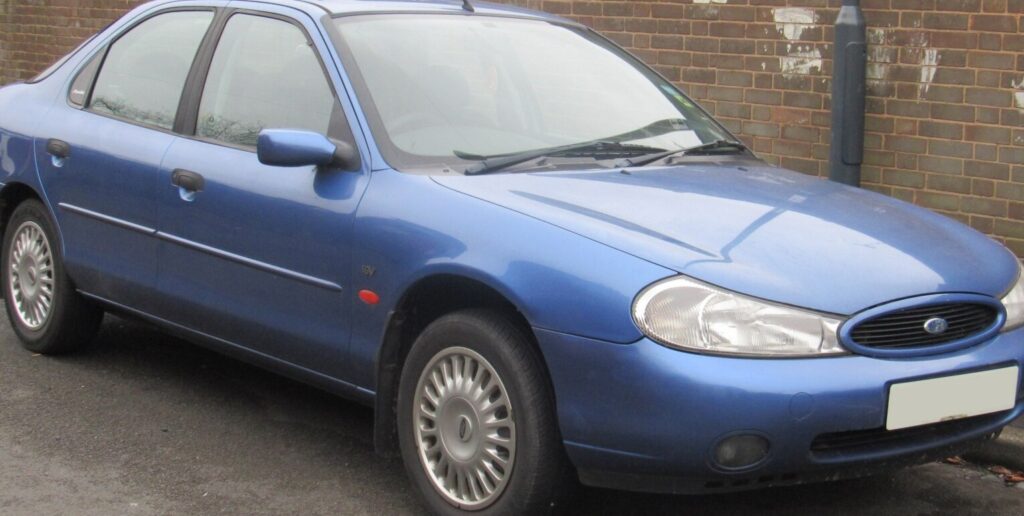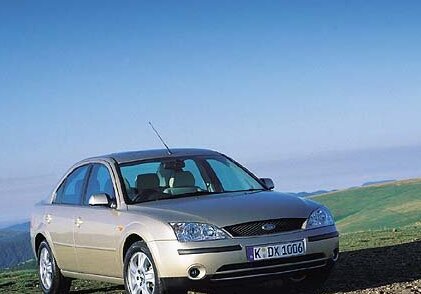
The Ford Mondeo II Sedan 2.0 DI, produced between 2001 and 2006, represented a significant step forward for Ford’s mid-size offering in the European market. Positioned as a practical and efficient option within the Mondeo II range, the 2.0 DI utilized a direct injection diesel engine to deliver a balance of performance and fuel economy. This variant aimed to appeal to drivers prioritizing cost-effectiveness and long-distance comfort, rather than outright sporting prowess. It was a key component of the second-generation Mondeo (internally designated as B500), which built upon the success of the original Mondeo by refining its design, improving interior quality, and introducing more advanced technology.
Technical Specifications
| Brand | Ford |
| Model | Mondeo |
| Generation | Mondeo II Sedan |
| Type (Engine) | 2.0 DI (115 Hp) |
| Start of production | 2001 |
| End of production | 2006 |
| Powertrain Architecture | Internal Combustion engine |
| Body type | Sedan |
| Seats | 5 |
| Doors | 4 |
| Fuel consumption (urban) | 8.2 l/100 km (28.7 US mpg) |
| Fuel consumption (extra urban) | 4.6 l/100 km (51.1 US mpg) |
| Fuel consumption (combined) | 5.9 l/100 km (39.9 US mpg) |
| Fuel Type | Diesel |
| Acceleration 0 – 100 km/h | 10.6 sec |
| Acceleration 0 – 62 mph | 10.6 sec |
| Acceleration 0 – 60 mph | 10.1 sec |
| Maximum speed | 195 km/h (121.17 mph) |
| Weight-to-power ratio | 13 kg/Hp |
| Weight-to-torque ratio | 5.3 kg/Nm |
| Power | 115 Hp @ 4000 rpm |
| Torque | 280 Nm @ 1900 rpm (206.52 lb.-ft. @ 1900 rpm) |
| Engine layout | Front, Transverse |
| Engine Model/Code | D6BA |
| Engine displacement | 1998 cm3 (121.93 cu. in.) |
| Number of cylinders | 4 |
| Engine configuration | Inline |
| Cylinder Bore | 86 mm (3.39 in.) |
| Piston Stroke | 86 mm (3.39 in.) |
| Compression ratio | 19:1 |
| Number of valves per cylinder | 4 |
| Fuel injection system | Diesel Commonrail |
| Engine aspiration | Turbocharger, Intercooler |
| Valvetrain | DOHC |
| Engine oil capacity | 6 l (6.34 US qt | 5.28 UK qt) |
| Coolant capacity | 10.4 l (10.99 US qt | 9.15 UK qt) |
| Kerb Weight | 1491 kg (3287.09 lbs.) |
| Max. weight | 1975 kg (4354.13 lbs.) |
| Max load | 484 kg (1067.04 lbs.) |
| Trunk (boot) space – minimum | 500 l (17.66 cu. ft.) |
| Fuel tank capacity | 56 l (14.79 US gal | 12.32 UK gal) |
| Length | 4731 mm (186.26 in.) |
| Width | 1812 mm (71.34 in.) |
| Height | 1429 mm (56.26 in.) |
| Wheelbase | 2754 mm (108.43 in.) |
| Front track | 1522 mm (59.92 in.) |
| Rear track | 1537 mm (60.51 in.) |
| Drivetrain Architecture | Front wheel drive |
| Number of gears | 5 |
| Gearbox type | Manual transmission |
| Front suspension | Wishbone |
| Rear suspension | Coil spring |
| Front brakes | Ventilated discs |
| Rear brakes | Disc |
| Assisting systems | ABS (Anti-lock braking system) |
| Steering type | Steering rack and pinion |
| Power steering | Hydraulic |
| Tires size | 205/55 R16 |
Powertrain & Engine Architecture
The heart of the Mondeo II 2.0 DI was the D6BA engine, a 1.998-liter inline-four cylinder diesel. This engine utilized direct fuel injection, a technology that improved efficiency and reduced emissions compared to older indirect injection systems. The D6BA employed a turbocharger with an intercooler to boost power output to 115 horsepower at 4000 rpm and 280 Nm (206.52 lb-ft) of torque at a low 1900 rpm. The common rail direct injection system allowed for precise control of fuel delivery, optimizing combustion and contributing to the engine’s relatively smooth operation for a diesel of its era. The engine featured a double overhead camshaft (DOHC) valvetrain with four valves per cylinder, further enhancing its breathing and overall performance. The 2.0 DI was typically paired with a five-speed manual transmission, although a four-speed automatic option was also available, albeit less common. The automatic transmission, while offering convenience, did impact acceleration and fuel economy compared to the manual.
Driving Characteristics
The 2.0 DI with the manual transmission offered respectable, if not exhilarating, performance. Acceleration from 0 to 60 mph took around 10.1 seconds, and it had a top speed of approximately 121 mph. The engine’s strong low-end torque made it well-suited for everyday driving and overtaking maneuvers. However, compared to the higher-output petrol variants (like the 2.5 V6), the 2.0 DI felt noticeably slower. The automatic transmission version further dulled the performance, with slightly slower acceleration times. The gear ratios in the manual transmission were well-chosen for maximizing fuel efficiency, but they didn’t prioritize sporty driving. The Mondeo’s suspension provided a comfortable ride, absorbing bumps and imperfections in the road effectively, making it a good choice for long journeys.
Equipment & Trim Levels
The 2.0 DI typically fell into the mid-range of the Mondeo II lineup. Standard equipment included power steering, ABS brakes, front airbags, electric front windows, and a basic audio system. Higher trim levels, such as Ghia, added features like alloy wheels, climate control, rear parking sensors, and upgraded interior trim. Interior upholstery was typically cloth, although leather options were available on higher-spec models. The dashboard layout was functional and straightforward, with clearly labeled controls. Optional extras included a sunroof, heated front seats, and a more advanced audio system with a CD changer.
Chassis & Braking
The Mondeo II utilized a front-wheel-drive layout with independent wishbone suspension at the front and a coil spring rear suspension. This setup provided a good balance of ride comfort and handling. The 2.0 DI models typically featured ventilated disc brakes at the front and solid disc brakes at the rear. ABS was standard, providing enhanced braking performance and stability. The steering was hydraulic power-assisted, offering a light and responsive feel. Stabilizer bars were fitted to both the front and rear axles to reduce body roll during cornering.
Market Reception & Comparison
The Mondeo II 2.0 DI was generally well-received by automotive critics as a practical and economical family car. It was praised for its comfortable ride, spacious interior, and fuel efficiency. However, some reviewers noted that the engine could be somewhat noisy and lacked the refinement of some of its competitors. Compared to the petrol-powered Mondeos, the 2.0 DI offered significantly better fuel economy, making it a popular choice for high-mileage drivers. Against rivals like the Volkswagen Passat and Opel/Vauxhall Vectra, the Mondeo 2.0 DI offered a competitive package in terms of price, features, and running costs.
Legacy
The Ford Mondeo II 2.0 DI has proven to be a relatively reliable vehicle, with many examples still on the road today. The D6BA engine, while not without its quirks, is generally considered durable and capable of high mileage with proper maintenance. Common issues include turbocharger wear and potential problems with the fuel injection system. In the used car market, the 2.0 DI represents a good value proposition for buyers seeking an affordable and practical family sedan. Its fuel efficiency and relatively low running costs continue to make it an attractive option, even two decades after its production ended. The Mondeo II, and the 2.0 DI variant in particular, helped solidify Ford’s reputation for building well-rounded and dependable vehicles in the European market.