
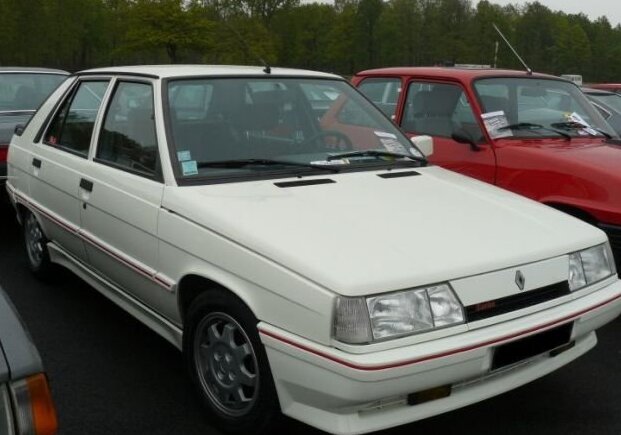
The Renault 11, produced between 1981 and 1993, represented a significant step forward for Renault in the small family car segment. The B/C37 series, specifically the 1.7 (B/C37D) variant with 87 horsepower, was manufactured from 1987 to 1988. This model occupied a middle ground within the 11 lineup, offering a balance between affordability and performance, appealing to buyers seeking a more refined experience than the base models but without the expense of the higher-specification trims. It was a key player in the European hatchback market during its production run, competing with vehicles like the Volkswagen Golf and Ford Escort.
Technical Specifications
| Brand | Renault |
| Model | 11 |
| Generation | 11 (B/C37) |
| Type (Engine) | 1.7 (B/C37D) (87 Hp) |
| Start of production | 1987 |
| End of production | 1988 |
| Powertrain Architecture | Internal Combustion engine |
| Body type | Hatchback |
| Seats | 5 |
| Doors | 5 |
| Fuel consumption (urban) | 9.5 l/100 km (24.8 US mpg) |
| Fuel consumption (extra urban) | 7.6 l/100 km (30.9 US mpg) |
| Fuel consumption (combined) | 8.4 l/100 km (28 US mpg) |
| Fuel Type | Petrol (Gasoline) |
| Acceleration 0 – 100 km/h | 14.7 sec |
| Acceleration 0 – 62 mph | 14.7 sec |
| Acceleration 0 – 60 mph | 14 sec |
| Maximum speed | 176 km/h (109.36 mph) |
| Weight-to-power ratio | 9.7 kg/Hp |
| Power | 87 Hp |
| Power per litre | 50.6 Hp/l |
| Engine layout | Front, Transverse |
| Engine Model/Code | F2N |
| Engine displacement | 1720 cm3 (104.96 cu. in.) |
| Number of cylinders | 4 |
| Engine configuration | Inline |
| Number of valves per cylinder | 2 |
| Fuel injection system | Carburettor |
| Engine aspiration | Naturally aspirated |
| Engine oil capacity | 5.5 l (5.81 US qt | 4.84 UK qt) |
| Coolant capacity | 6.5 l (6.87 US qt | 5.72 UK qt) |
| Kerb Weight | 840 kg (1851.88 lbs.) |
| Max. weight | 1350 kg (2976.24 lbs.) |
| Max load | 510 kg (1124.36 lbs.) |
| Fuel tank capacity | 47 l (12.42 US gal | 10.34 UK gal) |
| Drivetrain Architecture | Front wheel drive |
| Drive wheel | Front wheel drive |
| Number of gears and type of gearbox | 5 gears, manual transmission |
| Front suspension | Independent coil spring |
| Rear suspension | Independent torsion suspension |
| Front brakes | Disc |
| Rear brakes | Drum |
| Steering type | Steering rack and pinion |
Powertrain & Engine Architecture
The Renault 11 1.7 (B/C37D) was powered by the F2N engine, a 1720cc inline-four cylinder gasoline engine. This engine utilized a carburettor fuel injection system, a common feature for the time, though increasingly superseded by fuel injection in other markets. The engine featured a two-valve per cylinder configuration, contributing to its relatively simple and robust design. The 87 horsepower output was achieved at approximately 5,500 rpm, with peak torque of around 138 Nm (102 lb-ft) delivered at 3,500 rpm. The engine’s transverse mounting within the front-wheel-drive configuration was typical for European hatchbacks of this era, maximizing interior space. The 5-speed manual transmission was the standard offering, providing a reasonable spread of gears for both urban driving and highway cruising.
Driving Characteristics
The 1.7-liter engine provided a noticeable step up in performance compared to the smaller 1.4-liter variants of the Renault 11. While not a particularly sporty vehicle, the 1.7 offered adequate acceleration for everyday driving, with a 0-60 mph time of around 14 seconds. The carbureted engine delivered a somewhat less refined power delivery than fuel-injected counterparts, with a slight hesitation off the line. The five-speed manual transmission allowed drivers to keep the engine in its optimal power band, although the gear ratios were fairly widely spaced. Compared to the later fuel-injected versions, the 1.7 felt less responsive, but offered a simpler, more mechanically intuitive driving experience. The car’s relatively light weight (around 840 kg) helped to mitigate the engine’s modest power output.
Equipment & Trim Levels
The 1.7-liter Renault 11 typically came equipped with a reasonable level of standard features for its time. These included cloth upholstery, a basic instrument cluster, and manual windows and door locks. Optional extras could include a sunroof, upgraded stereo system, and central locking. The interior trim was generally functional and durable, though not particularly luxurious. The dashboard layout was straightforward and easy to use, with clearly marked controls. The 1.7 trim level often served as a base for adding optional packages, allowing buyers to customize their vehicle to some extent.
Chassis & Braking
The Renault 11 featured an independent coil spring suspension at the front and an independent torsion beam suspension at the rear. This setup provided a comfortable ride quality, although handling was not particularly sharp. The front brakes were disc brakes, offering adequate stopping power, while the rear brakes were drums. This combination was typical for cars in this price range during the late 1980s. The steering was a rack and pinion system, providing reasonably precise control. Stabilizer bars were often included as standard equipment, helping to reduce body roll during cornering.
Market Reception & Comparison
The Renault 11 1.7 was generally well-received by automotive critics as a practical and affordable family car. It was praised for its comfortable ride, spacious interior, and relatively fuel-efficient engine. However, some critics noted the engine’s lack of refinement and the car’s somewhat dated styling. Compared to the smaller 1.4-liter models, the 1.7 offered a significant improvement in performance, making it a more suitable choice for drivers who frequently traveled on highways or carried passengers. Fuel economy was competitive for the time, averaging around 28 US mpg in combined driving. Compared to the more expensive and powerful Renault 11 TXE, the 1.7 offered a more accessible price point, appealing to a wider range of buyers.
Legacy
The Renault 11 1.7, while not a particularly rare or collectible vehicle today, remains a popular choice among classic car enthusiasts and those seeking an affordable and reliable vintage hatchback. The F2N engine is known for its durability and relative simplicity, making it relatively easy to maintain. Parts availability is generally good, although some components may be becoming increasingly difficult to find. The 1.7’s combination of practicality, affordability, and reasonable performance has ensured its continued presence on European roads, and it is often remembered fondly as a solid and dependable family car from the 1980s. The carbureted engine, while less efficient than modern fuel injection systems, contributes to the car’s classic character and provides a unique driving experience.
