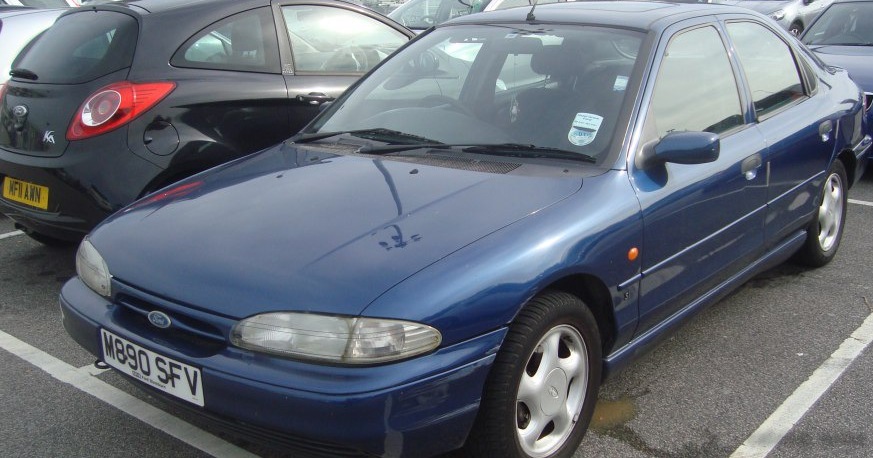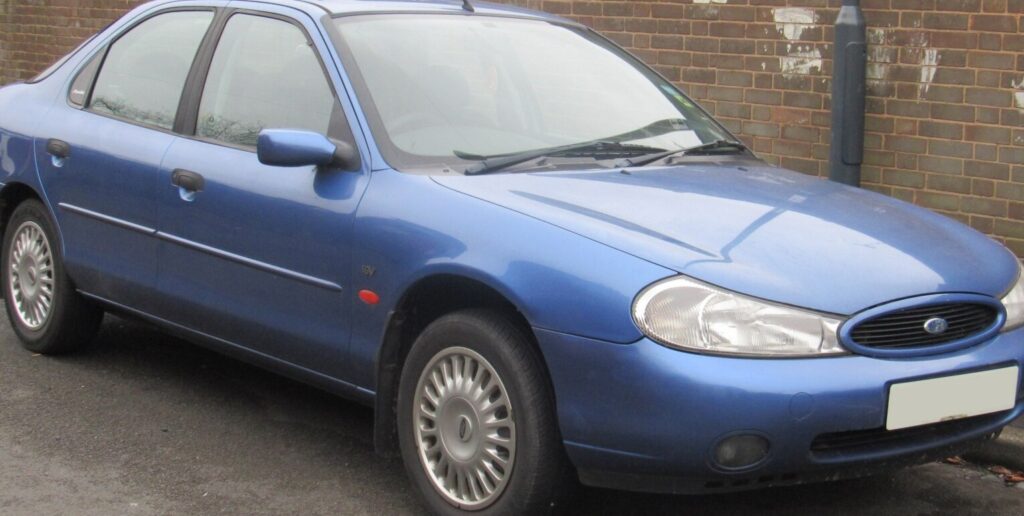
The Ford Mondeo II Sedan 2.0 DI (90 hp) was a diesel-powered variant of Ford’s popular mid-size family car, produced between 2001 and 2006. Positioned as an entry-level offering within the Mondeo II range, it aimed to provide fuel efficiency and reasonable performance for budget-conscious buyers. This model, built on the B5 platform (internally designated as 1HX0 for the sedan), was primarily sold in Europe, where diesel engines held a significant market share. It represented Ford’s attempt to cater to the growing demand for economical transportation without sacrificing the Mondeo’s reputation for practicality and comfort.
Technical Specifications
| Brand | Ford |
| Model | Mondeo |
| Generation | Mondeo II Sedan |
| Type (Engine) | 2.0 DI (90 Hp) |
| Start of production | 2001 |
| End of production | 2006 |
| Powertrain Architecture | Internal Combustion engine |
| Body type | Sedan |
| Seats | 5 |
| Doors | 4 |
| Fuel consumption (urban) | 8.2 l/100 km (28.7 US mpg) |
| Fuel consumption (extra urban) | 4.6 l/100 km (51.1 US mpg) |
| Fuel consumption (combined) | 5.9 l/100 km (39.9 US mpg) |
| Fuel Type | Diesel |
| Acceleration 0 – 100 km/h | 13.2 sec |
| Acceleration 0 – 62 mph | 13.2 sec |
| Acceleration 0 – 60 mph | 12.5 sec |
| Maximum speed | 180 km/h (111.85 mph) |
| Weight-to-power ratio | 16.6 kg/Hp |
| Weight-to-torque ratio | 6.1 kg/Nm |
| Power | 90 Hp @ 4000 rpm |
| Power per litre | 45 Hp/l |
| Torque | 245 Nm @ 1900 rpm (180.7 lb.-ft. @ 1900 rpm) |
| Engine layout | Front, Transverse |
| Engine Model/Code | D5BA |
| Engine displacement | 1998 cm3 (121.93 cu. in.) |
| Number of cylinders | 4 |
| Engine configuration | Inline |
| Cylinder Bore | 86 mm (3.39 in.) |
| Piston Stroke | 86 mm (3.39 in.) |
| Compression ratio | 19:1 |
| Number of valves per cylinder | 4 |
| Fuel injection system | Diesel Commonrail |
| Engine aspiration | Turbocharger, Intercooler |
| Valvetrain | DOHC |
| Engine oil capacity | 6 l (6.34 US qt | 5.28 UK qt) |
| Coolant capacity | 10.4 l (10.99 US qt | 9.15 UK qt) |
| Kerb Weight | 1492 kg (3289.3 lbs.) |
| Max. weight | 1980 kg (4365.15 lbs.) |
| Max load | 488 kg (1075.86 lbs.) |
| Trunk (boot) space – minimum | 500 l (17.66 cu. ft.) |
| Fuel tank capacity | 56 l (14.79 US gal | 12.32 UK gal) |
| Length | 4731 mm (186.26 in.) |
| Width | 1812 mm (71.34 in.) |
| Height | 1429 mm (56.26 in.) |
| Wheelbase | 2754 mm (108.43 in.) |
| Front track | 1522 mm (59.92 in.) |
| Rear track | 1537 mm (60.51 in.) |
| Drivetrain Architecture | Front wheel drive |
| Number of gears | 5 |
| Gearbox type | Manual transmission |
| Front suspension | Wishbone |
| Rear suspension | Coil spring |
| Front brakes | Ventilated discs |
| Rear brakes | Disc |
| Assisting systems | ABS (Anti-lock braking system) |
| Steering type | Steering rack and pinion |
| Power steering | Hydraulic |
| Tires size | 205/55 R16 |
INTRODUCTION
The Ford Mondeo II Sedan 2.0 DI (90 hp) was introduced as part of the facelifted second-generation Mondeo range in 2001. It occupied the lower end of the engine lineup, offering a more affordable entry point into the Mondeo family. The 2.0 DI engine, utilizing direct injection technology, was designed to balance fuel economy with acceptable performance for everyday driving. This variant was particularly popular in European markets where diesel fuel was cheaper and more readily available than gasoline, and where tax incentives favored vehicles with lower emissions. The Mondeo II, in general, was a significant step forward for Ford in Europe, offering a more refined and spacious alternative to its predecessors.
Powertrain & Engine Architecture
The heart of the Mondeo II 2.0 DI was the D5BA engine, a 1.998-liter inline-four cylinder diesel. This engine featured direct fuel injection, a technology that improved combustion efficiency and reduced emissions. The D5BA utilized a turbocharger with an intercooler to boost power output, achieving 90 horsepower at 4000 rpm and 245 Nm (180.7 lb-ft) of torque at a relatively low 1900 rpm. The engine employed a double overhead camshaft (DOHC) valvetrain with four valves per cylinder, optimizing airflow for improved performance. The fuel injection system was a common rail diesel injection (CRDI) system, providing precise fuel delivery and contributing to smoother engine operation. The engine was transversely mounted in the front of the vehicle. The 5-speed manual transmission was the standard offering for this variant, chosen for its efficiency and cost-effectiveness. While an automatic transmission was available on other Mondeo models, it wasn’t typically paired with the 90 hp diesel due to the potential for sluggish performance.
Driving Characteristics
The 2.0 DI 90 hp Mondeo Sedan offered a practical, if not particularly exciting, driving experience. Acceleration was modest, taking around 13.2 seconds to reach 62 mph (100 km/h). The engine’s strength lay in its torque delivery, providing adequate pulling power for everyday driving and overtaking maneuvers, especially when utilizing the engine’s low-end grunt. The 5-speed manual transmission was well-matched to the engine’s characteristics, allowing drivers to keep the engine in its optimal power band. Compared to the more powerful 2.0 TDCi or gasoline-powered Mondeos, the 2.0 DI felt noticeably slower, particularly at higher speeds. However, its fuel economy was a significant advantage, making it an attractive option for drivers covering long distances. The gear ratios were tuned for economy rather than outright performance, prioritizing fuel efficiency over rapid acceleration.
Equipment & Trim Levels
The 2.0 DI 90 hp Mondeo Sedan typically came with a fairly basic level of equipment, reflecting its position as an entry-level model. Standard features generally included power steering, central locking, electric front windows, and an anti-lock braking system (ABS). Interior upholstery was typically cloth, and the dashboard featured a functional, if somewhat plain, design. Optional extras included air conditioning, alloy wheels, a CD player, and upgraded interior trim. Higher trim levels, such as Ghia or Titanium, offered more luxurious appointments and additional features, but were typically paired with more powerful engines. The focus with this trim was on providing a reliable and affordable family car, rather than a feature-rich one.
Chassis & Braking
The Mondeo II Sedan featured independent front suspension with MacPherson struts and a multi-link rear suspension, providing a comfortable and controlled ride. The front brakes were ventilated discs, while the rear brakes were solid discs. The suspension setup was tuned to balance ride comfort with handling stability. The 2.0 DI variant, being one of the lighter Mondeo models, generally handled well, although it didn’t offer the same level of dynamic performance as the more powerful versions. Stabilizer bars were fitted to both the front and rear axles to reduce body roll during cornering. The hydraulic power steering provided light and precise steering feel.
Market Reception & Comparison
The Ford Mondeo II 2.0 DI (90 hp) was generally well-received by critics as a practical and economical family car. It was praised for its fuel efficiency, comfortable ride, and spacious interior. However, it was also criticized for its relatively slow acceleration and lack of refinement compared to some of its competitors. Compared to the more powerful Mondeo variants, such as the 2.0 TDCi or the V6 models, the 2.0 DI offered significantly lower performance but also lower running costs. It competed with other mid-size diesel sedans, such as the Volkswagen Passat TDI and the Opel/Vauxhall Vectra CDTi, offering a competitive package in terms of price and fuel economy.
Legacy
The Ford Mondeo II 2.0 DI (90 hp) powertrain proved to be relatively reliable, with many examples still on the road today. The D5BA engine, while not known for being particularly high-tech, was a robust and durable unit. Common issues included turbocharger wear and potential problems with the fuel injection system, but these were generally manageable with regular maintenance. In the used car market, this variant represents an affordable and economical option for buyers seeking a practical family car. Its fuel efficiency and relatively low maintenance costs make it an attractive choice for those on a budget. While it may not offer the performance or refinement of more modern vehicles, the Mondeo II 2.0 DI remains a capable and dependable car.