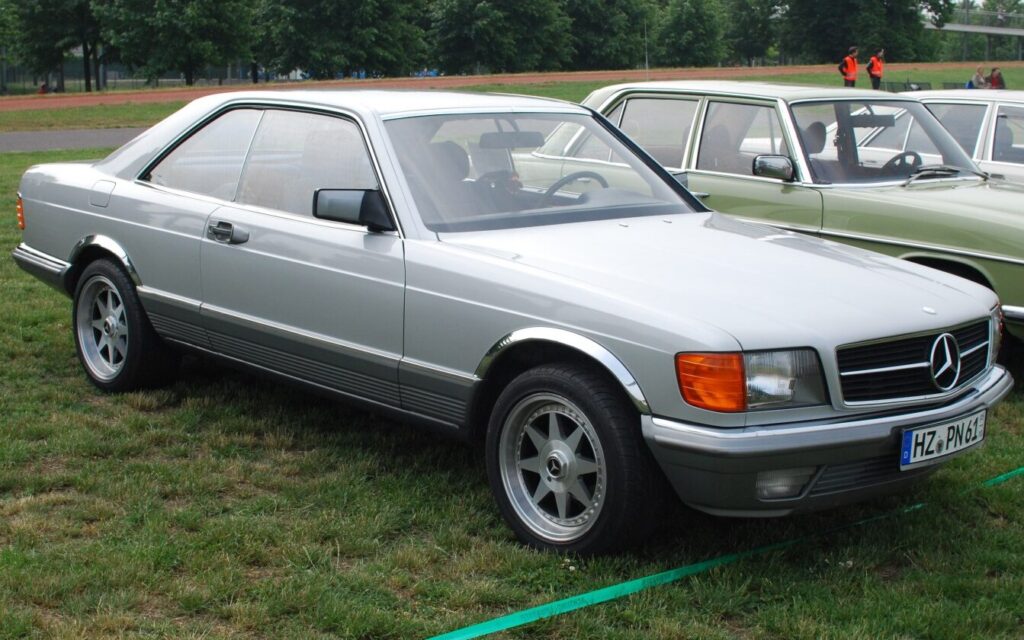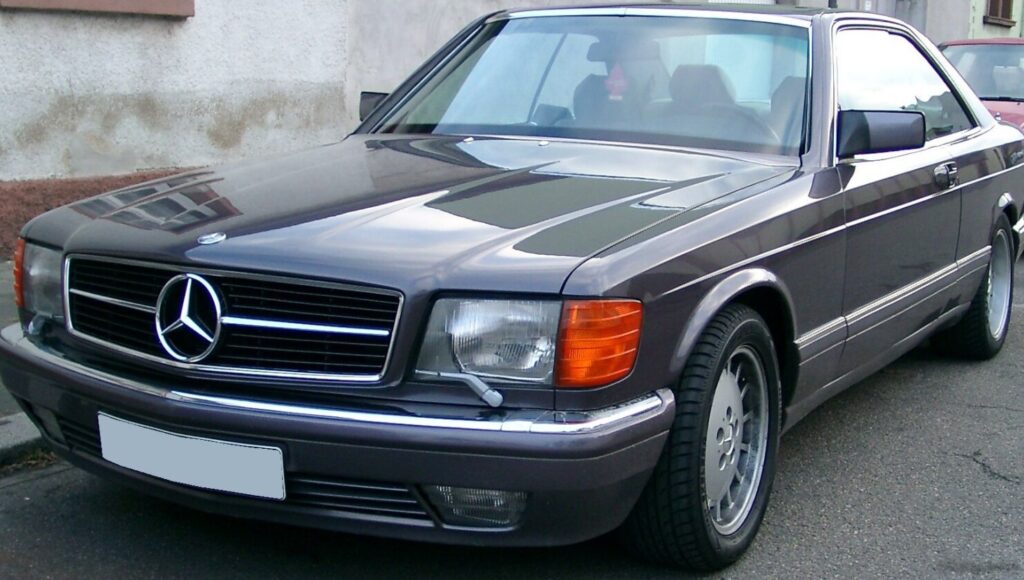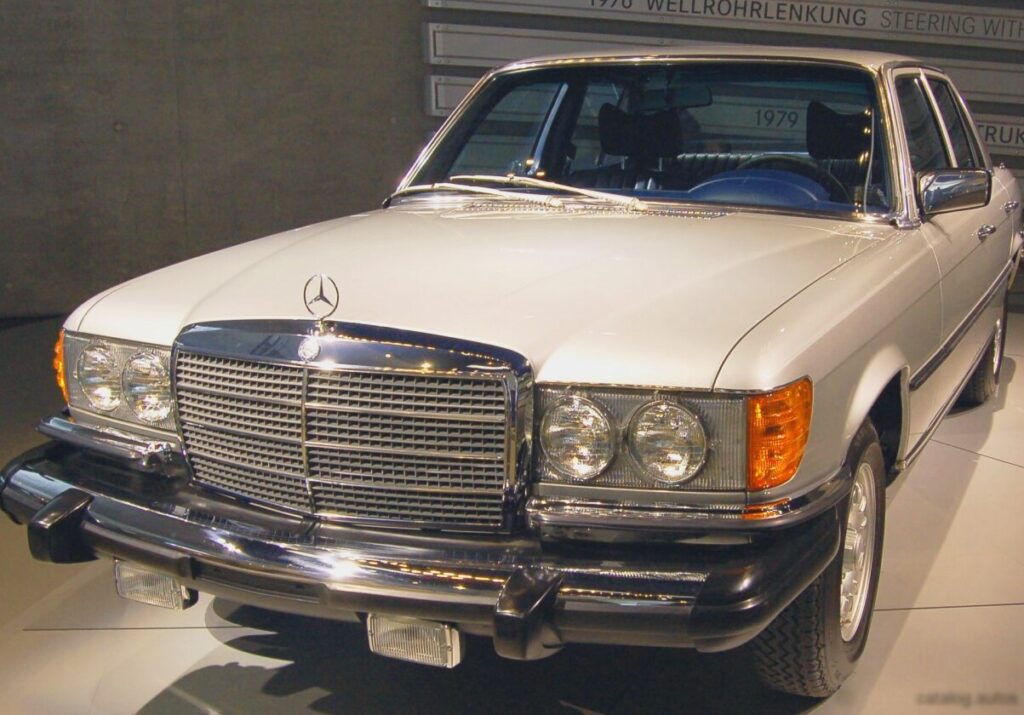
The Mercedes-Benz S-Class SEL (V116) 350 SEL, produced from January 1976 to April 1978, represented a significant evolution in luxury automotive engineering. Positioned as a mid-range offering within the V116 S-Class lineup – sandwiched between the 280 SEL and the flagship 450 SEL – the 350 SEL combined a robust V8 engine with the convenience of an automatic transmission. This model was primarily aimed at the North American market, where larger displacement engines were favored, and offered a blend of performance and comfort expected of a top-tier luxury sedan. The “SEL” designation signified the long-wheelbase version, providing enhanced rear passenger space, a key selling point for the S-Class.
Technical Specifications
| Brand | Mercedes-Benz |
| Model | S-class |
| Generation | S-class SEL (V116) |
| Type (Engine) | 350 SEL V8 (195 Hp) Automatic |
| Start of production | January, 1976 |
| End of production | April, 1978 |
| Powertrain Architecture | Internal Combustion engine |
| Body type | Sedan |
| Seats | 5 |
| Doors | 4 |
| Fuel consumption (combined) | 13 l/100 km (18.1 US mpg, 21.7 UK mpg, 7.7 km/l) |
| Fuel Type | Petrol (Gasoline) |
| Acceleration 0 – 100 km/h | 10.4 sec |
| Acceleration 0 – 62 mph | 10.4 sec |
| Acceleration 0 – 60 mph | 9.9 sec |
| Maximum speed | 200 km/h (124.27 mph) |
| Weight-to-power ratio | 8.7 kg/Hp, 114.7 Hp/tonne |
| Weight-to-torque ratio | 6.2 kg/Nm, 161.8 Nm/tonne |
| Power | 195 Hp @ 5500 rpm |
| Power per litre | 55.7 Hp/l |
| Torque | 275 Nm @ 4000 rpm (202.83 lb.-ft. @ 4000 rpm) |
| Engine layout | Front, Longitudinal |
| Engine Model/Code | M 116 E 35 / 116.985 |
| Engine displacement | 3499 cm3 (213.52 cu. in.) |
| Number of cylinders | 8 |
| Engine configuration | V-engine |
| Cylinder Bore | 92 mm (3.62 in.) |
| Piston Stroke | 65.8 mm (2.59 in.) |
| Compression ratio | 9:1 |
| Number of valves per cylinder | 2 |
| Fuel injection system | Multi-port manifold injection |
| Engine aspiration | Naturally aspirated engine |
| Valvetrain | SOHC |
| Engine oil capacity | 8 l (8.45 US qt | 7.04 UK qt) |
| Coolant | 8 l (8.45 US qt | 7.04 UK qt) |
| Kerb Weight | 1700 kg (3747.86 lbs.) |
| Max. weight | 2220 kg (4894.26 lbs.) |
| Max load | 520 kg (1146.4 lbs.) |
| Trunk (boot) space – minimum | 530 l (18.72 cu. ft.) |
| Fuel tank capacity | 96 l (25.36 US gal | 21.12 UK gal) |
| Length | 5060 mm (199.21 in.) |
| Width | 1870 mm (73.62 in.) |
| Height | 1430 mm (56.3 in.) |
| Wheelbase | 2960 mm (116.54 in.) |
| Front track | 1521 mm (59.88 in.) |
| Rear (Back) track | 1505 mm (59.25 in.) |
| Drivetrain Architecture | The Internal combustion engine (ICE) drives the rear wheels of the vehicle. |
| Drive wheel | Rear wheel drive |
| Number of gears and type of gearbox | 3 gears, automatic transmission |
| Front suspension | Double wishbone |
| Rear suspension | Trailing arm |
| Front brakes | Ventilated discs |
| Rear brakes | Disc |
| Steering type | Cone worm with recirculation balls |
| Power steering | Hydraulic Steering |
| Tires size | Front wheel tires: 205/70 R14 Rear wheel tires: 205/70 R14 |
| Wheel rims size | Front wheel rims: 6.5J x 14 Rear wheel rims: 6.5J x 14 |
Powertrain & Engine Architecture
The heart of the 350 SEL was the M116 E 35 engine, a 3.5-liter naturally aspirated V8. This engine featured a single overhead camshaft (SOHC) design and utilized Bosch K-Jetronic multi-port fuel injection, a sophisticated system for its time that improved fuel efficiency and reduced emissions compared to carbureted engines. The M116 was known for its smooth operation and relatively high torque output. The engine produced 195 horsepower at 5,500 rpm and 275 Nm (202.83 lb-ft) of torque at 4,000 rpm. The engine’s longitudinal mounting and rear-wheel drive configuration were standard for Mercedes-Benz at the time. Paired with the engine was a three-speed automatic transmission, providing smooth and effortless gear changes. This transmission was designed for comfort rather than outright performance, with relatively wide gear ratios geared towards relaxed cruising.
Driving Characteristics
The 350 SEL Automatic offered a comfortable and refined driving experience. While not a sports sedan, the V8 engine provided ample power for effortless highway cruising and confident acceleration. The automatic transmission, while smooth, did result in some power loss compared to the available four-speed manual transmission. Acceleration from 0 to 60 mph took approximately 9.9 seconds, and top speed was limited to 200 km/h (124 mph). The long wheelbase and sophisticated suspension – featuring double wishbones at the front and a trailing arm setup at the rear – contributed to a smooth and stable ride, even on imperfect road surfaces. The steering, utilizing a cone worm and recirculation ball system with hydraulic assistance, was relatively heavy but precise.
Equipment & Trim Levels
The 350 SEL came standard with a high level of equipment befitting its luxury status. This included power-assisted steering and brakes, central locking, electric windows, and a high-quality radio. Interior upholstery was typically offered in leather, with options for various colors and trim combinations. Wood veneer trim adorned the dashboard and door panels, adding to the luxurious ambiance. Optional extras included air conditioning, a sunroof, and upgraded audio systems. The SEL designation meant a longer wheelbase, translating to increased rear legroom, making it a popular choice for chauffeured transport.
Chassis & Braking
The V116 S-Class featured a robust chassis designed for comfort and safety. The suspension system, as mentioned, prioritized ride quality. The 350 SEL utilized ventilated disc brakes at the front and solid discs at the rear, providing adequate stopping power for the vehicle’s weight and performance. Anti-dive geometry was incorporated into the front suspension to minimize nose-diving during braking. The car rode on 6.5J x 14 inch wheels, typically fitted with 205/70 R14 tires.
Market Reception & Comparison
The 350 SEL was generally well-received by automotive critics. It was praised for its comfortable ride, refined interior, and smooth V8 engine. However, some critics noted that the automatic transmission dulled the engine’s performance compared to the manual version. Compared to the 280 SEL, the 350 SEL offered significantly more power and a more luxurious driving experience. The 450 SEL, with its larger 4.5-liter V8, provided even greater performance but came at a higher price point. Fuel economy, at 13 l/100 km (18.1 US mpg), was typical for a large luxury sedan of the era, but not particularly impressive.
Legacy
The Mercedes-Benz V116 S-Class, including the 350 SEL, is considered a classic of the era and remains highly sought after by collectors. The M116 engine, while not known for being particularly high-strung, is generally regarded as a durable and reliable powerplant when properly maintained. Common issues include wear in the suspension components and potential for corrosion, particularly in areas exposed to road salt. Today, well-maintained 350 SEL models command respectable prices in the used car market, reflecting their enduring appeal and status as a symbol of 1970s luxury.