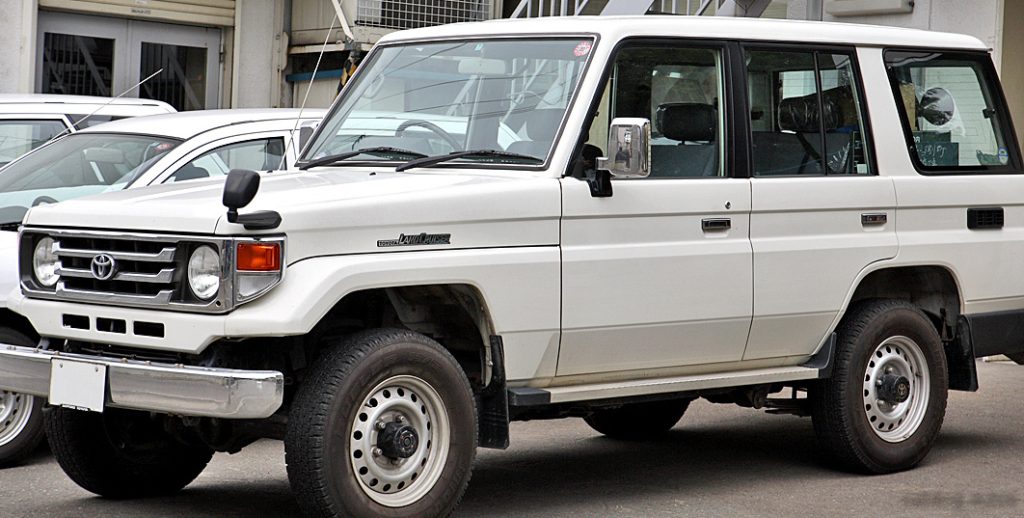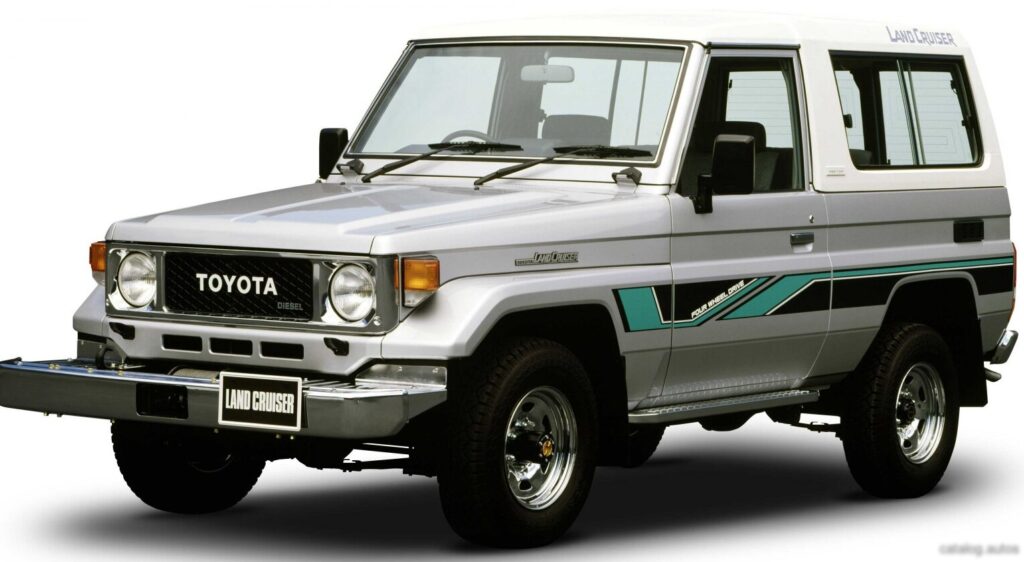
The Toyota Land Cruiser J70 series, produced from 1985 to 1998, represents a pivotal generation for the iconic off-road vehicle. Within this series, the HJ70 variant, powered by the 4.0 D engine, held a significant position, particularly in markets outside of North America where demand for rugged, diesel-powered 4x4s remained strong. This model, manufactured between 1985 and 1988, was characterized by its robust construction, simple mechanics, and exceptional off-road capability. The HJ70 was a mainstay for agricultural workers, explorers, and anyone needing a dependable vehicle in challenging terrain. It’s a three-door, five-seat configuration, emphasizing practicality over luxury.
Technical Specifications
| Brand | Toyota |
| Model | Land Cruiser |
| Generation | Land Cruiser (J70, J73) |
| Type (Engine) | 4.0 D (HJ70) (115 Hp) 4WD |
| Start of production | 1985 |
| End of production | 1988 |
| Powertrain Architecture | Internal Combustion engine |
| Body type | Off-road vehicle |
| Seats | 5 |
| Doors | 3 |
| Fuel Type | Diesel |
| Weight-to-power ratio | 15.2 kg/Hp |
| Hp/tonne | 65.7 Hp/tonne |
| Weight-to-torque ratio | 6.9 kg/Nm |
| Nm/tonne | 145.7 Nm/tonne |
| Power | 115 Hp @ 3500 rpm |
| Power per litre | 28.9 Hp/l |
| Torque | 255 Nm @ 2400 rpm (188.08 lb.-ft. @ 2400 rpm) |
| Engine layout | Front, Longitudinal |
| Engine Model/Code | 2H |
| Engine displacement | 3980 cm3 (242.87 cu. in.) |
| Number of cylinders | 6 |
| Engine configuration | Inline |
| Cylinder Bore | 91 mm (3.58 in.) |
| Piston Stroke | 102 mm (4.02 in.) |
| Compression ratio | 20.7:1 |
| Number of valves per cylinder | 2 |
| Fuel injection system | Precombustion chamber injection |
| Engine aspiration | Naturally aspirated engine |
| Valvetrain | OHV |
| Engine oil capacity | 10.7 l (11.31 US qt | 9.41 UK qt) |
| Coolant | 15.4 l (16.27 US qt | 13.55 UK qt) |
| Kerb Weight | 1750 kg (3858.09 lbs.) |
| Max. weight | 2260 kg (4982.45 lbs.) |
| Max load | 510 kg (1124.36 lbs.) |
| Fuel tank capacity | 90 l (23.78 US gal | 19.8 UK gal) |
| Length | 3975 mm (156.5 in.) |
| Width | 1690 mm (66.54 in.) |
| Height | 1895 mm (74.61 in.) |
| Wheelbase | 2310 mm (90.94 in.) |
| Drivetrain Architecture | The Internal combustion engine (ICE) drives the rear wheels permanently, and the front wheels are driven through an electrically or mechanically operated clutch if necessary. |
| Drive wheel | All wheel drive (4×4) |
| Number of gears and type of gearbox | 5 gears, manual transmission |
| Front suspension | Leaf spring |
| Rear suspension | Leaf spring |
| Front brakes | Ventilated discs |
| Rear brakes | Drum |
| Steering type | Cone worm with recirculation balls |
Powertrain & Engine Architecture
The heart of the HJ70 is the 2H inline-six cylinder diesel engine, displacing 3.98 liters (242.87 cubic inches). This engine is renowned for its durability and simplicity. It utilizes a precombustion chamber injection system, a common design for diesel engines of the era, which improves combustion efficiency and reduces engine noise compared to direct injection systems. The 2H engine features an overhead valve (OHV) valvetrain, contributing to its robust and easily maintainable design. The engine produces 115 horsepower at 3500 rpm and 255 Nm (188 lb-ft) of torque at 2400 rpm. The five-speed manual transmission was the standard offering, providing a wide range of gears for both on-road cruising and challenging off-road situations. The transmission’s gear ratios were optimized for low-speed torque, essential for navigating difficult terrain.
Driving Characteristics
The HJ70 4.0 D, with its 115 hp and manual transmission, offered a driving experience focused on capability rather than speed. Acceleration was modest, but the engine’s substantial torque provided ample pulling power, making it ideal for towing or traversing steep inclines. The manual gearbox allowed for precise control, particularly when rock crawling or navigating technical trails. Compared to potential upgrades like later fuel-injected Land Cruisers, or even higher-output diesel variants, the HJ70 prioritized reliability and ease of repair. The leaf spring suspension, while providing a comfortable ride on relatively smooth surfaces, could become bouncy on rough terrain. However, it contributed to the vehicle’s impressive articulation and off-road prowess.
Equipment & Trim Levels
The HJ70 was not a luxury vehicle. It was designed for functionality. Standard equipment typically included basic steel wheels, vinyl or cloth upholstery, and a simple dashboard layout. Air conditioning and power steering were often optional extras, depending on the market. The interior was spartan but durable, designed to withstand the rigors of off-road use. Trim levels were minimal; the focus was on providing a reliable and capable workhorse. Features like a basic radio and heater were common, but more sophisticated options were rarely fitted.
Chassis & Braking
The HJ70’s chassis was a body-on-frame construction, providing exceptional strength and durability. The front suspension utilized leaf springs, while the rear suspension also employed a leaf spring setup. This configuration was chosen for its robustness and ability to handle heavy loads. The braking system consisted of ventilated discs on the front wheels and drum brakes on the rear. While adequate for the vehicle’s weight and intended use, the braking performance was not particularly sophisticated by modern standards. The steering system was a cone worm with recirculation balls, providing a direct but somewhat heavy steering feel.
Market Reception & Comparison
The HJ70 4.0 D was well-received in markets where a rugged, reliable, and affordable 4×4 was in demand. Critics praised its off-road capability, durability, and simple mechanics. Compared to other Land Cruiser variants, such as those with gasoline engines, the HJ70 offered superior fuel economy and lower maintenance costs. However, it lacked the refinement and performance of its gasoline-powered counterparts. Against competitors like the Nissan Patrol, the HJ70 held its own, often being favored for its Toyota’s reputation for reliability. The manual transmission was seen as a plus by enthusiasts, offering greater control in off-road situations.
Legacy
The Toyota Land Cruiser HJ70 4.0 D has earned a legendary reputation for its longevity and dependability. Many examples are still in use today, often having accumulated hundreds of thousands of miles. The 2H engine is known for its ability to withstand abuse and continue running with minimal maintenance. In the used car market, well-maintained HJ70s command a premium price, reflecting their enduring appeal and collectibility. The HJ70 represents a golden age of simple, robust 4×4 design, and it continues to be a favorite among off-road enthusiasts and those seeking a truly dependable vehicle.