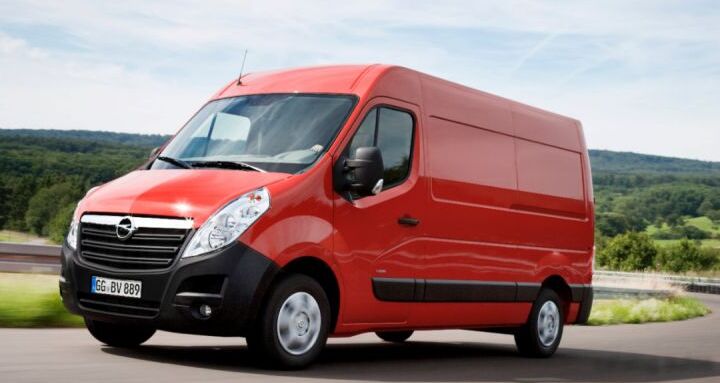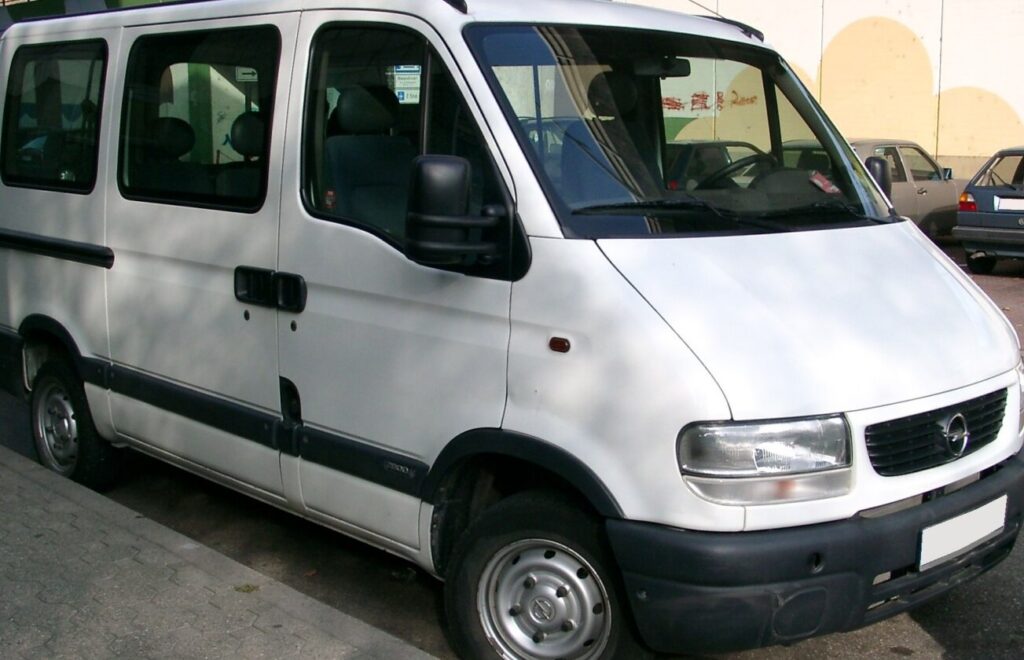
The Opel Movano A 2.8 DTI (114 hp) was a commercial vehicle produced between 1999 and 2000, representing a key variant within the first generation (Movano A) of Opel’s large van lineup. Positioned as a workhorse for businesses and tradespeople, this model aimed to provide a balance of cargo capacity, reasonable running costs, and durability. It was part of a collaborative effort with Renault and Nissan, sharing a platform and many components with the Renault Master and Nissan Interstar. The Movano A sought to modernize Opel’s presence in the large van segment, competing with established rivals like the Mercedes-Benz Sprinter and Volkswagen Crafter.
Technical Specifications
| Brand | Opel |
| Model | Movano |
| Generation | Movano A |
| Type (Engine) | 2.8 DTI (114 Hp) |
| Start of production | 1999 |
| End of production | 2000 |
| Powertrain Architecture | Internal Combustion engine |
| Body type | Minivan |
| Seats | 6-9 |
| Doors | 5 |
| Fuel Type | Diesel |
| Power | 114 Hp |
| Power per litre | 40.7 Hp/l |
| Engine Model/Code | S9W-700 |
| Engine displacement | 2799 cm3 / 170.81 cu. in. |
| Number of cylinders | 4 |
| Engine configuration | Rotary (Wankel) |
| Fuel injection system | Direct injection |
| Engine aspiration | Supercharger |
| Engine oil capacity | 6.7 l / 7.08 US qt | 5.9 UK qt |
| Coolant | 11 l / 11.62 US qt | 9.68 UK qt |
| Length | 5377 mm / 211.69 in. |
| Width | 1990 mm / 78.35 in. |
| Height | 2489 mm / 97.99 in. |
| Wheelbase | 3577 mm / 140.83 in. |
| Drivetrain Architecture | The Internal combustion engine (ICE) drives the rear wheels of the vehicle. |
| Drive wheel | Rear wheel drive |
| Front suspension | Independent type McPherson |
| Rear suspension | Spring Strut |
| Front brakes | Ventilated discs |
| Rear brakes | Drum |
| Steering type | Steering rack and pinion |
| Power steering | Hydraulic Steering |
Powertrain & Engine Architecture
The heart of the Movano A 2.8 DTI was the S9W-700 engine, a 2.8-liter inline-four cylinder diesel. This engine was a product of a joint venture between Opel/Renault and Nissan, and was also found in various forms in other commercial vehicles of the period. The “DTI” designation indicated a direct injection system, which improved fuel efficiency and reduced emissions compared to older indirect injection diesels. The engine utilized a Bosch EDC (Electronic Diesel Control) system to manage fuel delivery and timing. While the stated horsepower was 114 hp, peak torque was a more significant figure for a commercial vehicle, providing around 270 Nm (199 lb-ft) of torque. The engine featured a single overhead camshaft and two valves per cylinder. The transmission paired with the 2.8 DTI was typically a five-speed manual, but a four-speed automatic transmission was also available, though less common. The automatic transmission was designed for durability and ease of use, prioritizing functionality over sporty performance.
Driving Characteristics
The Movano A 2.8 DTI with the automatic transmission wasn’t designed for speed. Acceleration was modest, and the focus was on providing sufficient power for hauling loads and navigating urban environments. The automatic transmission, while convenient, did detract somewhat from fuel economy compared to the manual version. Gear changes were generally smooth, but not particularly quick. The engine’s torque curve was relatively flat, meaning that usable power was available across a wide range of engine speeds. This made it well-suited for carrying heavy loads, but it also meant that the engine could feel strained when pushed hard. Compared to the higher-output versions of the Movano, the 2.8 DTI felt noticeably slower, especially when fully loaded. However, it offered a more relaxed driving experience, particularly in stop-and-go traffic.
Equipment & Trim Levels
The Movano A 2.8 DTI was typically offered in a relatively basic trim level, reflecting its commercial vehicle focus. Standard equipment generally included power steering, a driver’s airbag, and central locking. The interior was functional and durable, with hard-wearing plastics and cloth upholstery. Air conditioning and a radio/cassette player were often optional extras. Higher trim levels, if available, might have included features like electric windows, upgraded upholstery, and a more comprehensive sound system. The van’s configuration was highly customizable, with options for different roof heights, cargo area lengths, and seating arrangements. The 2.8 DTI was often chosen by businesses that prioritized practicality and affordability over luxury features.
Chassis & Braking
The Movano A utilized a body-on-frame construction, providing a robust and durable platform for carrying heavy loads. The front suspension consisted of independent McPherson struts, while the rear suspension employed a leaf spring setup. This combination provided a reasonable balance of ride comfort and load-carrying capacity. Braking duties were handled by ventilated discs at the front and drum brakes at the rear. Hydraulic power steering was standard, making maneuvering the large van relatively easy. The steering feel was generally precise, but lacked the feedback of more sophisticated steering systems. Stabilizer bars were fitted to both the front and rear axles to reduce body roll during cornering.
Market Reception & Comparison
The Opel Movano A 2.8 DTI was generally well-received by commercial vehicle operators. Critics praised its spacious interior, robust construction, and reasonable running costs. However, the engine was sometimes criticized for being noisy and lacking refinement compared to some of its rivals. The automatic transmission, while convenient, was seen as detracting from fuel economy. Compared to the manual version, the 2.8 DTI automatic offered slightly worse fuel economy, averaging around 12-14 liters per 100 kilometers (19-20 mpg). In terms of reliability, the Movano A was generally considered to be a dependable vehicle, but regular maintenance was essential to prevent issues with the fuel injection system and turbocharger.
Legacy
The Opel Movano A 2.8 DTI, while a relatively short-lived variant, played a significant role in establishing Opel as a competitor in the large van segment. The S9W-700 engine proved to be a durable and reliable powerplant, and many examples are still in service today. On the used car market, these vans are typically valued for their practicality and affordability. However, potential buyers should be aware of the potential for age-related issues, such as corrosion and wear and tear on the suspension and braking systems. The Movano A paved the way for subsequent generations of the Movano, which have continued to build on its reputation for robustness and functionality. The 2.8 DTI automatic, while not the most powerful or refined version, remains a viable option for businesses and individuals seeking a dependable and affordable large van.