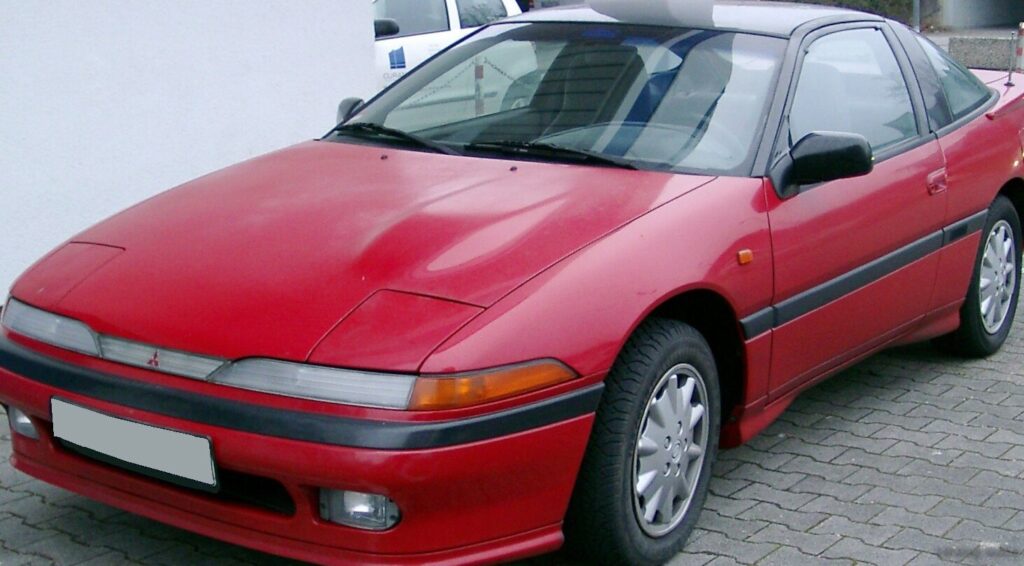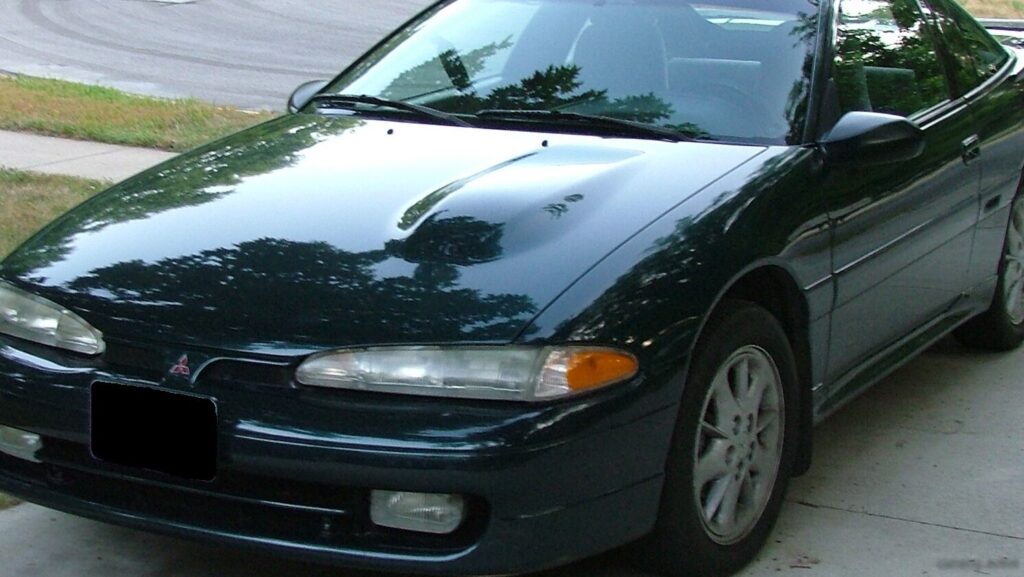
The Mitsubishi Eclipse first generation (1G), particularly the facelifted models produced from 1992 to 1994, represented Mitsubishi’s entry into the increasingly popular North American compact coupe market. Positioned as a sporty and affordable alternative to rivals like the Toyota Celica and Honda Prelude, the 1G Eclipse offered a blend of styling, performance, and technology. The 2.0-liter (135 hp) variant, available with either a five-speed manual or a four-speed automatic transmission, occupied a middle ground in the Eclipse lineup, offering a balance between performance and fuel economy. This model was crucial in establishing the Eclipse nameplate and building Mitsubishi’s reputation for building fun-to-drive vehicles in the US.
Technical Specifications
| Brand | Mitsubishi |
| Model | Eclipse |
| Generation | Eclipse I (1G, facelift 1992) |
| Type (Engine) | 2.0 (135 Hp) |
| Start of production | 1992 |
| End of production | 1994 |
| Powertrain Architecture | Internal Combustion engine |
| Body type | Coupe, Liftback |
| Seats | 4 |
| Doors | 3 |
| Fuel Type | Petrol (Gasoline) |
| Weight-to-power ratio | 9 kg/Hp, 110.7 Hp/tonne |
| Weight-to-torque ratio | 7.2 kg/Nm, 138.5 Nm/tonne |
| Power | 135 Hp @ 6000 rpm |
| Power per litre | 67.6 Hp/l |
| Torque | 169 Nm @ 3000 rpm (124.65 lb.-ft. @ 3000 rpm) |
| Engine layout | Front, Transverse |
| Engine Model/Code | 4G63 |
| Engine displacement | 1997 cm3 (121.86 cu. in.) |
| Number of cylinders | 4 |
| Engine configuration | Inline |
| Cylinder Bore | 85 mm (3.35 in.) |
| Piston Stroke | 88 mm (3.46 in.) |
| Number of valves per cylinder | 4 |
| Fuel injection system | Multi-port manifold injection |
| Engine aspiration | Naturally aspirated engine |
| Valvetrain | DOHC |
| Engine oil capacity | 4.4 l (4.65 US qt | 3.87 UK qt) |
| Coolant | 7 l (7.4 US qt | 6.16 UK qt) |
| Kerb Weight | 1220 kg (2689.64 lbs.) |
| Trunk (boot) space – minimum | 289 l (10.21 cu. ft.) |
| Fuel tank capacity | 60 l (15.85 US gal | 13.2 UK gal) |
| Length | 4390 mm (172.83 in.) |
| Width | 1695 mm (66.73 in.) |
| Height | 1306 mm (51.42 in.) |
| Wheelbase | 2470 mm (97.24 in.) |
| Drag coefficient (Cd) | 0.33 |
| Drivetrain Architecture | The Internal combustion engine (ICE) drives the front wheels of the vehicle. |
| Drive wheel | Front wheel drive |
| Number of gears and type of gearbox | 5 gears, manual transmission |
| Front suspension | Independent type McPherson, Transverse stabilizer |
| Rear suspension | Transverse stabilizer, Coil spring, Elastic beam |
| Front brakes | Ventilated discs |
| Rear brakes | Disc |
| Assisting systems | ABS (Anti-lock braking system) |
| Steering type | Steering rack and pinion |
| Power steering | Hydraulic Steering |
| Tires size | 205/55 R16 |
| Wheel rims size | 6J x 16 |
Powertrain & Engine Architecture
The heart of the 1992-1994 Mitsubishi Eclipse 2.0 was the 4G63 inline-four cylinder engine. This 1997cc (121.86 cubic inches) engine featured a cast iron block and an aluminum cylinder head, a common configuration for engines of this era. It employed multi-port fuel injection, delivering fuel directly into each intake port for improved efficiency and power delivery. The engine utilized a double overhead camshaft (DOHC) valvetrain, operating four valves per cylinder, which contributed to its relatively high specific output for a naturally aspirated engine. The 135 horsepower output was achieved at 6000 rpm, with peak torque of 169 Nm (124.65 lb-ft) arriving at 3000 rpm. The four-speed automatic transmission was a conventional hydraulic unit, offering smooth but not particularly quick shifts. It was designed for comfort and ease of use rather than outright performance.
Driving Characteristics
The 2.0-liter automatic Eclipse offered a comfortable and predictable driving experience. Acceleration was adequate for everyday driving, but it wasn’t a particularly quick car. The automatic transmission, while smooth, did sap some of the engine’s power, resulting in slower 0-60 mph times compared to the five-speed manual version. The gear ratios were tuned for fuel economy and cruising comfort, meaning the engine often felt strained during hard acceleration. Compared to the higher-performance turbocharged models, or even the manual transmission 2.0-liter, this variant prioritized ease of use and fuel efficiency over sporty driving dynamics. The front-wheel-drive configuration provided predictable handling, but lacked the all-wheel-drive grip offered on some higher-spec Eclipse models.
Equipment & Trim Levels
The 2.0-liter Eclipse typically came with a reasonable level of standard equipment. Base models included features like power steering, a basic stereo system, cloth upholstery, and manual windows and locks. Higher trim levels, often denoted by “GS” or “LS” designations, added features such as power windows and locks, upgraded audio systems, and alloy wheels. Optional extras included a sunroof, air conditioning, and cruise control. Interior upholstery was typically a durable cloth material, available in a variety of colors. The dashboard layout was functional and straightforward, with clearly marked gauges and controls.
Chassis & Braking
The Eclipse 1G utilized a MacPherson strut front suspension and a coil-sprung, elastic beam rear suspension. This setup provided a comfortable ride quality, although it wasn’t particularly sporty. A transverse stabilizer bar was fitted to both the front and rear axles to reduce body roll during cornering. Braking duties were handled by ventilated discs at the front and solid discs at the rear. Anti-lock brakes (ABS) were often included as standard equipment, enhancing safety. The steering system was a rack-and-pinion setup with hydraulic power assistance, providing light and easy steering feel.
Market Reception & Comparison
The 1992-1994 Mitsubishi Eclipse 2.0 with the automatic transmission received mixed reviews. Critics praised its styling and affordability, but noted that the automatic transmission diminished the engine’s performance. Compared to the manual transmission version, the automatic was noticeably slower. Fuel economy was generally considered to be average for its class. The 2.0-liter automatic Eclipse was often seen as a good choice for buyers who prioritized comfort and convenience over sporty driving dynamics. It offered a more affordable entry point into the Eclipse lineup compared to the turbocharged models or the all-wheel-drive variants.
Legacy
The 4G63 engine, in its various forms, proved to be remarkably durable and reliable. The 2.0-liter version found in the 1992-1994 Eclipse is generally considered to be a robust and long-lasting powertrain. While age and mileage inevitably take their toll, well-maintained examples can still be found on the road today. In the used car market, these Eclipses are often sought after by enthusiasts looking for an affordable and easily modified platform. The 1G Eclipse, particularly the 2.0-liter variant, played a significant role in establishing Mitsubishi as a credible player in the North American automotive market, and its legacy continues to endure among car enthusiasts.