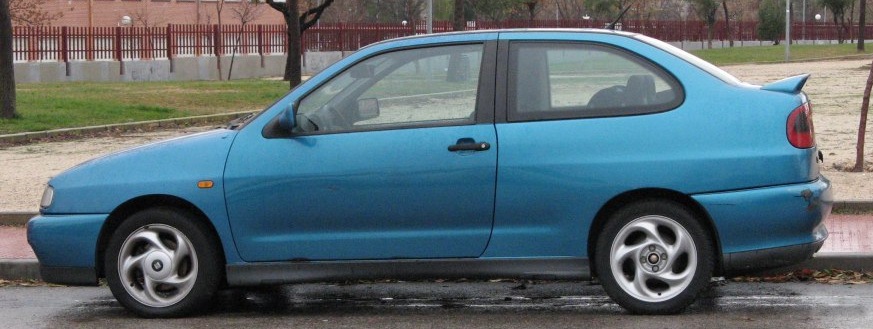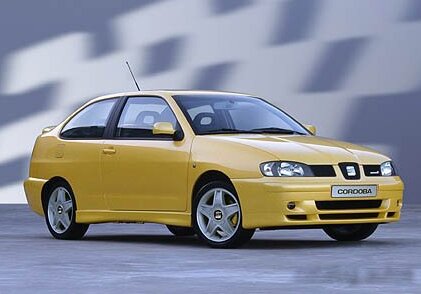
The Seat Cordoba Coupe I (facelifted in 1999) 1.6, producing 101 horsepower with an automatic transmission, represented a key offering in Seat’s lineup during the late 1990s and early 2000s. Produced from June 1999 to August 2002, this variant was positioned as a comfortable and accessible entry point into the coupe market, appealing to buyers seeking a stylish and practical vehicle. It was built on the Volkswagen Group’s 1HX0/A3 platform, shared with models like the Volkswagen Golf, Bora, and Audi A3, benefiting from the platform’s established reliability and engineering. This particular configuration aimed to balance affordability with convenience, offering an automatic transmission option in a segment often dominated by manual gearboxes.
Technical Specifications
| Brand | Seat |
| Model | Cordoba |
| Generation | Cordoba Coupe I (facelift 1999) |
| Type (Engine) | 1.6 (101 Hp) Automatic |
| Start of production | June, 1999 |
| End of production | August, 2002 |
| Powertrain Architecture | Internal Combustion engine |
| Body type | Coupe |
| Seats | 5 |
| Doors | 3 |
| Fuel consumption (urban) | 11.4 l/100 km (20.6 US mpg, 24.8 UK mpg, 8.8 km/l) |
| Fuel consumption (extra urban) | 6.2 l/100 km (37.9 US mpg, 45.6 UK mpg, 16.1 km/l) |
| Fuel consumption (combined) | 8.5 l/100 km (27.7 US mpg, 33.2 UK mpg, 11.8 km/l) |
| Fuel Type | Petrol (Gasoline) |
| Acceleration 0 – 100 km/h | 11 sec |
| Acceleration 0 – 62 mph | 11 sec |
| Acceleration 0 – 60 mph | 10.5 sec |
| Maximum speed | 188 km/h (116.82 mph) |
| Weight-to-power ratio | 10.7 kg/Hp, 93.5 Hp/tonne |
| Weight-to-torque ratio | 7.4 kg/Nm, 134.3 Nm/tonne |
| Power | 101 Hp @ 5600 rpm |
| Power per litre | 63.3 Hp/l |
| Torque | 145 Nm @ 3800 rpm (106.95 lb.-ft. @ 3800 rpm) |
| Engine layout | Front, Transverse |
| Engine Model/Code | AEH, AKL |
| Engine displacement | 1595 cm3 (97.33 cu. in.) |
| Number of cylinders | 4 |
| Engine configuration | Inline |
| Cylinder Bore | 81 mm (3.19 in.) |
| Piston Stroke | 77.4 mm (3.05 in.) |
| Compression ratio | 10.2:1 |
| Number of valves per cylinder | 2 |
| Fuel injection system | Multi-port manifold injection |
| Engine aspiration | Naturally aspirated engine |
| Valvetrain | OHC |
| Engine oil capacity | 4.5 l (4.76 US qt | 3.96 UK qt) |
| Coolant | 5.5 l (5.81 US qt | 4.84 UK qt) |
| Kerb Weight | 1080 kg (2380.99 lbs.) |
| Max. weight | 1540 kg (3395.12 lbs.) |
| Max load | 460 kg (1014.13 lbs.) |
| Trunk (boot) space – minimum | 455 l (16.07 cu. ft.) |
| Trunk (boot) space – maximum | 760 l (26.84 cu. ft.) |
| Fuel tank capacity | 45 l (11.89 US gal | 9.9 UK gal) |
| Length | 4165 mm (163.98 in.) |
| Width | 1645 mm (64.76 in.) |
| Height | 1420 mm (55.91 in.) |
| Wheelbase | 2445 mm (96.26 in.) |
| Front track | 1430 mm (56.3 in.) |
| Rear (Back) track | 1395 mm (54.92 in.) |
| Drivetrain Architecture | The Internal combustion engine (ICE) drives the front wheels of the vehicle. |
| Drive wheel | Front wheel drive |
| Number of gears and type of gearbox | 4 gears, automatic transmission |
| Front suspension | Spring Strut |
| Rear suspension | Suspension with traction connecting levers |
| Front brakes | Disc |
| Rear brakes | Drum |
| Assisting systems | ABS (Anti-lock braking system) |
| Steering type | Steering rack and pinion |
| Power steering | Hydraulic Steering |
| Tires size | 175/70 R13 |
| Wheel rims size | 13 |
Powertrain & Engine Architecture
The Cordoba 1.6 Automatic was powered by the Volkswagen Group’s AEH or AKL engine code, a 1.6-liter inline-four cylinder gasoline engine. This engine featured a single overhead camshaft (SOHC) valvetrain with two valves per cylinder. Fuel delivery was managed by a multi-port fuel injection system, providing a balance between efficiency and performance. The engine’s 101 horsepower output at 5600 rpm and 145 Nm (106.95 lb-ft) of torque at 3800 rpm were respectable for its displacement and intended market segment. The automatic transmission was a conventional four-speed unit, designed for smooth operation and ease of use. While not known for its sportiness, this transmission provided a comfortable driving experience, particularly in urban environments.
Driving Characteristics
The 1.6-liter engine paired with the four-speed automatic transmission delivered a driving experience focused on comfort and practicality rather than outright performance. Acceleration from 0 to 60 mph took around 10.5 seconds, and the top speed was approximately 116.82 mph. The automatic transmission’s gear ratios were tuned for fuel efficiency and smooth cruising, resulting in a somewhat leisurely pace. Compared to the manual transmission versions of the Cordoba 1.6, or the more powerful 1.8-liter and VR6 models, this variant felt noticeably less responsive. However, the automatic transmission made it a more accessible option for drivers who preferred the convenience of not having to shift gears, especially in congested city traffic.
Equipment & Trim Levels
The Cordoba Coupe 1.6 Automatic typically came with a reasonable level of standard equipment. This included power steering, central locking, electric front windows, and an anti-lock braking system (ABS). Interior upholstery was generally cloth, with a functional and durable design. Optional extras could include air conditioning, alloy wheels, and a radio/cassette player. The trim level often dictated the availability of these options, with higher trims offering more features as standard. The overall interior design was typical of Volkswagen Group products of the era – functional, well-built, and understated.
Chassis & Braking
The Cordoba Coupe I utilized a front-wheel-drive layout with a relatively simple suspension setup. The front suspension consisted of spring struts, while the rear employed a torsion beam suspension with traction connecting levers. This configuration provided a comfortable ride quality, although it wasn’t particularly sporty. The braking system featured disc brakes on the front wheels and drum brakes on the rear. ABS was standard, enhancing braking performance and safety. The chassis was designed to provide a balance between handling and ride comfort, prioritizing stability and ease of driving over sharp cornering ability.
Market Reception & Comparison
The Seat Cordoba Coupe 1.6 Automatic was generally well-received as a practical and affordable coupe. Critics noted its comfortable ride, decent fuel economy (around 27.7 US mpg combined), and the convenience of the automatic transmission. However, it was often criticized for its lack of outright performance compared to other models in the lineup, such as the 1.8-liter or VR6 versions. The 1.8-liter offered a noticeable power increase, while the VR6 provided a more premium driving experience. The 1.6 Automatic appealed to buyers who prioritized comfort, convenience, and affordability over sporty handling and rapid acceleration. Its fuel economy was comparable to other vehicles in its class, and its reliability was generally considered good.
Legacy
The Seat Cordoba Coupe I 1.6 Automatic, while not a performance icon, has proven to be a relatively reliable and durable vehicle. Many examples are still on the road today, testament to the solid engineering of the Volkswagen Group platform. In the used car market, these Cordobas are often sought after as affordable and practical coupes. The 1.6-liter engine and four-speed automatic transmission are known for their simplicity and relatively low maintenance costs. While parts availability may become more challenging over time, the widespread use of these components in other Volkswagen Group vehicles ensures that they are generally accessible. The Cordoba 1.6 Automatic represents a practical and accessible entry point into the world of European coupes, offering a blend of style, comfort, and affordability.