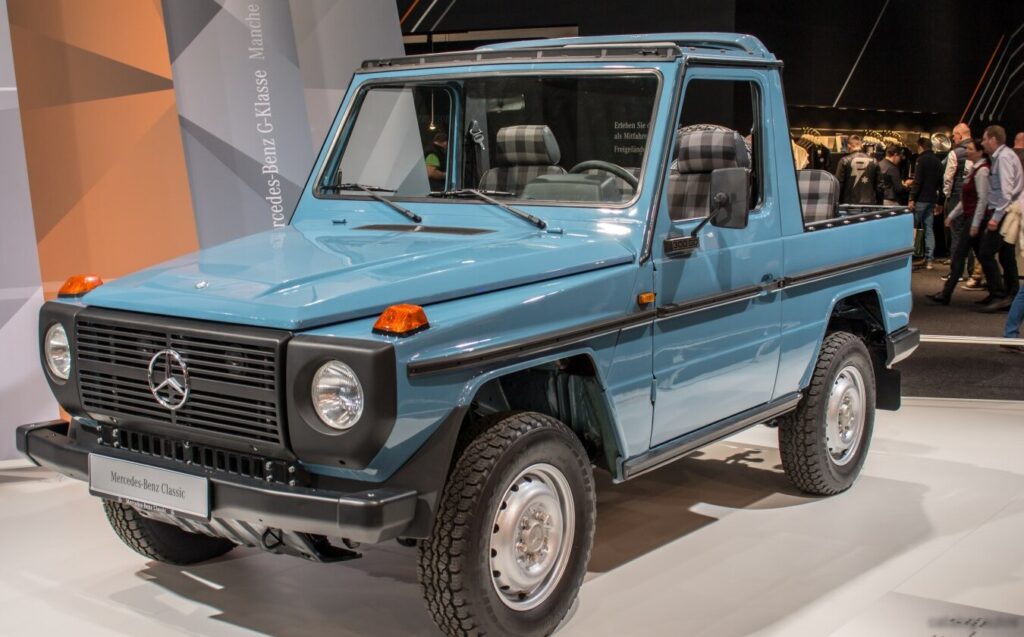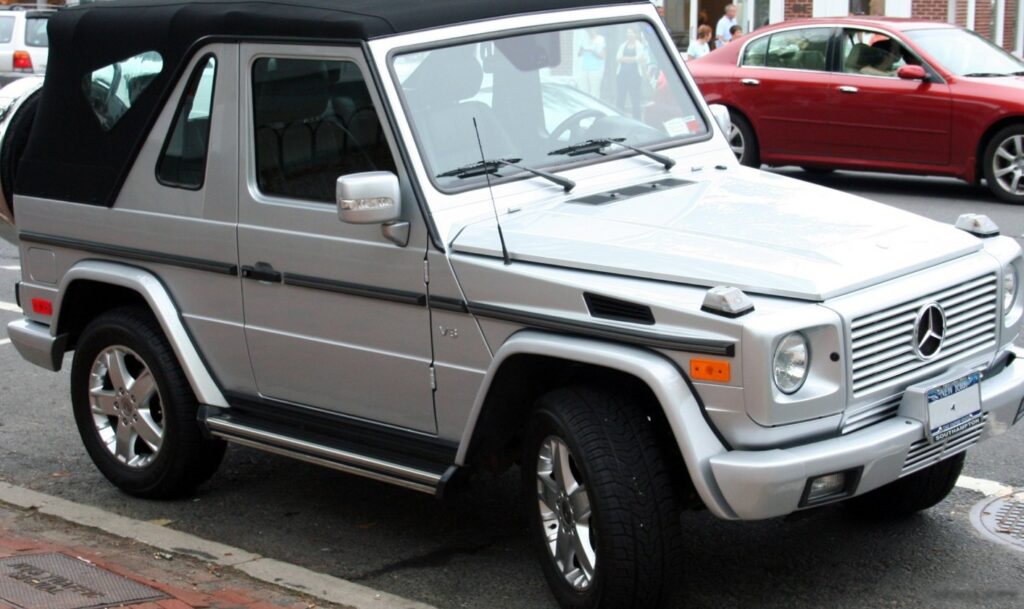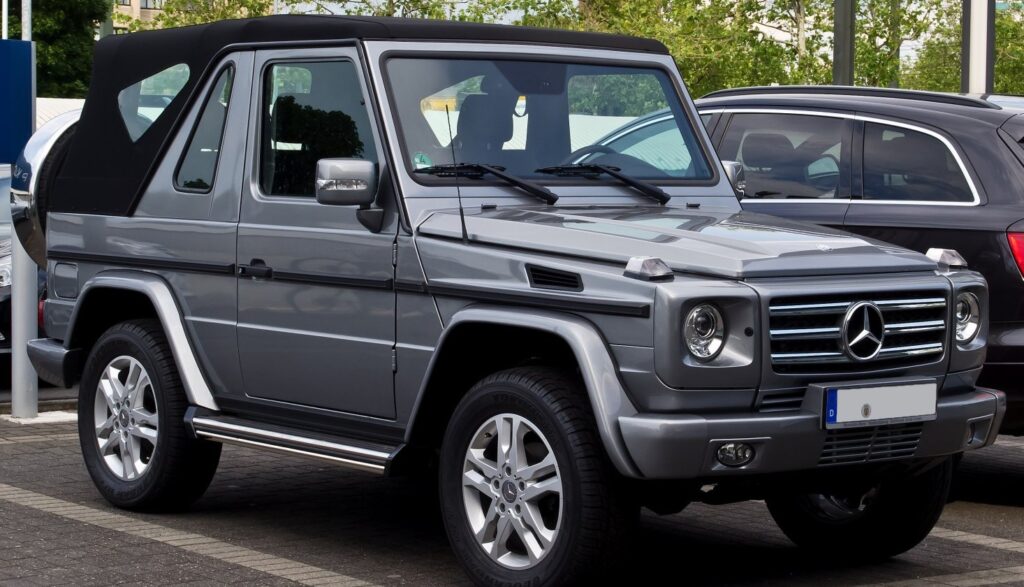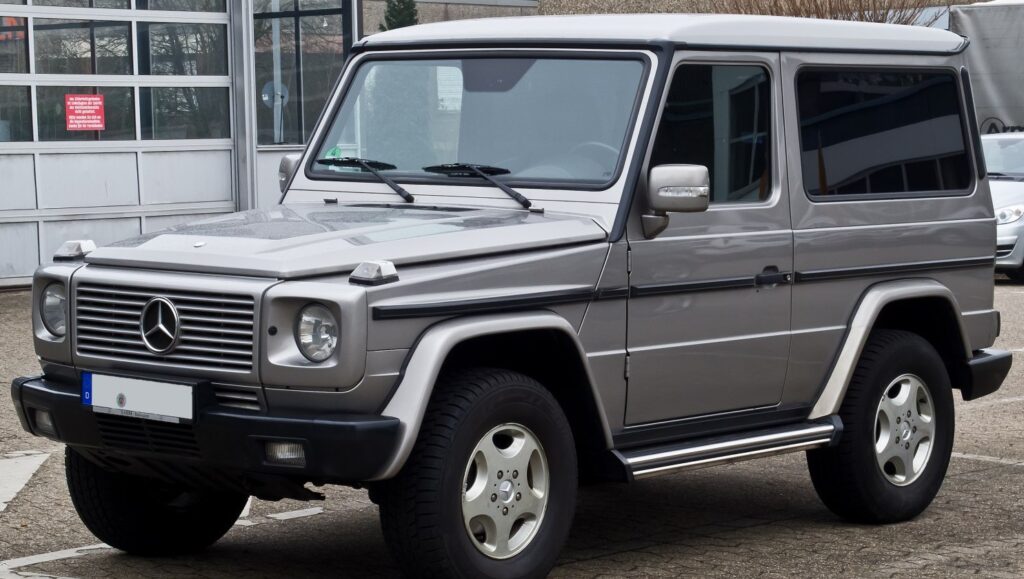
The Mercedes-Benz G 320, produced from 2001 to 2006 as part of the W463 facelift generation, represents a compelling blend of luxury and off-road capability. This variant, equipped with a 3.2-liter V6 engine producing 215 horsepower and paired with a five-speed automatic transmission, occupied a significant middle ground within the G-Class lineup. It offered a more accessible entry point into the G-Wagen world compared to the higher-performance G 500/G 55 AMG models, while still delivering the robust build quality and all-terrain prowess for which the G-Class is renowned. The G 320 aimed to balance everyday usability with the iconic vehicle’s legendary off-road heritage.
Technical Specifications
| Brand | Mercedes-Benz |
| Model | G-class |
| Generation | G-class (W463, facelift 2000) |
| Type (Engine) | G 320 V6 (215 Hp) 4MATIC Automatic |
| Start of production | February, 2001 |
| End of production | August, 2006 |
| Powertrain Architecture | Internal Combustion engine |
| Body type | Off-road vehicle |
| Seats | 5 |
| Doors | 3 |
| Fuel consumption (economy) – urban (NEDC) | 19.7 l/100 km (11.9 US mpg, 14.3 UK mpg, 5.1 km/l) |
| Fuel consumption (economy) – extra urban (NEDC) | 12.7 l/100 km (18.5 US mpg, 22.2 UK mpg, 7.9 km/l) |
| Fuel consumption (economy) – combined (NEDC) | 15.5 l/100 km (15.2 US mpg, 18.2 UK mpg, 6.5 km/l) |
| CO2 emissions (NEDC) | 370 g/km |
| Fuel Type | Petrol (Gasoline) |
| Acceleration 0 – 100 km/h | 10.9 sec |
| Acceleration 0 – 62 mph | 10.9 sec |
| Acceleration 0 – 60 mph | 10.4 sec |
| Maximum speed | 175 km/h (108.74 mph) |
| Emission standard | Euro 4 |
| Weight-to-power ratio | 10.5 kg/Hp, 95.3 Hp/tonne |
| Weight-to-torque ratio | 7.5 kg/Nm, 133 Nm/tonne |
| Power | 215 Hp @ 5500 rpm |
| Power per litre | 67.2 Hp/l |
| Torque | 300 Nm @ 2800-4800 rpm (221.27 lb.-ft. @ 2800-4800 rpm) |
| Engine layout | Front, Longitudinal |
| Engine Model/Code | M 112.945 |
| Engine displacement | 3199 cm3 (195.21 cu. in.) |
| Number of cylinders | 6 |
| Engine configuration | V-engine |
| Cylinder Bore | 89.9 mm (3.54 in.) |
| Piston Stroke | 84 mm (3.31 in.) |
| Compression ratio | 10:1 |
| Number of valves per cylinder | 3 |
| Fuel injection system | Multi-port manifold injection |
| Engine aspiration | Naturally aspirated engine |
| Valvetrain | SOHC |
| Engine oil capacity | 8 l (8.45 US qt | 7.04 UK qt) |
| Coolant | 11.5 l (12.15 US qt | 10.12 UK qt) |
| Kerb Weight | 2255 kg (4971.42 lbs.) |
| Max. weight | 2850 kg (6283.17 lbs.) |
| Max load | 595 kg (1311.75 lbs.) |
| Trunk (boot) space – minimum | 250 l (8.83 cu. ft.) |
| Trunk (boot) space – maximum | 1580 l (55.8 cu. ft.) |
| Fuel tank capacity | 96 l (25.36 US gal | 21.12 UK gal) |
| Max. roof load | 150 kg (330.69 lbs.) |
| Permitted trailer load with brakes (12%) | 2850 kg (6283.17 lbs.) |
| Permitted trailer load without brakes | 750 kg (1653.47 lbs.) |
| Length | 4230 mm (166.54 in.) |
| Width | 1760 mm (69.29 in.) |
| Width including mirrors | 2007 mm (79.02 in.) |
| Height | 1931 mm (76.02 in.) |
| Wheelbase | 2400 mm (94.49 in.) |
| Front track | 1475 mm (58.07 in.) |
| Rear (Back) track | 1475 mm (58.07 in.) |
| Ride height (ground clearance) | 205 mm (8.07 in.) |
| Drag coefficient (Cd) | 0.54 |
| Minimum turning circle (turning diameter) | 11.3 m (37.07 ft.) |
| Approach angle | 36° |
| Departure angle | 27° |
| Ramp-over (brakeover) angle | 23° |
| Climb angle | 38.7° |
| Wading depth | 500 mm (19.69 in.) |
| Drivetrain Architecture | The Internal combustion engine (ICE) drives permanently the four wheels of the vehicle. |
| Drive wheel | All wheel drive (4×4) |
| Number of gears and type of gearbox | 5 gears, automatic transmission |
| Front suspension | Coil spring, Rigid axle suspension, Trailing arm |
| Rear suspension | Rigid axle suspension, Trailing arm, Coil spring |
| Front brakes | Disc |
| Rear brakes | Disc |
| Assisting systems | ABS (Anti-lock braking system) |
| Steering type | Cone worm with recirculation balls |
| Power steering | Hydraulic Steering |
| Tires size | 265/70 R 16 |
| Wheel rims size | 7.5 J x 16 |
Powertrain & Engine Architecture
The heart of the G 320 is the M112.945 3.2-liter V6 engine. This engine, a naturally aspirated powerplant, utilizes a three-valve-per-cylinder (two intake, one exhaust) SOHC design and multi-port fuel injection. The engine’s architecture is a 60-degree V-configuration, contributing to a relatively compact engine bay footprint. The M112 engine family was known for its smoothness and refinement, a characteristic carried over to the G 320. The five-speed automatic transmission (typically the 722.6) was chosen for its durability and suitability for both on-road comfort and off-road crawling. This transmission featured a torque converter for smooth power delivery and a range of gear ratios designed to balance acceleration and fuel efficiency. While not as quick as the G 500, the G 320’s powertrain provided adequate power for most driving situations, especially considering the vehicle’s substantial weight.
Driving Characteristics
The G 320’s driving experience is unique. The automatic transmission, while smooth, isn’t particularly sporty. Gear changes are deliberate, prioritizing comfort over rapid acceleration. The 215 horsepower and 300 Nm (221 lb-ft) of torque provide sufficient power for highway cruising and moderate off-road excursions. However, the G 320 feels noticeably slower than its V8-powered sibling. The automatic transmission’s gear ratios are geared towards maintaining momentum rather than providing quick bursts of speed. The G-Class’s legendary off-road capability remains intact, thanks to its robust four-wheel-drive system, three locking differentials, and substantial ground clearance. The vehicle’s high center of gravity and relatively soft suspension contribute to a noticeable body roll in corners, but this is a trade-off for its off-road prowess.
Equipment & Trim Levels
The G 320 typically came standard with features such as leather upholstery, power windows and locks, air conditioning, and an AM/FM radio with a CD player. Optional extras included a sunroof, heated seats, upgraded audio systems, and various exterior enhancements. The interior, while functional, wasn’t overly luxurious compared to other Mercedes-Benz models of the time. The focus was on durability and practicality rather than opulent appointments. The G 320’s trim level was generally considered mid-range within the G-Class lineup, offering a good balance of features and affordability.
Chassis & Braking
The G 320 utilizes a body-on-frame construction, a hallmark of the G-Class since its inception. This robust design contributes to the vehicle’s exceptional durability and off-road capability. The suspension consists of coil springs and rigid axles with trailing arms, providing a comfortable ride on and off-road. Braking duties are handled by disc brakes on all four wheels, assisted by an Anti-lock Braking System (ABS). The braking performance is adequate for the vehicle’s weight, but not particularly sporty. The G 320’s chassis is designed to withstand significant stress and abuse, making it a reliable and durable platform.
Market Reception & Comparison
The G 320 was generally well-received by critics as a more accessible entry point into the G-Class world. It was praised for its off-road capability, build quality, and comfortable ride. However, some critics noted its relatively slow acceleration and high fuel consumption. Compared to the G 500, the G 320 offered a more affordable price point but sacrificed some performance. Fuel economy was a significant drawback, averaging around 15.5 liters per 100 kilometers (15.2 US mpg). Reliability was generally good, although maintenance costs could be high due to the vehicle’s complex engineering and specialized parts.
Legacy
The G 320 (W463 facelift) has developed a strong following among enthusiasts and collectors. Its combination of luxury, off-road capability, and relative affordability has made it a popular choice in the used car market. The M112 V6 engine is known for its durability, although regular maintenance is essential to prevent issues. Today, well-maintained G 320s command a premium price, reflecting their iconic status and enduring appeal. The G 320 represents a sweet spot in the G-Class lineage, offering a unique blend of practicality, performance, and prestige.