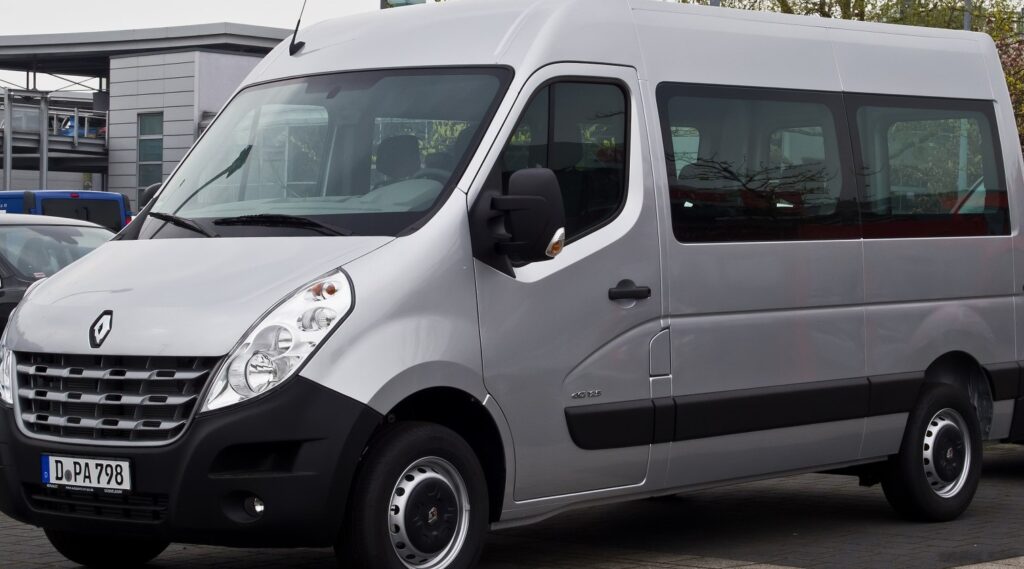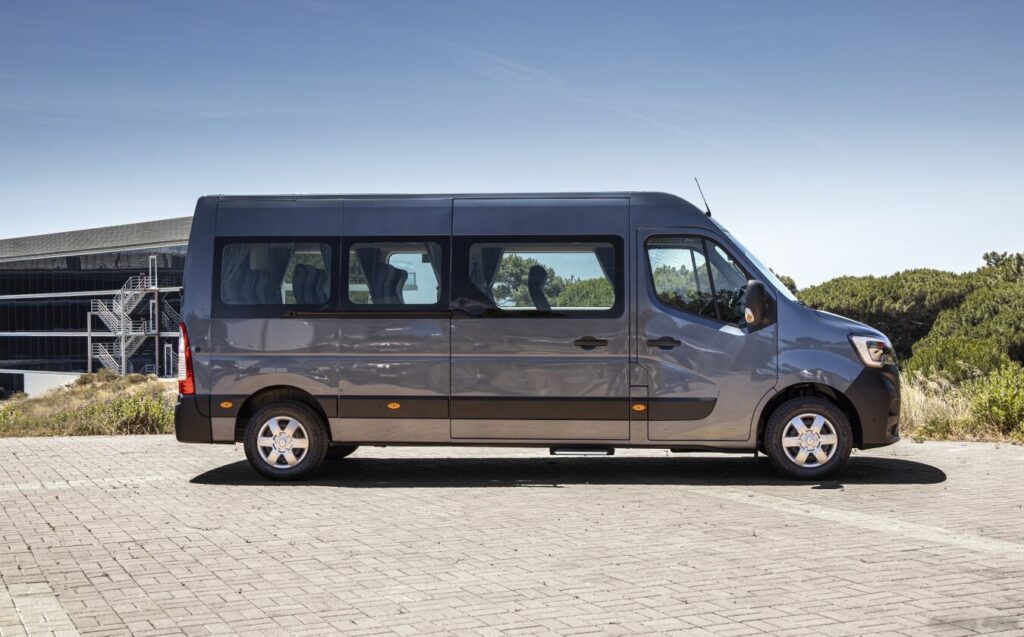
The Renault Master III Phase III, launched in 2019, represents a significant update to Renault’s large van and bus platform. This iteration of the Master, specifically the 2.3 Energy dCi variant producing 145 horsepower, is geared towards commercial and passenger transport applications. Positioned as a mid-range offering within the Master lineup, it balances capability with reasonable operating costs. The Phase III updates brought refinements to the exterior styling, interior ergonomics, and crucially, the powertrain to meet increasingly stringent Euro VI-D emissions standards. This model is primarily sold in European and international markets, serving as a workhorse for businesses and organizations requiring substantial cargo or passenger capacity.
Technical Specifications
| Brand | Renault |
| Model | Master |
| Generation | Master III (Phase III, 2019) Bus |
| Type (Engine) | 2.3 Energy dCi (145 Hp) |
| Start of production | 2019 |
| Powertrain Architecture | Internal Combustion engine |
| Body type | MPV |
| Seats | 17 |
| Doors | 4 |
| Fuel Type | Diesel |
| Acceleration 0 – 100 km/h | 16.1 sec |
| Acceleration 0 – 62 mph | 16.1 sec |
| Acceleration 0 – 60 mph | 15.3 sec |
| Maximum speed | 100 km/h (62.14 mph) |
| Emission standard | EURO VI-D |
| Power | 145 Hp @ 3500 rpm |
| Power per litre | 63.1 Hp/l |
| Torque | 360 Nm @ 1500 rpm (265.52 lb.-ft. @ 1500 rpm) |
| Engine Model/Code | M9T |
| Engine displacement | 2298 cm3 (140.23 cu. in.) |
| Number of cylinders | 4 |
| Engine configuration | Inline |
| Number of valves per cylinder | 4 |
| Fuel injection system | Diesel Commonrail |
| Engine aspiration | Twin-Turbo, Intercooler |
| Max. weight | 3900 kg (8598.03 lbs) |
| Length | 6225 mm (245.08 in) |
| Width | 2070 mm (81.5 in) |
| Width including mirrors | 2470 mm (97.24 in) |
| Height | 2496 mm (98.27 in) |
| Wheelbase | 4332 mm (170.55 in) |
| Front track | 1750 mm (68.9 in) |
| Rear (Back) track | 1730 mm (68.11 in) |
| Front overhang | 869 mm (34.21 in) |
| Rear overhang | 1024 mm (40.31 in) |
| Drivetrain Architecture | The Internal combustion engine (ICE) drives the front wheels of the vehicle. |
| Drive wheel | Front wheel drive |
| Number of gears and type of gearbox | 6 gears, manual transmission |
| Tires size | 225/65 R16 |
| Wheel rims size | 16 |
Powertrain & Engine Architecture
The heart of the Renault Master III 2.3 Energy dCi is the M9T engine, a 2.3-liter inline four-cylinder diesel. This engine utilizes a sophisticated twin-turbocharger setup coupled with an intercooler, designed to deliver a broad torque curve and improved responsiveness. The fuel injection system is a common rail direct injection system, allowing for precise fuel delivery and optimized combustion. The engine produces 145 horsepower at 3500 rpm and a substantial 360 Nm (265.52 lb.-ft.) of torque at just 1500 rpm. This torque output is particularly beneficial for a vehicle of this size and weight, providing ample pulling power for both cargo and passengers. The engine is designed to meet the stringent Euro VI-D emissions standards, incorporating technologies like diesel particulate filters (DPF) and selective catalytic reduction (SCR) systems. The 6-speed manual transmission is the standard offering, providing a good balance between fuel efficiency and driver control.
Driving Characteristics
The 145 hp 2.3 dCi engine, paired with the 6-speed manual transmission, delivers adequate, though not exhilarating, performance in the Renault Master III. Acceleration from 0-60 mph takes around 15.3 seconds, and top speed is limited to approximately 100 km/h (62 mph). The focus is clearly on utility rather than speed. The engine’s strong low-end torque makes it well-suited for urban driving and hauling loads. The gear ratios are optimized for maximizing fuel efficiency and providing sufficient power for climbing hills or overtaking. Compared to higher-output versions of the Master, this variant feels less strained under heavy loads, but also lacks the same level of responsiveness. The manual transmission allows for greater driver control, but requires more effort than an automatic, especially in stop-and-go traffic.
Equipment & Trim Levels
The 2.3 Energy dCi 145 hp variant of the Renault Master III typically comes with a respectable level of standard equipment, geared towards commercial use. This includes features like air conditioning, a driver’s air suspension seat, electric windows, and a basic audio system with USB connectivity. Safety features such as ABS, ESP (Electronic Stability Program), and multiple airbags are also standard. The interior is functional and durable, with hard-wearing plastics and easy-to-clean surfaces. Optional extras could include navigation systems, rear parking sensors, cruise control, and upgraded seating upholstery. The bus configuration, seating up to 17 passengers, features a dedicated passenger area with comfortable seating and ample headroom.
Chassis & Braking
The Renault Master III utilizes a front-wheel-drive layout with a reinforced chassis designed to handle substantial payloads. The suspension consists of independent coil springs at the front and leaf springs at the rear. The rear leaf springs are tuned to provide a comfortable ride while maintaining stability under load. Braking is handled by disc brakes on all four wheels, providing adequate stopping power. The braking system is assisted by ABS and ESP, enhancing safety and control. Stabilizer bars are fitted to both the front and rear axles to reduce body roll during cornering. The steering is hydraulic power-assisted, providing a reasonable level of feedback and ease of use.
Market Reception & Comparison
The Renault Master III 2.3 Energy dCi 145 hp variant was generally well-received by critics as a practical and reliable workhorse. It offered a good balance between performance, fuel economy, and cost. Compared to the higher-powered versions of the Master, this variant was seen as a more sensible choice for operators who prioritize fuel efficiency and lower running costs over outright performance. The manual transmission was praised for its durability and driver engagement. Fuel economy is a strong point, with real-world figures typically ranging from 28-35 mpg depending on driving conditions and load. Reliability is generally good, although like all diesel engines, the DPF and SCR systems require regular maintenance to prevent issues.
Legacy
The Renault Master III 2.3 Energy dCi 145 hp has proven to be a durable and dependable powertrain. In the used car market, these models are sought after for their practicality and relatively low operating costs. The M9T engine, while not without its complexities, has a reputation for longevity when properly maintained. Common issues include DPF blockages and occasional problems with the turbocharger, but these are typically addressed with routine servicing. The Master III remains a popular choice for businesses and organizations requiring a large, versatile van or bus, and the 2.3 dCi 145 hp variant continues to offer a compelling combination of capability and affordability.