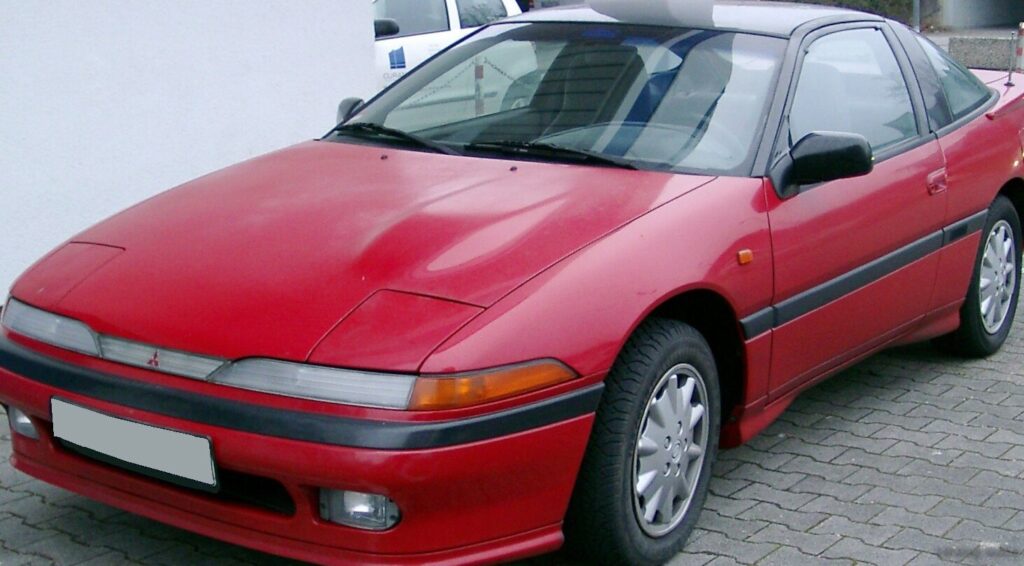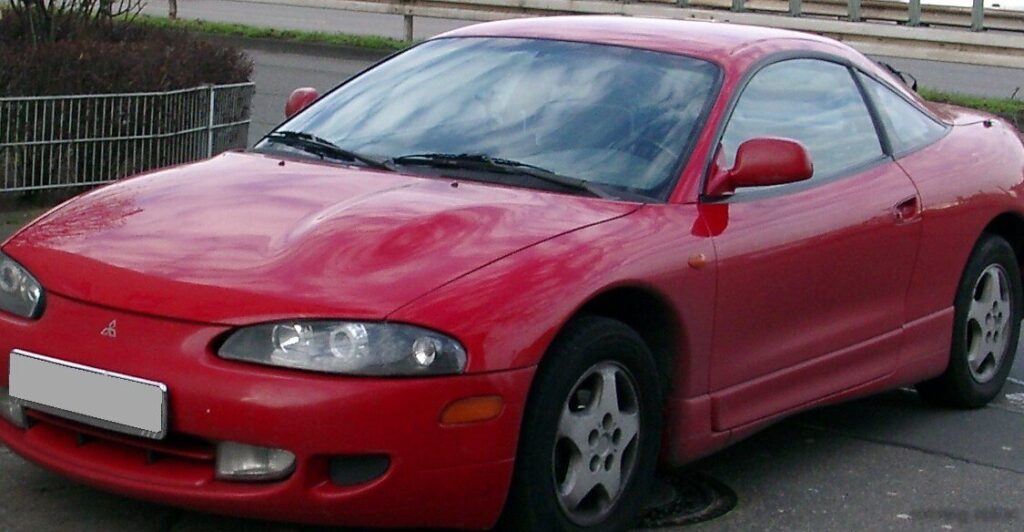
The Mitsubishi Eclipse II (2G) 2.0 Turbo 16V, produced from 1995 to 1996, represented a significant evolution in Mitsubishi’s sporty coupe lineage. Falling within the broader second-generation Eclipse range (1994-1999), this variant occupied the performance-oriented top tier of the lineup, offering a substantial power increase over the base models. Built on the 1HX0 platform, the 2G Eclipse aimed to capture a larger share of the North American sports compact market, competing with vehicles like the Toyota Supra, Nissan 240SX, and Honda Prelude. This particular 2.0L turbocharged model was primarily marketed in the United States and Canada, where demand for affordable, powerful coupes was high.
Technical Specifications
| Brand | Mitsubishi |
| Model | Eclipse |
| Generation | Eclipse II (2G) |
| Type (Engine) | 2.0 Turbo 16V (213 Hp) |
| Start of production | 1995 |
| End of production | 1996 |
| Powertrain Architecture | Internal Combustion engine |
| Body type | Coupe, Liftback |
| Seats | 4 |
| Doors | 2 |
| Fuel consumption (urban) | 15 l/100 km (15.7 US mpg, 18.8 UK mpg, 6.7 km/l) |
| Fuel consumption (extra urban) | 7.6 l/100 km (30.9 US mpg, 37.2 UK mpg, 13.2 km/l) |
| Fuel consumption (combined) | 9 l/100 km (26.1 US mpg, 31.4 UK mpg, 11.1 km/l) |
| Fuel Type | Petrol (Gasoline) |
| Weight-to-power ratio | 6.1 kg/Hp, 163.2 Hp/tonne |
| Weight-to-torque ratio | 4.5 kg/Nm, 222.2 Nm/tonne |
| Power | 213 Hp @ 6000 rpm |
| Power per litre | 106.7 Hp/l |
| Torque | 290 Nm @ 3000 rpm (213.89 lb.-ft. @ 3000 rpm) |
| Engine layout | Front, Transverse |
| Engine displacement | 1997 cm3 (121.86 cu. in.) |
| Number of cylinders | 4 |
| Engine configuration | Inline |
| Cylinder Bore | 85 mm (3.35 in.) |
| Piston Stroke | 88 mm (3.46 in.) |
| Compression ratio | 8.5:1 |
| Number of valves per cylinder | 4 |
| Fuel injection system | Multi-port manifold injection |
| Engine aspiration | Turbocharger |
| Valvetrain | DOHC |
| Kerb Weight | 1305 kg (2877.03 lbs.) |
| Max. weight | 1750 kg (3858.09 lbs.) |
| Max load | 445 kg (981.06 lbs.) |
| Fuel tank capacity | 64 l (16.91 US gal, 14.08 UK gal) |
| Length | 4375 mm (172.24 in.) |
| Width | 1745 mm (68.7 in.) |
| Height | 1295 mm (50.98 in.) |
| Wheelbase | 2510 mm (98.82 in.) |
| Front track | 1515 mm (59.65 in.) |
| Rear track | 1510 mm (59.45 in.) |
| Front overhang | 930 mm (36.61 in.) |
| Rear overhang | 935 mm (36.81 in.) |
| Ride height (ground clearance) | 145 mm (5.71 in.) |
| Approach angle | 11.5° |
| Departure angle | 15.8° |
| Drivetrain Architecture | Front wheel drive |
| Drive wheel | Front wheel drive |
| Number of gears | 5 |
| Gearbox type | Manual transmission |
| Front suspension | Independent multi-link suspension |
| Rear suspension | Independent multi-link suspension |
| Front brakes | Ventilated discs |
| Rear brakes | Disc |
| Assisting systems | ABS (Anti-lock braking system) |
| Steering type | Steering rack and pinion |
| Power steering | Hydraulic Steering |
| Tires size | 205/60 R15 |
| Wheel rims size | 15 |
Powertrain & Engine Architecture
The heart of the 2.0 Turbo 16V Eclipse is the 4G63T inline-four cylinder engine. This engine, a staple of Mitsubishi performance vehicles, featured a cast iron block and an aluminum cylinder head. The “T” designation signifies the presence of a Mitsubishi TD04H turbocharger, boosting power output significantly. The 4G63T utilized a multi-point fuel injection system, delivering precise fuel metering for optimal combustion. The engine’s double overhead camshaft (DOHC) valvetrain, with four valves per cylinder, maximized airflow and contributed to its high-revving nature. The 5-speed manual transmission was the only transmission option offered with this engine, providing drivers with full control over the power delivery. The engine’s 8.5:1 compression ratio was a compromise between performance and reliability, allowing for the use of readily available 91 octane gasoline.
Driving Characteristics
The 2.0 Turbo 16V Eclipse delivered a noticeably more engaging driving experience compared to the naturally aspirated models. The turbocharger provided a surge of power in the mid-range, making overtaking and spirited driving considerably easier. While not a drag racer, the 213 horsepower and 290 Nm (213.89 lb-ft) of torque allowed for brisk acceleration. The 5-speed manual transmission offered precise shifts, and the front-wheel-drive layout, while prone to some torque steer under hard acceleration, provided good traction in most conditions. Compared to the base 2.0L engine, the turbo variant felt significantly more responsive and capable. The gear ratios were tuned for acceleration, prioritizing quick off-the-line performance over maximizing fuel economy at highway speeds.
Equipment & Trim Levels
The 2.0 Turbo 16V Eclipse typically came equipped with a more comprehensive list of standard features than the lower trims. These included power windows, power locks, air conditioning, and a decent sound system. Sport seats with enhanced bolstering provided better support during cornering. Optional extras included a sunroof, upgraded audio systems (often featuring a CD changer), and alloy wheels. The interior trim generally featured a dark color scheme with sporty accents. The dashboard layout was functional and driver-focused, with clearly marked gauges and easy-to-reach controls.
Chassis & Braking
The Eclipse 2G featured an independent multi-link suspension system at both the front and rear, providing a comfortable ride and good handling characteristics. The front suspension utilized coil springs and stabilizer bar, while the rear suspension also employed coil springs. Braking duties were handled by ventilated discs at the front and solid discs at the rear. An Anti-lock Braking System (ABS) was standard, enhancing safety and control during emergency braking situations. The chassis was reinforced compared to the base models to handle the increased power output of the turbocharged engine.
Market Reception & Comparison
The 2.0 Turbo 16V Eclipse was generally well-received by automotive critics, who praised its performance and sporty handling. However, some reviewers noted the presence of torque steer and the relatively basic interior compared to some European competitors. Fuel economy, while acceptable, was not a strong point, with combined figures around 26.1 US mpg. Compared to the naturally aspirated Eclipse models, the turbo variant offered a significant performance upgrade, but at a higher price point. The 2.0 Turbo was often seen as a more affordable alternative to the more expensive and sophisticated sports cars of the era.
Legacy
The 4G63T engine, found in the 2.0 Turbo Eclipse, has gained a legendary reputation for its durability and tunability. Many examples of this engine are still running strong today, even with significant modifications. The 2G Eclipse, particularly the turbo models, have become popular among enthusiasts and are often used as project cars for performance upgrades. While finding a well-maintained example can be challenging, the 2.0 Turbo 16V Eclipse remains a desirable and iconic sports coupe from the 1990s, remembered for its blend of performance, affordability, and potential.