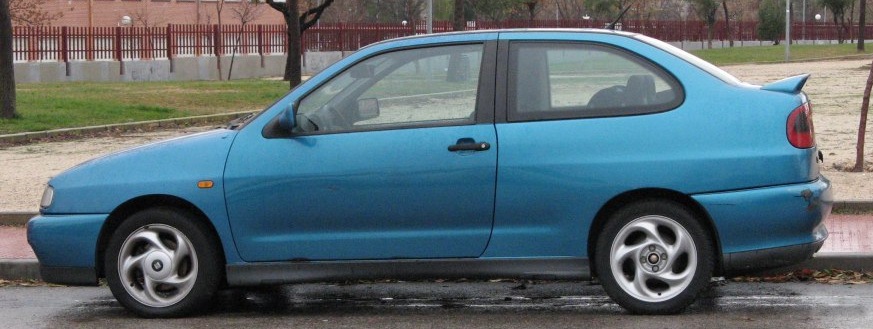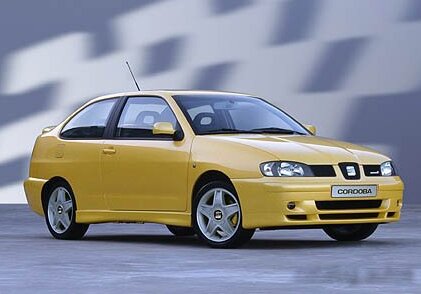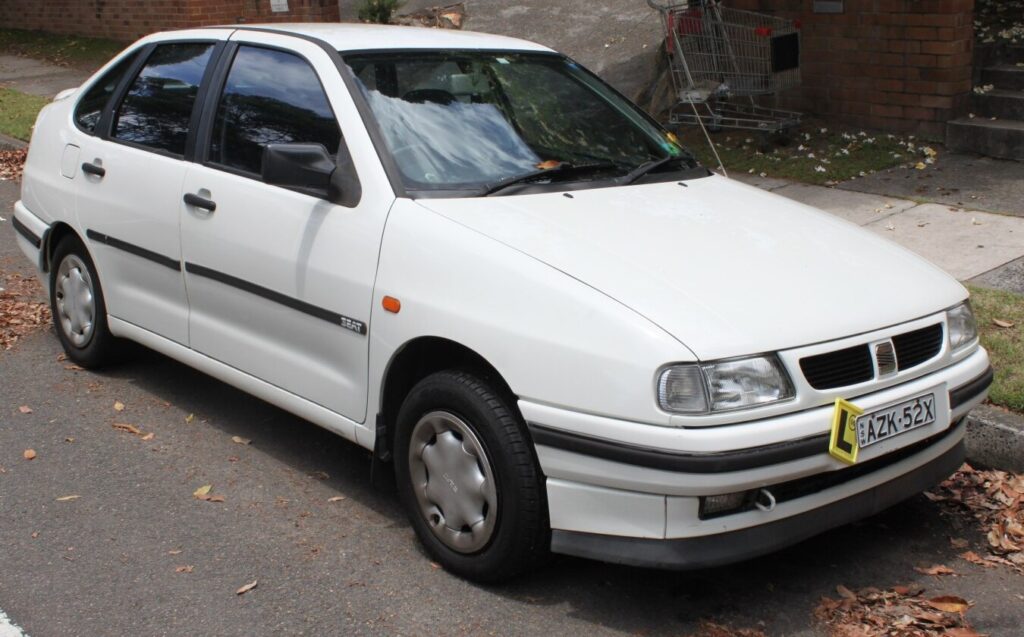
The SEAT Córdoba I 1.4 i 16V, produced between June 1997 and June 1999, represented a key offering in SEAT’s early expansion as a mainstream automotive brand. Based on the Volkswagen Group’s Polo 6N platform (internally designated 6K2), the Córdoba was SEAT’s entry into the compact sedan market, aimed at providing a stylish and affordable alternative to established competitors. This particular 1.4-liter 16-valve variant occupied a mid-range position within the Córdoba lineup, offering a balance between performance, fuel economy, and price. It was positioned above the base 1.0-liter models and below the more powerful 1.6 and 1.8-liter options.
Technical Specifications
| Brand | Seat |
| Model | Cordoba |
| Generation | Cordoba I |
| Type (Engine) | 1.4 i 16V (101 Hp) |
| Start of production | June, 1997 |
| End of production | June, 1999 |
| Powertrain Architecture | Internal Combustion engine |
| Body type | Sedan |
| Seats | 5 |
| Doors | 4 |
| Fuel consumption (urban) | 9.9 l/100 km (23.8 US mpg) |
| Fuel consumption (extra urban) | 5.7 l/100 km (41.3 US mpg) |
| Fuel Type | Petrol (Gasoline) |
| Acceleration 0 – 100 km/h | 10.9 sec |
| Acceleration 0 – 62 mph | 10.9 sec |
| Acceleration 0 – 60 mph | 10.4 sec |
| Maximum speed | 188 km/h (116.82 mph) |
| Weight-to-power ratio | 10.1 kg/Hp |
| Weight-to-torque ratio | 8 kg/Nm |
| Power | 101 Hp @ 6000 rpm |
| Torque | 128 Nm @ 4400 rpm (94.41 lb.-ft. @ 4400 rpm) |
| Engine layout | Front, Transverse |
| Engine Model/Code | AFH |
| Engine displacement | 1391 cm3 (84.88 cu. in.) |
| Number of cylinders | 4 |
| Engine configuration | Inline |
| Cylinder Bore | 76.5 mm (3.01 in.) |
| Piston Stroke | 75.6 mm (2.98 in.) |
| Compression ratio | 10.5:1 |
| Number of valves per cylinder | 4 |
| Fuel injection system | Multi-port manifold injection |
| Engine aspiration | Naturally aspirated |
| Engine oil capacity | 3.5 l (3.7 US qt | 3.08 UK qt) |
| Coolant capacity | 6.6 l (6.97 US qt | 5.81 UK qt) |
| Kerb Weight | 1025 kg (2259.74 lbs.) |
| Max. weight | 1485 kg (3273.86 lbs.) |
| Max load | 460 kg (1014.13 lbs.) |
| Trunk (boot) space – minimum | 455 l (16.07 cu. ft.) |
| Trunk (boot) space – maximum | 762 l (26.91 cu. ft.) |
| Fuel tank capacity | 45 l (11.89 US gal | 9.9 UK gal) |
| Length | 4144 mm (163.15 in.) |
| Width | 1640 mm (64.57 in.) |
| Height | 1424 mm (56.06 in.) |
| Wheelbase | 2440 mm (96.06 in.) |
| Front track | 1430 mm (56.3 in.) |
| Rear track | 1394 mm (54.88 in.) |
| Drivetrain Architecture | Front wheel drive |
| Number of gears | 5 |
| Gearbox type | Manual transmission |
| Front suspension | Wishbone |
| Rear suspension | Suspension with traction connecting levers |
| Front brakes | Ventilated discs |
| Rear brakes | Disc |
| Assisting systems | ABS (Anti-lock braking system) |
| Steering type | Steering rack and pinion |
| Power steering | Hydraulic |
| Tires size | 185/60 R14 |
Powertrain & Engine Architecture
The Córdoba 1.4 i 16V was powered by the Volkswagen Group’s AFH engine code, a 1.4-liter inline-four cylinder gasoline engine. This engine featured a cast iron block and an aluminum cylinder head, incorporating a dual overhead camshaft (DOHC) design with four valves per cylinder – hence the “16V” designation. The engine utilized a Bosch Motronic multi-port fuel injection system, delivering fuel to each cylinder individually for optimized combustion. The AFH engine was known for its relatively smooth operation and decent responsiveness for its displacement. The five-speed manual transmission was the standard offering, providing a reasonable spread of gears for both city driving and highway cruising. The transmission was a typical front-wheel-drive configuration, known for its durability and relatively low maintenance requirements.
Driving Characteristics
The 101 horsepower and 128 Nm (94.41 lb-ft) of torque produced by the 1.4-liter engine translated to adequate, but not exhilarating, performance. Acceleration from 0 to 60 mph took approximately 10.4 seconds, and the top speed was around 116.82 mph. Compared to the more powerful 1.6 and 1.8-liter Córdoba variants, the 1.4 felt noticeably less responsive, particularly when fully loaded or tackling steep inclines. The five-speed manual transmission helped to keep the engine in its optimal power band, but required frequent shifting to maintain momentum. The gear ratios were tuned for fuel efficiency rather than outright performance. The steering was light and precise, making the Córdoba easy to maneuver in urban environments. The suspension provided a comfortable ride, absorbing most road imperfections without excessive body roll.
Equipment & Trim Levels
The 1.4 i 16V Córdoba typically came equipped with a reasonable level of standard features. These included power steering, central locking, electric front windows, and an adjustable steering column. Interior upholstery was typically cloth, with a relatively simple dashboard layout. Optional extras included air conditioning, alloy wheels, a radio/cassette player, and upgraded interior trim. The trim level often dictated the availability of these options, with higher trims offering more features as standard.
Chassis & Braking
The Córdoba I utilized a front-wheel-drive chassis with independent front suspension using wishbones and a semi-independent torsion beam rear suspension. The front brakes were ventilated discs, providing good stopping power, while the rear brakes were solid discs. Anti-lock Braking System (ABS) was standard, enhancing safety by preventing wheel lockup during hard braking. The suspension setup was tuned for comfort and stability, providing a balanced ride quality. Stabilizer bars were fitted to both the front and rear axles to reduce body roll during cornering.
Market Reception & Comparison
The SEAT Córdoba 1.4 i 16V was generally well-received by automotive critics as a practical and affordable compact sedan. It was praised for its stylish design, comfortable ride, and reasonable fuel economy. However, some critics noted that the 1.4-liter engine lacked the punch of its larger counterparts. Compared to the 1.6-liter version, the 1.4 offered slightly better fuel economy but significantly less performance. The 1.8-liter models provided a more engaging driving experience but came at a higher price point. The Córdoba competed with other compact sedans such as the Ford Escort, Opel Astra, and Renault Mégane.
Legacy
The AFH engine, while not known for being particularly groundbreaking, proved to be a relatively reliable unit when properly maintained. Common issues included occasional oil leaks and sensor failures, but these were generally not major concerns. Today, the Córdoba I 1.4 i 16V can be found in the used car market at very affordable prices. It represents a good value for those seeking a simple, reliable, and economical compact sedan. Parts availability is generally good, thanks to the widespread use of Volkswagen Group components. While not a collector’s item, the Córdoba I 1.4 i 16V remains a testament to SEAT’s early efforts to establish itself as a competitive player in the European automotive market.