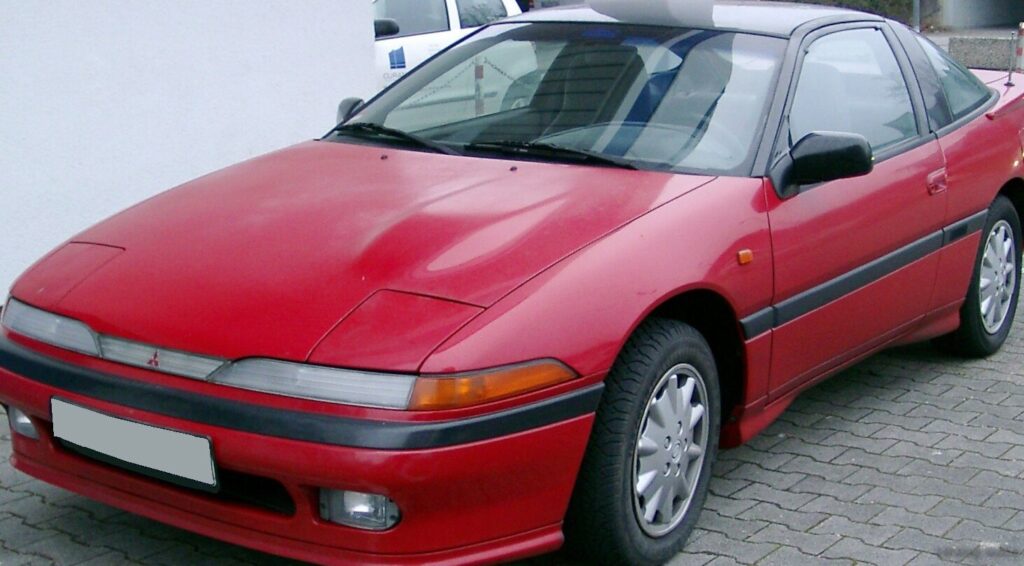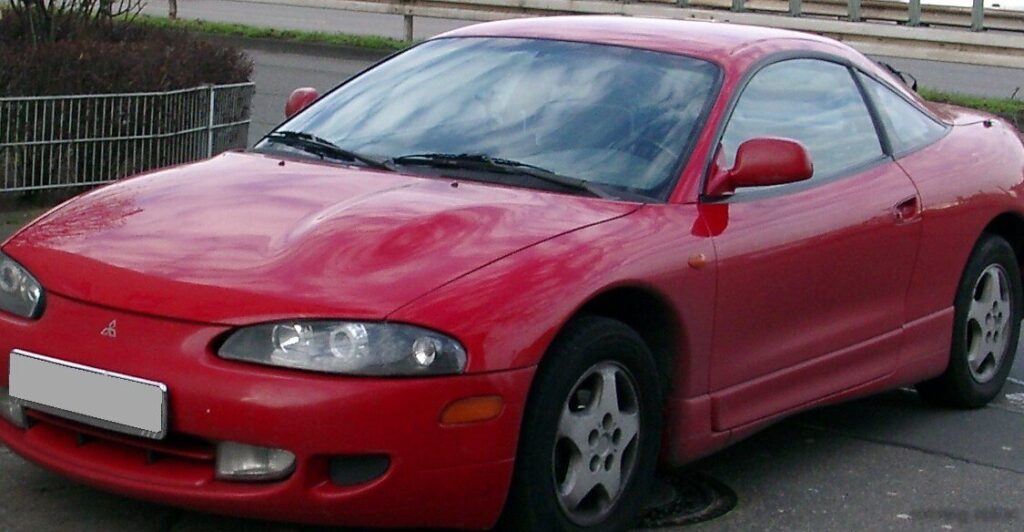
The Mitsubishi Eclipse II (2G), produced between 1995 and 1996, represented a significant evolution of the popular Eclipse sports coupe. This second generation, built on the 1HX0 platform, aimed to broaden the car’s appeal while retaining its sporty character. Within the 2G lineup, the 2.0 Turbo 16V variant with an automatic transmission occupied a performance-oriented niche, offering a blend of power and convenience. It was positioned as a step up from the naturally aspirated models, but below the more focused, enthusiast-level manual transmission versions. This model catered to buyers seeking a spirited driving experience without the complexity of a manual gearbox.
Technical Specifications
| Brand | Mitsubishi |
| Model | Eclipse |
| Generation | Eclipse II (2G) |
| Type (Engine) | 2.0 Turbo 16V (213 Hp) Automatic |
| Start of production | 1995 |
| End of production | 1996 |
| Powertrain Architecture | Internal Combustion engine |
| Body type | Coupe, Liftback |
| Seats | 4 |
| Doors | 2 |
| Fuel Type | Petrol (Gasoline) |
| Weight-to-power ratio | 6.3 kg/Hp, 159 Hp/tonne |
| Weight-to-torque ratio | 4.6 kg/Nm, 216.4 Nm/tonne |
| Power | 213 Hp @ 6000 rpm |
| Power per litre | 106.6 Hp/l |
| Torque | 290 Nm @ 3000 rpm, 213.89 lb.-ft. @ 3000 rpm |
| Engine layout | Front, Transverse |
| Engine Model/Code | 4G63 |
| Engine displacement | 1998 cm3, 121.93 cu. in. |
| Number of cylinders | 4 |
| Engine configuration | Inline |
| Cylinder Bore | 85 mm, 3.35 in. |
| Piston Stroke | 88 mm, 3.46 in. |
| Compression ratio | 8.5:1 |
| Number of valves per cylinder | 4 |
| Fuel injection system | Multi-port manifold injection |
| Engine aspiration | Turbocharger |
| Valvetrain | DOHC |
| Kerb Weight | 1340 kg, 2954.19 lbs |
| Max. weight | 1750 kg, 3858.09 lbs |
| Max load | 410 kg, 903.9 lbs |
| Fuel tank capacity | 64 l, 16.91 US gal | 14.08 UK gal |
| Length | 4375 mm, 172.24 in. |
| Width | 1745 mm, 68.7 in. |
| Height | 1295 mm, 50.98 in. |
| Wheelbase | 2510 mm, 98.82 in. |
| Front track | 1515 mm, 59.65 in. |
| Rear (Back) track | 1510 mm, 59.45 in. |
| Front overhang | 930 mm, 36.61 in. |
| Rear overhang | 935 mm, 36.81 in. |
| Ride height (ground clearance) | 145 mm, 5.71 in. |
| Drag coefficient (Cd) | 0.29 |
| Approach angle | 11.5° |
| Departure angle | 15.8° |
| Drivetrain Architecture | The Internal combustion engine (ICE) drives the front wheels of the vehicle. |
| Drive wheel | Front wheel drive |
| Number of gears and type of gearbox | 4 gears, automatic transmission |
| Front suspension | Independent multi-link suspension |
| Rear suspension | Independent multi-link suspension |
| Front brakes | Ventilated discs |
| Rear brakes | Disc |
| Assisting systems | ABS (Anti-lock braking system) |
| Steering type | Steering rack and pinion |
| Power steering | Hydraulic Steering |
| Tires size | 205/60 R15 |
| Wheel rims size | 15 |
Powertrain & Engine Architecture
The heart of this Eclipse variant was the 4G63 2.0-liter turbocharged inline-four engine. This engine, a mainstay of Mitsubishi performance models, featured a cast iron block and an aluminum cylinder head. The 16-valve DOHC (Double Overhead Camshaft) configuration, coupled with multi-port fuel injection, allowed for precise control of the combustion process. The turbocharger, a key component, boosted power output significantly. The automatic transmission was a four-speed unit, designed to provide smooth shifts and ease of use. While not as responsive as a manual, it offered a more relaxed driving experience, particularly in city traffic. The engine’s 8.5:1 compression ratio was a compromise between performance and reliability, allowing it to run on readily available gasoline grades.
Driving Characteristics
The 213 horsepower and 290 Nm (213.89 lb-ft) of torque delivered by the 2.0 Turbo engine provided brisk acceleration. However, the automatic transmission did introduce some power loss compared to the manual versions. The four-speed automatic’s gear ratios were tuned for a balance of acceleration and fuel economy. While it offered decent off-the-line performance, it lacked the precise control and engagement of a manual gearbox. The front-wheel-drive layout, while common for its class, could exhibit torque steer under hard acceleration. Overall, the driving experience was comfortable and capable, making it a suitable daily driver with a sporty edge.
Equipment & Trim Levels
The 2.0 Turbo Automatic Eclipse typically came equipped with features such as power windows, power locks, air conditioning, and a decent sound system. Upholstery was usually cloth, though leather options were available. The dashboard layout was functional and driver-focused, with easy-to-read gauges. Optional extras included a sunroof, upgraded audio systems, and alloy wheels. The trim level often dictated the availability of these features, with higher trims offering more luxurious appointments.
Chassis & Braking
The Eclipse II featured an independent multi-link suspension system at both the front and rear, providing a comfortable ride and good handling characteristics. Ventilated disc brakes were used at the front, while the rear brakes were typically solid discs. ABS (Anti-lock Braking System) was standard, enhancing safety by preventing wheel lockup during hard braking. The suspension was tuned to balance ride comfort with sporty handling, offering a good compromise for everyday driving. The steering utilized a rack and pinion system with hydraulic power assistance, providing precise and responsive steering feel.
Market Reception & Comparison
The 2.0 Turbo Automatic Eclipse was generally well-received by automotive critics. It was praised for its strong engine performance and comfortable ride. However, some reviewers noted that the automatic transmission detracted from the overall driving experience compared to the manual versions. In terms of fuel economy, it was comparable to other turbocharged coupes of the era. Reliability was generally good, although the turbocharger did require regular maintenance. Compared to the naturally aspirated Eclipse models, the 2.0 Turbo offered a significant performance upgrade. Compared to the more powerful manual transmission versions, it provided a more accessible and user-friendly driving experience.
Legacy
The Mitsubishi Eclipse II (2G) 2.0 Turbo Automatic has become a popular choice among enthusiasts and collectors. The 4G63 engine is renowned for its durability and tunability, making it a favorite for modifications. While the automatic transmission may not be as desirable as the manual, it offers a unique driving experience and is often more affordable. Today, well-maintained examples of this variant are sought after by those looking for a classic 1990s sports coupe with a strong following and a reputation for reliability. The 2.0 Turbo Automatic Eclipse remains a testament to Mitsubishi’s engineering prowess and its commitment to delivering exciting and engaging vehicles.