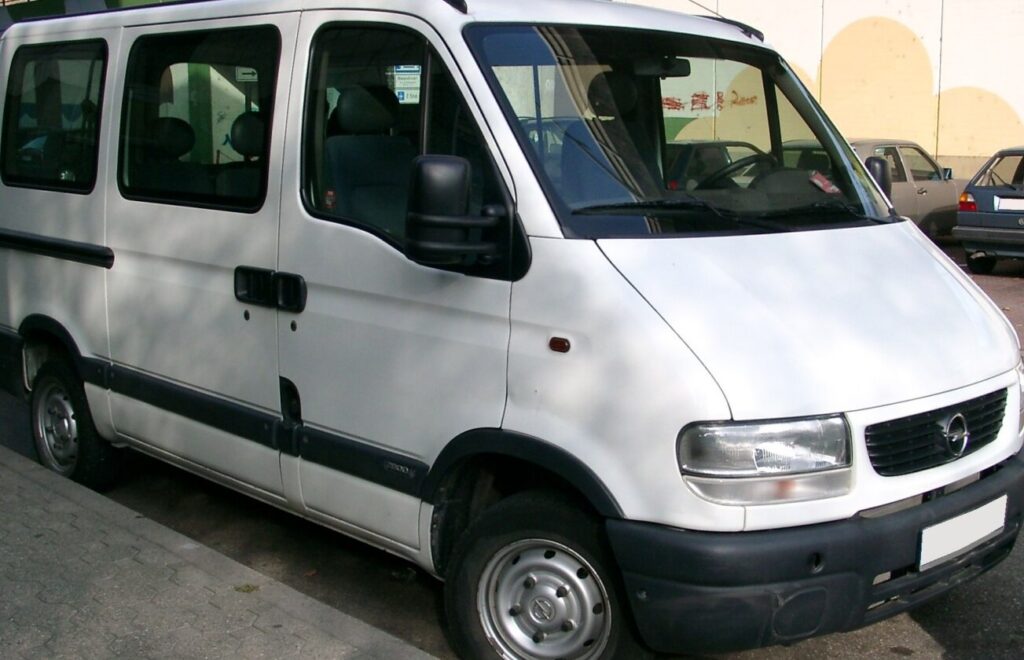
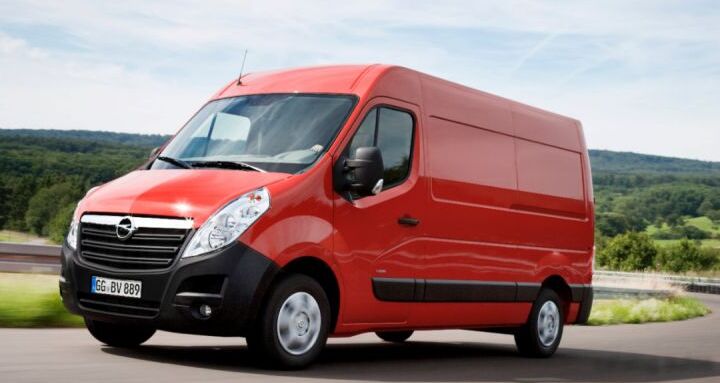
The Opel Movano B Combi 2.3 BiTurbo, produced from 2010 to 2019, represents a significant iteration of Opel’s large passenger and cargo van, positioned as a versatile vehicle for both commercial and family use. Falling within the broader Movano B generation (launched in 1998 and receiving a substantial refresh in 2010), the Combi variant specifically catered to passenger transport, offering seating for six to nine occupants. This 2.3 BiTurbo configuration, delivering 145 horsepower, occupied a middle ground in the Movano B Combi lineup, offering a balance between performance, fuel economy, and cost, appealing to businesses and larger families needing substantial space and capability. It was primarily sold in European markets, where large vans of this type are common for both commercial and personal transportation.
Technical Specifications
| Brand | Opel |
| Model | Movano |
| Generation | Movano B Combi |
| Type (Engine) | 2.3 BiTurbo (145 Hp) |
| Start of production | 2010 |
| End of production | 2019 |
| Powertrain Architecture | Internal Combustion engine |
| Body type | Minivan |
| Seats | 6-9 |
| Doors | 5 |
| Fuel Type | Diesel |
| Emission standard | Euro 6 |
| Power | 145 Hp @ 3500 rpm |
| Power per litre | 63.1 Hp/l |
| Torque | 350 Nm @ 1500-2750 rpm / 258.15 lb.-ft. @ 1500-2750 rpm |
| Engine layout | Front, Transverse |
| Engine Model/Code | M9T-706 |
| Engine displacement | 2298 cm3 / 140.23 cu. in. |
| Number of cylinders | 4 |
| Engine configuration | Inline |
| Compression ratio | 16:1 |
| Number of valves per cylinder | 4 |
| Fuel injection system | Diesel Commonrail |
| Engine aspiration | BiTurbo, Intercooler |
| Engine oil capacity | 8 l / 8.45 US qt | 7.04 UK qt |
| Fuel tank capacity | 80 l / 21.13 US gal | 17.6 UK gal |
| Permitted trailer load with brakes (12%) | 2500 kg / 5511.56 lbs. |
| Permitted trailer load without brakes | 750 kg / 1653.47 lbs. |
| Length | 5048 mm / 198.74 in. |
| Width | 2070 mm / 81.5 in. |
| Width including mirrors | 2470 mm / 97.24 in. |
| Height | 2307 mm / 90.83 in. |
| Wheelbase | 3182 mm / 125.28 in. |
| Front track | 1750 mm / 68.9 in. |
| Rear (Back) track | 1730 mm / 68.11 in. |
| Minimum turning circle (turning diameter) | 12.05 m / 39.53 ft. |
| Drivetrain Architecture | The Internal combustion engine (ICE) drives the front wheels of the vehicle. |
| Drive wheel | Front wheel drive |
| Number of gears and type of gearbox | 6 gears, manual transmission |
| Front brakes | Disc |
| Rear brakes | Disc |
| Assisting systems | ABS (Anti-lock braking system) |
| Steering type | Steering rack and pinion |
Powertrain & Engine Architecture
The heart of the Movano B Combi 2.3 BiTurbo is the M9T-706 engine, a 2.3-liter inline-four cylinder diesel. This engine utilizes a sophisticated BiTurbo setup – employing two turbochargers of differing sizes – to minimize turbo lag and provide a broad, usable torque curve. The smaller turbocharger spools up quickly at lower engine speeds, delivering immediate response, while the larger turbocharger contributes to increased power at higher RPMs. A common rail direct fuel injection system, operating at high pressure, ensures precise fuel delivery and efficient combustion. The engine features four valves per cylinder, enhancing breathing and contributing to its power output. The 145 horsepower peak is reached at 3500 rpm, but the engine’s strength lies in its 350 Nm (258 lb-ft) of torque, available from a low 1500 rpm and sustained through 2750 rpm. This makes it well-suited for hauling passengers and cargo without constant downshifting. The engine meets Euro 6 emission standards, incorporating a diesel particulate filter (DPF) and other technologies to reduce harmful emissions.
Driving Characteristics
The 2.3 BiTurbo engine, paired with a six-speed manual transmission, provides a reasonably refined driving experience for a vehicle of this size. While not a performance-oriented van, the engine delivers adequate acceleration for everyday driving and highway cruising. The broad torque band means that overtaking maneuvers are achievable without needing to rev the engine excessively. The six-speed gearbox helps to keep engine speeds down at highway speeds, contributing to improved fuel economy and reduced noise levels. Compared to the lower-powered 1.9-liter engine options available in the Movano B Combi range, the 2.3 BiTurbo offers a noticeable improvement in performance, particularly when fully loaded. However, it doesn’t match the outright power of the higher-output versions, which were often favored by those prioritizing maximum towing capacity or performance. The front-wheel-drive configuration provides predictable handling, but it’s important to be mindful of traction limits, especially in slippery conditions.
Equipment & Trim Levels
The Movano B Combi 2.3 BiTurbo typically came equipped with a respectable level of standard features, focusing on practicality and comfort. These included air conditioning, power windows, central locking, and an adjustable steering wheel. Interior upholstery was generally durable cloth, designed to withstand heavy use. Dashboard design was functional rather than luxurious, prioritizing ease of use and visibility. Optional extras included features like a navigation system, rear parking sensors, upgraded audio systems, and various seating configurations. Higher trim levels offered additional comfort features such as cruise control and more premium interior materials. The Combi variant specifically featured flexible seating arrangements, allowing for various configurations to accommodate different passenger and cargo needs.
Chassis & Braking
The Movano B Combi utilizes a robust chassis designed to handle the weight of passengers and cargo. Suspension consists of independent front suspension with coil springs and a twist-beam rear axle. This setup provides a reasonable balance between ride comfort and load-carrying capacity. Braking is handled by disc brakes on all four wheels, providing adequate stopping power. An Anti-lock Braking System (ABS) is standard, enhancing safety during emergency braking situations. Steering is rack and pinion, offering precise control. Stabilizer bars were fitted to both the front and rear axles to reduce body roll during cornering.
Market Reception & Comparison
The Opel Movano B Combi 2.3 BiTurbo was generally well-received by critics as a practical and versatile vehicle. Its strong torque output and relatively fuel-efficient engine were praised, as was its spacious interior and flexible seating arrangements. Compared to other vans in its class, such as the Volkswagen Crafter and Ford Transit, the Movano offered a competitive combination of features and price. However, some critics noted that the interior design was somewhat dated and lacked the refinement of some of its rivals. Fuel economy was respectable for a vehicle of its size, but not class-leading. Reliability was generally good, although the diesel particulate filter (DPF) could be a potential source of issues if the vehicle was primarily used for short trips.
Legacy
The Opel Movano B Combi 2.3 BiTurbo remains a relatively common sight on European roads today. The M9T-706 engine, while not without its quirks, has proven to be reasonably durable with proper maintenance. Used examples are generally affordable, making them an attractive option for businesses and families needing a large, versatile vehicle. The BiTurbo setup, while more complex than single-turbo engines, provides a noticeable improvement in performance and driveability. The Movano B Combi’s enduring popularity is a testament to its practicality, reliability, and value for money. However, potential buyers should be aware of the potential for DPF issues and ensure that the vehicle has been properly maintained.