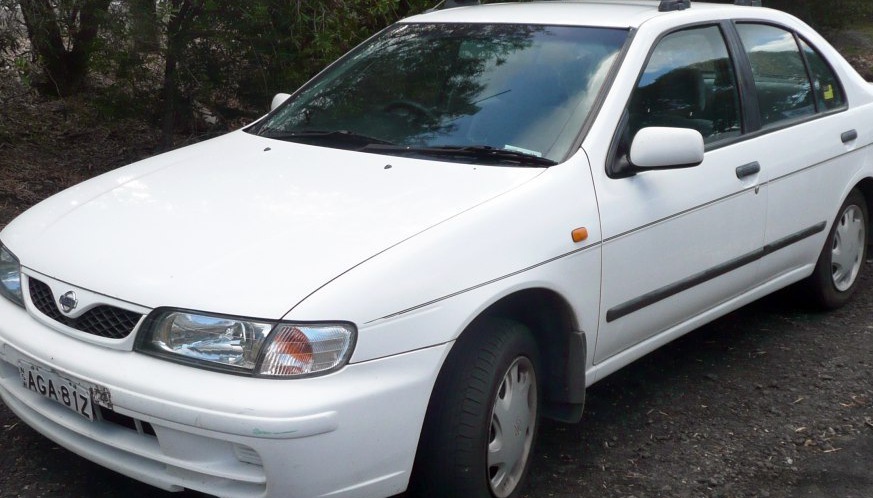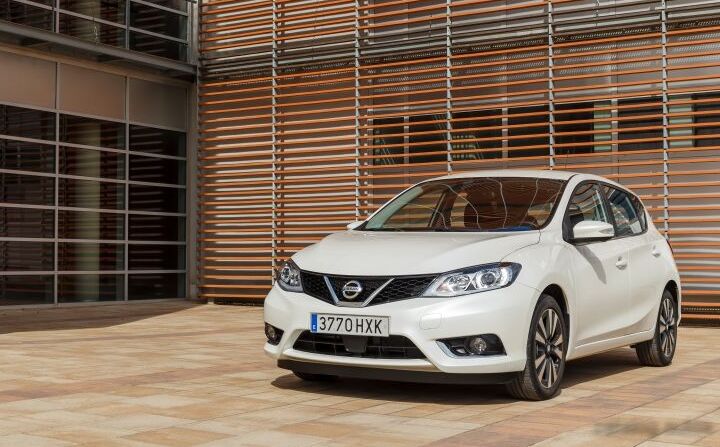
The Nissan Pulsar (C13) 1.5 dCi 110 horsepower variant was a key model in Nissan’s European lineup from October 2014 to June 2018. Positioned as an efficient and practical hatchback, it aimed to compete in the highly contested compact segment. This version of the Pulsar, built on the C13 platform, represented Nissan’s attempt to offer a diesel-powered option with a balance of fuel economy and reasonable performance. It served as a more economical alternative to the petrol-powered versions and a more accessible entry point into the Pulsar range compared to higher-specification models.
Technical Specifications
| Brand | Nissan |
| Model | Pulsar |
| Generation | Pulsar (C13) |
| Type (Engine) | 1.5 dCi (110 Hp) |
| Start of production | October, 2014 |
| End of production | June, 2018 |
| Powertrain Architecture | Internal Combustion engine |
| Body type | Hatchback |
| Seats | 5 |
| Doors | 5 |
| Fuel consumption (urban) | 4.1 l/100 km (57.4 US mpg, 68.9 UK mpg, 24.4 km/l) |
| Fuel consumption (extra urban) | 3.3 l/100 km (71.3 US mpg, 85.6 UK mpg, 30.3 km/l) |
| Fuel consumption (combined) | 3.6 l/100 km (65.3 US mpg, 78.5 UK mpg, 27.8 km/l) |
| CO2 emissions | 94 g/km |
| Fuel Type | Diesel |
| Acceleration 0 – 100 km/h | 11.5 sec |
| Acceleration 0 – 62 mph | 11.5 sec |
| Acceleration 0 – 60 mph | 10.9 sec |
| Maximum speed | 190 km/h (118.06 mph) |
| Emission standard | Euro 6 |
| Weight-to-power ratio | 11.5 kg/Hp, 86.6 Hp/tonne |
| Weight-to-torque ratio | 4.9 kg/Nm, 204.7 Nm/tonne |
| Power | 110 Hp @ 4000 rpm |
| Power per litre | 75.3 Hp/l |
| Torque | 260 Nm @ 1750-2500 rpm (191.77 lb.-ft. @ 1750-2500 rpm) |
| Engine layout | Front, Transverse |
| Engine Model/Code | K9K |
| Engine displacement | 1461 cm3 (89.16 cu. in.) |
| Number of cylinders | 4 |
| Engine configuration | Inline |
| Cylinder Bore | 76 mm (2.99 in.) |
| Piston Stroke | 80.5 mm (3.17 in.) |
| Number of valves per cylinder | 2 |
| Fuel injection system | Diesel Commonrail |
| Engine aspiration | Turbocharger, Intercooler |
| Engine oil capacity | 4.4 l (4.65 US qt | 3.87 UK qt) |
| Coolant | 7.4 l (7.82 US qt | 6.51 UK qt) |
| Kerb Weight | 1270-1352 kg (2799.87 – 2980.65 lbs.) |
| Max. weight | 1785 kg (3935.25 lbs.) |
| Max load | 433-515 kg (954.6 – 1135.38 lbs.) |
| Trunk (boot) space – minimum | 385 l (13.6 cu. ft.) |
| Trunk (boot) space – maximum | 1395 l (49.26 cu. ft.) |
| Fuel tank capacity | 46 l (12.15 US gal | 10.12 UK gal) |
| Max. roof load | 75 kg (165.35 lbs.) |
| Permitted trailer load with brakes (12%) | 1200 kg (2645.55 lbs.) |
| Permitted trailer load without brakes | 672 kg (1481.51 lbs.) |
| Permitted towbar download | 75 kg (165.35 lbs.) |
| Length | 4387 mm (172.72 in.) |
| Width | 1768 mm (69.61 in.) |
| Height | 1520 mm (59.84 in.) |
| Wheelbase | 2700 mm (106.3 in.) |
| Front track | 1540/1530 mm (60.63 in.) |
| Rear (Back) track | 1540/1530 mm (60.63 in.) |
| Ride height (ground clearance) | 156 mm (6.14 in.) |
| Minimum turning circle (turning diameter) | 10.2 m (33.46 ft.) |
| Drivetrain Architecture | The Internal combustion engine (ICE) drives the front wheels of the vehicle. |
| Drive wheel | Front wheel drive |
| Number of gears and type of gearbox | 6 gears, manual transmission |
| Front suspension | Independent type McPherson |
| Rear suspension | Semi-independent, coil spring |
| Front brakes | Ventilated discs |
| Assisting systems | ABS (Anti-lock braking system) |
| Steering type | Steering rack and pinion |
| Tires size | 195/60 R16; 205/50 R17 |
| Wheel rims size | 6.5J x 16; 6.5J x 17 |
Powertrain & Engine Architecture
The heart of this Pulsar variant is the K9K engine, a 1.5-liter inline-four cylinder diesel engine. This engine, developed by Renault and widely used across the Renault-Nissan Alliance, is known for its fuel efficiency and relatively compact size. The K9K in the Pulsar 1.5 dCi produces 110 horsepower at 4000 rpm and 260 Nm (191.77 lb-ft) of torque between 1750 and 2500 rpm. It utilizes a diesel commonrail direct injection system, which precisely meters fuel into the cylinders for optimized combustion. A turbocharger with an intercooler is employed to boost power and improve responsiveness. The engine features two valves per cylinder and is transversely mounted in the front of the vehicle. The transmission is a six-speed manual gearbox, chosen for its efficiency and driver engagement.
Driving Characteristics
The 1.5 dCi 110 hp Pulsar offers a comfortable and economical driving experience. Acceleration from 0 to 62 mph takes around 11.5 seconds, which is adequate for everyday driving but doesn’t offer particularly sporty performance. The engine’s torque peak is relatively low in the rev range, providing good pulling power for overtaking and navigating city streets. The six-speed manual transmission is well-matched to the engine, allowing drivers to keep the engine in its optimal power band. Compared to higher-output Pulsar variants, such as those with more powerful petrol engines, the 1.5 dCi feels less eager to rev, but it compensates with significantly better fuel economy. The gear ratios are tuned for efficiency rather than outright speed.
Equipment & Trim Levels
The 1.5 dCi 110 hp Pulsar typically came with a reasonable level of standard equipment. This included air conditioning, electric front windows, a basic audio system with USB connectivity, and stability control. Higher trim levels, such as Visia, Acenta, and Tekna, added features like alloy wheels, a touchscreen infotainment system, rear parking sensors, and climate control. Interior upholstery was typically cloth, with a functional and durable design. Optional extras included a panoramic sunroof, leather seats, and a navigation system.
Chassis & Braking
The Pulsar C13 features a McPherson strut independent suspension at the front and a semi-independent coil spring suspension at the rear. This setup provides a comfortable ride quality, absorbing bumps and imperfections in the road surface effectively. The front brakes are ventilated discs, offering good stopping power, while the rear brakes are typically drums on lower trim levels and discs on higher ones. The steering is a rack and pinion system, providing precise and responsive handling. The Pulsar’s chassis is designed to prioritize comfort and practicality over sporty handling.
Market Reception & Comparison
The Nissan Pulsar 1.5 dCi 110 hp was generally well-received by critics for its fuel efficiency and practicality. It offered a compelling alternative to competitors like the Volkswagen Golf, Ford Focus, and Opel Astra. However, some reviewers noted that the interior design was somewhat bland and that the driving experience wasn’t as engaging as some rivals. Fuel economy was a major selling point, with the Pulsar achieving up to 78.5 mpg on the combined cycle. Compared to the petrol-powered Pulsar variants, the 1.5 dCi offered significantly better fuel economy but slightly less performance. The diesel engine also typically commanded a higher purchase price.
Legacy
The K9K engine has proven to be a relatively reliable unit, and the 1.5 dCi Pulsar is generally considered a dependable used car. However, as with any diesel engine, it’s important to ensure that the diesel particulate filter (DPF) has been properly maintained. Regular servicing and the use of quality diesel fuel are crucial for long-term reliability. In the used car market, the Pulsar 1.5 dCi 110 hp represents a good value proposition for buyers seeking an economical and practical hatchback. Its fuel efficiency and relatively low running costs make it an attractive option for those who cover high mileage.