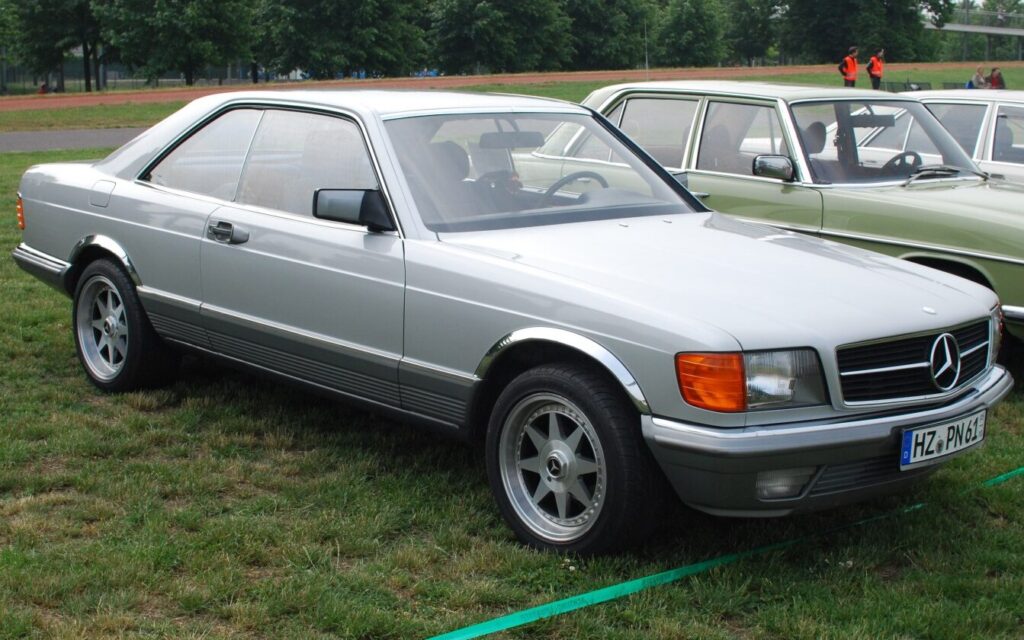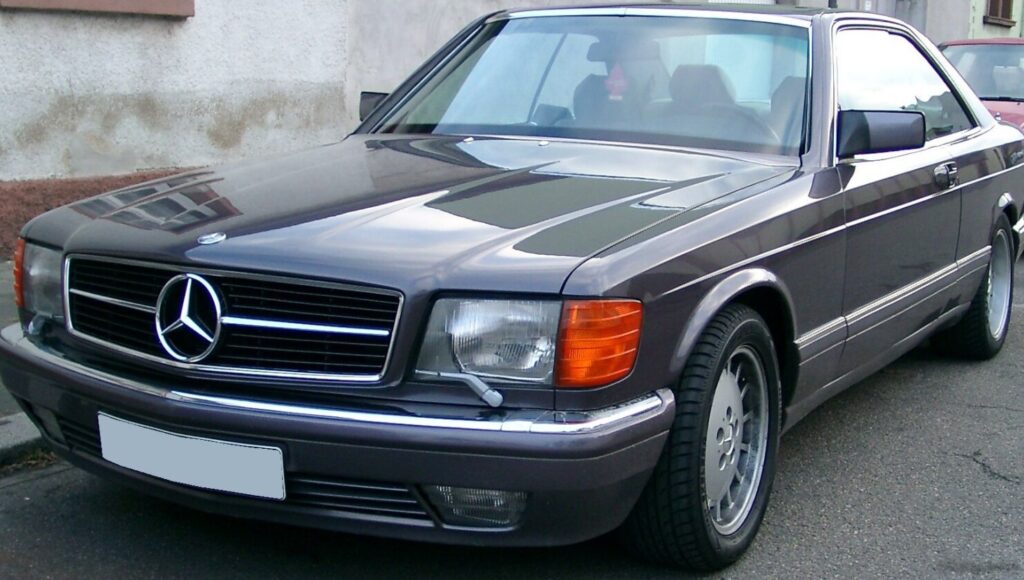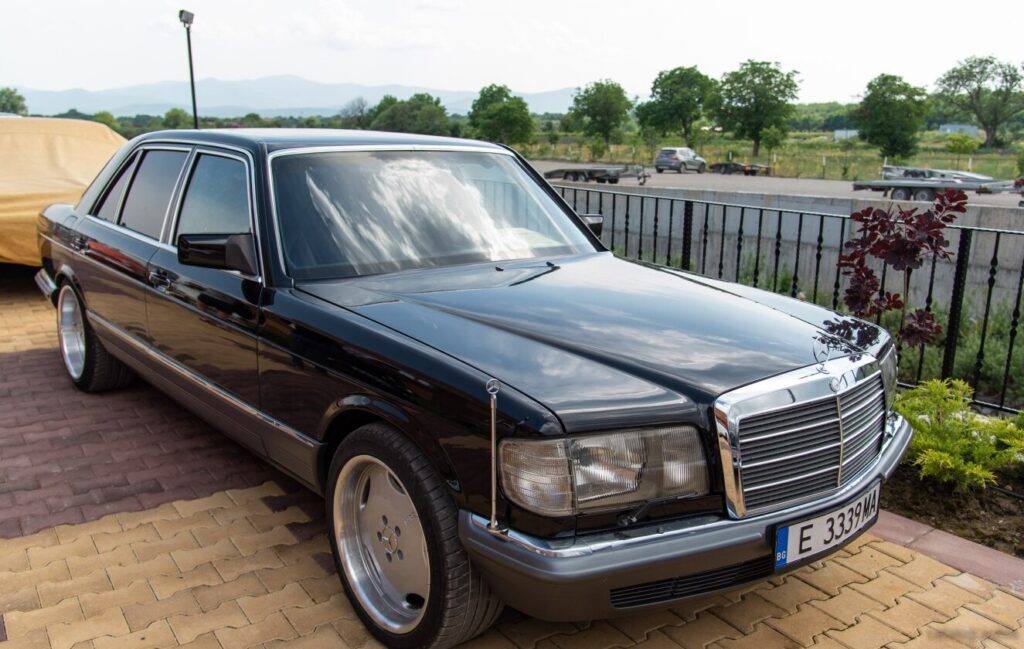
The Mercedes-Benz S-Class SEL (V126) 280 SEL, produced from December 1979 to September 1985, represented a crucial entry point into the flagship S-Class range during the W126 generation. Positioned as the base model, it offered the prestige and advanced engineering of the S-Class at a comparatively accessible price point. The 280 SEL, with its inline-six engine and automatic transmission, catered to buyers prioritizing comfort and refinement over outright performance. It served as a stepping stone to the more powerful V8-equipped models, offering a balance of luxury and efficiency within the broader S-Class lineup. The “SEL” designation signified the long-wheelbase version, offering increased rear passenger space, a key feature for the target demographic.
Technical Specifications
| Brand | Mercedes-Benz |
| Model | S-class |
| Generation | S-class SEL (V126) |
| Type (Engine) | 280 SEL (185 Hp) Automatic |
| Start of production | December, 1979 |
| End of production | September, 1985 |
| Powertrain Architecture | Internal Combustion engine |
| Body type | Sedan |
| Seats | 5 |
| Doors | 4 |
| Fuel consumption (urban) | 14.5 l/100 km (16.2 US mpg, 19.5 UK mpg, 6.9 km/l) |
| Fuel consumption (extra urban) | 9.5 l/100 km (24.8 US mpg, 29.7 UK mpg, 10.5 km/l) |
| Fuel Type | Petrol (Gasoline) |
| Acceleration 0 – 100 km/h | 10.8 sec |
| Acceleration 0 – 62 mph | 10.8 sec |
| Acceleration 0 – 60 mph | 10.3 sec |
| Maximum speed | 205 km/h (127.38 mph) |
| Weight-to-power ratio | 8.6 kg/Hp, 116.4 Hp/tonne |
| Weight-to-torque ratio | 6.6 kg/Nm, 150.9 Nm/tonne |
| Power | 185 Hp @ 5800 rpm |
| Power per litre | 67.4 Hp/l |
| Torque | 240 Nm @ 4500 rpm (177.01 lb.-ft. @ 4500 rpm) |
| Engine layout | Front, Longitudinal |
| Engine Model/Code | M 110 E 28 / 110.987 |
| Engine displacement | 2746 cm3 (167.57 cu. in.) |
| Number of cylinders | 6 |
| Engine configuration | Inline |
| Cylinder Bore | 86 mm (3.39 in.) |
| Piston Stroke | 78.8 mm (3.1 in.) |
| Compression ratio | 9:1 |
| Number of valves per cylinder | 2 |
| Fuel injection system | Multi-port manifold injection |
| Engine aspiration | Naturally aspirated engine |
| Valvetrain | DOHC |
| Engine oil capacity | 7 l (7.4 US qt | 6.16 UK qt) |
| Coolant | 10.5 l (11.1 US qt | 9.24 UK qt) |
| Kerb Weight | 1590 kg (3505.35 lbs.) |
| Max. weight | 2110 kg (4651.75 lbs.) |
| Max load | 520 kg (1146.4 lbs.) |
| Fuel tank capacity | 90 l (23.78 US gal | 19.8 UK gal) |
| Length | 5135 mm (202.17 in.) |
| Width | 1820 mm (71.65 in.) |
| Height | 1434 mm (56.46 in.) |
| Wheelbase | 3070 mm (120.87 in.) |
| Front track | 1545 mm (60.83 in.) |
| Rear track | 1517 mm (59.72 in.) |
| Drivetrain Architecture | The Internal combustion engine (ICE) drives the rear wheels of the vehicle. |
| Drive wheel | Rear wheel drive |
| Number of gears and type of gearbox | 4 gears, automatic transmission |
| Front suspension | Double wishbone |
| Rear suspension | Trailing arm |
| Front brakes | Ventilated discs |
| Rear brakes | Disc |
| Steering type | Cone worm with recirculation balls |
| Power steering | Hydraulic Steering |
| Tires size | Front wheel tires: 195/70 R14Rear wheel tires: 195/70 R14 |
| Wheel rims size | Front wheel rims: 6J x 14Rear wheel rims: 6J x 14 |
Powertrain & Engine Architecture
The heart of the 280 SEL was the M110 E 28 inline-six engine, a robust and over-engineered powerplant. Displacing 2.8 liters (2746 cc), it featured a cast-iron block and aluminum cylinder head. The engine utilized a Bosch K-Jetronic fuel injection system, a mechanical system known for its reliability and precise fuel delivery, though less efficient than later electronic systems. The double overhead camshaft (DOHC) valvetrain, operating two valves per cylinder, contributed to the engine’s smooth operation and respectable power output. The engine produced 185 horsepower at 5800 rpm and 240 Nm (177 lb-ft) of torque at 4500 rpm. Paired exclusively with a four-speed automatic transmission, the powertrain prioritized smooth shifts and ease of use over sporty responsiveness. This transmission was a traditional hydraulic automatic, known for its durability but lacking the efficiency of modern electronically controlled units.
Driving Characteristics
The 280 SEL Automatic offered a comfortable and refined driving experience, typical of the S-Class. Acceleration was adequate, with a 0-60 mph time of around 10.3 seconds, but it wasn’t designed for spirited driving. The automatic transmission, while smooth, resulted in some power loss compared to the available five-speed manual transmission offered with other engine options. The gear ratios were optimized for cruising, making it a pleasant grand tourer. Compared to the later 280 SE with the same engine but a manual gearbox, the automatic version felt noticeably less responsive. Against the more powerful V8 models (380 SEL, 560 SEL), the 280 SEL lacked the outright acceleration and passing power, but it offered a more balanced and economical driving experience.
Equipment & Trim Levels
The 280 SEL came standard with a generous array of features for its time, reflecting its status as a luxury vehicle. Standard equipment included power windows, central locking, a sunroof, and air conditioning. The interior was typically upholstered in high-quality cloth, with leather upholstery available as an option. Dashboard trim was often finished in wood veneer, adding to the luxurious ambiance. Optional extras included automatic climate control, a premium sound system, and heated seats. The long wheelbase (“SEL”) provided significantly more rear legroom than the standard S-Class, making it particularly appealing to those who frequently traveled with passengers.
Chassis & Braking
The V126 S-Class featured a robust chassis with independent suspension all around. The front suspension utilized double wishbones, while the rear employed a trailing arm setup. This configuration provided a comfortable ride and good handling characteristics. The 280 SEL typically came equipped with ventilated disc brakes at the front and solid disc brakes at the rear. Hydraulic power steering was standard, making maneuvering the large sedan relatively easy. The suspension was tuned for comfort, prioritizing a smooth ride over sporty handling. Stabilizer bars were fitted front and rear to reduce body roll during cornering.
Market Reception & Comparison
The 280 SEL was generally well-received by critics as a comfortable and refined luxury sedan. However, some reviewers noted its relatively modest performance compared to the V8-powered models. Fuel economy was considered reasonable for a vehicle of its size and class, though not exceptional. Compared to the 380 SEL, the 280 SEL offered a lower purchase price but sacrificed performance. Against the 280 SE (the standard wheelbase version), the 280 SEL offered the significant benefit of increased rear passenger space. Reliability was generally good, though the K-Jetronic fuel injection system could require specialized maintenance.
Legacy
The M110 engine, found in the 280 SEL, is renowned for its durability and longevity. Well-maintained examples can still be found running reliably today. The V126 S-Class, as a whole, is considered a classic of the era, and the 280 SEL represents an accessible entry point into ownership. In the used car market, the 280 SEL is often more affordable than its V8-powered siblings, making it an attractive option for enthusiasts seeking a classic Mercedes-Benz experience. While not the fastest or most technologically advanced S-Class variant, the 280 SEL Automatic remains a comfortable, reliable, and stylish luxury sedan that embodies the engineering excellence of Mercedes-Benz.