
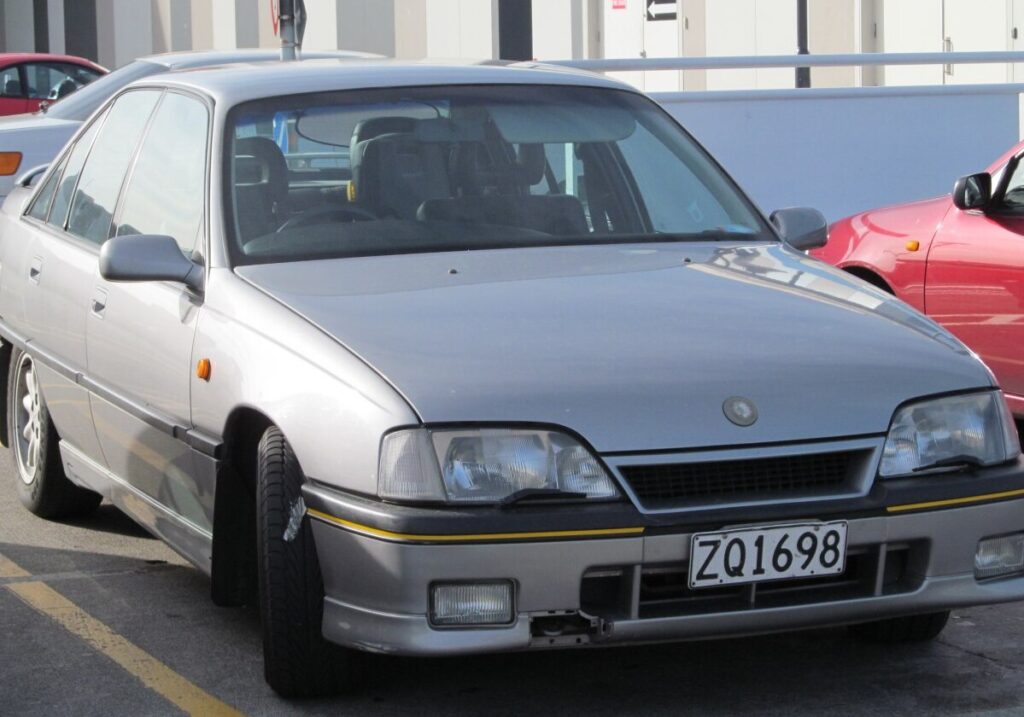
The Opel Omega A 1.8, producing 90 horsepower, was an entry-level variant of the first-generation Omega, produced between 1986 and 1987. Positioned as the most accessible model in the Omega A lineup, it aimed to provide comfortable and reliable transportation for families and commuters. The Omega A, launched as a replacement for the Opel Rekord, represented a significant step forward in Opel’s engineering, offering a more modern design and improved features. This 1.8-liter version, while not the performance leader of the range, played a crucial role in establishing the Omega as a popular choice in the mid-size executive car segment, particularly in Europe.
Technical Specifications
| Brand | Opel |
| Model | Omega |
| Generation | Omega A |
| Type (Engine) | 1.8 (90 Hp) |
| Start of production | 1986 |
| End of production | 1987 |
| Powertrain Architecture | Internal Combustion engine |
| Body type | Sedan |
| Seats | 5 |
| Doors | 4 |
| Fuel consumption (urban) | 9.8 l/100 km (24 US mpg, 28.8 UK mpg, 10.2 km/l) |
| Fuel consumption (extra urban) | 5.6 l/100 km (42 US mpg, 50.4 UK mpg, 17.9 km/l) |
| Fuel consumption (combined) | 7.8 l/100 km (30.2 US mpg, 36.2 UK mpg, 12.8 km/l) |
| Fuel Type | Petrol (Gasoline) |
| Acceleration 0 – 100 km/h | 14 sec |
| Acceleration 0 – 62 mph | 14 sec |
| Acceleration 0 – 60 mph | 13.3 sec |
| Maximum speed | 183 km/h (113.71 mph) |
| Weight-to-power ratio | 13.7 kg/Hp, 73.2 Hp/tonne |
| Weight-to-torque ratio | 8.3 kg/Nm, 120.3 Nm/tonne |
| Power | 90 Hp @ 5200 rpm |
| Power per litre | 50.1 Hp/l |
| Torque | 148 Nm @ 3400 rpm (109.16 lb.-ft. @ 3400 rpm) |
| Engine layout | Front, Longitudinal |
| Engine Model/Code | 18SV |
| Engine displacement | 1796 cm3 (109.6 cu. in.) |
| Number of cylinders | 4 |
| Engine configuration | Inline |
| Cylinder Bore | 84.8 mm (3.34 in.) |
| Piston Stroke | 79.5 mm (3.13 in.) |
| Compression ratio | 10:1 |
| Number of valves per cylinder | 2 |
| Fuel injection system | Carburettor |
| Engine aspiration | Naturally aspirated engine |
| Valvetrain | SOHC |
| Engine oil capacity | 4.5 l (4.76 US qt | 3.96 UK qt) |
| Coolant capacity | 6.4 l (6.76 US qt | 5.63 UK qt) |
| Kerb Weight | 1230 kg (2711.69 lbs.) |
| Max. weight | 1865 kg (4111.62 lbs.) |
| Max load | 635 kg (1399.94 lbs.) |
| Trunk (boot) space – minimum | 520 l (18.36 cu. ft.) |
| Trunk (boot) space – maximum | 870 l (30.72 cu. ft.) |
| Fuel tank capacity | 75 l (19.81 US gal | 16.5 UK gal) |
| Length | 4740 mm (186.61 in.) |
| Width | 1760 mm (69.29 in.) |
| Height | 1445 mm (56.89 in.) |
| Wheelbase | 2730 mm (107.48 in.) |
| Front track | 1445 mm (56.89 in.) |
| Rear (Back) track | 1460 mm (57.48 in.) |
| Minimum turning circle | 10.8 m (35.43 ft.) |
| Drivetrain Architecture | Rear wheel drive |
| Drive wheel | Rear wheel drive |
| Number of gears | 5 gears, manual transmission |
| Front suspension | Spring Strut |
| Rear suspension | Wishbone |
| Front brakes | Ventilated discs |
| Rear brakes | Disc |
| Assisting systems | ABS (Anti-lock braking system), Hydraulic Steering |
| Tires size | 195/65 R15 |
| Wheel rims size | 6J x 15 |
Powertrain & Engine Architecture
The heart of the Omega A 1.8 was the 18SV engine, a 1.8-liter inline-four cylinder gasoline engine. This engine, part of Opel’s established family of engines, featured a single overhead camshaft (SOHC) valvetrain with two valves per cylinder. Crucially, this version utilized a carburetor for fuel delivery, a technology becoming less common as the 1980s progressed, but still prevalent in entry-level models for cost reasons. The carburetor system, while simpler than fuel injection, required more frequent adjustments to maintain optimal performance and fuel economy. The engine produced 90 horsepower at 5200 rpm and 148 Nm (109.16 lb-ft) of torque at 3400 rpm. The engine was mounted longitudinally in the front of the vehicle, driving the rear wheels. The transmission was a five-speed manual, offering a relatively conventional driving experience for the time.
Driving Characteristics
The 1.8-liter Omega A, with its 90 horsepower, offered modest performance. Acceleration from 0 to 100 km/h (0-62 mph) took around 14 seconds, and top speed was approximately 183 km/h (113.71 mph). Compared to the more powerful Omega variants, such as those equipped with the 2.0-liter or 2.3-liter engines, the 1.8 felt noticeably slower, particularly when fully loaded or tackling inclines. The five-speed manual transmission helped to keep the engine in its optimal power band, but the carburetor’s responsiveness wasn’t as sharp as that of fuel-injected engines. The rear-wheel-drive configuration provided a balanced feel, but the relatively narrow tires (195/65 R15) limited grip during spirited driving. The focus was on comfortable cruising and everyday usability rather than outright performance.
Equipment & Trim Levels
The 1.8-liter Omega A was typically offered with a fairly basic level of equipment, reflecting its position as the entry-level model. Standard features generally included cloth upholstery, a basic stereo system, and manual windows and door locks. Power steering was often included, but air conditioning and central locking were usually optional extras. The dashboard layout was functional and straightforward, with clearly marked gauges and controls. Optional extras could include upgraded stereo systems, sunroofs, and more luxurious interior trim options. The interior trim was generally durable and practical, designed to withstand the rigors of daily use.
Chassis & Braking
The Omega A 1.8 featured a conventional chassis layout with a spring strut front suspension and a wishbone rear suspension. The suspension was tuned for comfort, providing a relatively smooth ride over uneven surfaces. Braking was provided by ventilated discs at the front and discs at the rear. An anti-lock braking system (ABS) was often available as an option, enhancing safety by preventing wheel lockup during hard braking. The car’s weight of around 1230 kg (2711.69 lbs) contributed to its moderate handling characteristics. Stabilizer bars were fitted to both the front and rear axles to reduce body roll during cornering.
Market Reception & Comparison
The Opel Omega A 1.8 was generally well-received as a practical and affordable family car. Critics praised its spacious interior, comfortable ride, and reasonable fuel economy (around 7.8 l/100 km combined). However, the 1.8-liter engine was often criticized for being underpowered, particularly when compared to the more potent engines available in the Omega range. The 2.0-liter and 2.3-liter models offered significantly more performance, but at a higher price point. The 1.8 was often seen as a sensible choice for buyers who prioritized fuel efficiency and affordability over outright performance. Compared to competitors like the Ford Granada and Volkswagen Passat, the Omega A offered a good balance of features and value.
Legacy
The Opel Omega A 1.8, while not a particularly sought-after classic today, represents an important chapter in Opel’s history. The 18SV engine, while relatively simple, proved to be reasonably reliable, and many examples are still on the road today. However, carburetor-equipped models require more regular maintenance than those with fuel injection. The Omega A’s spacious interior and comfortable ride continue to be appreciated by owners. In the used car market, these models are typically quite affordable, making them an attractive option for budget-conscious buyers looking for a classic European sedan. The Omega A laid the foundation for subsequent generations of the Omega, which would become known for their advanced technology and refined driving experience.
