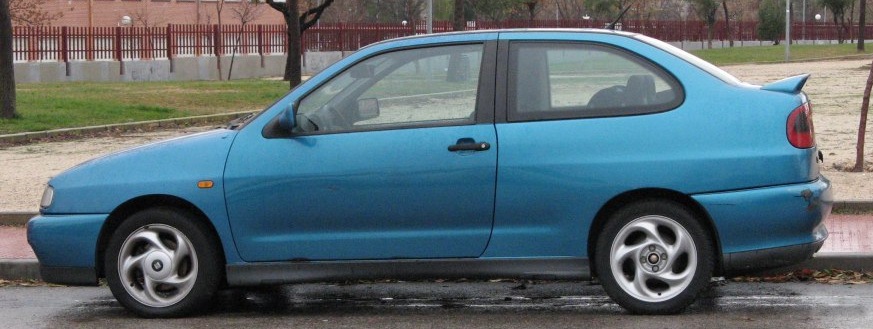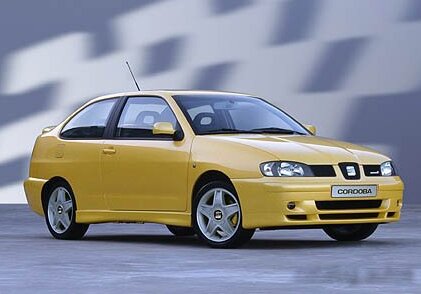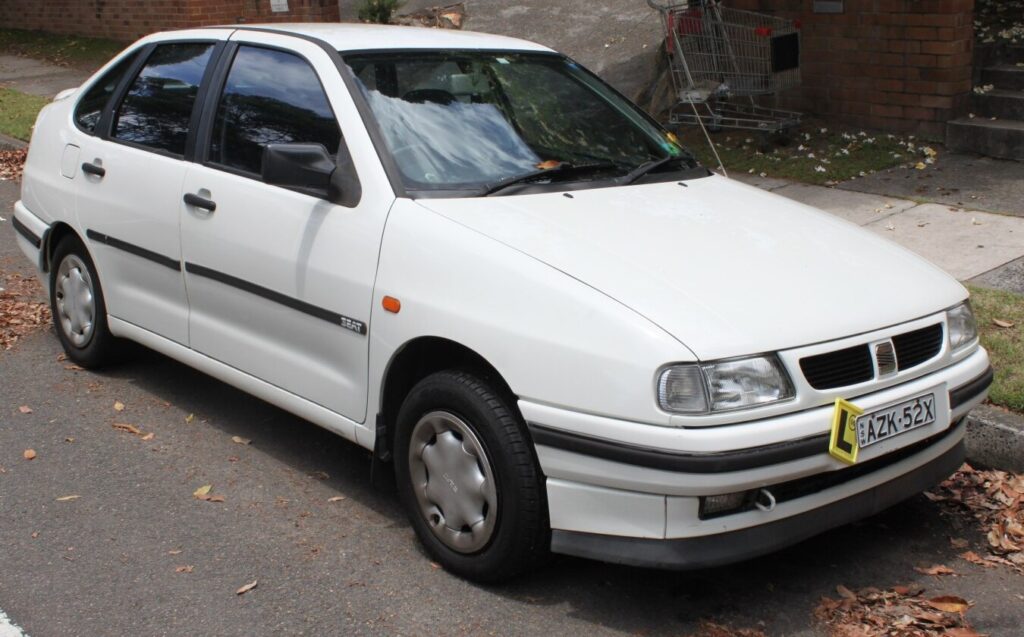
The SEAT Cordoba I 1.8 i (90 hp) Automatic, produced between September 1993 and June 1999, represented a key offering in SEAT’s early expansion into the compact sedan market. Positioned as a more affordable and practical alternative to the Ibiza hatchback, the Cordoba I was based on the Volkswagen Polo/Golf platform (1HX0/A3), sharing many components but offering a distinct Spanish design flair. This particular 1.8-liter, 90 horsepower variant, coupled with a four-speed automatic transmission, aimed to provide a comfortable and convenient driving experience, appealing to buyers prioritizing ease of use over outright performance. It occupied a mid-range position within the Cordoba lineup, slotting below the more powerful engine options and above the base 1.4-liter models.
Technical Specifications
| Brand | Seat |
| Model | Cordoba |
| Generation | Cordoba I |
| Type (Engine) | 1.8 i (90 Hp) Automatic |
| Start of production | September, 1993 |
| End of production | June, 1999 |
| Powertrain Architecture | Internal Combustion engine |
| Body type | Sedan |
| Seats | 5 |
| Doors | 4 |
| Fuel Type | Petrol (Gasoline) |
| Acceleration 0 – 100 km/h | 11.7 sec |
| Acceleration 0 – 62 mph | 11.7 sec |
| Acceleration 0 – 60 mph | 11.1 sec |
| Maximum speed | 182 km/h (113.09 mph) |
| Weight-to-power ratio | 11.2 kg/Hp, 89.6 Hp/tonne |
| Weight-to-torque ratio | 6.9 kg/Nm, 144.3 Nm/tonne |
| Power | 90 Hp @ 5500 rpm |
| Power per litre | 50.5 Hp/l |
| Torque | 145 Nm @ 2900 rpm (106.95 lb.-ft. @ 2900 rpm) |
| Engine layout | Front, Transverse |
| Engine Model/Code | ABS, ADZ, ACC |
| Engine displacement | 1781 cm3 (108.68 cu. in.) |
| Number of cylinders | 4 |
| Engine configuration | Inline |
| Cylinder Bore | 81 mm (3.19 in.) |
| Piston Stroke | 86.4 mm (3.4 in.) |
| Compression ratio | 10:1 |
| Number of valves per cylinder | 2 |
| Fuel injection system | Single-point injection |
| Engine aspiration | Naturally aspirated engine |
| Valvetrain | OHC |
| Engine oil capacity | 4 l (4.23 US qt | 3.52 UK qt) |
| Coolant | 5.5 l (5.81 US qt | 4.84 UK qt) |
| Kerb Weight | 1005 kg (2215.65 lbs) |
| Max. weight | 1480 kg (3262.84 lbs) |
| Max load | 475 kg (1047.2 lbs) |
| Trunk (boot) space – minimum | 455 l (16.07 cu. ft.) |
| Trunk (boot) space – maximum | 802 l (28.32 cu. ft.) |
| Fuel tank capacity | 47 l (12.42 US gal | 10.34 UK gal) |
| Length | 4109 mm (161.77 in.) |
| Width | 1640 mm (64.57 in.) |
| Height | 1408 mm (55.43 in.) |
| Wheelbase | 2440 mm (96.06 in.) |
| Front track | 1429 mm (56.26 in.) |
| Rear (Back) track | 1394 mm (54.88 in.) |
| Drivetrain Architecture | The Internal combustion engine (ICE) drives the front wheels of the vehicle. |
| Drive wheel | Front wheel drive |
| Number of gears and type of gearbox | 4 gears, automatic transmission |
| Front suspension | Wishbone |
| Rear suspension | Suspension with traction connecting levers |
| Front brakes | Disc |
| Rear brakes | Drum |
| Assisting systems | ABS (Anti-lock braking system) |
| Steering type | Steering rack and pinion |
| Power steering | Hydraulic Steering |
| Tires size | 185/60 R14 |
| Wheel rims size | 14 |
Powertrain & Engine Architecture
The heart of the Cordoba I 1.8 i Automatic is the Volkswagen Group’s ABS, ADZ, or ACC engine code, a 1.8-liter inline four-cylinder gasoline engine. This engine utilized a single-point fuel injection system (also known as throttle body injection), a relatively simple and cost-effective technology for the time. The overhead camshaft (OHC) valvetrain operated two valves per cylinder. While not particularly advanced, this configuration provided reasonable reliability and acceptable performance for the intended market segment. The four-speed automatic transmission, a common unit within the VW Group, was chosen for its ease of use and comfort. It featured a traditional hydraulic torque converter and lacked the modern features found in later automatic gearboxes, such as manual shift modes or adaptive learning.
Driving Characteristics
The 90 hp output and automatic transmission combination resulted in a driving experience focused on comfort and convenience rather than sporty performance. Acceleration from 0-60 mph took approximately 11.1 seconds, and the top speed was around 113 mph. The automatic transmission’s gear ratios were geared towards fuel efficiency and smooth cruising, meaning the engine often felt strained during hard acceleration. Compared to the manual transmission versions of the 1.8, the automatic suffered a noticeable performance deficit. The 1.8 automatic was also significantly slower than the more powerful 2.0-liter variants, which offered a more engaging driving experience. However, the automatic provided a relaxed and effortless driving experience, particularly in urban environments.
Equipment & Trim Levels
The Cordoba I 1.8 i Automatic typically came equipped with basic amenities such as power steering, central locking, and electric front windows. Interior upholstery was generally cloth, with a relatively simple dashboard layout. Optional extras included air conditioning, a radio/cassette player, and alloy wheels. Higher trim levels, such as the ‘Stella’ or ‘Chromo’ offered additional features like upgraded interior trim, a sunroof, and more sophisticated audio systems. The specific equipment level varied depending on the market and the year of production.
Chassis & Braking
The Cordoba I utilized a front-wheel-drive layout with a relatively simple suspension setup. The front suspension featured independent wishbones, while the rear employed a torsion beam axle with traction connecting levers. Braking was handled by disc brakes on the front wheels and drum brakes on the rear. Anti-lock Braking System (ABS) was standard, enhancing safety by preventing wheel lockup during hard braking. The suspension tuning prioritized ride comfort over sharp handling, making it well-suited for everyday driving conditions. Stabilizer bars were present, but relatively thin compared to those found on sportier models.
Market Reception & Comparison
The Cordoba I 1.8 i Automatic received mixed reviews. Critics generally praised its comfortable ride, practical interior space, and affordability. However, the engine’s lack of power and the automatic transmission’s sluggishness were common criticisms. Compared to the manual transmission versions, the automatic offered lower fuel economy. Against competitors like the Ford Escort and Opel Astra, the Cordoba offered a distinctive design and a reputation for reasonable reliability, but often lacked the refinement and performance of its rivals. The 1.9 TDI diesel version of the Cordoba was a popular alternative, offering significantly better fuel economy and torque, but at the expense of refinement.
Legacy
The SEAT Cordoba I 1.8 i Automatic, while not a performance icon, remains a relatively common sight on European roads today. The ABS/ADZ/ACC engine is known for its durability, although regular maintenance is crucial to prevent issues such as oil leaks and timing belt failure. The automatic transmission, while not particularly sophisticated, is generally reliable if properly serviced. In the used car market, these Cordobas are valued for their affordability and simplicity, making them attractive options for first-time car owners or those seeking a practical and inexpensive mode of transportation. The Cordoba I laid the foundation for SEAT’s continued growth and success in the compact car segment, establishing the brand as a viable alternative to established European manufacturers.