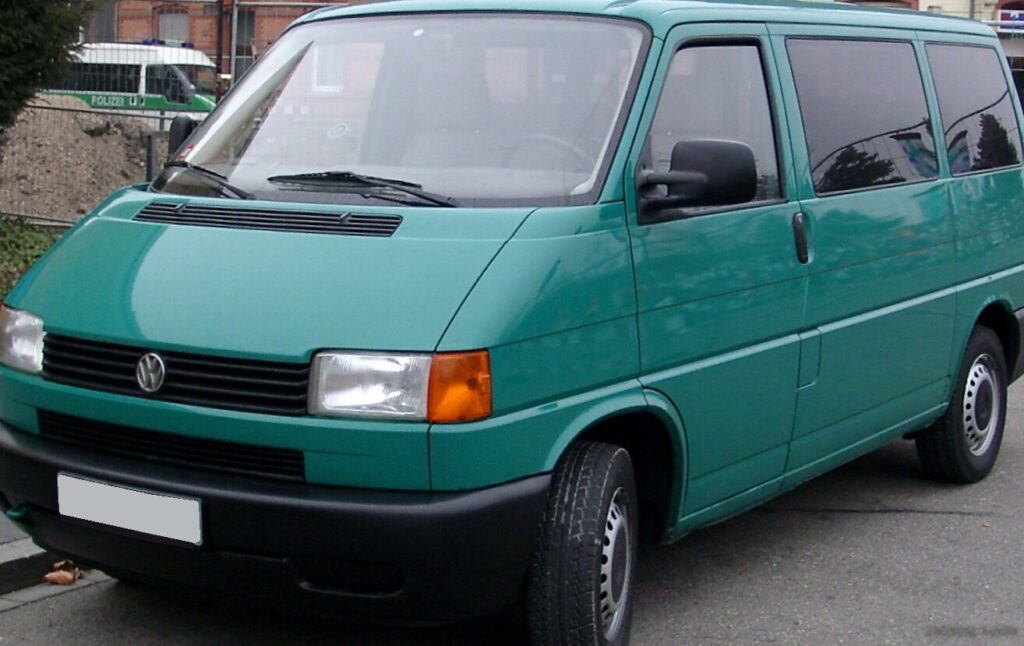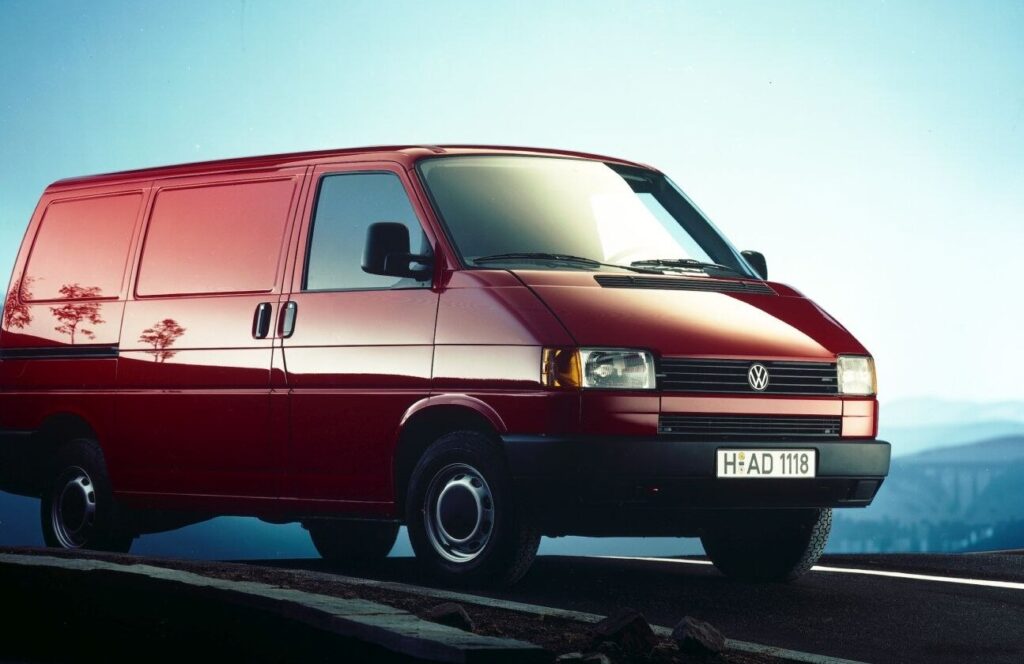
The Volkswagen Transporter (T4), produced from 1990 to 2003, represented a significant leap forward for the iconic van, offering a more modern and refined experience compared to its T3 predecessor. Within the T4 range, the 2.4 D (78 hp) Automatic L1H1 variant occupied a specific niche, aimed at buyers prioritizing fuel economy and ease of driving over outright performance. This configuration, available primarily between 1990 and 1995, was a popular choice for commercial users and those seeking a practical, no-frills workhorse. The L1H1 designation refers to the short wheelbase and low roof height, making it a relatively compact and maneuverable option within the T4 lineup.
Technical Specifications
| Brand | Volkswagen |
| Model | Transporter |
| Generation | Transporter (T4) Panel Van |
| Type | 2.4 D (78 Hp) Automatic L1H1 |
| Start of production | 1990 |
| End of production | 1995 |
| Powertrain Architecture | Internal Combustion engine |
| Body type | Van |
| Seats | 2 |
| Doors | 4-5 |
| Fuel consumption (combined) | 10.8 l/100 km (21.8 US mpg, 26.2 UK mpg, 9.3 km/l) |
| Fuel Type | Diesel |
| Maximum speed | 133 km/h (82.64 mph) |
| Weight-to-power ratio | 20.8 kg/Hp, 48 Hp/tonne |
| Weight-to-torque ratio | 9.9 kg/Nm, 100.9 Nm/tonne |
| Power | 78 Hp @ 3700 rpm |
| Power per litre | 32.9 Hp/l |
| Torque | 164 Nm @ 1800-2200 rpm (120.96 lb.-ft. @ 1800-2200 rpm) |
| Engine layout | Front, Transverse |
| Engine Model/Code | AAB |
| Engine displacement | 2370 cm3 (144.63 cu. in.) |
| Number of cylinders | 5 |
| Engine configuration | Inline |
| Cylinder Bore | 79.5 mm (3.13 in.) |
| Piston Stroke | 95.5 mm (3.76 in.) |
| Compression ratio | 22.5:1 |
| Number of valves per cylinder | 2 |
| Fuel injection system | Precombustion chamber injection |
| Engine aspiration | Naturally aspirated engine |
| Valvetrain | SOHC |
| Engine oil capacity | 5.5 l (5.81 US qt | 4.84 UK qt) |
| Coolant | 9 l (9.51 US qt | 7.92 UK qt) |
| Kerb Weight | 1625 kg (3582.51 lbs.) |
| Max. weight | 2395-2775 kg (5280.07 – 6117.83 lbs.) |
| Max load | 770-1150 kg (1697.56 – 2535.32 lbs.) |
| Trunk (boot) space – maximum | 5400 l (190.7 cu. ft.) |
| Fuel tank capacity | 80 l (21.13 US gal | 17.6 UK gal) |
| Max. roof load | 100 kg (220.46 lbs.) |
| Permitted trailer load with brakes (12%) | 2000 kg (4409.25 lbs.) |
| Permitted trailer load without brakes | 700 kg (1543.24 lbs.) |
| Permitted towbar download | 100 kg (220.46 lbs.) |
| Length | 4650 mm (183.07 in.) |
| Width | 1840 mm (72.44 in.) |
| Height | 1940 mm (76.38 in.) |
| Wheelbase | 2920 mm (114.96 in.) |
| Front track | 1575 mm (62.01 in.) |
| Rear (Back) track | 1540 mm (60.63 in.) |
| Ride height (ground clearance) | 180 mm (7.09 in.) |
| Drag coefficient (Cd) | 0.36 |
| Minimum turning circle (turning diameter) | 11.7 m (38.39 ft.) |
| Drivetrain Architecture | The Internal combustion engine (ICE) drives the front wheels of the vehicle. |
| Drive wheel | Front wheel drive |
| Number of gears and type of gearbox | 4 gears, automatic transmission |
| Front suspension | Independent torsion bar, double wishbone, Transverse stabilizer |
| Rear suspension | Independent coil spring, Trailing arm |
| Front brakes | Disc |
| Rear brakes | Drum |
| Assisting systems | ABS (Anti-lock braking system) |
| Steering type | Steering rack and pinion |
| Power steering | Hydraulic Steering |
| Tires size | 195/70 R15; 205/65 R15; 215/65 R15 |
| Wheel rims size | 6J x 15; 7J x 15 |
INTRODUCTION
The Volkswagen Transporter T4 2.4 D Automatic L1H1, produced primarily between 1990 and 1995, was a work-oriented variant of the fourth-generation Transporter. It slotted into the T4 range as an entry-level option, offering a balance of practicality, fuel efficiency, and ease of use. The “2.4 D” designation refers to the 2.4-liter naturally aspirated diesel engine, while “Automatic” indicates the four-speed automatic transmission. The L1H1 configuration signified a short wheelbase and low roof, making it suitable for urban environments and applications where maneuverability was key. This model was a common sight in Europe, serving as a delivery van, mobile workshop, or even a basic passenger vehicle.
Powertrain & Engine Architecture
The heart of this Transporter is the Volkswagen AAB engine, a 2.4-liter inline five-cylinder diesel. This engine utilized a precombustion chamber injection system, a common technology for diesel engines of the era. This system involved injecting fuel into a precombustion chamber, where it partially ignited before entering the main combustion chamber, promoting more complete combustion. The engine produced 78 horsepower at 3700 rpm and 164 Nm (120.96 lb-ft) of torque between 1800 and 2200 rpm. The four-speed automatic transmission, while providing convenience, was not known for its speed or responsiveness. It was a relatively simple hydraulic automatic, prioritizing durability and ease of maintenance over performance. The transmission’s gear ratios were geared towards maximizing fuel economy and providing adequate pulling power for commercial applications.
Driving Characteristics
The driving experience in the 2.4 D Automatic was decidedly utilitarian. Acceleration was modest, and the automatic transmission contributed to a somewhat sluggish feel. Compared to the available manual transmission or the more powerful 1.9 TDI and 2.5 TDI engines, this variant lacked outright pep. However, the automatic transmission made it significantly easier to drive in stop-and-go traffic, a major benefit for urban delivery drivers. The torque curve was relatively flat, providing usable power across a broad range of engine speeds. The gear changes were noticeable, and the transmission wasn’t particularly quick to downshift, requiring careful planning when overtaking. The focus was on reliability and low running costs rather than a sporty driving experience.
Equipment & Trim Levels
The 2.4 D Automatic L1H1 was typically equipped with basic, functional features. Standard equipment included a driver’s seat, basic instrumentation, and a steering wheel. Interior trim was sparse, with durable plastics and vinyl upholstery being the norm. Options were available, such as a passenger seat, upgraded audio systems, and basic heating/ventilation. However, this variant was generally considered a “base” model, with minimal frills. The emphasis was on providing a practical and affordable work vehicle.
Chassis & Braking
The T4 Transporter featured an independent suspension system on both the front and rear axles. The front suspension utilized a torsion bar setup with double wishbones and a transverse stabilizer bar, while the rear employed independent coil springs and trailing arms. This configuration provided a reasonable level of ride comfort, considering the vehicle’s commercial purpose. Braking was accomplished via disc brakes on the front wheels and drum brakes on the rear. An Anti-lock Braking System (ABS) was often included as standard equipment, enhancing safety. The steering was rack and pinion with hydraulic power assistance, making it relatively easy to maneuver, even when fully loaded.
Market Reception & Comparison
The 2.4 D Automatic L1H1 was well-received by businesses and individuals seeking a reliable and economical van. Critics generally praised its fuel efficiency and ease of driving, particularly in urban environments. However, the lack of power and the somewhat dated automatic transmission were common criticisms. Compared to the more popular 1.9 TDI variant, the 2.4 D offered lower performance but also a lower purchase price. The 1.9 TDI provided significantly better fuel economy and more responsive acceleration, making it a more desirable option for those willing to pay the premium. The 2.4 D’s simplicity, however, often translated to lower maintenance costs and greater long-term reliability.
Legacy
The Volkswagen Transporter T4 2.4 D Automatic L1H1 has proven to be a durable and long-lasting vehicle. Many examples are still on the road today, testament to the robust engineering of the AAB engine and the relatively simple automatic transmission. While not a collector’s item, well-maintained examples command reasonable prices in the used car market. The AAB engine is known for its longevity, although precombustion chamber diesel engines can be prone to glow plug issues and require regular maintenance to prevent injector problems. Overall, the T4 2.4 D Automatic remains a practical and affordable option for those seeking a classic Volkswagen van with a focus on reliability and low running costs.