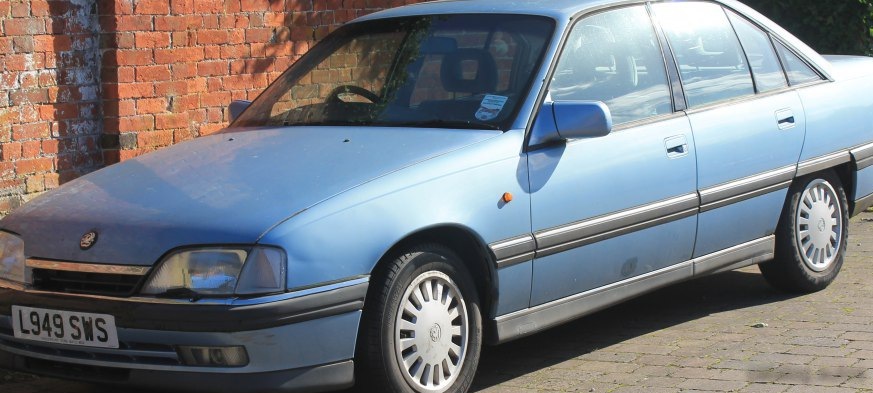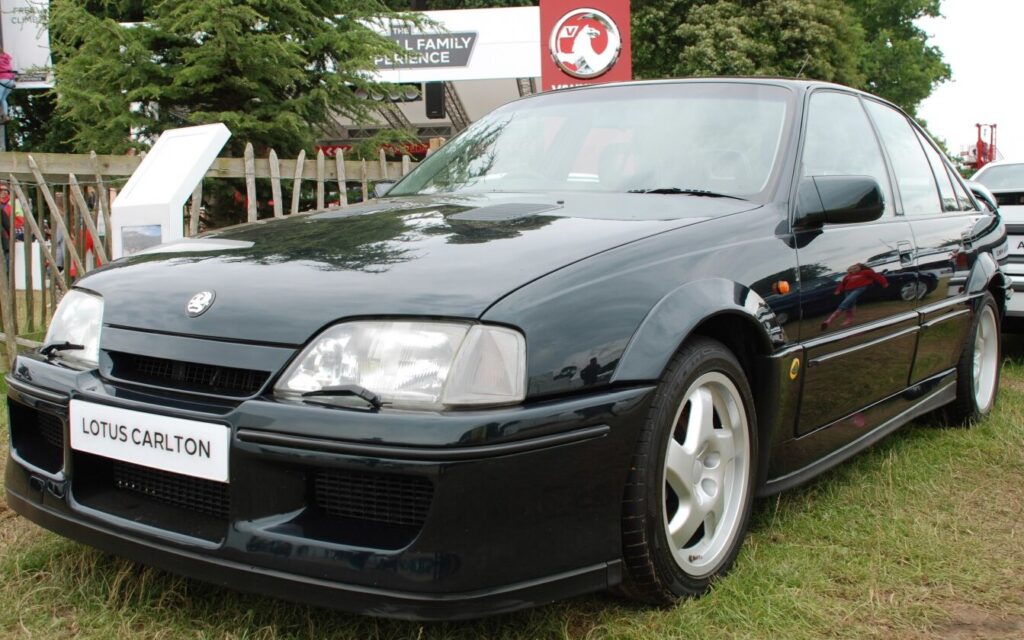
The Vauxhall Carlton Mk III Lotus 3.6, produced between 1990 and 1992, represents the pinnacle of the Carlton lineage. This high-performance variant, developed in collaboration with Lotus, was intended to be a sophisticated and rapid executive saloon, competing with offerings from BMW and Mercedes-Benz. It was a flagship model designed to showcase Vauxhall’s engineering capabilities and offer a genuinely world-class driving experience. The Carlton Mk III itself was part of the X30 generation, a significant update to the Carlton range, and the Lotus 3.6 was the ultimate expression of that update. It was never officially sold in the United States, remaining a primarily European market vehicle.
Technical Specifications
| Brand | Vauxhall |
| Model | Carlton Mk III |
| Generation | Carlton Mk III |
| Type (Engine) | Lotus 3.6 (377 Hp) |
| Start of production | 1990 |
| End of production | 1992 |
| Powertrain Architecture | Internal Combustion engine |
| Body type | Sedan |
| Seats | 5 |
| Doors | 4 |
| Fuel consumption (economy) – urban | 16.1 l/100 km (14.6 US mpg, 17.5 UK mpg, 6.2 km/l) |
| Fuel consumption (economy) – extra urban | 8.1 l/100 km (29 US mpg, 34.9 UK mpg, 12.3 km/l) |
| Fuel Type | Petrol (Gasoline) |
| Acceleration 0 – 60 mph | 5.2 sec |
| Power | 377 Hp @ 5200 rpm |
| Power per litre | 104.3 Hp/l |
| Torque | 568 Nm @ 4200 rpm (418.94 lb.-ft. @ 4200 rpm) |
| Engine layout | Front, Longitudinal |
| Engine Model/Code | C36GET |
| Engine displacement | 3615 cm3 (220.6 cu. in.) |
| Number of cylinders | 6 |
| Engine configuration | Inline |
| Cylinder Bore | 95 mm (3.74 in.) |
| Piston Stroke | 85 mm (3.35 in.) |
| Compression ratio | 8.2:1 |
| Number of valves per cylinder | 4 |
| Fuel injection system | Multi-port manifold injection |
| Engine aspiration | Twin-Turbo, Intercooler |
| Valvetrain | DOHC |
| Engine oil capacity | 8 l (8.45 US qt | 7.04 UK qt) |
| Coolant | 10.25 l (10.83 US qt | 9.02 UK qt) |
| Trunk (boot) space – minimum | 520 l (18.36 cu. ft.) |
| Trunk (boot) space – maximum | 870 l (30.72 cu. ft.) |
| Fuel tank capacity | 75 l (19.81 US gal | 16.5 UK gal) |
| Length | 4768 mm (187.72 in.) |
| Width | 1812 mm (71.34 in.) |
| Width including mirrors | 1933 mm (76.1 in.) |
| Height | 1435 mm (56.5 in.) |
| Wheelbase | 2730 mm (107.48 in.) |
| Drivetrain Architecture | The Internal combustion engine (ICE) drives the rear wheels of the vehicle. |
| Drive wheel | Rear wheel drive |
| Number of gears and type of gearbox | 6 gears, manual transmission |
| Front suspension | Independent, type McPherson with coil spring and anti-roll bar |
| Rear suspension | Independent multi-link suspension |
| Front brakes | Ventilated discs |
| Rear brakes | Ventilated discs |
| Assisting systems | ABS (Anti-lock braking system) |
| Steering type | Steering rack and pinion |
| Power steering | Hydraulic Steering |
| Tires size | Front wheel tires: 235/45 R17 Rear wheel tires: 265/40 R17 |
| Wheel rims size | Front wheel rims: 8.5J x 17 Rear wheel rims: 9.5J x 17 |
Powertrain & Engine Architecture
The heart of the Carlton Lotus is the C36GET engine, a 3.6-liter inline-six cylinder powerplant. This engine wasn’t designed in-house by Vauxhall; it was sourced from Cosworth, who extensively modified a pre-existing design. The key feature is its twin-turbocharged setup with an intercooler, which dramatically increases power output. The engine utilizes multi-port fuel injection and a double overhead camshaft (DOHC) valvetrain. The compression ratio is set at 8.2:1. The engine’s longitudinal mounting and rear-wheel drive configuration were a departure from the front-wheel drive layout of most other Carlton models. The transmission is a robust 6-speed manual gearbox, chosen to handle the substantial torque produced by the engine.
Driving Characteristics
The Carlton Lotus 3.6 delivers a markedly different driving experience compared to other Carlton variants. The twin-turbochargers provide a significant surge of power, resulting in a 0-60 mph time of just 5.2 seconds – exceptionally quick for a saloon of its size in the early 1990s. The manual transmission allows for precise control, and the rear-wheel drive layout contributes to a balanced and engaging driving feel. While the power delivery can be somewhat abrupt due to the turbo lag, once the turbos spool up, the acceleration is relentless. The suspension, tuned by Lotus, provides a firm but controlled ride, minimizing body roll during cornering.
Equipment & Trim Levels
The Lotus version of the Carlton was generously equipped, reflecting its premium positioning. Standard features included leather upholstery, electric windows and mirrors, central locking, and an upgraded sound system. The interior trim was distinct from other Carlton models, with unique badging and detailing. Optional extras included a sunroof, upgraded audio systems, and special paint colors. The focus was on providing a luxurious and comfortable cabin to complement the car’s performance capabilities.
Chassis & Braking
The chassis of the Carlton Lotus was reinforced to handle the increased power and torque. The suspension was revised by Lotus, featuring stiffer springs and dampers, along with a thicker anti-roll bar. The braking system was upgraded with ventilated discs on all four wheels and an anti-lock braking system (ABS) as standard. The tires were also wider and of a lower profile than those fitted to standard Carlton models, providing improved grip. The front tires were 235/45 R17, while the rear tires were 265/40 R17.
Market Reception & Comparison
The Carlton Lotus 3.6 received generally positive reviews from automotive journalists. It was praised for its exceptional performance, handling, and build quality. However, its high price tag – significantly more expensive than other Carlton models – limited its appeal to a relatively small niche of buyers. Compared to the standard Carlton, the Lotus version offered a vastly superior driving experience, but at a considerable cost. It was often compared to rivals such as the BMW M5 and Mercedes-Benz 560 SEC, and while it offered comparable performance, it lacked the brand prestige of its German competitors. Fuel economy, as expected, was poor, with urban consumption reaching 16.1 l/100 km.
Legacy
The Vauxhall Carlton Lotus 3.6 remains a highly sought-after classic car today. Its rarity, performance, and unique character have made it a favorite among collectors and enthusiasts. While the engine and drivetrain are generally reliable, maintenance can be expensive due to the complexity of the twin-turbo system and the age of the vehicle. Parts availability can also be a challenge. Despite these challenges, the Carlton Lotus 3.6 is considered a landmark achievement in British automotive engineering, representing a bold attempt to create a world-class performance saloon. It’s a testament to the collaboration between Vauxhall and Lotus, and a reminder of a time when British manufacturers were willing to push the boundaries of performance and innovation.