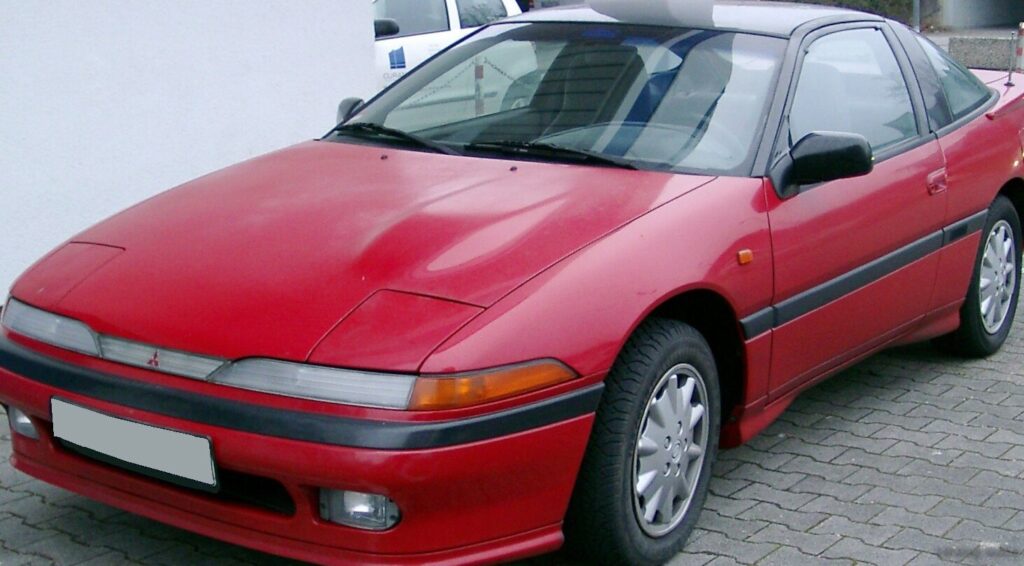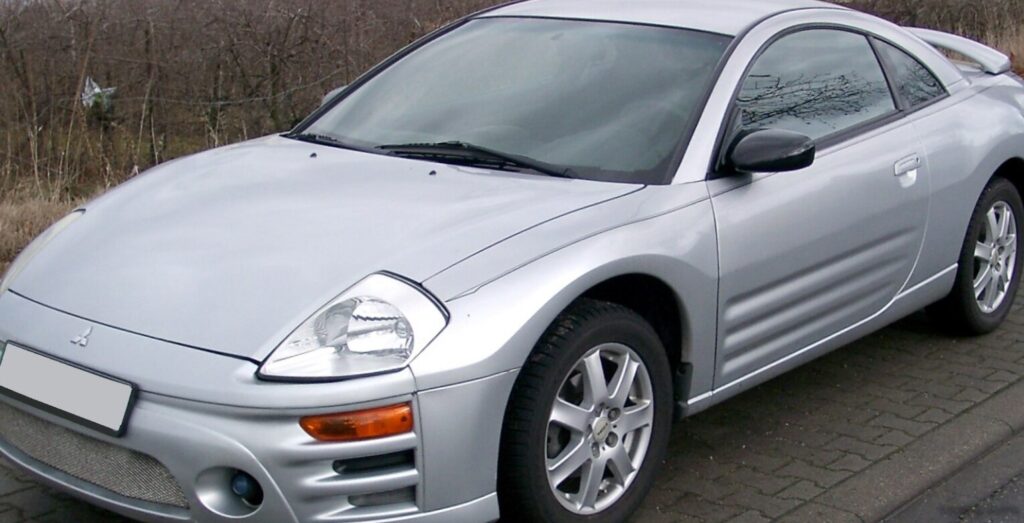
The Mitsubishi Eclipse III (3G), specifically the facelifted version produced from 2003 to 2005, represented a significant evolution for the popular coupe and liftback. This generation, built on the DS platform (shared with the Chrysler Sebring and Dodge Stratus), aimed to broaden the Eclipse’s appeal with a more refined interior and updated styling. The 2.4-liter (142 hp) automatic variant occupied a middle ground in the lineup, offering a balance between performance and affordability, targeting buyers who prioritized comfort and ease of driving over outright sportiness. It was a key model for Mitsubishi in the North American market, where the Eclipse had established a strong following.
Technical Specifications
| Brand | Mitsubishi |
| Model | Eclipse |
| Generation | Eclipse III (3G, facelift 2003) |
| Type (Engine) | 2.4 (142 Hp) Automatic |
| Start of production | 2003 |
| End of production | 2005 |
| Powertrain Architecture | Internal Combustion engine |
| Body type | Coupe, Liftback |
| Seats | 4 |
| Doors | 2 |
| Fuel consumption (urban) | 11.2 l/100 km (21 US mpg) |
| Fuel consumption (extra urban) | 8.4 l/100 km (28 US mpg) |
| Fuel Type | Petrol (Gasoline) |
| Weight-to-power ratio | 9.5 kg/Hp |
| Weight-to-torque ratio | 6.3 kg/Nm |
| Power | 142 Hp @ 5500 rpm |
| Power per litre | 60.4 Hp/l |
| Torque | 214 Nm @ 4000 rpm (157.84 lb.-ft. @ 4000 rpm) |
| Maximum engine speed | 6000 rpm |
| Engine layout | Front, Transverse |
| Engine Model/Code | 4G64 |
| Engine displacement | 2350 cm3 (143.41 cu. in.) |
| Number of cylinders | 4 |
| Engine configuration | Inline |
| Cylinder Bore | 86.5 mm (3.41 in.) |
| Piston Stroke | 100 mm (3.94 in.) |
| Compression ratio | 9:1 |
| Number of valves per cylinder | 4 |
| Fuel injection system | Multi-port manifold injection |
| Engine aspiration | Naturally aspirated engine |
| Valvetrain | SOHC |
| Engine oil capacity | 4.3 l (4.54 US qt | 3.78 UK qt) |
| Coolant capacity | 7 l (7.4 US qt | 6.16 UK qt) |
| Kerb Weight | 1350 kg (2976.24 lbs.) |
| Max. weight | 1750 kg (3858.09 lbs.) |
| Max load | 400 kg (881.85 lbs.) |
| Trunk (boot) space (minimum) | 479 l (16.92 cu. ft.) |
| Fuel tank capacity | 62 l (16.38 US gal | 13.64 UK gal) |
| Length | 4490 mm (176.77 in.) |
| Width | 1750 mm (68.9 in.) |
| Height | 1310 mm (51.57 in.) |
| Wheelbase | 2560 mm (100.79 in.) |
| Front track | 1510 mm (59.45 in.) |
| Rear track | 1510 mm (59.45 in.) |
| Ride height (ground clearance) | 148 mm (5.83 in.) |
| Minimum turning circle | 10.8 m (35.43 ft.) |
| Drivetrain Architecture | Front wheel drive |
| Number of gears and type of gearbox | 4 gears, automatic transmission |
| Front suspension | Independent type McPherson, Transverse stabilizer |
| Rear suspension | Independent multi-link suspension |
| Front brakes | Ventilated discs, 276×26 mm |
| Rear brakes | Drum, 229 mm |
| Assisting systems | ABS (Anti-lock braking system) |
| Steering type | Steering rack and pinion |
| Power steering | Hydraulic Steering |
| Tires size | 195/65 R15 |
| Wheel rims size | 6J x 15 |
Powertrain & Engine Architecture
The heart of this Eclipse variant was the 4G64 2.4-liter inline-four engine. This engine, a member of Mitsubishi’s 4G6 family, featured a single overhead camshaft (SOHC) design and multi-port fuel injection. The 9:1 compression ratio was a compromise between performance and the ability to run on readily available fuel grades. While not a particularly high-tech engine by 2003 standards, the 4G64 was known for its durability and relative simplicity. The automatic transmission was a conventional four-speed unit, chosen for its smooth operation and ease of use. It wasn’t designed for aggressive shifting, prioritizing comfort over sporty responsiveness. The transmission’s gear ratios were tuned for fuel efficiency and relaxed cruising, rather than quick acceleration.
Driving Characteristics
The 142 horsepower and 157.84 lb-ft of torque delivered by the 2.4-liter engine and automatic transmission provided adequate, but not exhilarating, performance. Acceleration from 0 to 60 mph was typically in the 9-10 second range. Compared to the available five-speed manual transmission, the automatic resulted in a noticeable decrease in responsiveness. The automatic’s shift points were programmed to prioritize fuel economy, sometimes leaving the engine feeling slightly strained during overtaking maneuvers. However, for everyday driving, the automatic offered a comfortable and convenient experience. The front-wheel-drive configuration provided predictable handling, but lacked the cornering prowess of all-wheel-drive variants (which were available on higher-trim models).
Equipment & Trim Levels
The 2.4-liter automatic Eclipse typically came standard with features like air conditioning, power windows and locks, a basic audio system, and cloth upholstery. Higher trim levels, such as the ES or GT, added features like alloy wheels, a sunroof, upgraded audio systems (often including a CD changer), and leather upholstery. Optional extras included side airbags, a premium sound system, and various cosmetic enhancements. The interior design was functional and relatively modern for its time, though the materials used were generally of average quality. The liftback configuration offered a degree of practicality, with a usable cargo area accessible through the rear hatch.
Chassis & Braking
The Eclipse III utilized an independent McPherson strut suspension in the front and an independent multi-link suspension in the rear. This setup provided a reasonable balance between ride comfort and handling. The front suspension included a transverse stabilizer bar to reduce body roll. Braking duties were handled by ventilated discs in the front and drum brakes in the rear. While adequate for normal driving conditions, the rear drum brakes were a cost-saving measure that limited the car’s overall braking performance compared to models equipped with rear discs. ABS (Anti-lock Braking System) was standard, enhancing safety during emergency braking situations.
Market Reception & Comparison
Critics generally viewed the 2.4-liter automatic Eclipse as a competent, but unremarkable, offering. It was praised for its comfortable ride and ease of use, but criticized for its lack of performance and somewhat bland styling. Compared to the more powerful turbocharged models or the sporty GT trim with the manual transmission, the 2.4-liter automatic appealed to a different demographic – those seeking a reliable and affordable coupe or liftback for daily commuting. Fuel economy was decent for its class, averaging around 21 mpg in the city and 28 mpg on the highway. Reliability was generally good, though some owners reported minor issues with the automatic transmission over the long term.
Legacy
Today, the 2003-2005 Mitsubishi Eclipse 2.4-liter automatic is a relatively affordable used car option. The 4G64 engine is known for its durability, and with proper maintenance, can provide many years of reliable service. However, finding well-maintained examples can be challenging, as many have suffered from neglect or accumulated high mileage. The automatic transmission, while generally reliable, may require attention as it ages. The Eclipse III, particularly in this configuration, represents a transitional period for Mitsubishi, bridging the gap between the sporty coupes of the past and the more mainstream offerings of the future. While it may not be a collector’s item, it remains a popular choice for those seeking an affordable and practical coupe or liftback.